How does a city prepare for a global-scale event that expects to mobilize nearly 50,000 people in a couple of days? Floods of people, pilgrim buses, security, armored routes, coordination between administrations, and cleaning will weave a transversal device to receive the Pope in Barcelona on June 9 and 10. Although the city is accustomed to hosting large events, the arrival of Leo XIV goes much further, both in terms of spirituality and symbolism, and in terms of complexity and transcendence.
And the city knows this. For this reason, it addresses the arrival of Leo XIV hand in hand with various institutions: City Council, Generalitat, State, and also the Archbishopric of Barcelona are in charge of the planning and operational management of everything related to the visit, through an ad hoc committee. With weekly meetings, they will X-ray every detail of the device together with other actors —such as the Sagrada Família—, in a process that is beginning to materialize, after the Vatican has detailed the itinerary of the visit.
To recap: Leo XIV will arrive in Barcelona, after visiting Madrid, on Tuesday, June 9, at noon. The first point of the visit will not be long in coming, at the Cathedral at 1 p.m., with a Prayer of the Mid-Hour and a meeting with volunteers. Then, the most multitudinous act of the visit will arrive at 8 p.m., at the Estadi Olímpic Lluís Companys. With a capacity of 37,000 people —expandable to 39,000—, the venue will be the scene of liturgy, and also of musical performances, such as those by the Escolania de Montserrat and Sergio Dalma.
Of the total tickets, about half will be allocated to the representation of the Tarraconense Episcopal Conference —which includes the Archbishopric of Barcelona—, with parishes, communities, and parish schools. The rest will be publicly accessible (and free), in a meeting for which the City Council has freely ceded the stadium, considering it an "event of great civic interest." This is affirmed by the mayor, Jaume Collboni, following the example of other occasions on which it has been ceded, such as the solidarity concert for DANA and the Catalonia-Palestine match.
The Pope will continue his visit by moving to the Brians 1 penitentiary center, where he will hold a meeting with prisoners. From there he will travel to Montserrat, where he will be received by Abbot Manel Gasch for the prayer of the Rosary, and will have lunch with the Benedictine community of Montserrat. In the afternoon, he will continue his journey with representatives of social entities that combat poverty. This will be during a visit to the parish of Sant Agustí del Raval, as part of a trip with a marked "social dimension," according to the organization.
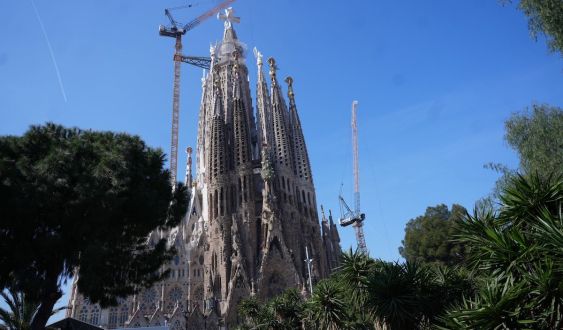
Then it will be time for the visit around which the apostolic journey has been built: the mass at the Sagrada Família, which will serve as the inauguration of the Tower of Jesus Christ that already dominates the Barcelona skyline, in the middle of Gaudí Year. The Pope's visit is seen by the temple as "a recognition and a gift," as celebrated by the basilica's general director, Xavier Martínez, in a session of the Moments Estel·lars cycle, organized by The New Barcelona Post.

Within the machinery
For all services to function like clockwork, the inter-administrative committee —created by the Generalitat in March— is working to size and design the necessary arrangements for the visit. With a dual objective: for it to be successful, and for the city to be able to maintain its usual rhythm at the same time, according to municipal sources. The City Council participates in these weekly coordination meetings with areas such as the Municipal Management, Mobility, and the Urban Guard, to "land the needs that the city will have with the arrival of the Pope".
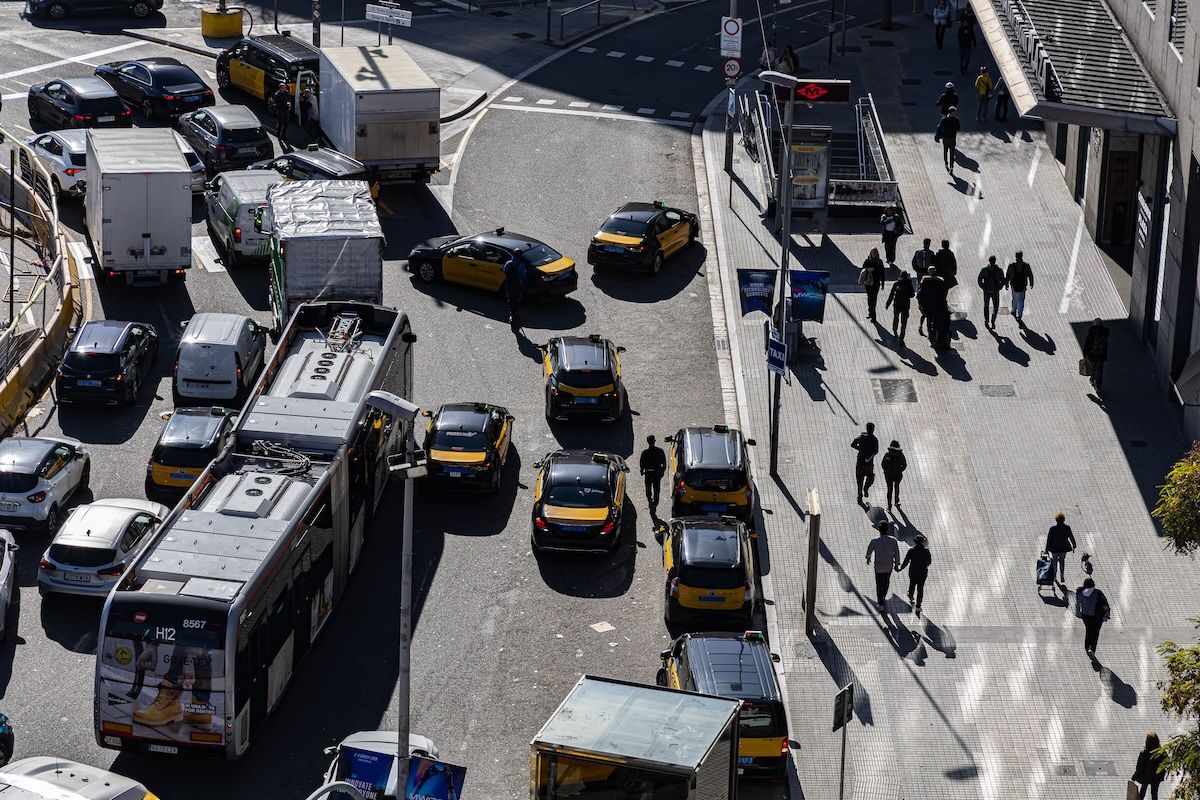
Security will have a main weight in this device, for which police forces and security teams will be coordinated, in devices that have been worked on for months, also from the Ministry of Interior. From the Government Delegation in Catalonia, security boards will be convened, which bring together the various police forces to address the visit in a coordinated manner.
All of this, to ensure that all devices, from security to cleaning, are coordinated and at the same pace; a pace marked by more than 47,000 people mobilized in two days, with requests from more than 1,600 journalists from around the world and with a symbolism that will leave its mark on the city, and on the Sagrada Família. Fifteen years after the visit of Benedict XVI, also with the basilica in the background, the city prepares for an apostolic journey that intertwines faith and spirituality with heritage, architecture, projection and identity of the city.
Add The New Barcelona Post as your preferred Google source for free
Stay informed with the latest news.