
Cruise passengers have returned to the city with force after the pandemic, as has been detected for months. The Port of Barcelona has finally left behind the effects of covid and has broken its record with 3.5 million passengers, 14% above the 3.1 million in 2019. A total of 800 cruise ships docked at the six operational terminals last year, the same as in 2022, but they did so with more passengers. "It's not because more cruise ships are coming but because the vessels are coming fuller," summarized its president, Lluís Salvadó.
Looking ahead to this year, the Port of Barcelona expects to maintain these figures regarding the arrival of cruise passengers, despite growing citizen unrest over tourist overcrowding. It is not ruled out to reach a horizon of 4 million passengers, considering that the port does not know the occupancy rate of the vessels registered in 2023 and everything depends on the number of cabins sold by the cruise ships that already arrive in the city. "We are making an effort to increase cruise ships with Barcelona as their home port and smaller ones, with higher added value. We want to increase quality more than quantity," Salvadó defended.
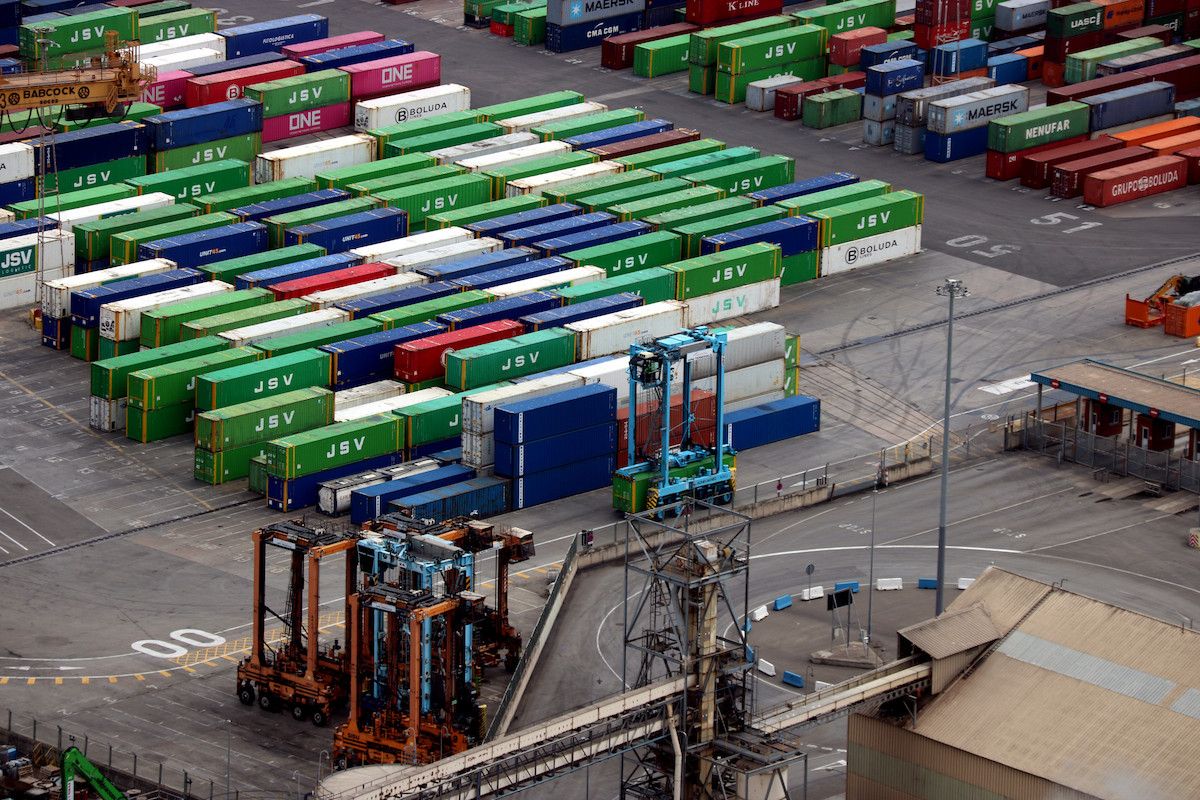
Despite the good tourism results, the infrastructure has not remained oblivious to the unfavorable macroeconomic context and geopolitical conflicts, with a special incidence of the war in Gaza in the last quarter of the year. The Port of Barcelona moved 64 million tons during 2023, 10% less than in 2022, a record year with 71 million tons. A lower European demand and a cooling of imports also contributed to this decline.
A trend that has strengthened in 2023 is vehicle traffic, with a growth of 34% compared to the previous year. A total of 790,000 automobiles have passed through the port, continuing a growth that began in 2022, when new traffic of electric cars manufactured in China began to arrive, including those from Tesla, which has ended up turning the Catalan capital into the main hub for the entry of this type of vehicle in Southern Europe and the Mediterranean.
Nevertheless, last year a record for car imports was broken with 246,000 units, a 54% increase, also surpassing the last highest figure in the historical series, achieved in 2017 with almost 239,000 units. In addition, 34% of the total vehicles imported through the port are electric and, of these, 92% come from China. "A process of expansion is taking place. From the Port de Barcelona, we are working to prepare ourselves and to be able to have better conditions to respond to traffic that is growing and will continue to do so," Salvadó remarked. The same is not true for vehicle exports, with Spanish manufacturers like Seat still far from their manufacturing peaks.
Record revenues and a 20% drop in profits
The turnover of the Port de Barcelona has also been a record and stood at 189 million euros in 2023, a 4.4% increase compared to 2022, when it was 181 million euros. The increase in revenues is explained by the completion of the aid plan that the infrastructure launched in 2021 to facilitate the liquidity of port companies and mitigate the effects of the pandemic, with an outlay of almost 28 million euros.
Even with the record turnover, operating profit fell by 18.5% in 2023, to 44 million euros, a decrease motivated by the increase in expenses for infrastructure maintenance and salary increases, as well as the investment to comply with the agreement with the Barcelona City Council to move cruise terminals away from the urban fabric. In 2022 it was 54 million euros. After taxes, the port recorded profits of 50 million euros, 20% less than in 2022, when they were 62.5 million euros.
The increase in revenues is due to the completion of the aid plan that was launched to mitigate the effects of the pandemicThe infrastructure's debt has decreased to 124 million euros, a figure that represents an 8% ratio with respect to the port authority's own funds. The debt, dependent solely on the European Investment Bank (EIB), is accompanied by a cash flow of 101 million euros and a cash balance of 325 million euros. "It protects us from the macroeconomic and geopolitical context. It is an unbeatable situation to face future challenges," says the deputy general economic-financial director, Miriam Alaminos.
The port invested 43 million in 2023, above the 33 million in 2022, and also tendered projects worth 150 million euros, among which were the railway terminal for the new accesses, advances in the electrification of the docks, and the rehabilitation of the Portal de la Pau. For this 2024, the port plans to tender more than 332 million euros. Among the most outstanding projects will be the start of the construction of Moll Catalunya, for 100 million euros, and its new berths, also with a budget of 100 million euros. The bidding process is expected to begin shortly.
Add The New Barcelona Post as your preferred Google source for free
Stay informed with the latest news.
