
Barcelona residents have gained a new public space that brings them closer to the sea and the port reality. The new Rambla del Rompeolas and its brand new Mirador Building culminate the development of the Nova Bocana area of the Port of Barcelona, two decades after this northern mouth of the enclosure was opened.
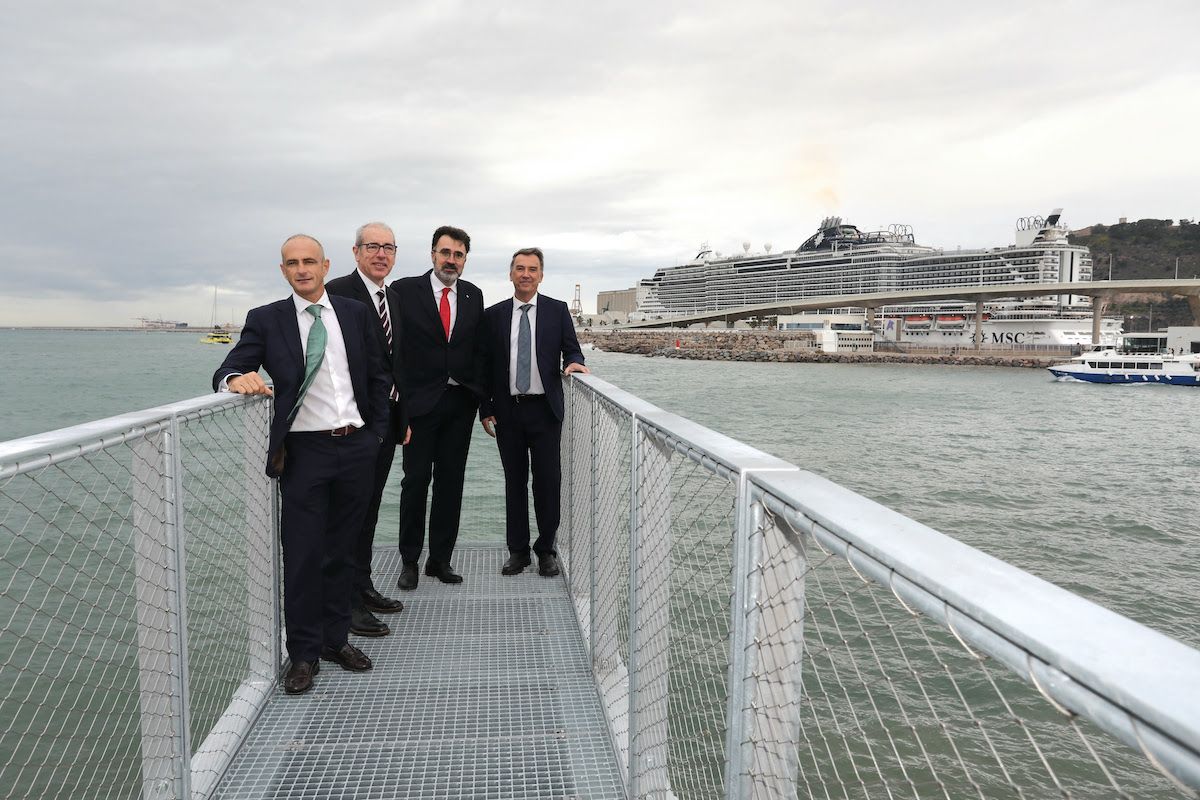
The new public space gained in the port facilities of the Nova Bocana area offers a new visual perspective for Barcelona residents who have not ventured out to sea and have not seen the Catalan capital from the waves. Walking along the new promenade, one can observe on one side the swaying of moored boats and, on the other, ship repair vessels. At the end of the rambla, the Moll Adossat can be glimpsed. Through the tongue of sea between the new viewpoint and the dock, ships entering the port circulate, among them the indefatigable Golondrinas.
The new rambla occupies the space of the old dike known as Rompeolas and offers the walker various elements that explain the history of the space and its importance for the city through exhibition panels. The works to create the promenade, about 700 meters long, and the new building began in the summer of last year. Both actions have had a cost of five million euros, invested by Marina Vela, the concessionaire of this environment.
The Mirador Building will house several gastronomic proposals. On the ground floor, it will have a canteen aimed at marina workers and ship employees. On the upper floor, there will be a bar and a restaurant on the main floor. They intend for this restaurant to represent an iconic and quality proposal but accessible to the general public. The building is designed to withstand the inclement weather, in an environment where wind usually blows, even on the rainy day it was inaugurated.
Marina Vela is finalizing the details to close the operator that will exploit the establishments. Preferably, it will be a single operator in charge of the three proposals for logistical facilities, since the space has common facilities for warehouses and refrigeration. The forecast is that the establishments will begin to operate in the coming months, and Marina Vela guarantees that they will be fully operational when the America's Cup begins in August. The building will be accessible to the public when the restaurants become operational. The terrace will also open then, which will have 15% of the space reserved for a bar service, while the rest will be for public use.
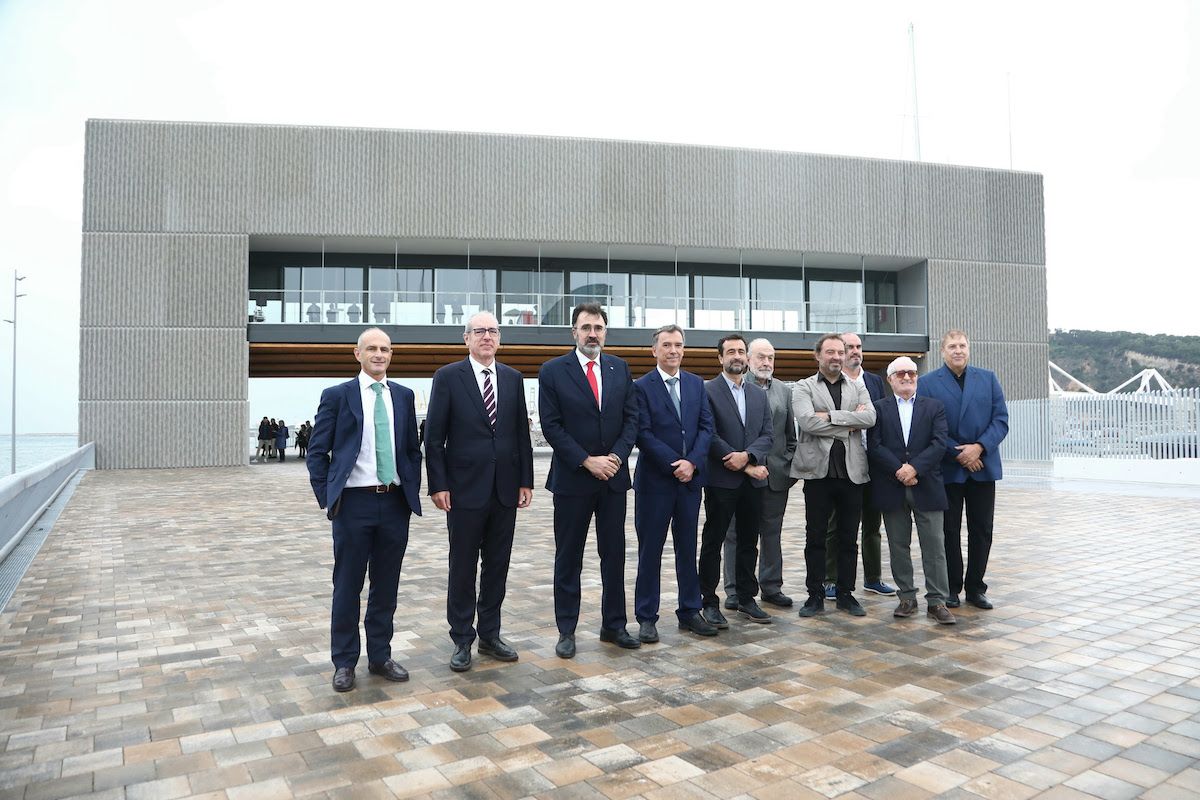
The president of the Port of Barcelona, Lluís Salvadó, highlighted in the presentation of the new space that the port incorporated the development of the Nova Bocana area into its planning 35 years ago. During these decades, the environment has undergone important transformations, with the opening of the W Hotel in 2009; the completion of the marina works in 2018; the subsequent opening of the Rompeolas promenade, parallel to the new rambla, and the creation of the viewpoint in 2022, among other actions.
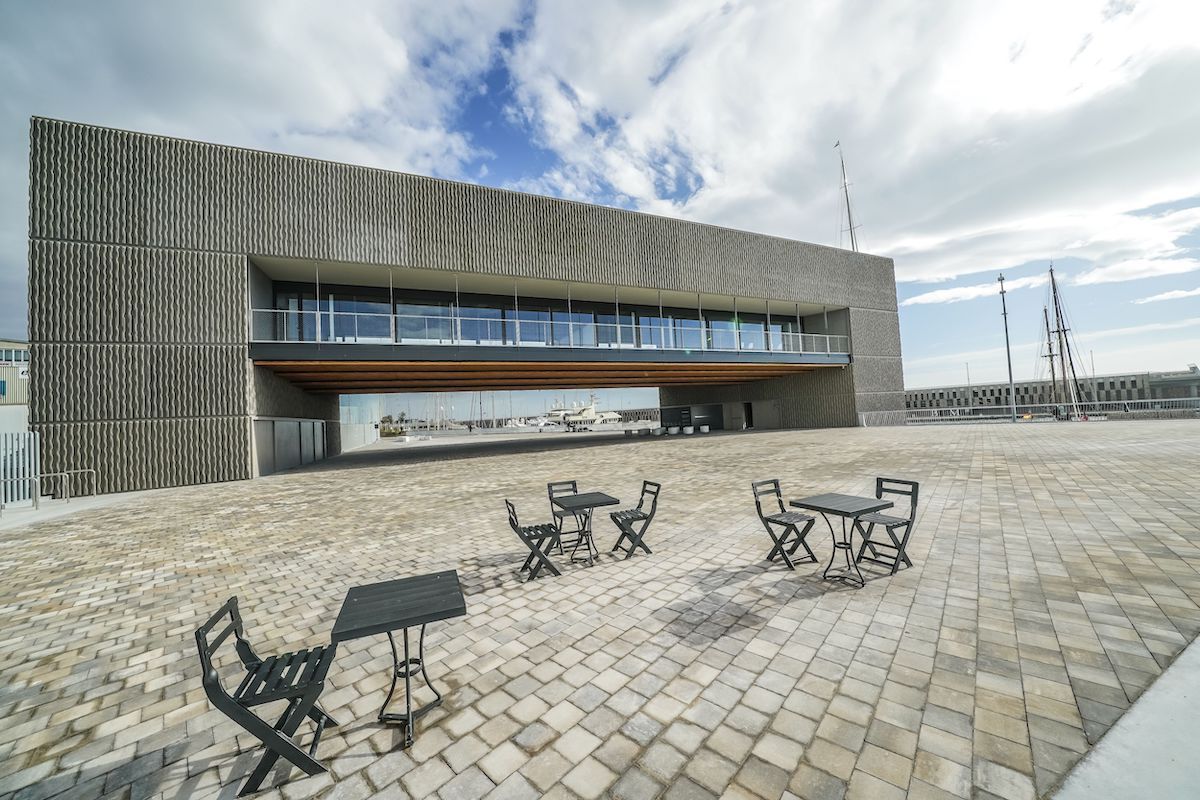
America's Cup Viewpoint
The opening of this new space "is important for the entire city, because an iconic and unique space is opened to the public," according to the general director of Marina Vela, Alberto García. He highlighted that the new rambla will stand as a privileged viewpoint for the America's Cup. Apart from the competition, the space will allow Barcelonans "to enjoy the Mediterranean and port infrastructures in a unique and new way." He said this during a visit in which Joan Alemany, commissioner of the new rambla's theming process, also participated.
New accesses, in 2030
The opening of the new entrance adds to the transformations the port is undergoing, some of them accelerated by the America's Cup, especially in the Port Vell. In addition to urban transformations, there are also infrastructure transformations, and the improvement of access to the port is closer. The Ministry of Transport, Mobility and Urban Agenda tendered on Tuesday the drafting of the construction projects for both road and rail accesses to the south of the port, for 12.2 million euros. The preparation of the documents that will define these accesses will last about three years, with a first phase of 24 months and a second of 12.
On this matter, Salvadó has detailed that they are working with the forecast that the road and rail accesses will be operational in 2030. He recalled that the project has been promoted on other occasions and finally reversed, but he is convinced that "this time it will be the definitive one." Salvadó emphasized that it is a historic project that the port has been working on for years.
Through this project, new road and rail infrastructures are expected to be developed, with the aim of expanding connectivity between the Mediterranean Corridor and the port of Barcelona. The drafting of the projects, tendered through Adif, will define the works to be executed and their process, and will take into account future rail and road actions to ensure their compatibility.
The railway infrastructures will include two tunnels, which will add up to a length of 3.2 kilometers. Specifically, one will be 1.9 kilometers long and double track and will connect with the L'Hospitalet-Can Tunis line, and the other will be 1.3 kilometers long and will link with the Can Tunis station. The works will include the provisional diversion of Ferrocarrils de la Generalitat de Catalunya (FGC) lines and their subsequent repositioning.
One of the main conditioning factors for these actions is the density and concentration of services on Calle 6 of the Zona FrancaThe link with the Free Trade Zone and the Pratenc industrial estate will also be defined. One of the main conditioning factors for these actions is the density and concentration of services on Calle 6 of the Free Trade Zone, parallel to the old bed of the Llobregat river and where part of Mercabarna is located, among other facilities. In addition to this action, Salvadó highlighted that Adif's board of directors has also approved the creation of sidings on the tracks connecting Barcelona with Zaragoza. With these sidings, which allow loading and parking wagons, it will be possible for 750-meter trains to circulate on the tracks, larger than the 450-meter ones currently operating. All this will increase the competitiveness of the Port of Barcelona: "The more competitive rail transport is, the more trucks will get on the train" and then on the ships, to be distributed from Barcelona to the world through the Mediterranean.
Add The New Barcelona Post as your preferred Google source for free
Stay informed with the latest news.
