
The Chinese car manufacturer Chery reaffirms its commitment to Barcelona. In a context of tension over European tariffs on electric cars from China, Chery's top brass landed this Saturday at the Ebro Factory, formerly the Nissan plant in the Zona Franca, to demonstrate that it continues to bet on the industrial alliance it has forged with Ebro, a historic local brand of trucks and tractors that disappeared in the late 80s. Production has thus been reactivated at the factory, where the first pre-series of Ebro's s700 SUV have begun to be manufactured in recent weeks, the model with which the brand has been recovered and activity has been returned to facilities that had been idle for almost three years after Nissan's departure.
"Today is a new step for collaboration between China and Spain in automotive. Our collaboration will be an impulse for Ebro to become again a very well-received brand in Spain and Europe. I hope it serves as an example for the bilateral relationship between both countries," said Chery's president, Tongyue Yin, in a message full of meaning. After both companies signed the agreement to reactivate the Zona Franca in April, doubts returned when a few months ago the start of Chery's production at the Ebro Factory was delayed until 2025 due to European tariffs, a start initially planned for this year with the gasoline and electric Omoda 5 model.
Shortly after the announcement about the delay of Chery's arrival, state-owned and based in Wuhu, the President of the Government, Pedro Sánchez, made an official trip to China, as recalled by his ambassador in Spain, Yao Jing, at the same event this Saturday, which was also attended by the President of the Standing Committee of the National People's Congress of China, Zhao Leji. During Sánchez's visit to China, Spain changed its position and asked to reconsider the new taxes of the European Commission, also affecting Seat and other important sectors for the country such as pork. "It has not been an easy road, but finally this historic plant is producing cars again," celebrated the Minister of Industry, Jordi Hereu, accompanied by the President of the Generalitat, Salvador Illa, and the consellers Albert Dalmau, Alícia Romero, Miquel Sàmper and Jaume Duch. Former ERC consellers such as Natàlia Mas and Roger Torrent also attended.
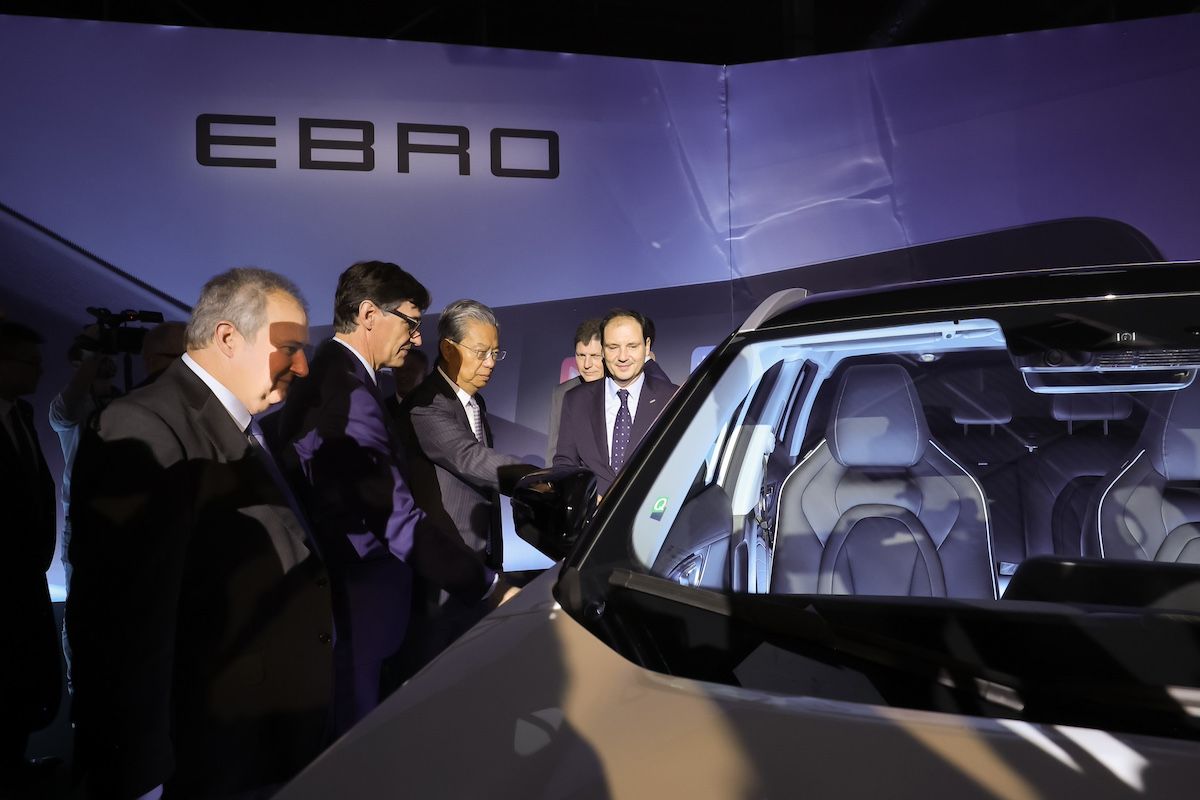
With the pre-series of Ebro's SUV already underway, the first vehicles of the s700 model will begin to be manufactured in the coming weeks, with the forecast of commercializing them starting this December through 30 dealerships. It will be followed by the s800 SUV. Both are made with a platform and technologies shared with Chery. They are medium-sized, with the s800 being larger, with combustion and plug-in hybrid versions, with a range of 90 kilometers in electric mode, pending the manufacture of 100% electric Ebro vehicles.
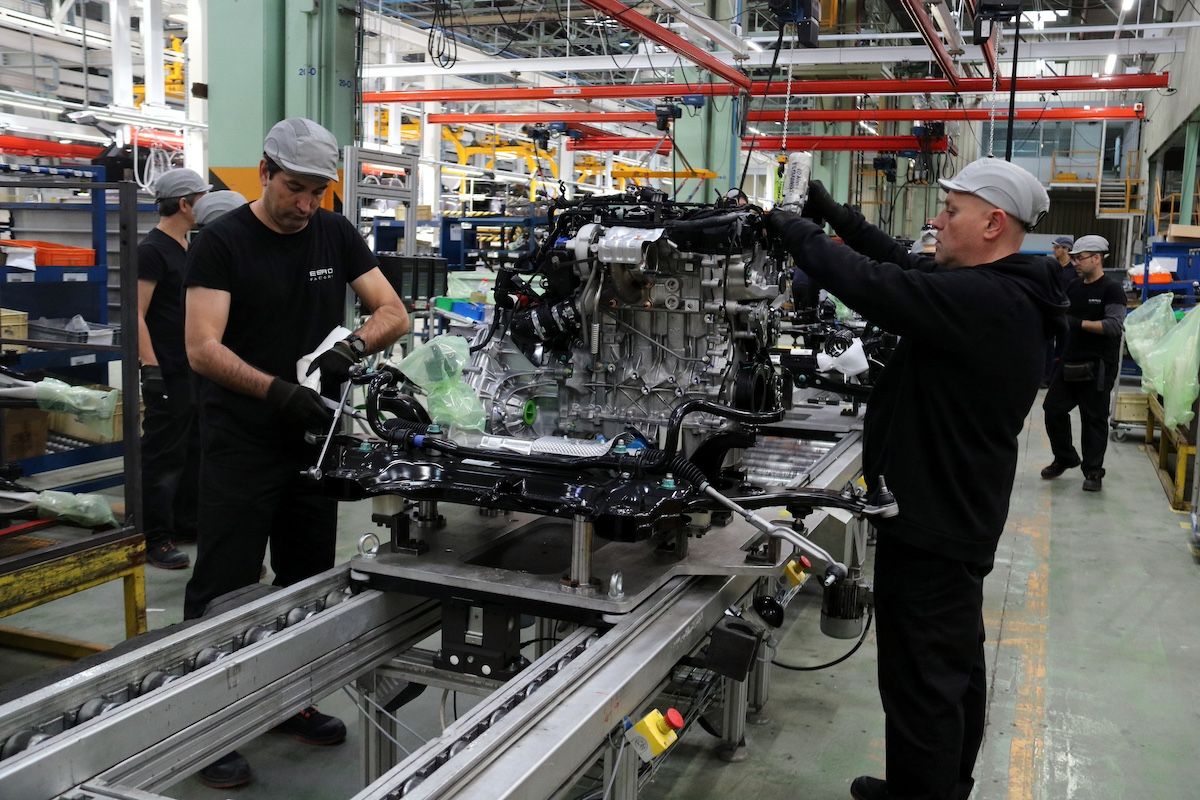
The production of the Ebros will start with one and a half shifts, with 44 cars per shift."After 40 years, we will see Ebro vehicles on our roads again. We are sure that this is the beginning of a great alliance," said its president, Rafael Ruiz. To make this possible, between 150 and 200 workers have rejoined the production line, according to Miguel Ruiz, a representative of the USOC union and the most visible face of Nissan employees since the Japanese firm announced it was leaving the plant in 2020, in the midst of the pandemic.
In a first phase, the car will come semi-assembled from China and will be completed in the Zona Franca. Later, by next year, welding, painting, and assembly processes will be carried out in Barcelona, also for Chery vehicles, which will allow more former Nissan workers to be incorporated into the workforce, with the aim of reaching 1,250 employees when the plant is at full capacity. Ebro's plans are to manufacture more than 20,000 vehicles in 2025.
Add The New Barcelona Post as your preferred Google source for free
Stay informed with the latest news.
