
In a discotheque in Prague that I recently visited, a robotic arm served cocktails to customers. It draws attention. It's fast, curious, almost hypnotic. But also… cold. No greeting. No gaze. No story. Just a machine doing its job. And after the third drink, you notice it: the experience leaves no mark.
And then I thought: what happens when we transfer that logic to commerce? What would happen if the tourist visiting Barcelona experienced their time in our shops just like that robotic drink? Correct, yes. But soulless. Because in an increasingly automated world, the true difference is no longer in efficiency, but in the human element. And there, retail has a fundamental role.
Commerce with soul for tourism with meaning
In recent years, we have talked a lot about quality tourism, deseasonalization, sustainability. But little has been said about the role of commerce in this transformation. What kind of city do we want to show? And what role does retail play in that image? A well-attended shop, with local products and committed staff, can be as revealing as a guided tour. In it, one can discover design, history, character, and talent. What differentiates us is not the quantity of shops, but the experience the visitor takes away when entering them.
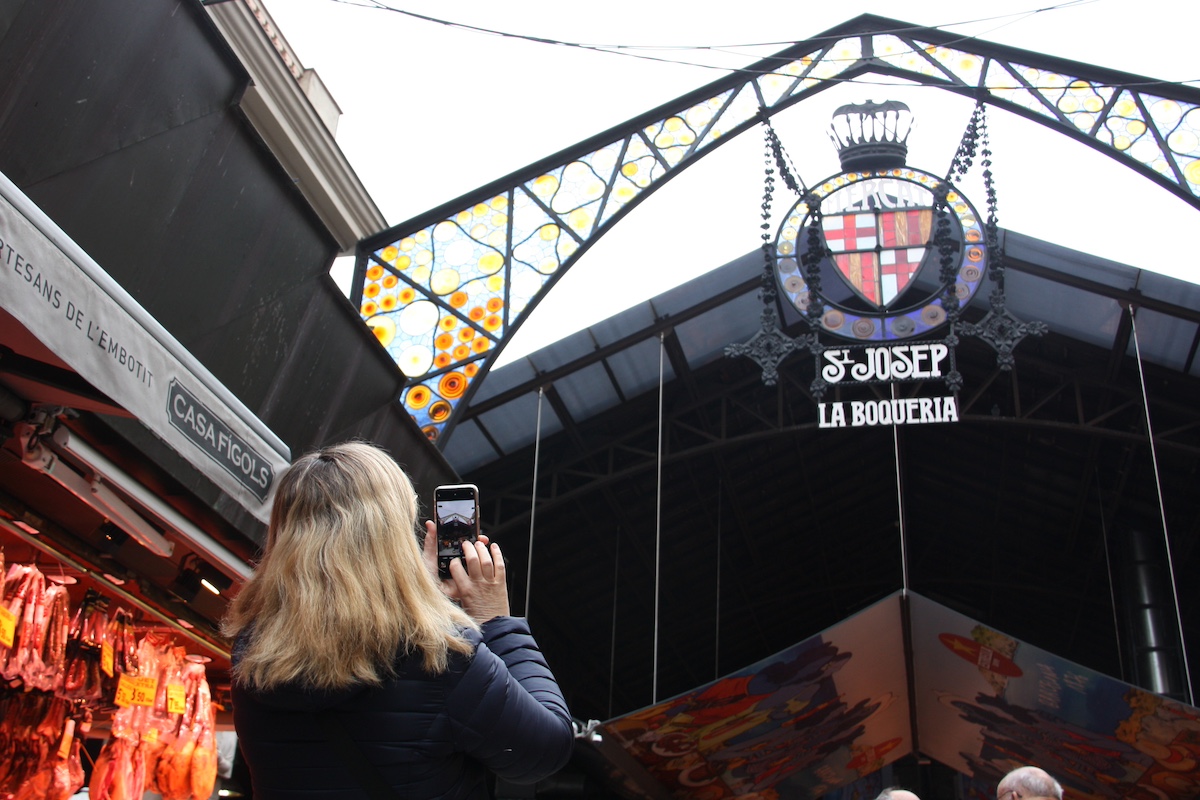
A great example of this is the Boqueria market, one of the spaces with the highest density of narrative in the entire city. In many stalls of this market, third and fourth generations of merchants coexist, transmitting knowledge, craft, and passion every day. Talking to a mushroom expert, discovering the history of Vidal Pons or listening to how the best seasonal products are selected is to understand Barcelona from within. And it represents that model of tourism we want to foster: more attentive, more curious, more connected to the real.
Brands that tell stories
But not everything is in fresh produce. Also in design, in fashion, in objects. Brands like Mietis, born in Poblenou, represent a new local luxury with its own identity. Founded by Maria Fontanellas based on the family tanning trade, Mietis has conquered Paseo de Gracia with an aesthetic proposal that has nothing to envy to major international brands. The same goes for Santa Eulalia, an emblem of Barcelona tailoring, or Raima, the largest stationery store in Europe, which has managed to combine tradition and renovation with sensitivity.
These are spaces where history and customer service create experiences. In all these cases, the common denominator is clear: a carefully crafted experience, a coherent story, and a salesperson who knows how to observe, listen, and accompany. And that is precisely what the new tourist values. They don't come to buy cheaper: they come to understand, to connect, to take something that they won't find in any other city.

The city must also commit
Therefore, this transformation cannot depend solely on the private sector. Institutions must understand that retail is not just an economic axis: it is a cultural, social, and urban planning tool of the first order. Just as New York invites visitors to explore the Meatpacking or Hudson Yards, Barcelona must open the door to discovering Gràcia, Poblenou, or Sant Antoni, where the city beats far from the crowded tourist routes.
The time has come to promote a joint strategy that enhances commerce with identity, recognizes the salesperson as a host, and restores retail's role as a city creator. Perhaps the best memory someone can take from Barcelona is not a bag full of things, but a well-told story: a conversation in La Boqueria, a design piece made with soul, or a sincere recommendation from someone who loves what they sell and what they represent. That (and not a generic souvenir) is what will make tourists return to Barcelona.
Add The New Barcelona Post as your preferred Google source for free
Stay informed with the latest news.