
The demand for digital talent in Barcelona, and by extension in Catalonia, has not only not stopped during the pandemic years, but has continued to grow at double-digit rates. In 2021, Catalonia added 10,500 new digital professionals, representing an annual increase of 12%. Today, the ICT ecosystem is made up of just over 113,000 professionals, 16,000 companies, and generates a business volume of around 23,000 million euros, equivalent to 10% of Catalan GDP.
The Catalan capital, where 95% of the ICT specialists working in Catalonia are concentrated, has surpassed pre-pandemic demand figures, with a 43% increase compared to the previous year, which has translated into 9,400 new digital professionals incorporated into the labor market. The rest, just over 10,000, have been distributed among the provinces of Girona, Tarragona, and Lleida. It is clear that the 2019 figures have been surpassed, when Barcelona's ecosystem incorporated some 6,100 professionals, and also those of 2020, when 6,700 ICT jobs were created in the city.
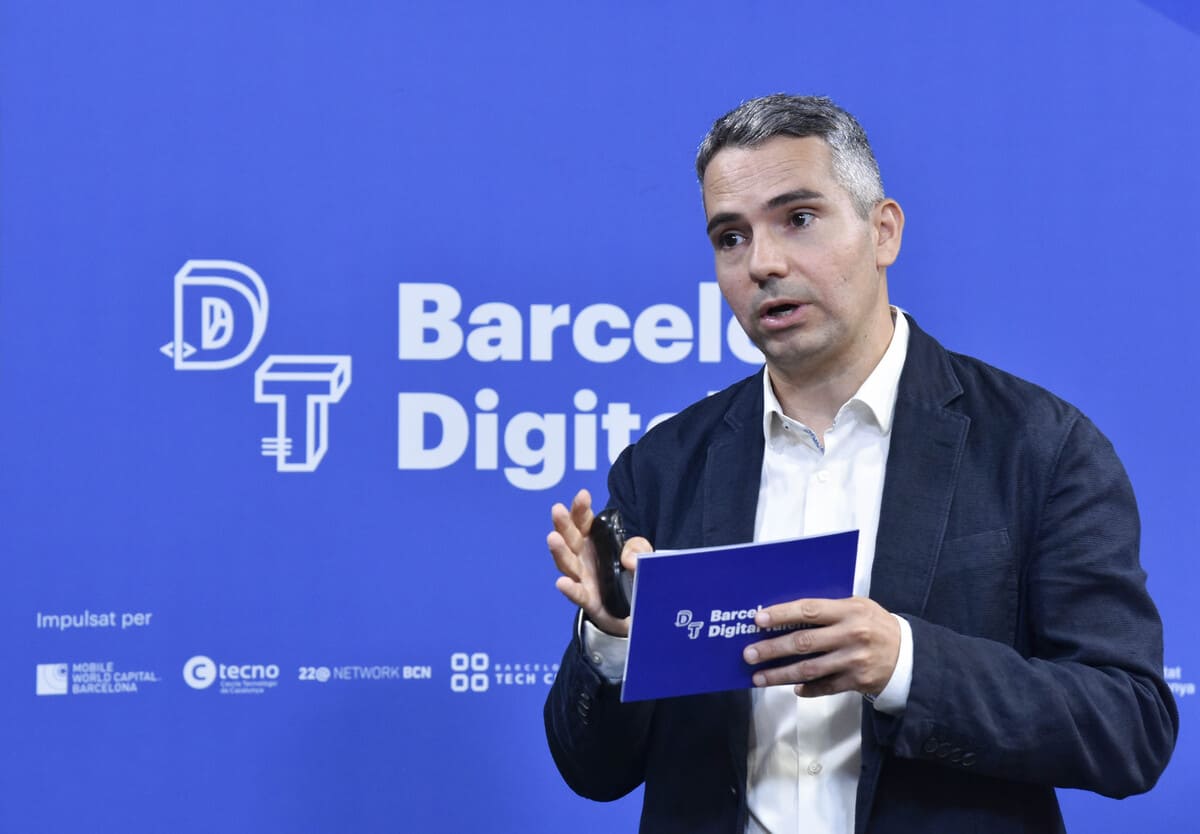
It stands out that, given the lack of sufficient local professionals, 50% of new hires have been specialists of international origin, as evidenced by the fourth edition of the Digital Talent Overview 2022 report, presented this Wednesday by the Mobile World Capital Barcelona Foundation (MWCapital), the Department of Vice-presidency and Digital Policies and Territory of the Generalitat, and the Cercle Tecnològic de Catalunya, within the framework of the Barcelona Digital Talent public-private alliance initiative.
Cybersecurity specialists are the most difficult profiles to find in the marketThe lack of professionals is highlighted by one fact:for every job offer in the digital sector there is an average of 15 workers in the market, while in the set of economic sectors the ratio is 1 to 60, highlighted Jordi Arrufí, director of the Digital Talent program at Mobile World Capital Barcelona and spokesperson for Barcelona Digital Talent. However, Arrufí remarked that, in part, this is due to the recovery of the opening of international markets after the border closure in 2020 due to coronavirus limitations.
In this regard, the president of the Cercle Tecnològic de Catalunya, Joan Ramon Barrera, insisted that it is necessary to "demystify" the type of demand generated by ICT companies, as it is believed that the digital sector "only needs engineers or professionals with technological careers, which it does, but it also accommodates broader profiles, professionals with digital skills." According to Barrera, these digital skills can be acquired and, therefore, many professionals from other sectors with specific training can acquire them and join the ICT ecosystem.
Based on the report, Jordi Arrufí specified that 60% of the demand focuses on the most consolidated technological profiles (programmers, with a 20% increase in vacant positions; and cloud specialists, with a skyrocketing 66% demand). The data also highlights that cybersecurity specialists are the most difficult profiles to find in the market, since for every demand only 3 professionals are found. This is why the demand for cybersecurity profiles and application developers are the ones that attract the most talent from other cities, and London and Madrid are the ones that export the most workers to Barcelona.
According to the study, Barcelona is among the cities with the most women in the digital sector with nearly 30% of female workers. A figure higher than the ten main European cities. Likewise, regarding salary, the capital continues to offer the most competitive salaries in all of Catalonia for software developers with three or four years of experience, with an average salary that has increased by 2,000 euros and reaches up to 37,692 euros; followed by Lleida, 30,500 euros; Girona, 29,000 euros; and Tarragona, 28,200 euros.
For new labor incorporations, last year's report emphasizes teleworking. The proportion of ICT job offers with teleworking modality has gone from 4% in January 2020 to 14% at the end of 2021 in economies such as the Spanish one.
Add The New Barcelona Post as your preferred Google source for free
Stay informed with the latest news.
