
The Cruïlla leaves behind this year the electric generators to power its stages. Hand in hand with Endesa, the festival has adapted to avoid burning diesel during concerts, plugging into the medium voltage electrical grid that powers the area, dependent on the Sant Adrià de Besòs substation. In addition, Cruïlla has contracted the company to supply it with only 100% renewable energy, originating from the hydroelectric plants in the Pyrenees.
These measures will allow it to become the first in all of Spain powered by renewable energy, setting a precedent for others to follow, defends its director, Jordi Herreruela. "Music festivals have a great impact on their environment and our responsibility is to significantly reduce and compensate for it," he states. With this new energy scheme, Cruïlla will save 13,600 liters of fuel and, consequently, avoid the emission of 36,000 kilos of CO2, says María Lacasa, head of sponsorships at Endesa. And it does not represent a large investment, Herreruela emphasizes, equating the cost of this supply to no longer contracting a second-tier artist.
Beyond plugging in, Cruïlla also wants to reduce its impact by eliminating its main waste, the plastic cups with which it serves drinks. This year they stop having the typical organization logo, with a different design for each edition, becoming standard, marked only with the logos of beverage brands such as Damm or Coca Cola. Thus, without any incentive to take them as a souvenir, they can be returned when the concerts end and used at other events.
Before finding this solution, the organizers had looked for different types of materials for the cups that were more sustainable and even less polluting recycling methods. In fact, last year, a company that proposed a 100% compostable cup and that had to be tested with a pilot this 2023 won the Sustainable Festival Challenge, a competition for startups convened by the festival. But, in the end, they have ended up prioritizing a lifelong method, cleaning and reusing, calculating that they will need 12,000 liters of water for the 200,000 cups that will be served, with the possibility of refilling them up to 150 times. A figure lower than the 300,000 liters of water required for the manufacture of the same quantity of cups.
Another aspect in which it is easier to reduce its impact is in the displacement of attendees, with a maximum of 25,000 each day. With 95% local public, most arrive at the Parc del Fòrum by public transport, reducing emissions compared to other events with attendees who come from other countries and fly to Barcelona. Of course, this year, it will be a little more difficult given the improvement works affecting the L4 and the tram.
Aware that there is still a long way to go, this year the festival will dedicate itself to analyzing its environmental impact, focusing on the waste generated and the emissions emitted, with the aim of finding new fronts in which to reduce its ecological footprint. The study that collects the conclusions is expected to be published this autumn.
Cruïlla is also technology
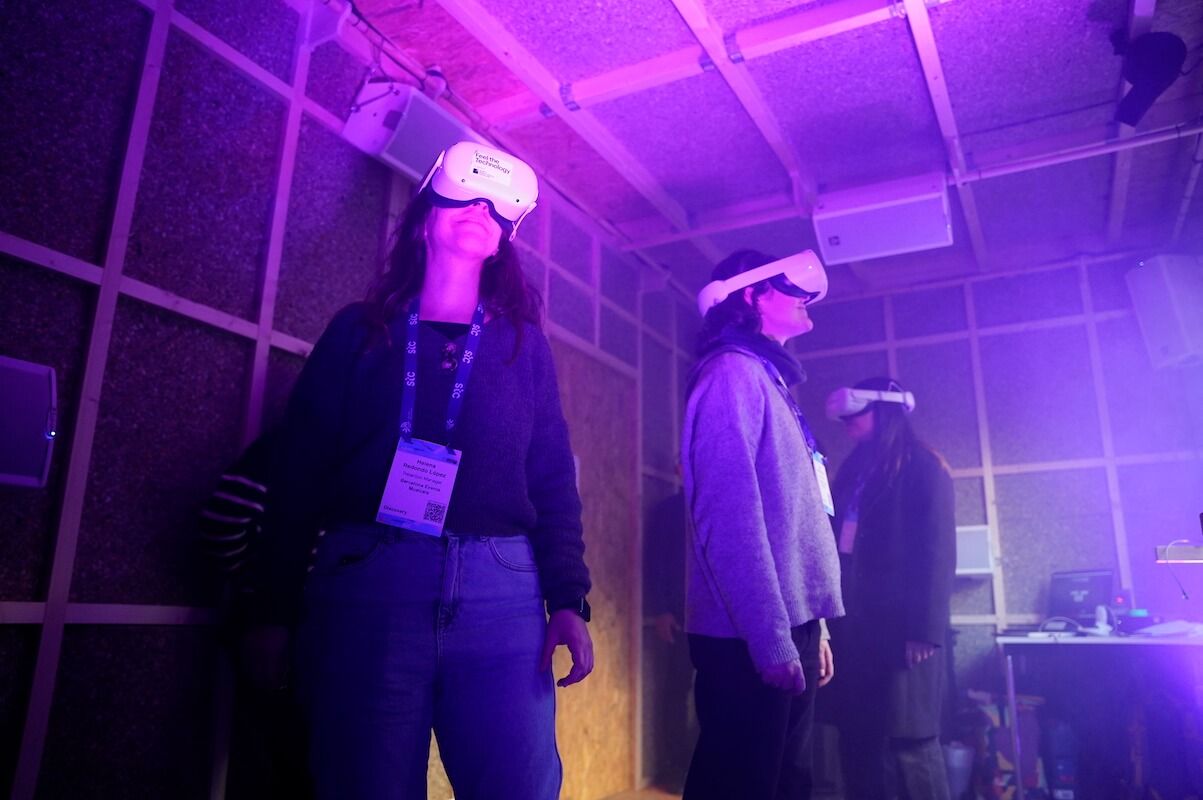
Cruïlla not only wants to find new solutions to pollute less, but also dedicates itself to relating to other disciplines beyond music, such as technology. One of the stops between concert and concert will allow you to see one of the novelties that were presented at the Mobile World Congress (MWC). Congress attendees were able to discover in this 2023 edition how a singer feels on stage, arming themselves only with virtual reality glasses and becoming a member of Izal, a pilot that can be tested at the festival at the Mobile World Capital Barcelona (MWCapital) stand. You can also discover what the city smells like, without bad surprises, and what a bonbon tastes like, made by the Roca brothers, in a digital environment.
But not everything will be feeling like a singer, smelling the Rambla or eating a sweet. A humanoid robot, called Ari and developed by Pal Robotics, will walk through the festival, with the aim of interacting with attendees. In addition, the Eurecat technology center will create an emotional map of the public, making a neuroscientific evaluation, they say, of their experience and their responses, focusing on their physiological signals. There will even be a line of digital merchandising, conceived by the Barcelona startup Guzzu, dedicated to Web3.
Add The New Barcelona Post as your preferred Google source for free
Stay informed with the latest news.
