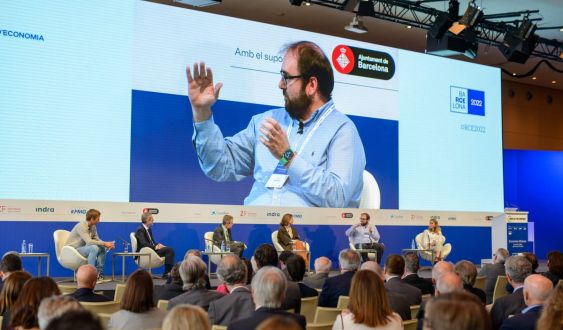
The second day of the annual meeting of the Cercle d'Economia has been eminently business-oriented. Industry and startups have claimed their role in economic recovery in the current post-pandemic context.
The debates around this aspect have shown that business owners and entrepreneurs are committed to fostering the growth of their businesses, especially in a broader framework: Europe and the world.
Startups consider the retention and attraction of talent and continued investment in innovation to be paramount, as agreed by Oscar Pierre, CEO and co-founder of Glovo; Enric Asunción, CEO and co-founder of Wallbox; Marc Murtra, president of Indra; Elisenda Bou, co-founder of Vilynx and, from the venture capital side, Beatriz González, founding partner of Seaya Ventures.
As representatives of the Spanish entrepreneurial ecosystem, they have shown that the success of technological businesses is no different from that of the rest of the industry, as they have insisted that it is necessary to "scale the project and grow, basically at an international level, but seeking to be the first in each market," according to Oscar Pierre, who presented the evolution of Glovo, which was recently sold to Delivery Hero.
Pierre stated that it is not easy to find the necessary talent, specifically "there are no programmers" because the educational system does not promote this profession. He warned of the risk that exists with the establishment of digital centers of large corporations in Barcelona because, although it is positive because they attract talent and are technological references, on the other hand, they generate a lot of salary competition "because their remunerations are much higher." "At Glovo, we have problems incorporating local professionals," he specified.
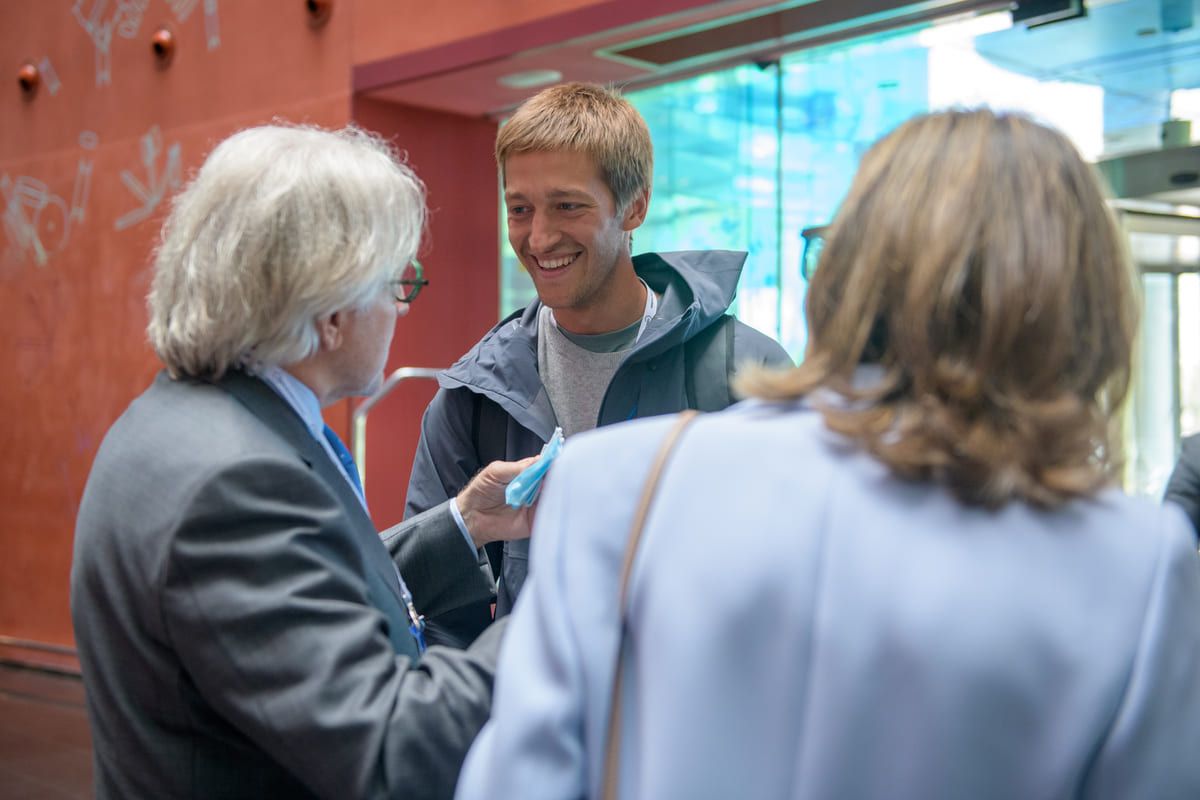
Another example of how a startup passes into the hands of more consolidated companies was the experience explained by Elisenda Bou, founder of Vilynx, specialized in autonomous learning systems which, at the end of 2020, was acquired by Apple. Bou emphasized the importance of good collaboration between companies and universities and how her team has been forged with the local and international university fabric.
"The formula that combines talent, innovation, and ambition is what has provided Wallbox's success," highlighted one of its architects, Enric Asunción, while reiterating that the company wants to lead growth with current investors and the control of its founders and from Barcelona, although it has a very global business vision.
For his part, Marc Murtra, president of Indra, highlighted the role of technology and investing in R&D, but warned that there is a lack of more public-private collaboration and cited the example of the United States, where between 3% and 3.5% of GDP is allocated to research and development each year, and half of that percentage is contributed by administrations.
Businesspeople and entrepreneurs demand a more active and efficient role from the administrationIn this regard, it should be said that the role of the administration in Spain has received criticism from entrepreneurs who believe that much more dialogue is necessary because technology is the basis of the new economy and disruptive businesses that will require specific regulation and that it is necessary to establish it through dialogue. In this vein, he stated the president of CaixaBank, José Ignacio Goirigolzarri,in explaining that the financial sector has seen in recent years the entry of new players such asstartupsand companiesfintechthat, "legitimately," want to break thestatu quoof the sector, thus increasing competition, buthas urged regulators to establish the same rules of the game for traditional banking and new players in the technological ecosystemthat operate in the financial sector.
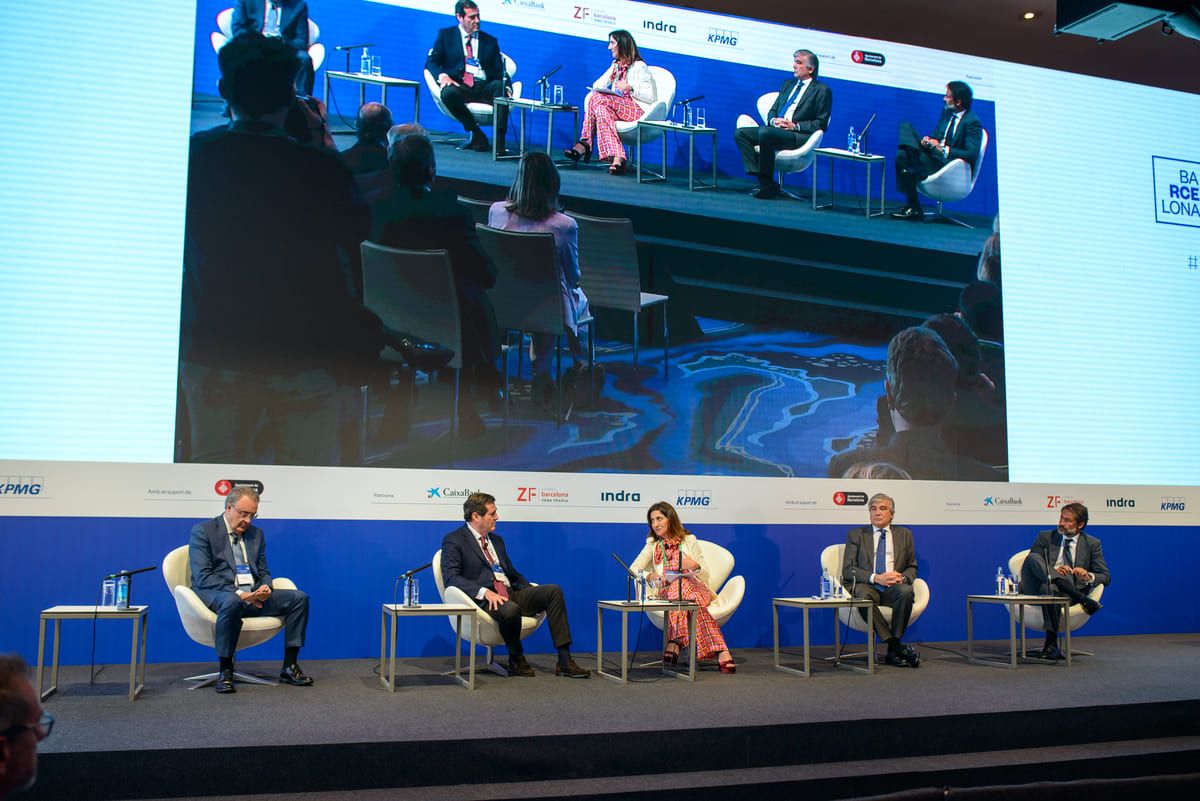
From the investment capital segment, Beatriz González, founding partner of Seaya Ventures, has stressed that not all European states are regulating in the same way and that, furthermore, there is a great difference between Europe and the United States. Where are European unicorns listed?, she asked. And the answer was next to her: Wallbox has chosen the New York Stock Exchange.
The industry has also provided an X-ray of the current situation and has insisted on the role of Europe and its excessive dependence, while also making demands on the Spanish administration. Business owners feel "suffocated" by extreme regulation and demand a "competitive tax ecosystem". This has been claimed by the business organizations that participated in the annual meeting of the Cercle d'Economia, chaired by Javier Faus, an opinion shared by the most consolidated business fabric, as expressed by the top representatives of companies such as Gestamp, Telefónica, Naturgy or Cellnex. Tobías Martínez, CEO of Cellnex, specified that it is necessary to "address the challenges from Europe ---some of which have arisen unexpectedly--- and come up with a common strategy", which takes into account the digital and energy transition, among others.
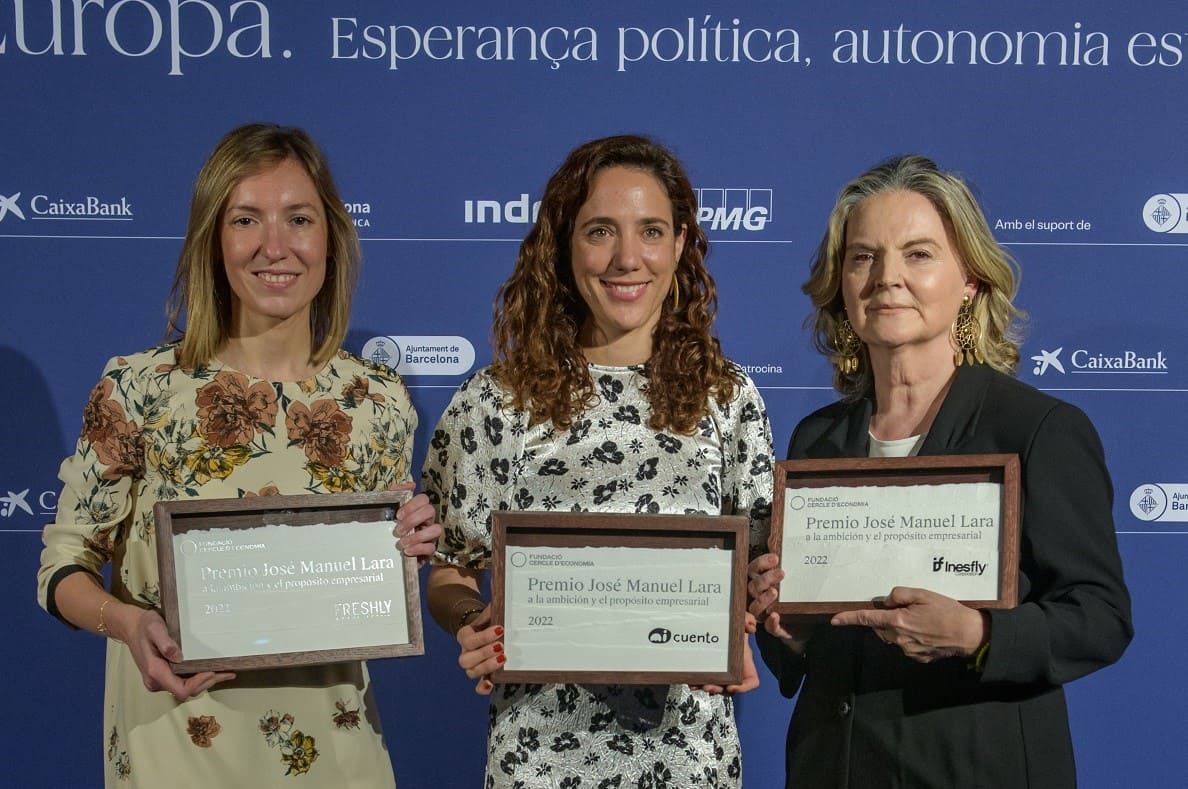
Recognition of business ambition and purpose
The celebration of the business meeting, which takes place at the W Hotel in Barcelona, has been the setting chosen by the Fundació Cercle d'Economia to present the José Manuel Lara awards for business ambition and purpose. In its third edition, the awards went to Mireia Trepat, co-founder and CMO of Freshly Cosmetics; Pilar Mateo, president of Inesfly; and Muriel Bourgeois, CEO and co-founder of MiCuento.
The awards ceremony was presided over by Felipe VI, who highlighted three issues he considers relevant: ideas, innovation, and entrepreneurial spirit, and stressed that Spain's challenges require "an extraordinary effort and the collaboration of society in both public and private spheres." "Spain cannot be left behind. We cannot relax," emphasized Felipe VI, who warned that to avoid falling behind, "the maximum energy, will, and business and social awareness" must be applied.
Add The New Barcelona Post as your preferred Google source for free
Stay informed with the latest news.
