
Catalonia stands as a reference hub for the audiovisual world. Propelled by the Integrated Systems Europe (ISE), the value chain encompassing the audiovisual sector continues to grow, and in 2024 it has raised its turnover to 8.6 billion euros, 14% more than the previous year. With this increase in its business volume, what the sector generates now equals 3% of Catalan GDP.
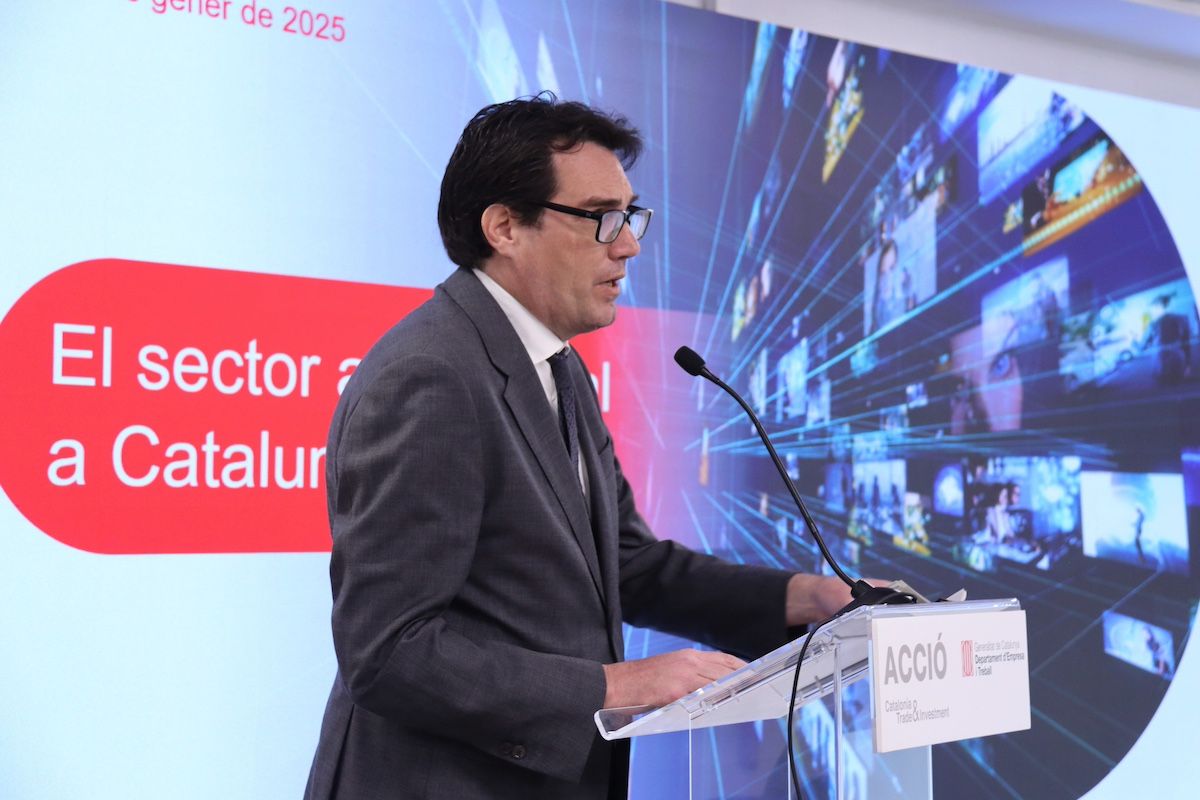
The audiovisual sector's turnover has maintained a positive evolution in recent years, but it has been accelerated by a determining factor: the arrival of ISE in Barcelona in 2021. The fair, which is held next week, has generated a revitalizing effect that has boosted the sector's growth, as highlighted by the Secretary of Business and Competitiveness of the Generalitat and CEO of Acció, Jaume Baró, who presented the study data alongside the general director of ISE, Mike Blackman, and the president of the Audiovisual Cluster of Catalonia, Miquel Rutllant.
In fact, since the first edition of ISE, the number of Catalan audiovisual companies has grown by 15%, and companies that were already established in Catalonia before have seen their turnover grow by 30%. "Is it all because of ISE? Surely a change in habits after the pandemic has also helped, but it is clear that attracting reference fairs like ISE helps strengthen our economy," remarked Baró, who also highlighted the role of the Mobile World Congress.
This growth in turnover is accompanied by an increase in the number of people working in the audiovisual field, which has also climbed by 13%, to nearly 42,000 professionals. In parallel, the companies that make up the sector have also grown, exceeding 4,160 in Catalonia, 4% more than the previous year.
Despite this increase, turnover and workers have grown more than the number of companies, and "that means the sector is getting fatter and companies are growing," Baró highlighted. "We have a solid and balanced sector that allows new blood to enter and a stable base of companies to be maintained," he pointed out. So much so that 60% of companies have more than 10 years of experience, and these companies that exceed a decade of activity generate 80% of the sector's jobs.
Consolidated companies shape an audiovisual ecosystem that also draws from new companies. Among them, startups stand out, having more than doubled over the last five years, reaching 335 emerging companies. "They are excelling with a lot of technology, content, video games, and the musictech field, which we believe the sector should include within its perimeter," Baró detailed. 87% of them are located in the province of Barcelona, and the Catalan capital concentrates more than half.
Within the sector's value chain, half of the turnover comes from companies linked to audiovisual development and production, while communication and advertising of productions account for 36%, and distribution for 13%. The ecosystem is completed with 18 universities and training centers, which this year have 12,000 people enrolled in degrees and master's programs in Catalonia, 25% of the entire country. This "first-class ecosystem" operating in Catalonia also has infrastructures such as the Parc Audiovisual de Catalunya, in Terrassa, and projects such as the future Catalunya Media City, which will be located in les Tres Xemeneies in Sant Adrià de Besòs.
"The Catalunya Media City is a great opportunity," proclaimed the president of the Catalan Audiovisual Cluster, facing a future full of opportunities like this, but also challenges. Among them, he highlighted that "technologies are constantly changing, which forces sector players to continuously adapt" and, on the other hand, access to technological equipment characterized by high investment and, at the same time, a rapid degree of obsolescence, precisely due to continuous technological evolution. Artificial intelligence plays a prominent role in this technological landscape. "I believe there isn't a single company in the Catalan audiovisual industry that isn't working with AI, but there is a challenge regarding how our business models and content generation will change," Rutllant emphasized.

In this context, Blackman has highlighted that the audiovisual sector is experiencing "rapid change" due to these technologies, and not only AI, but also "virtual reality, the possibilities of home videos and immersive technologies that enhance experiences in museums, theaters, theme parks, concerts," Blackman said about a transversal sector that is opening up to new markets. All of this will be addressed at ISE, which this year grows 20% in surface area compared to the previous edition, and which is already looking at the expansion of Fira de Barcelona's Gran Via venue to continue growing: "We are already planning the 2027 edition."
ISE will grow in the city in parallel with the growth of the audiovisual sector. "It is a strategic sector and will be a priority sector" for Catalonia, Baró guaranteed. And the audiovisual sector stands out for its economic potential, for its ecosystem and for being a pole of attraction and generation of talent, which place the sector in Catalonia "in the first division" globally.
Add The New Barcelona Post as your preferred Google source for free
Stay informed with the latest news.
