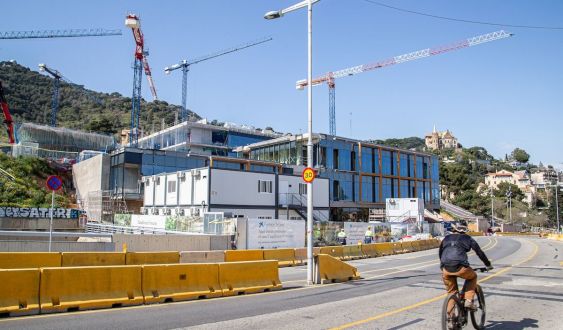
Those who visit CosmoCaixa will see a large block emerging on the other side of the Ronda de Dalt. Where La Soci, the sports complex for CaixaBank employees, once stood, a research institute dedicated to immunology, a discipline focused on studying the immune system, is being built, with Dr. Josep Tabernero as director of the scientific committee.
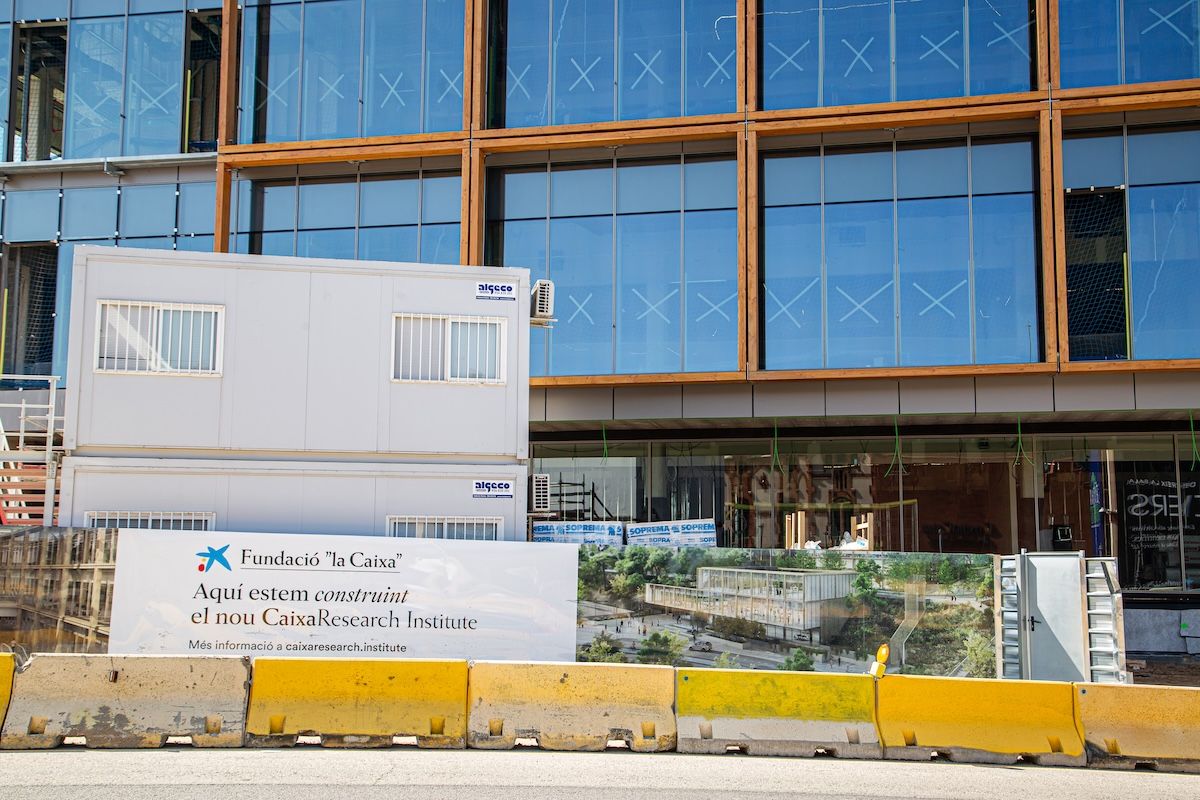
Driven by the La Caixa Foundation, construction is progressing at a good pace and a first phase is expected to be completed by the end of 2025. "We are just a few months away from opening our doors," remarks the executive director of the CaixaResearch Institute, Àngel Font. With an area of 20,000 square meters, the scientific complex will have capacity for 45 research groups and 500 professionals. The new center will involve an investment of 100 million euros, for which support has been received from the European Investment Bank (EIB). Specifically, the EIB has signed an 80 million euro loan with CriteriaCaixa, the La Caixa Foundation's holding company, to finance the construction and commissioning of the future biomedical research center.
"Immunology is an ancient science that is now experiencing a new impulse thanks to technologies such as artificial intelligence that allow processing a large volume of data," explains Font. This discipline has made it possible to find a protein that puts the immune system to sleep when cancerous cells appear. This is the research line of one of the first scientists confirmed for the new center, Argentine Biochemistry doctor Gabriel Rabinovich. Focusing on colon cancer, Rabinovich has studied how blocking this protein can increase the response of lymphocytes and, furthermore, prevents blood vessels from feeding the tumor and allowing it to grow.
The CaixaResearch Institute has also incorporated the neurologist and researcher from the August Pi i Sunyer Biomedical Research Institute (Idibaps), Dr. Josep Dalmau, recognized for having discovered several autoimmune encephalitis syndromes, a type of inflammatory disease of the central nervous system in which the immune system mistakenly attacks the body's own proteins. Dr. Dalmau will maintain clinical research at Idibaps and will concentrate preclinical research at the CaixaResearch Institute.
The focus of the La Caixa Foundation's research center will be on applying immunology to cancer and metabolic, infectious, and neurological diseases. It will be the first of its kind in Spain and one of the first in Europe. Its research will be accompanied by that carried out by other centers promoted by the La Caixa Foundation, such as the Barcelona Global Institute (ISGlobal), the AIDS Research Institute (IrsiCaixa), the Vall d'Hebron Institute of Oncology (VHIO), and the Barcelona Beta Research Centre (BBRC).
The project had been brewing for years, and the pandemic delayed it a bit. After overcoming the halt due to covid, the works began more than two years ago, in mid-2022, when the demolition of the old La Soci complex began. This space, which had tennis courts, swimming pools, a gym, and a sports pavilion, was bought by the La Caixa Foundation from CaixaBank in early 2020 for more than 12 million euros. The acquisition took place after the complex closed its doors in 2018 and, subsequently, the association of bank employees and retirees moved to a new location, on Sardenya street, next to Ronda Guinardó.
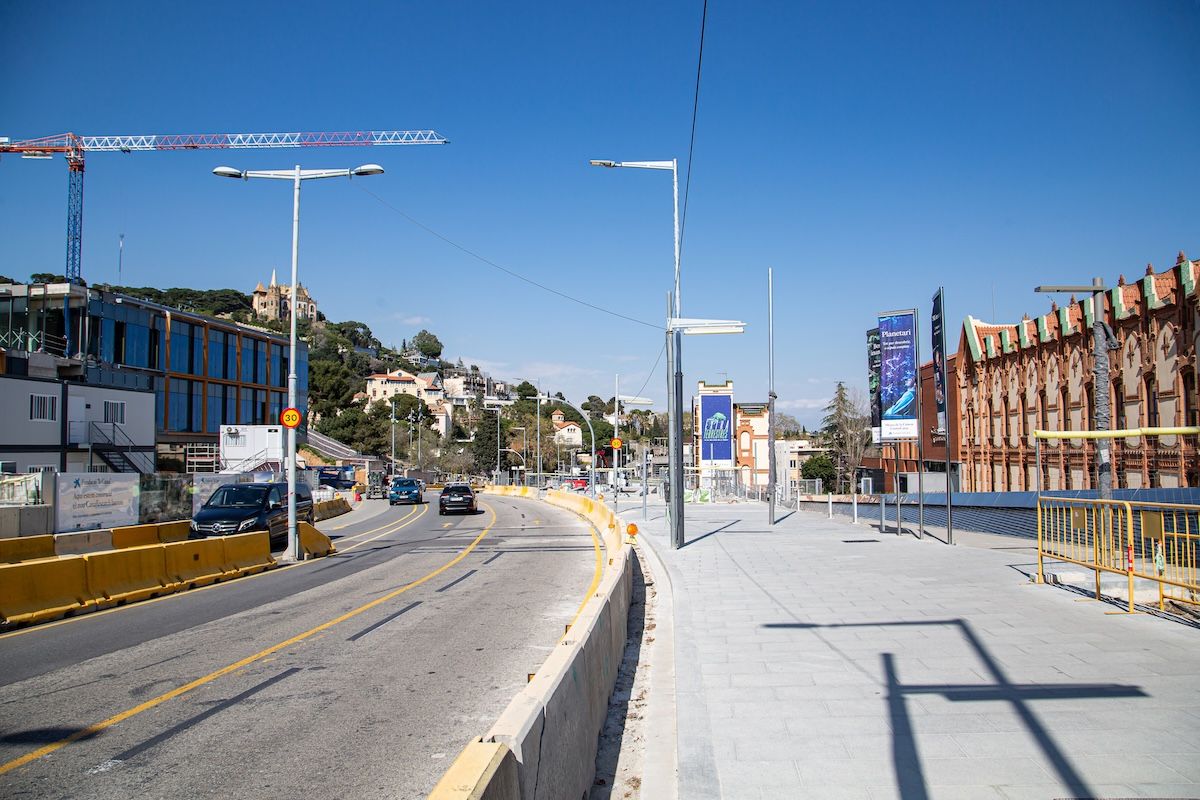
A year later, in November 2023, the first stone was laid. The architectural project has been carried out by TAC Arquitectes. Its main architect, Eduard Gascón, has been in charge of the Manresa Technology Center (CTM) and the Mirasol Complex. The forecast is that, with the first phase of the works completed, between 3,000 and 4,000 square meters will be put into operation, where laboratories, offices, and meeting rooms will be distributed over three floors. The first research groups will be installed there, awaiting the announcement in the coming weeks of new names that will join Rabinovich and Dalmau. By 2026, the rest of the complex will be finished.
In addition to having a new research center in front of CosmoCaixa, in a few years, the walk will be more pleasant between both facilities. A new public square will be urbanized over the ring road, which will connect with the museum dedicated to science. Likewise, in the back of the center, a public green area of 1,200 square meters will be enabled, next to the Collserola park.
Add The New Barcelona Post as your preferred Google source for free
Stay informed with the latest news.
