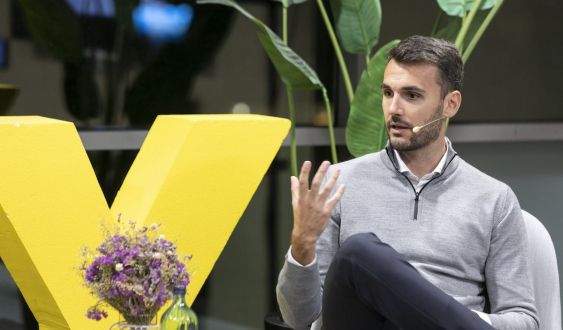
In the world of basketball, there are plays that can change your life. Francesc Julià Ametller had everything to be a professional player until he broke his ankle during his second year as a junior in Girona. Sidelined, in the pre-selection phase and just before playing against Barça. This injury changed his life: he studied Economics at UPF, worked at Kantox, and joined the family business Julià Grup and Kave Home shortly before Black Friday 2016. "We aspire to be the global leader in the mid-high range of the design and furniture world, preserving the culture and way of doing things in Girona," he assures in a new session of True Leaders in an afterwork format organized by The New Barcelona Post and EY to learn firsthand about different business leaders and their success stories in an exclusive environment with entrepreneurs, senior executives, founders, and new generations of business families.
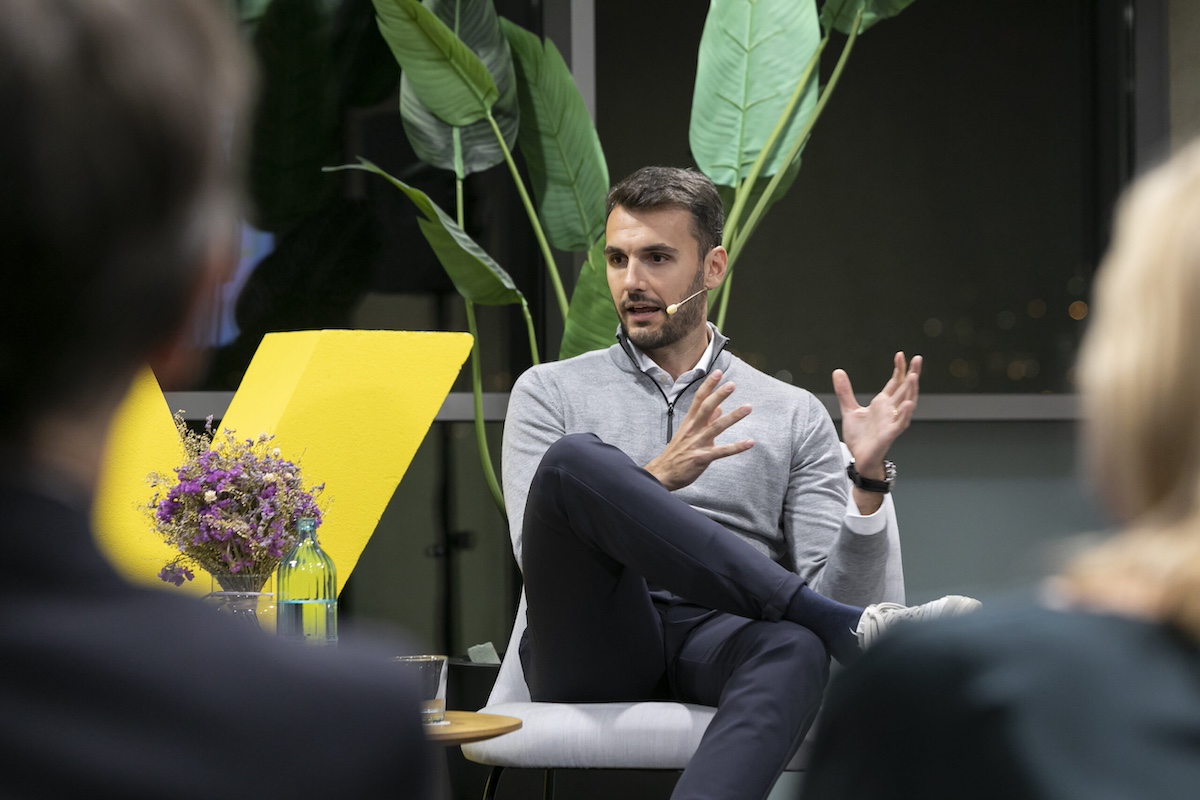
They say roots and mentors are never forgotten. The businessman Francesc Julià Gelabert was known during the 80s as Julià of the mattresses, and his warehouse was an old chicken coop in Sils that served hotels on the Costa Brava. Francesc Julià Ametller remembers that his father inherited the builder gene from his grandmother, and that he has been his great mentor and the alma mater of the business project. His father says he will retire soon, but for now it seems he works more than ever. "You cannot understand a business family without the family business, and vice versa. Everything stems from a long-term sustainable vocation," he points out.
In this sense, Francesc Julià Ametller considers himself a continuator of the Julià family business, adding new ingredients and, above all, a strong global vocation with Kave Home. It seems that marketing experts recommend just the opposite, but on the package wrapping of this Catalan company that reaches more than 80 countries around the world, there is a name known almost everywhere: Designed in Girona. "The roots are those of a hardworking family from Girona, which implies a way of doing and understanding life, values, a product, and a service," he explains. From Sils, to the world, and with Girona pride.
Nobody said that the path of a young entrepreneur born in the early 90s would be easy. Francesc Julià says that now he surely wouldn't study Economics, but rather Engineering combined with ADE. At the time, however, he was convinced by a couple of books: El juego de vivir by Fabià Estapé and Economía liberal para no economistas y no liberales, by Xavier Sala i Martín. Francesc Julià defines himself loud and clear as a liberal.
He entered the UPF, he explains, with "a great impostor syndrome," but discovered a new world by approaching local startups. He started working at Kantox when the fintech had only six employees, and left when there were already more than 150 on staff. He had about fifteen job options in mind, supposedly better than joining the family business. In fact, he had almost everything tied up with an American multinational online advertising company, but the ways of those from Girona are also inscrutable. The Gasol brothers, the Roca brothers, or the entrepreneur Dídac Lee are a very good example of this.
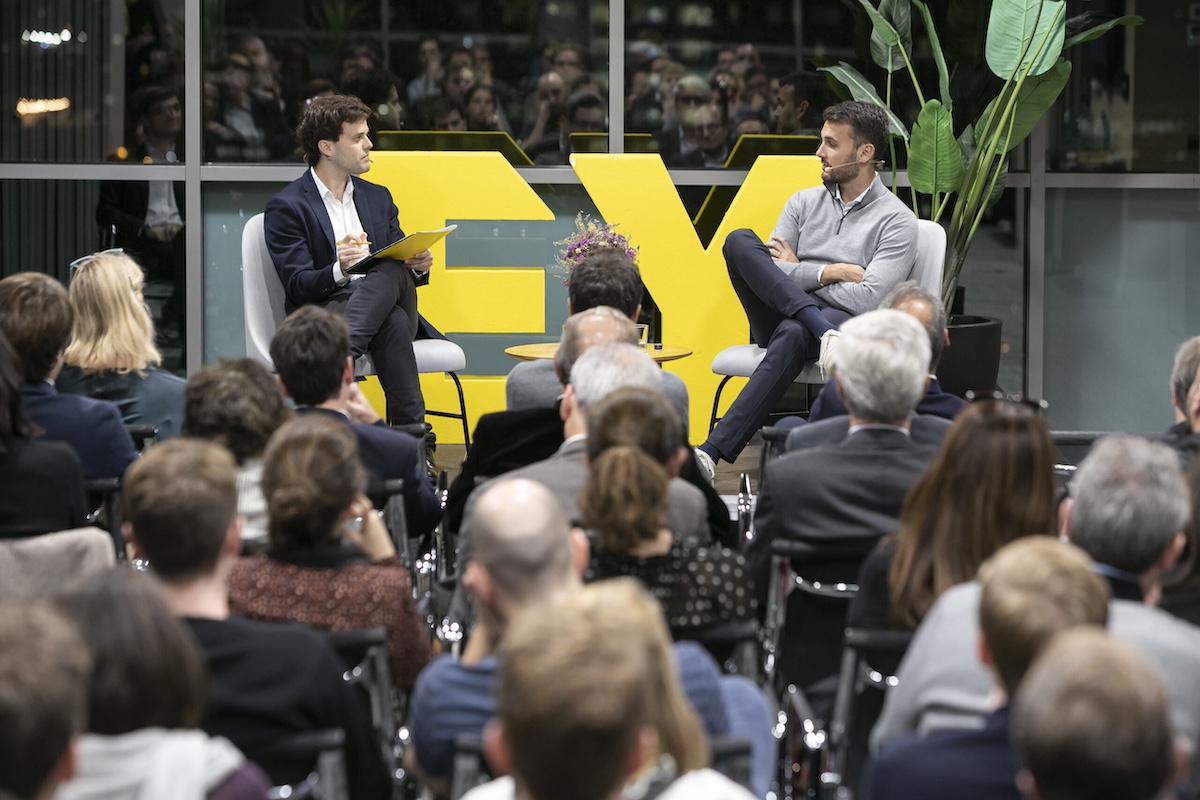
According to the CEO of Kave Home, "the family business is the typical brother who isn't there, but who sits at the table during family meals or dinners. When I took the ego out of the structural reasoning, I saw an industrial company that expands and has a global presence." Kave was one more of the Julià family, and the first seed of B2C was already sown. The other Julià brother was also warned just as he passed through the entrance door of the family business: "It's the first day of the rest of your life."
With just over 30 years old, Francesc Julià Ametller is in "consolidation phase," and the environment plays a crucial role. And when we talk about environment, we are not talking about the famous environment that is so common in the Barça world, but about the personal, family, and professional environment of the one who was winner of the Aijec Young Entrepreneur Award in 2023.
The mentor before the logo
When it comes to learning, the CEO of Kave Home advises focusing more on the mentor than on a company's logo. His mentor, jokes aside, is the Board of Directors. And his spiritual mentor is the entrepreneur and consultant Xavier Marcet. We share his humanist philosophy of authenticity, avoiding mediocrity, growing by making others grow, or common sense.
Julià advises focusing more on the mentor than on a company's logoKave Home was born as a brand of Julià Grup and has become a company that bills more than 250 million euros a few years later,with an annual growth of over 30% ---an organic growth of 85%---, with a presence in more than 80 countries and employing more than 700 people. According to Julià, Kave Home was born as a satellite sales testonlinein France that had a dual purpose: to test B2C sales and to create a brand associated with the product.
Figures may not be everything, but they help to put business trajectories into context. "We could grow faster, but we say no to some options because we want solid and sustained growth, taking advantage of the best of both worlds: B2C and B2B," he assures.
What must growth have to be good? Growth must above all be digestible. The CEO of Kave Home details that "it has been a tough year in the operations chain, and the company does not allow for digesting growth greater than 35% or 40% correctly and without excessively affecting the customer experience." He warns, however, that one of the future handicaps is the excessive presence in Europe, and that Spain currently does not account for even 20% of its turnover.
Kave culture on a large scale
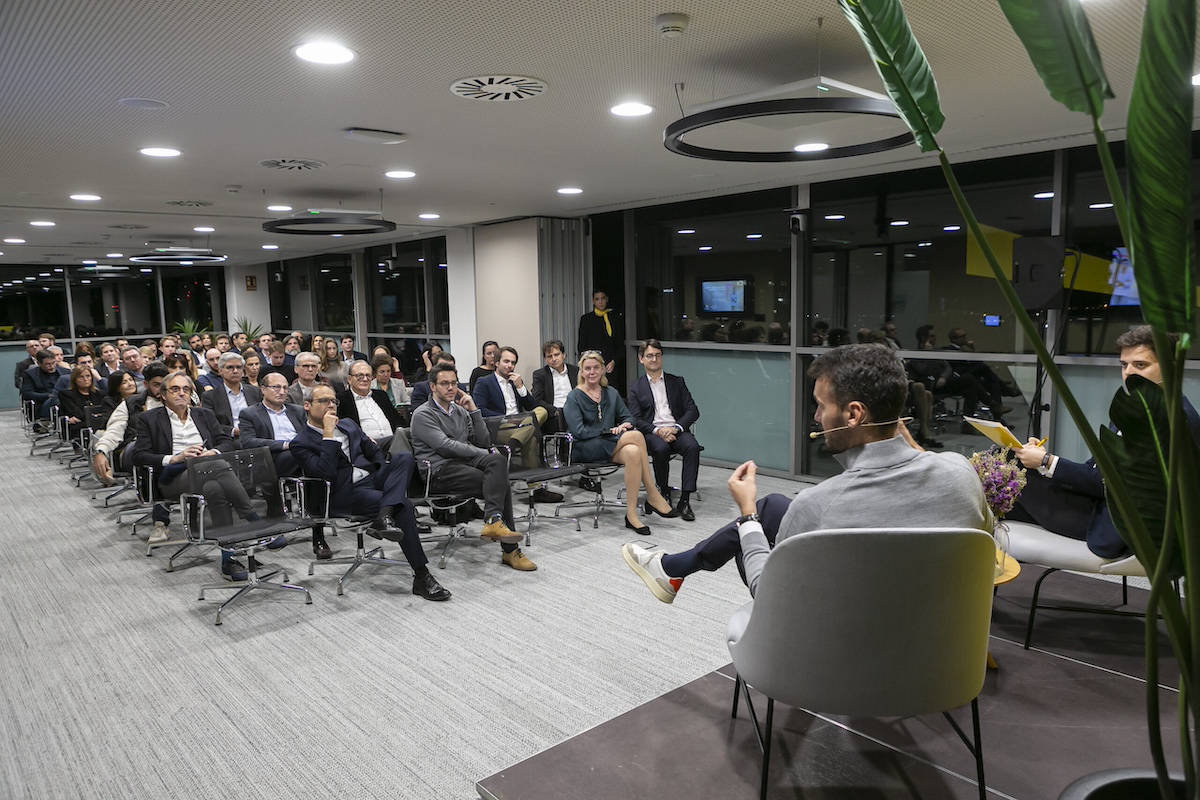
Regarding scalability, Julià insists that continental diversification is very important, but at the same time, "Kave culture on a large scale" must also be maintained. The company is known as "the UN of Girona" because in its Sils office, 26 different nationalities coexist in a town with fewer than 7,000 inhabitants. "Maintaining the culture in Kave's workplaces around the world is one of the great complexities that many companies die from," he points out.
"I no longer look at the CV before an interview; I am dazzled by a person's gaze, message, or explanation. It is much more difficult to teach Kave than a professional role"The truth, however, is that Francesc Julià works on company culture almost daily, and admits to having made many mistakes in talent management and acquisition. The CEO of Kave advises hiring the team first, and then choosing the strategic project well. His best move is "to hire good people and team players who put the collective before the individual, focusing on energy, attitude, and desire, rather than on logos." "I no longer look at the CV before an interview. I am dazzled by a person's gaze, message, or explanation. You can make many mistakes if you hire a star and do not preserve the culture. It is much more difficult to teach Kave than a professional role," he insists.
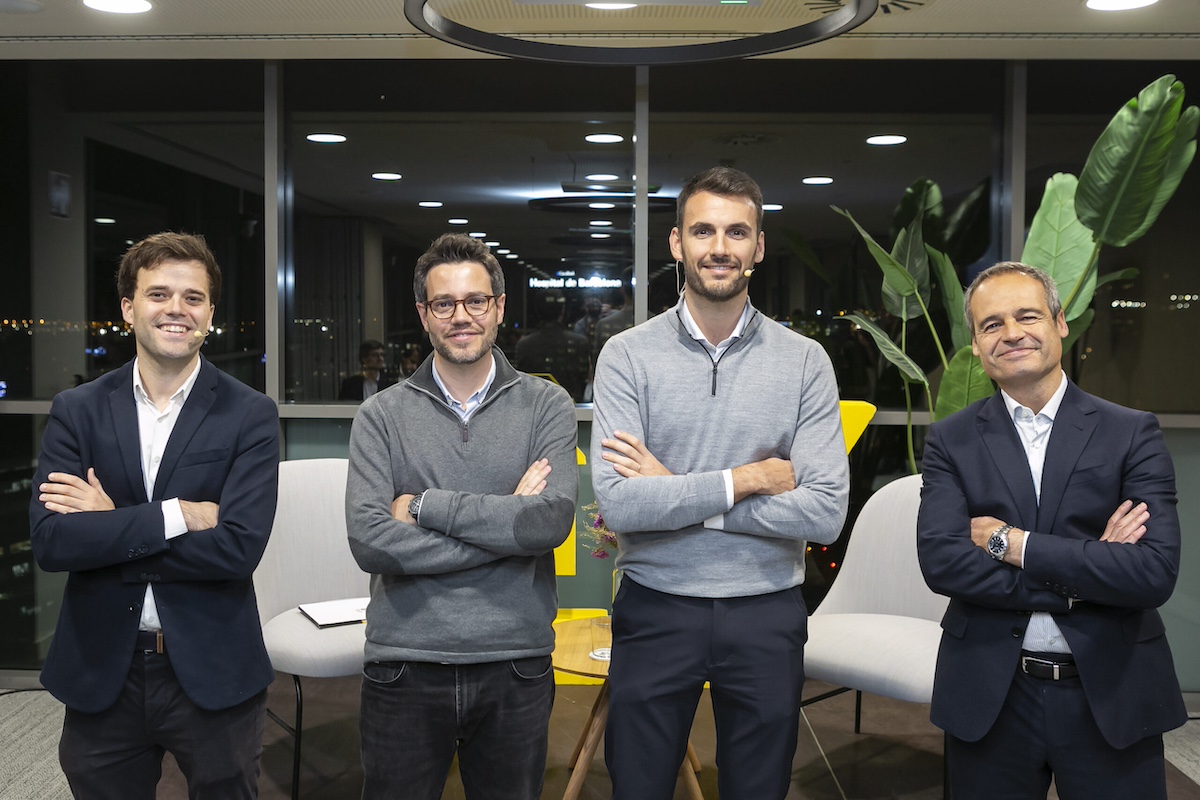
Thus, it is not surprising that the CEO of Kave Home claims the importance of believing in convictions and listening little or nothing to the ambient noise. "We have to question anything we do, we have to be willing to make mistakes and we have to embrace renewal. All this comes from my father," he explains.
Francesc Julià defends, in current terms, of the Forum of Entities for Administrative Reform (FERA) that the partisan system should be changed and that public administration must embrace the private sector more: "We created and built Catalonia during the 20th century with a public-private collaboration that was a national and European reference". Fira de Barcelona is a very good example of this.
It's question time and as always, the level is up to the speaker. Below, and not to prolong myself further, a summary of the great hits:
- Chip change: "We are willing to change our coat every season or our mobile phone every two years, but we find the mattress or sofa we change every fifteen years expensive."
- The price: "We work with the best qualities, but there has been no margin increase."
- The diagnosis: "The furniture sector is archaic, has little vision of vertical integration and low brand recognition. We apply logic in communication."
- The model: "The B2C brand transformed the group and reorganized distribution towards multichannel. B2C surpasses B2B in turnover."
- The protocol: "The family has the power to preserve the legacy, but does not have the power to manage the executive management of the company. The political family cannot enter the company by protocol."
- The challenge: "Everything goes through the Tordera logistics warehouse. We are defining the new commercial and distribution model to make it more capillary and local. We have a product that travels very badly. The next warehouse will be in northern Europe."
- The financial recipe: "We make sales that are positive in cash generation and ebitda. B2C is a beast of cash generation, and we have to look for sales that leave us a positive margin. The profitable growth limit is 30% or 35%."
- The vision: "How to create a global leader with the culture and values of a province of Catalonia? Billing does not inflate our ego. We want to have a global impact, maintaining our way of doing things."
Add The New Barcelona Post as your preferred Google source for free
Stay informed with the latest news.
