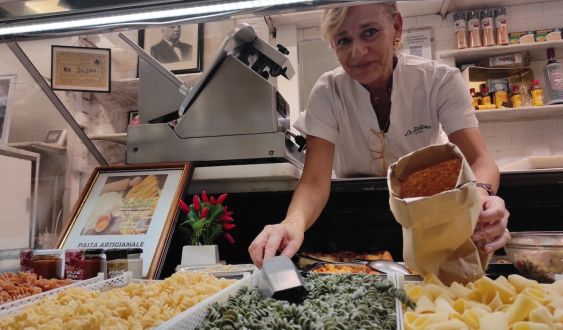
Raising the blind of a business every morning is like opening a book with blank pages. Everything is yet to be written. How many customers will enter, which ones will be neighbors from the area, what they will ask for, what they will explain or comment on, with what they will be most satisfied, and what will remain, material or immaterial, from their visit to the establishment. The dialogues between customers and shopkeepers, which in moments of calm can be enriching conversations, fill the days of towns and cities like Barcelona with everyday stories. Behind the counter, life still passes, weaving one-on-one connections.
That's what Carla Rivali likes most. At fifteen, she already sat on a stool, every Saturday, in front of the cash register in her family's store, collecting payments from customers. Her parents were in charge of the business, but her grandparents still made their contribution too. Her grandmother, in the kitchen, with the sauce recipes that they have continued to prepare just as she made them.
"Yes, my grandparents were there, but they worked at a different pace. They retired when I started working here all day." That was when Carla finished her Psychology degree. She was twenty-two years old, and at number 12 on Bonsuccés street, a long counter awaited her, behind the fresh product display cases where the wide range of pasta made every morning is exhibited. There she could practice all the psychology learned in the classroom, with each client, and with the daily life of a family-managed business. She worked, side by side, with her mother, who ---she says---, was an excellent boss. "From my nonna ---as she refers to her grandmother, in Italian--- I learned many things, because I went to her house every Tuesday for lunch and there we chatted about all the good and less good things about the store."
Family businesses have that, at the table, at night and during the day: the store, the customers, the purchases and sales appear in conversations. From her grandmother, Carla especially remembers these words: "The store is a great daily effort, but you will never lack a plate on the table or a warm place to sleep."
And with these and many other memories, every day Carla Rivali opens the door of one of the oldest shops in Barcelona dedicated uninterruptedly to the same thing. Fresh pasta was the origin of the business and is still today the star product in this food establishment, especially for items imported from Italy, but also made in the workshop and from other places in Catalonia, or from countries like France.
Carla's great-grandparents were already dedicated to the export and import of food products. They were from a small town in Piedmont, called Gavi, which is an hour from Genoa. The great-grandfather worked in customs sending Italian flavors to Latin America, above all. Their dealings with Argentina made them think of that country as a good destination to live. But on their boat trip to South America, they made a stop in Barcelona, and decided to stay here, among other things, because the great-grandmother was pregnant.
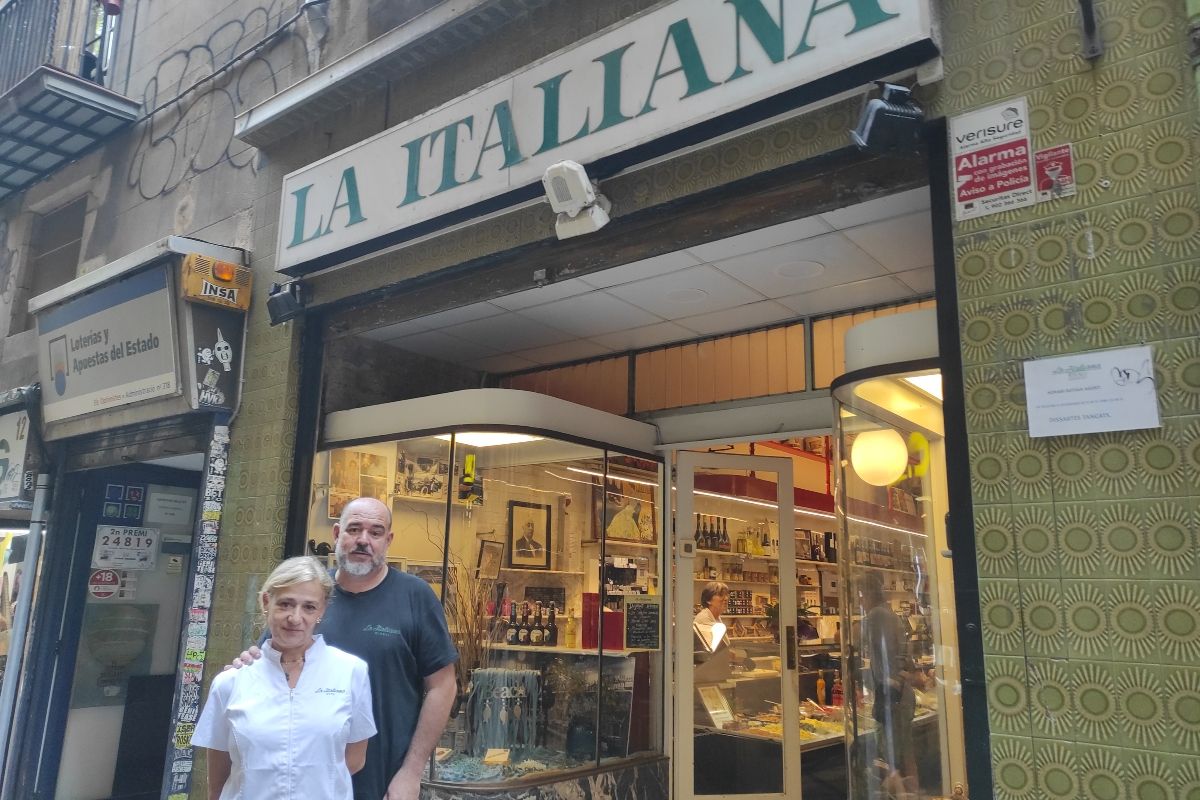
In a kiosk on La Rambla, they began to sell those Italian products they knew so well and to make the first fresh pasta that Barcelonans could try without having to travel to Italy. It was 1902. And two years later, everything they made and sold took its place on the shelves and display cases of the shop where La Italiana Rivali has been ever since.
It is where Carla and her husband keep alive what their Genoese great-grandparents started. They continue to offer the most authentic and exquisite of Italian gastronomy, always with the fresh pasta they make every day in the workshop, which occupies the back room. Cutting spaghetti, they stretch the thread of a four-generation family tradition; a fifth, Carla's children, are already collaborating too.
La Italiana prepares fresh pasta daily, with about thirty varietiesLittle by little,Carla has wanted to make the store represent an embrace between cultures.Articles like Catalan and French wines share display cases and shelves with those from wineries in northern and southern Italy. Carla can be said to be made of Italian flavors and customs, but in a Barcelona where she was born fully Catalan. "Catalan and Italian are two Mediterranean cultures, and in both, what happens around a table is very important. I try to convey this in the store, although I also have some Ribera del Duero," she explains.
These are very select product choices, such as salt flakes with wine or pasta fillings made by combining asparagus and ricotta cheese; pear, truffle, mushrooms, roasted meat... The sale of packaged products has also been accompanied by prepared food. Thus, La Italiana is like the kitchen of the restaurant where we would always want to eat or dine, but they prepare it for us to take home. It's as if an Italian nonna still cooked in this city.
When Carla talks about fresh pasta, it's clear that she connects with the most authentic part of the store, what makes her open the blinds with enthusiasm every morning, because in every ravioli, every spaghetti, every gnocchi or tortellini, she knows she transmits a culture, a way of doing things that has been passed down from generation to generation. Men, especially, making the pasta, and women, the sauce and fillings that do their chup chup for as long as it takes.
Currently, they prepare more than thirty varieties of fresh pasta, filled or not, long or short, also for vegans, "only with durum wheat semolina, without egg or anything else," she explains. And Carla's husband, Gerard Vilà, is in charge of the workshop, where the machinery, like the laminator, is part of the family.
"About three years ago we started making fresh galets, and they are a success. Being fresh pasta, they need less cooking time, and that way, the broth doesn't reduce," Carla explains. She says it's very noticeable that many people travel to Italy and come back fascinated by the gastronomy there. And from them, she also learns things. "I like to ask how people prepare their dishes. Our customers know a lot. In fact, we prepare a lasagna with the recipe of a client, Mr. Quim, with vegetables, capers, and olives," she comments. "I always make a habit of asking, and from that, I learn things that I then prepare in the kitchen", she adds.
She really likes the counter, because of the contact with people. "With respect, I know the name of the grandmother, the mother, and the grandchildren; I keep it very present. I personalize the service, and that way everyone who comes in can feel unique at La Italiana." And knowing that her work safeguards the continuation of such a long family tradition makes her live it even more motivated. But also ---she expresses--- "I open the blind every day thinking that establishments like mine are making a city closer to its citizens."
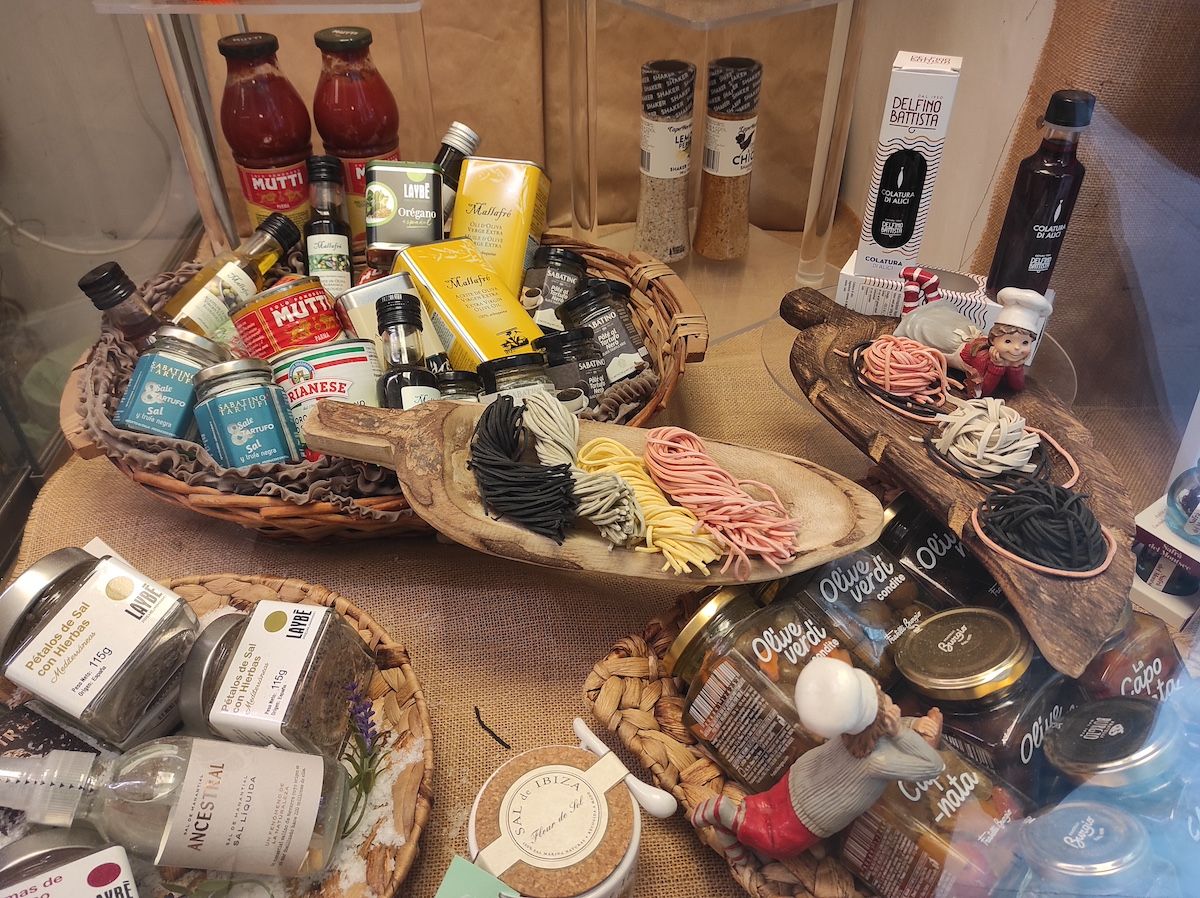
On Mondays, they prepare the sauces that they seal in jars in a bain-marie to sell alongside cold cuts and cheeses. "The weather dictates what you put on the table at any given moment," she comments. Now that autumn is approaching, pasta filled with chestnuts and sweet potato with mushrooms will start to fill trays. They make pumpkin all year round, as well as artichoke; on the other hand, with pesto, especially in summer. But they also make fish, duck, and foie, both ravioli and tortellini. "Every ten days I try to bring new things, thinking of the regular customer, to attract their attention more. If they ask me for something I don't have, I try to locate it. This closeness with the customer is the most valuable thing," she says. And, for Sant Jordi, the tortellini take the shape of a heart. There is a lot of romanticism in everything that is cooked at La Italiana; the detail is what has been passed down from fathers to sons, from grandmothers to mothers, and from mothers to granddaughters.
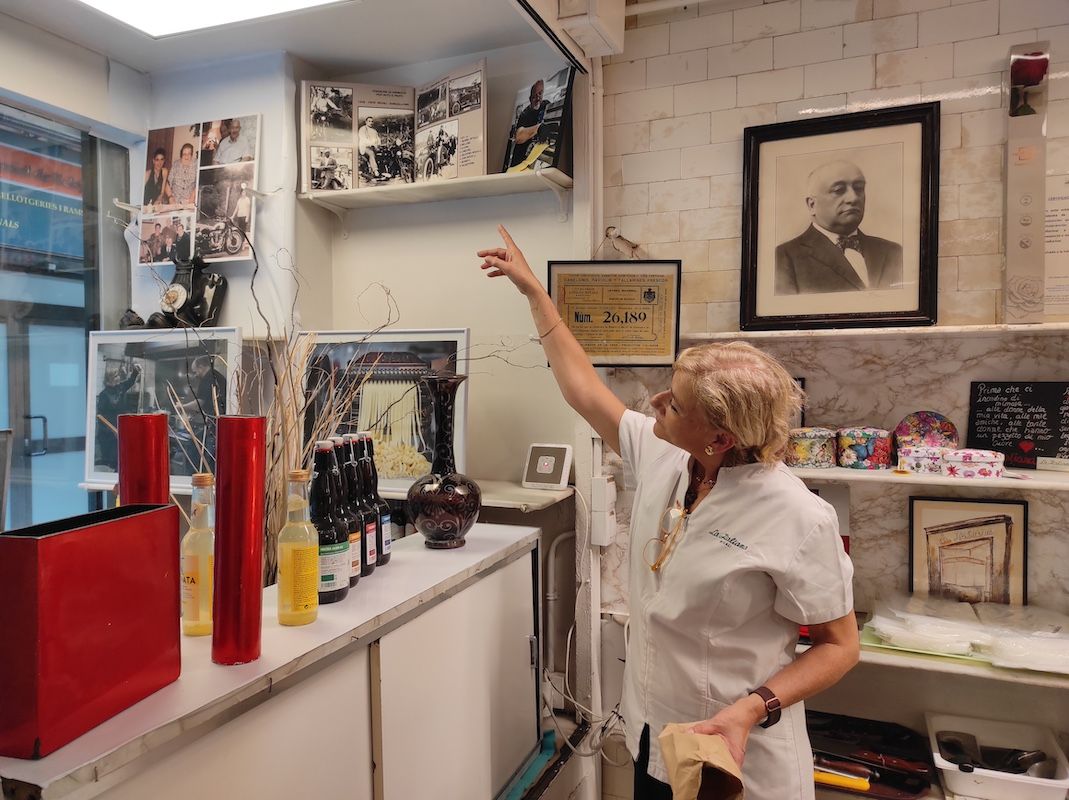
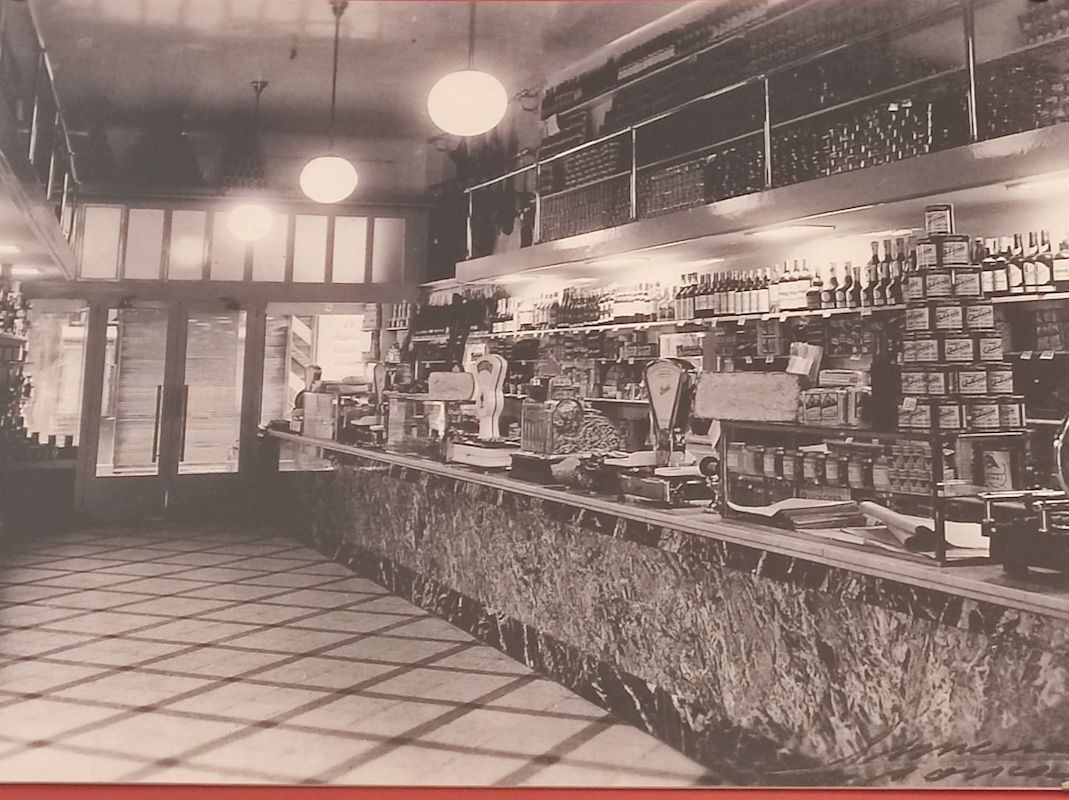
Now that La Rambla is under construction and ancient remains have been discovered underground, from this main thoroughfare, more obstacles must be overcome to enter Bonsuccés street, but there is a basket full of reasons to still access Carla's shop. Inside, a large black and white photo makes us very aware that the shop remains just as it has always been. It's 121 years, and it's easy to say; it's a story that has also been slow-cooked.
Carla faces autumn with novelties: "We will make new sauces, Neapolitan and walnut and gorgonzola," she announces. But, in addition, a sustainable, electric vehicle will debut delivering La Italiana's fresh pasta around the city. If nonna could see it!
Add The New Barcelona Post as your preferred Google source for free
Stay informed with the latest news.
