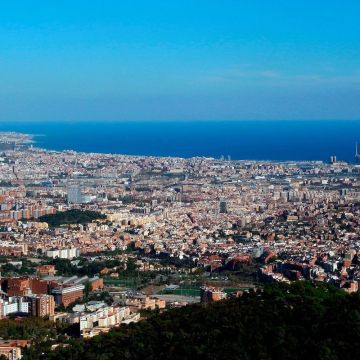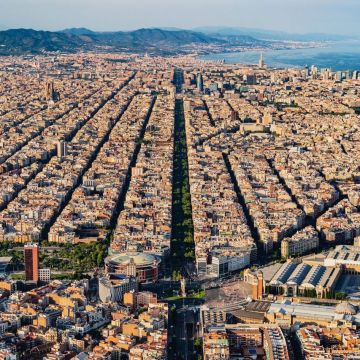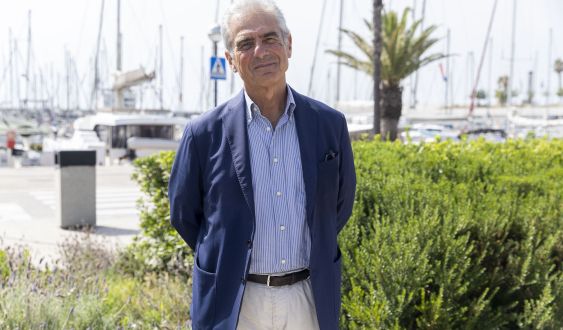
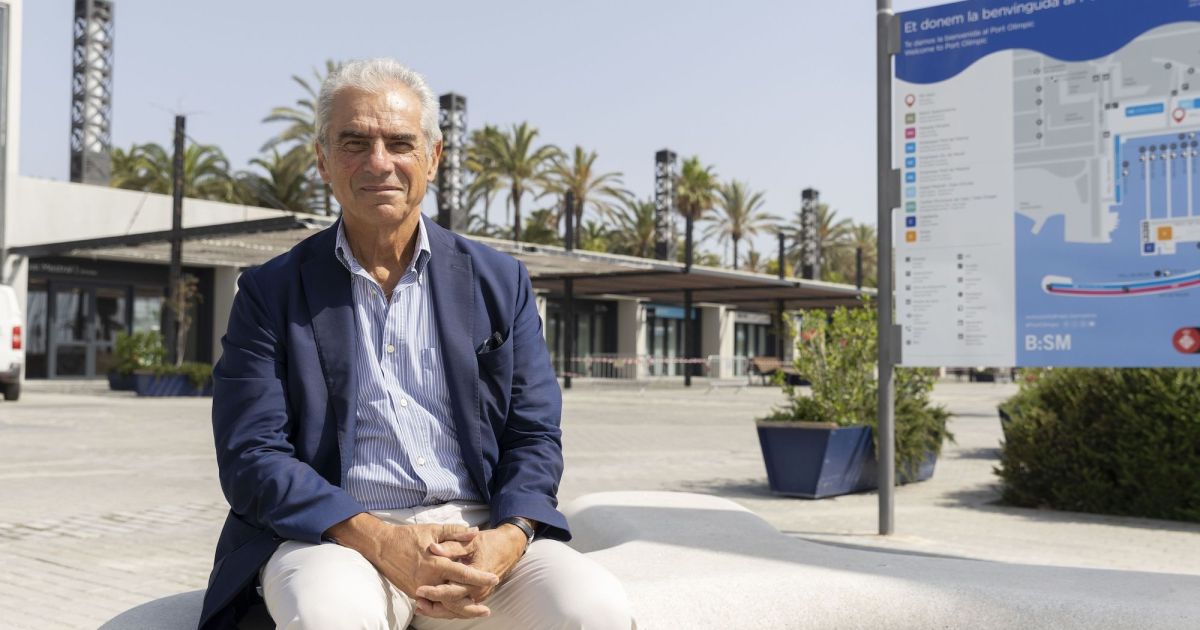
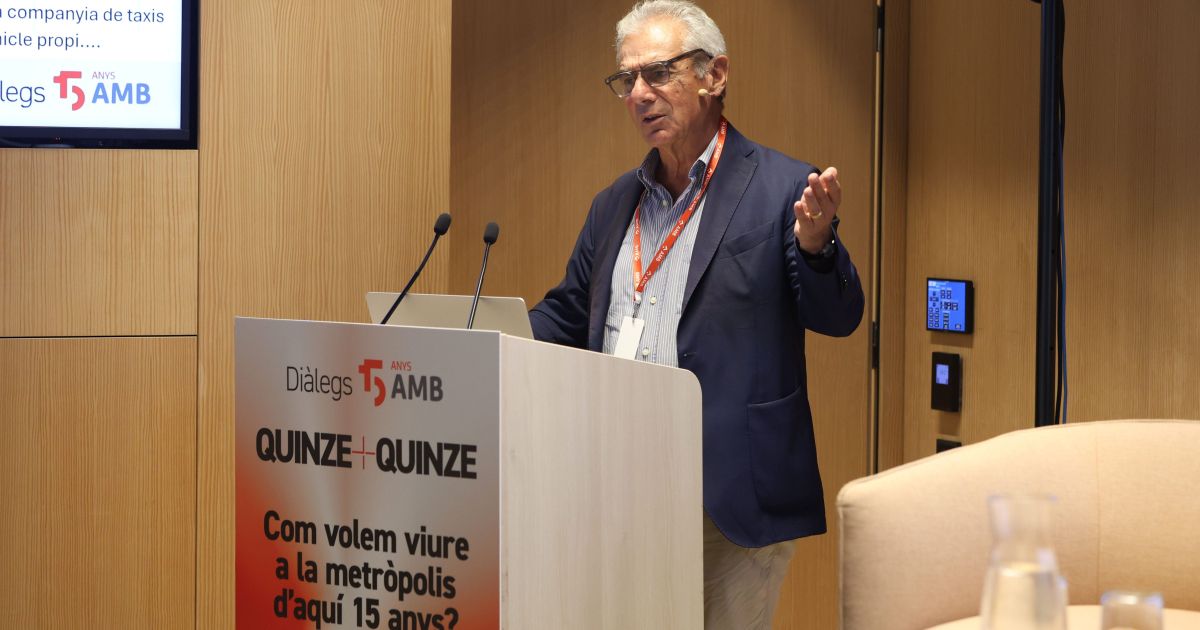
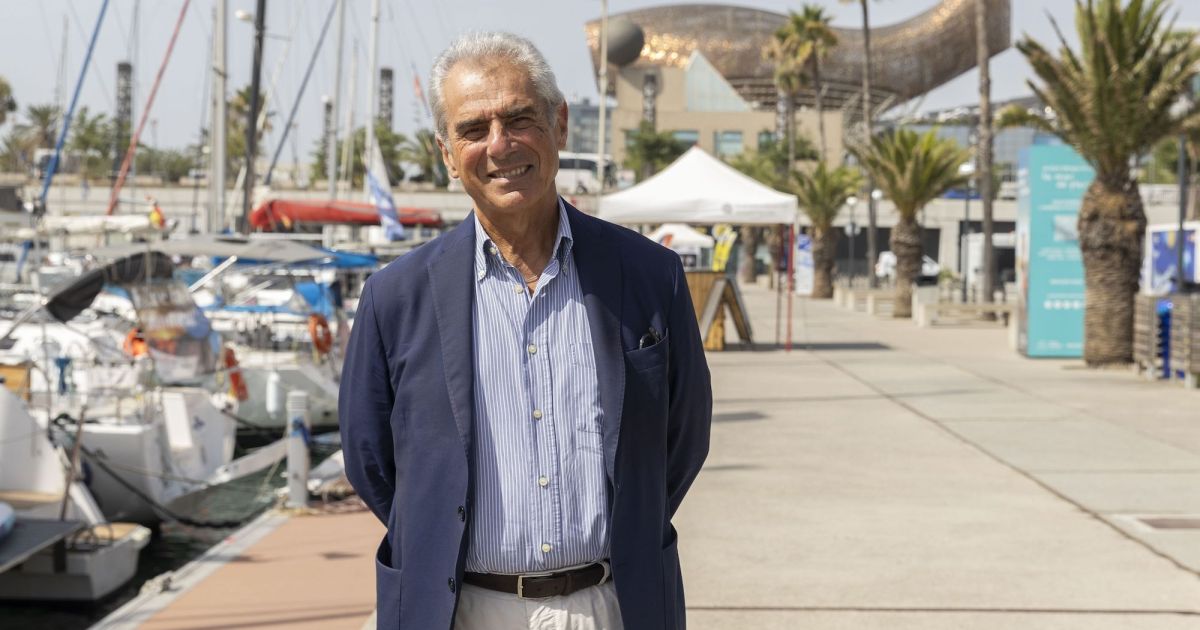
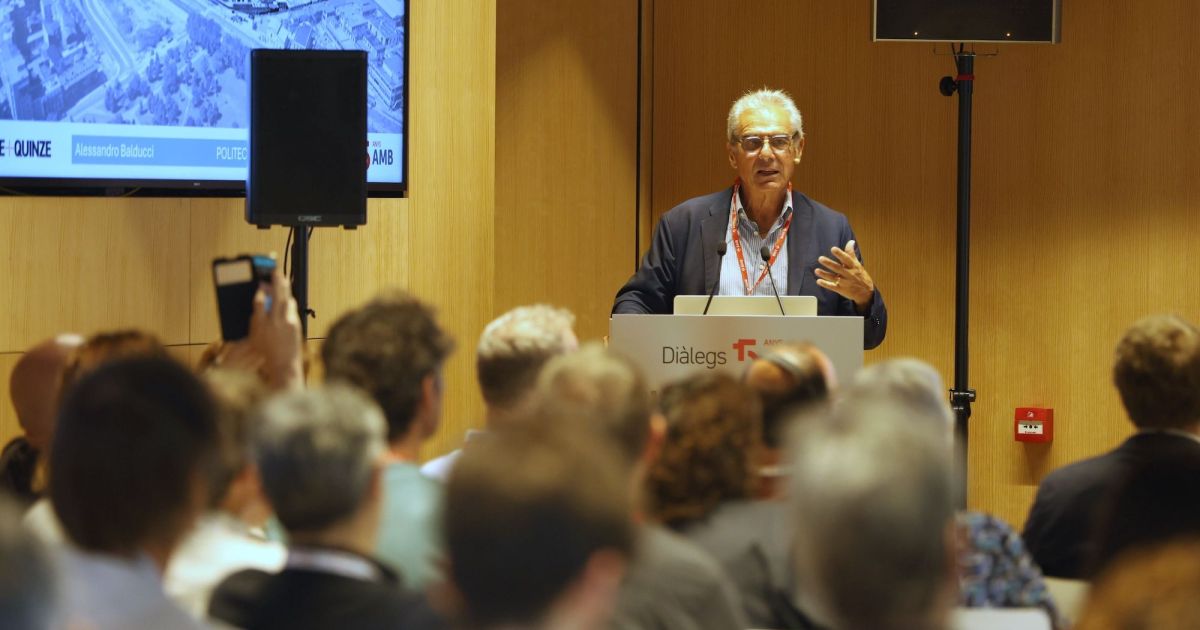
Alessandro Balducci has been studying how cities evolve for decades. A professor at the Politecnico di Milano and one of the most influential voices in territorial planning and metropolitan governance in Europe, he argues that metropolises are complex organisms that do not understand administrative boundaries. For him, large cities—Barcelona included—must be interpreted as a region interconnected by flows of people, data, infrastructure, economic activity, and social relationships that cross administrative borders. This is how Balducci sees it, and this is what he defended on the second day of dialogues of AMB 15+15, which met on Wednesday at the Port Olímpic with a question: How do we want to live the metropolis in 15 years?
This perspective also inspires the concept of the invisible city, and Balducci argues that urban transformations are often not perceived at first glance: digitalization and certain infrastructures and social and economic dynamics redefine cities, their challenges, and the way to address them. These include housing, climate change, and social cohesion, and designing policies capable of anticipating a reality that changes faster than institutions. All this also happens in Barcelona, which 15 years ago constituted the AMB to build a metropolitan strategy, which we now address with Balducci in an interview.
— What is the balance of 15 years of the AMB?
— The AMB is the most prestigious metropolitan administration in Europe. To begin with, because it is a relatively new institution, and it was already created with a structure that gives it a very important capacity for action. Despite its youth, it assumes very diverse competencies, ranging from territorial planning to transport, housing, water, and waste.
— It's 15 years as AMB, but metropolitan cooperation goes back much further.
— It is the heir to a tradition of strategic planning that goes back a long way, and which received a boost in the 90s. The strategic plan developed for the Olympic Games was probably the first of its kind in Europe. It introduced the idea that, to govern a city, a general urban plan is not enough: a shared vision of the future is needed. That model was renewed in different stages thanks to cooperation between Barcelona and its surrounding municipalities, a way of working that was later consolidated with the creation of the Metropolitan Area.
— With 36 municipalities, and aiming for 3.5 million people.
— And I believe that the institution has the capacity to address the challenges of an even broader territory.
— The metropolitan region of five million. Should the AMB's limits be expanded?
— I believe that, in reality, the debate about limits is endless. For years, academic literature has spoken of planetary urbanization. The economy and society evolve very quickly, and digitalization constantly expands our relationships. If we try to find the definitive limit of a metropolis, we will always end up expanding it a little more.
— What should be done, then?
— In this context, it is more useful to have a strong central institution that is aware that it does not represent the entire urban region and that, consequently, cooperates with the other administrations. In the case of Barcelona, this means working jointly with the Generalitat and with the surrounding territories through shared projects, instead of opening a permanent debate about administrative limits.
— Therefore, is cooperation the key?
—Exactly. And this cooperation should go beyond the political color of the governments. If it depends only on the majorities of the moment, it is very difficult to build a solid metropolitan strategy. I would advocate for strengthening collaboration between existing institutions and developing concrete projects. If the challenge is to expand the public transport network, let's do joint projects. If the problem is access to housing, let's promote policies that allow living in more affordable municipalities, well connected by rail. The important thing is to solve problems.
— Should Barcelona look to other European metropolises?
— Without a doubt. But, more than copying specific models, I believe it should observe European initiatives that are experimenting with new forms of territorial governance, such as projects promoted by the European Commission that work on new functional geographies, territories that do not coincide with traditional administrative limits.
— For example?
— These initiatives have developed flexible tools to foster cooperation between administrations. A good example is the Integrated Territorial Investments (ITI), which allow different institutions to develop common strategies without the need to create a new administration. It is a very interesting tool.
— With your experience in Milan, what could Barcelona learn?
— Barcelona and Milan share many characteristics. Neither of them is the political capital of their country, but both are the main economic engines. They also accumulate a long tradition of experimentation in urban policies. Just as Milan is a city of cities, this can also be applied in Barcelona, to stop considering the surrounding municipalities as peripheries and understand them as communities with their own identity, capable of sharing services, green spaces, and common projects.
— Can other European experiences inspire Barcelona?
— A very interesting case is that of the IBA Emscher Park, in the Ruhr basin, in Germany. It was created to regenerate a large declining industrial region and, instead of developing a traditional plan, an open call for projects and ideas was launched. In this way, a strategic vision driven by institutions was combined with initiatives arising from society. It is a good example of this relationship between top-down and bottom-up processes that I believe will be increasingly necessary in urban planning.
— What should the Barcelona metropolis be like in 15 years?
— I believe it should focus its efforts on two major challenges: housing and climate change. These are the two most urgent issues that any metropolitan institution must face. And to address them, we must reflect on another idea that may seem more abstract, but which will be increasingly important: hybrid proximity.
— In what sense?
— For a long time, we have understood proximity solely as a physical issue: living close to work, services, or social spaces. But today, digitalization is changing this reality. Many activities can be done remotely, without giving up the benefits of face-to-face contact when necessary. The challenge is to combine these two dimensions, physical and digital, to create new, more balanced forms of urban life.
— Is Barcelona moving in this direction?
— It is already developing very interesting experiences in both housing and public space, such as with the superilles. The next step is to extend this innovation beyond the central core. Teleworking, for example, can reduce the need to commute daily to the city center and, at the same time, revitalize municipalities in the rest of the metropolitan region. If a part of the economic activity can be developed from other well-connected cities, opportunities, services, and quality of life can also be redistributed.
— The central core can be decongested, and new centralities can be created.
— In the past, attempts were made to decentralize by creating new poles of activity from the administrations, but those models often did not yield the expected results. Now, the combination of digital connectivity and physical proximity offers a different opportunity: to distribute urban value beyond the center without losing the intensity of metropolitan relationships. Along with the response to climate change and affordable housing, this is one of the great opportunities for the Barcelona metropolis in the next fifteen years.
Add The New Barcelona Post as your preferred Google source for free
Stay informed with the latest news.