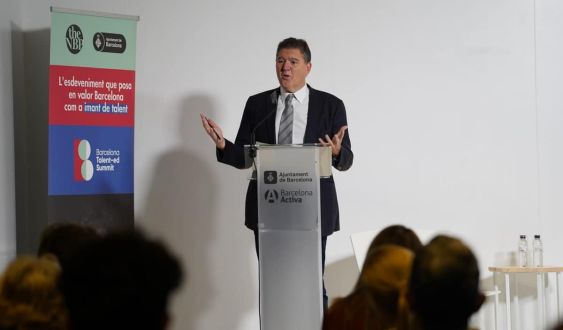
Defining Barcelona's formula for attracting international talent and what characteristics it needs to enhance to continue doing so have been some of the questions that have been addressed at the Barcelona Talent-Ed Summit, an event organized by The New Barcelona Post and the Barcelona City Council to highlight the aspects that make the Catalan capital a magnet for professionals.
To begin, the Commissioner for City Promotion of the Barcelona City Council, Pau Solanilla, was in charge of inaugurating the day, outlining the recipe the city follows to attract professionals, one of the main factors for cities to be competitive. Despite not being a very large city, its diversity and tolerance play in its favor, as does the quality of life it offers. One of the other key factors for Solanilla is the public leadership promoted by the local administration to drive changes, as is now visible in the consolidation of 22@ as a technological district: "We need public leadership, which does not mean public monopoly," complemented by private investment and a social vision.
Proof of this strategy to attract international talent is that Barcelona has 23% foreign residents, many of whom become naturalized, coming to represent 29% of the inhabitants living in the city. Precisely, the last factor that enhances the rootedness of workers in the Catalan capital are the interactions generated between them. "Talent is the new oil, but emotions are the energy that moves the world and Barcelona is emotion," Solanilla remarked. For this reason, he defended the City Council's commitment to fostering relationships among the international talent living in the city as essential, through initiatives such as the new Barcelona Welcome Desk.
Once the recipe promoted by the City Council was known, the senior manager of the human resources company Michael Page, Gizem Baykal, expanded on the reasons for Barcelona's success in attracting professionals in the first round table of the day. For the British company based in L'Hospitalet, the Catalan capital is "one of the most powerful economic engines in Europe," thanks to factors such as the presence of large multinationals with investment capacity and the effervescence of emerging companies to generate new approaches. With this environment, talent acquisition is based, mainly, on issues such as those mentioned by Solanilla, but also on others such as the presence of several prestigious universities, allowing both the attraction of foreign workers in initial phases of their career and in intermediate phases thanks to the country's retention capacity.
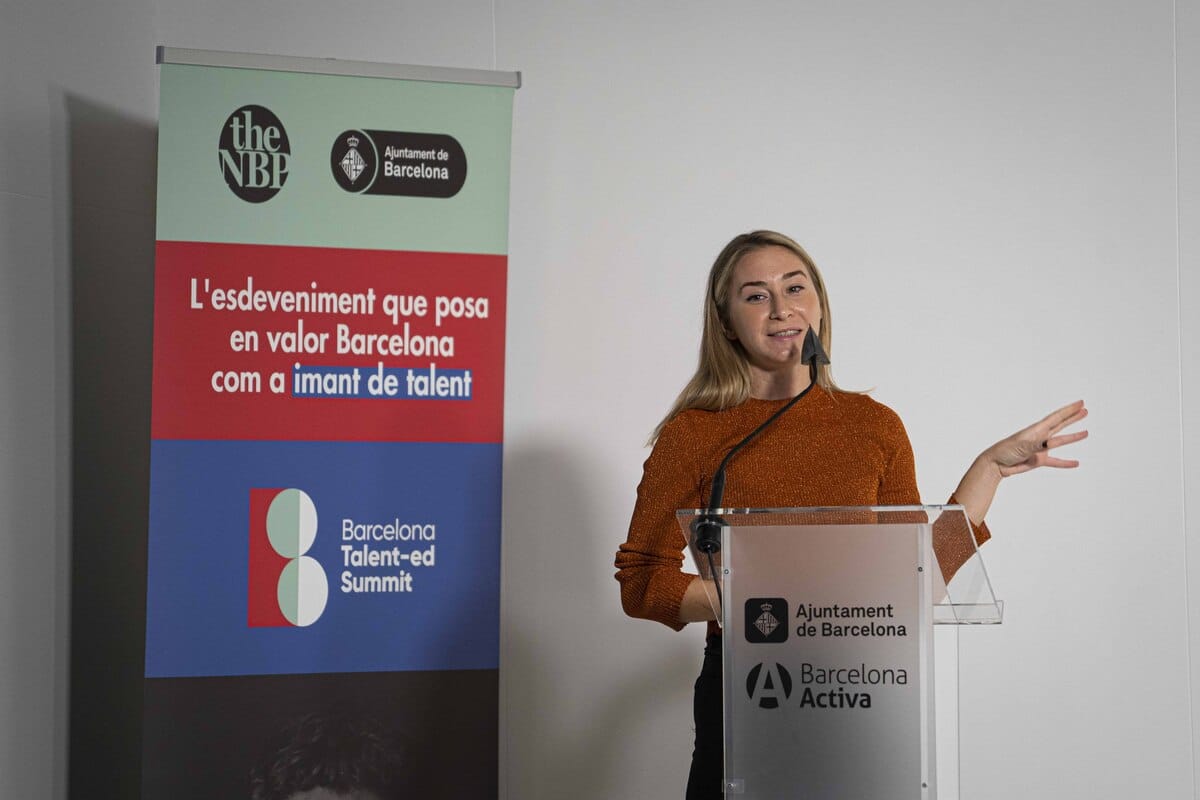
If viewed from the other side, taking into account the needs of workers who decide to settle in Barcelona, Michael Page has detected that factors such as having a good public transport connection, spending a maximum of 45 minutes to get to work, and locating offices in the city center or in business parks are valued, as well as providing them with complements such as proximity to a gym or a variety of dining options. It is also important for employees to clearly visualize the career path they can have in the company and to have flexible hours and be able to combine in-person work with teleworking.
A tool to boost this attraction of talent from the Catalan capital will be European funds, explained by the general director of the UPF Barcelona School of Management (UPF-BSM), José M. Martínez-Sierra, in one of the round tables of Barcelona Talent-ed Summit. The European Commission has focused on energy transition and digitalization as ways to overcome the crisis caused by Covid-19, which led to a 6.2% contraction of its economy in 2020.
This recovery plan, according to Martínez-Sierra, can benefit sectors such as construction, renewable energies, mobility, the circular economy, or tourism. Especially, it can be positive for SMEs, which make up the majority of the productive fabric of the Catalan economy. To benefit, companies need to seek partners that allow them to connect their projects with European initiatives, as well as train talent, master lines that are followed from UPF-BSM itself.
Add The New Barcelona Post as your preferred Google source for free
Stay informed with the latest news.
