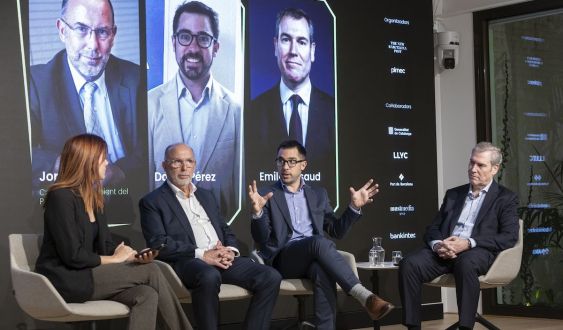
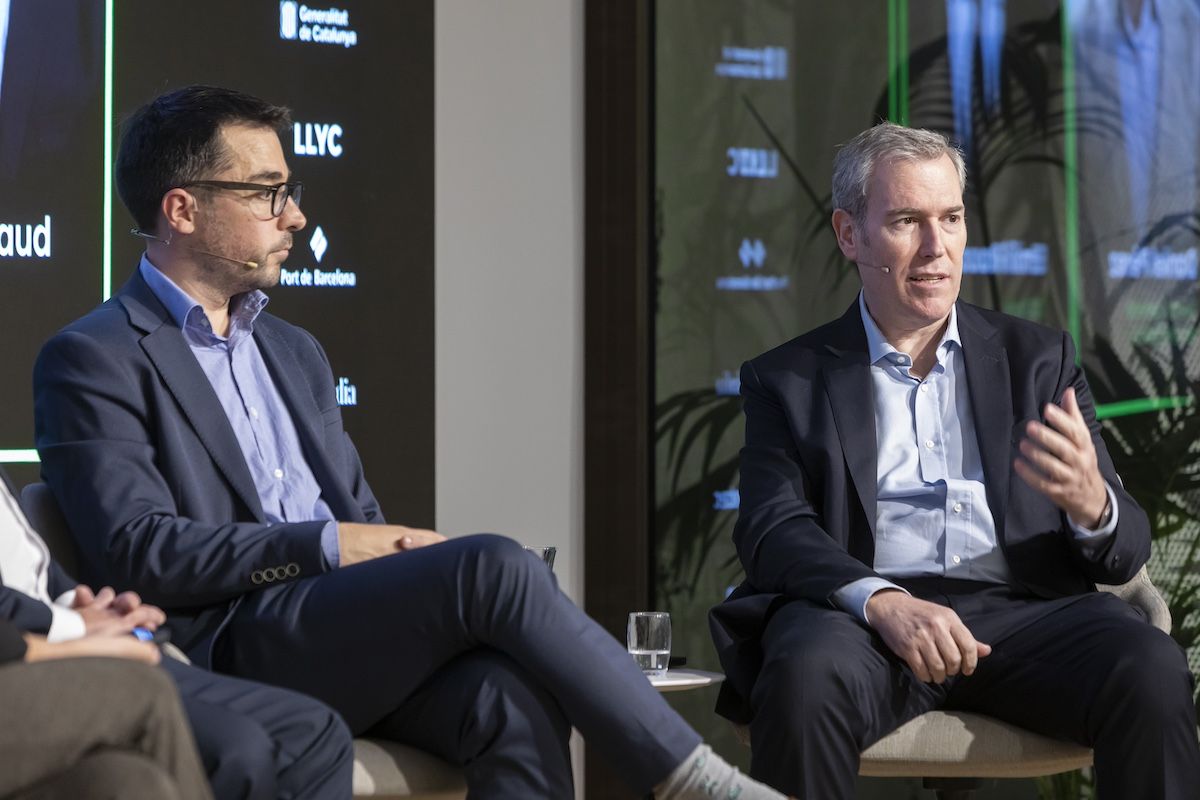
"People want renewables, but not in their backyard." This is how the director of L'Energètica, Dani Pérez, summarizes the main current challenge of the energy transition in Catalonia, and this is shared by the CEO of Factor Energia, Emili Rousaud, and the head of Environment of the Port of Barcelona, Jordi Vila. "Now, the challenge we have ahead is no longer mainly regulatory, but communicative," Pérez reiterated, with the aim of raising society's awareness of the importance of moving forward in this direction, even if it is next to their home.
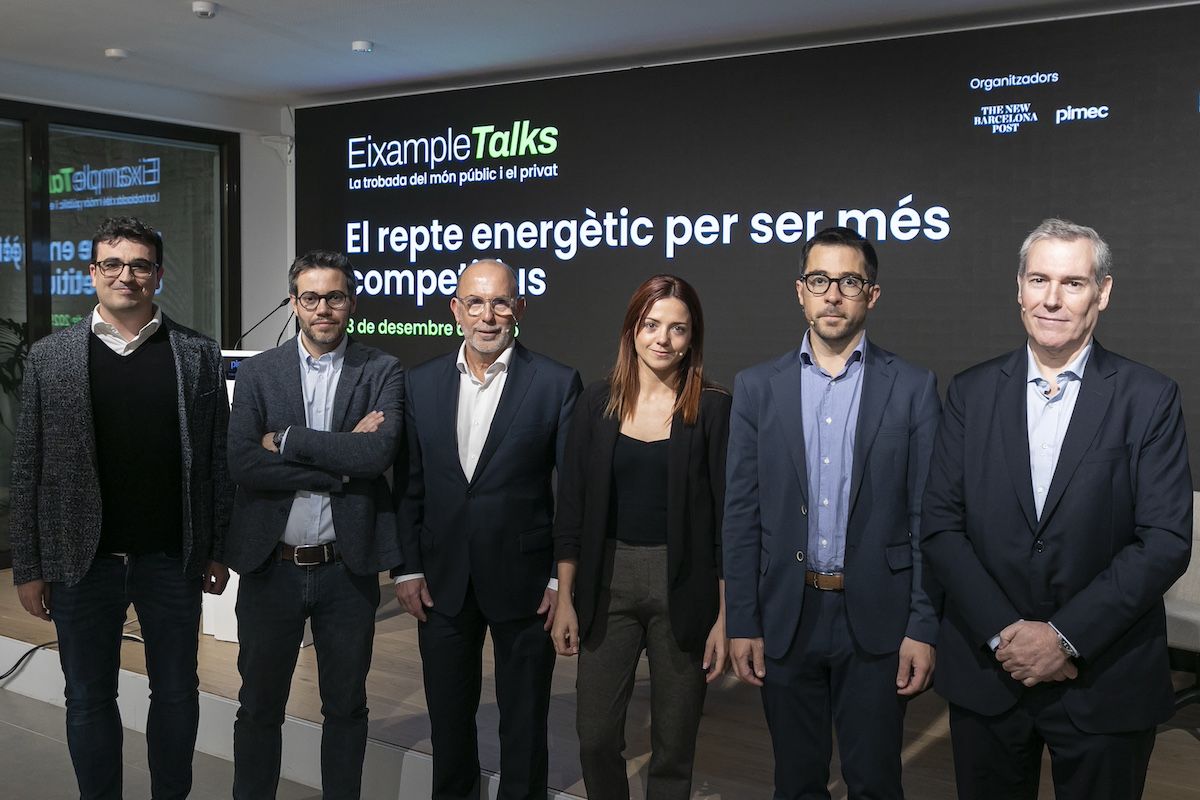
"We need to better communicate the energy transition so that this territory, which wants neither nuclear, nor solar, nor wind, nor hydraulic, nor cables, nor any type of energy infrastructure," Pérez added in the third session of the Eixample Talks debate series. Organized by Pimec and The New Barcelona Post, the session revolved around the energy challenge through the lens of both the public and private sectors, in a series that has the collaboration of the Generalitat, Bankinter, the Port of Barcelona, the Barcelona Metropolitan Area (AMB), Mustmedia Group and LLYC.
In a debate moderated by the director of The New Barcelona Post, Elena Busquets, Vila went further: "Perhaps we need to rethink the governance of these renewable infrastructures," so that developers are "more transparent and think of participatory formulas with the territory," instead of trying to land in a certain municipality without taking into account the importance of social acceptance. "If we sprinkle the territory with energy infrastructures, social acceptance must be taken very much into account, and we must study how to compensate the inhabitant, the municipality or the territory. Otherwise, we are stuck," added the head of Environment of the Port of Barcelona.
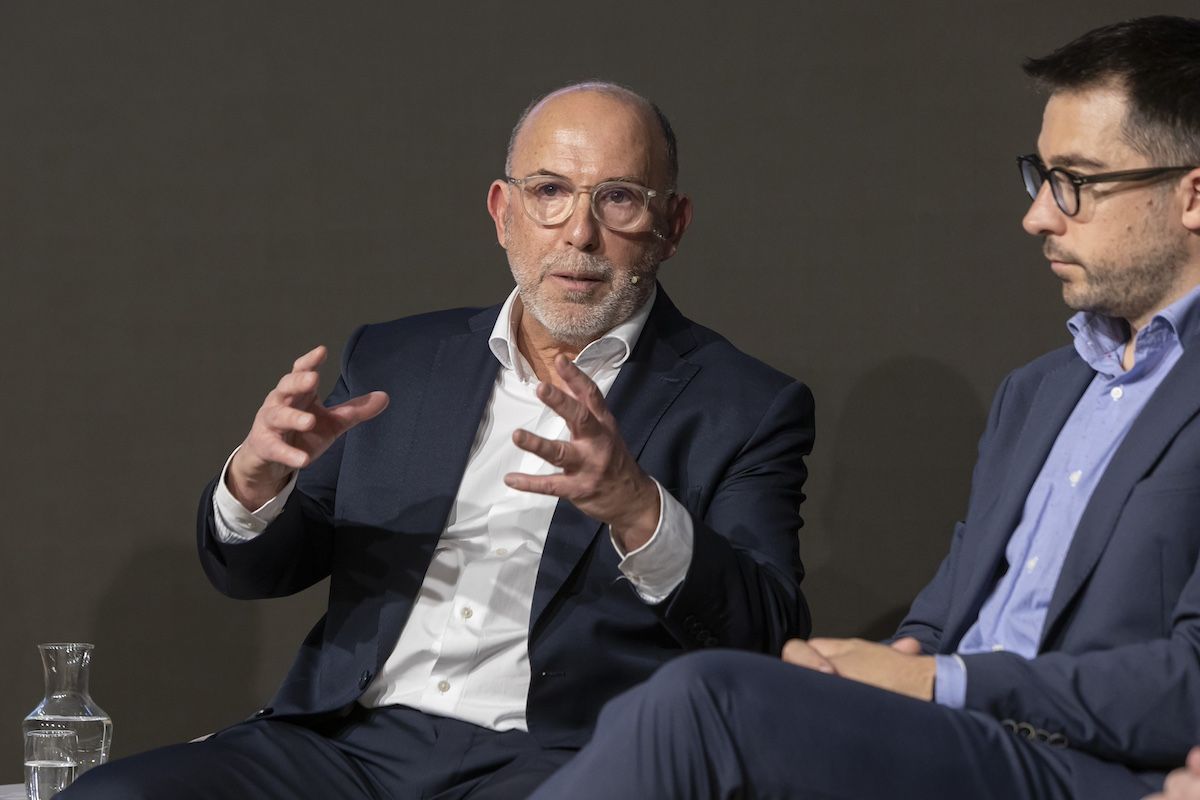
The lack of social acceptance, together with a regulation that has been inefficient until now, according to Rousaud, have slowed down the implementation of renewable energies. "The administration has part of the responsibility, due to a regulation that has not favored the transition, but there is also responsibility of civil society, due to social opposition," according to the CEO of Factor Energia. "If we are willing not to generate energy here, we have to be aware that we will have to import it from other communities. But then towers and cables will not be wanted either," he summarized. In this sense, he launched another warning: "The closure of nuclear power plants is impossible, and not because of an ideological debate, but because of an electrotechnical debate." Thus, in the current energy context, "it is an absolute fiction to believe that it can be done; we would have restrictions and a problem of energy supply."
In this scenario, is it possible to accelerate this transition to the initially marked levels? "If we get to it and do everything we have to do, we can get there. But if for each park we have a judicial appeal that delays it three years, we will not get there," said Pérez, returning again to the key of social acceptance. Catalonia has the stated goal of reaching 12,000 megawatts by 2030, and is now at 2,500; there is a good stretch left, but it will be shortened already in 2026, when the current capacity is expected to practically double: "We are at a time when we are reaping fruits, but it is insufficient: more needs to be done."
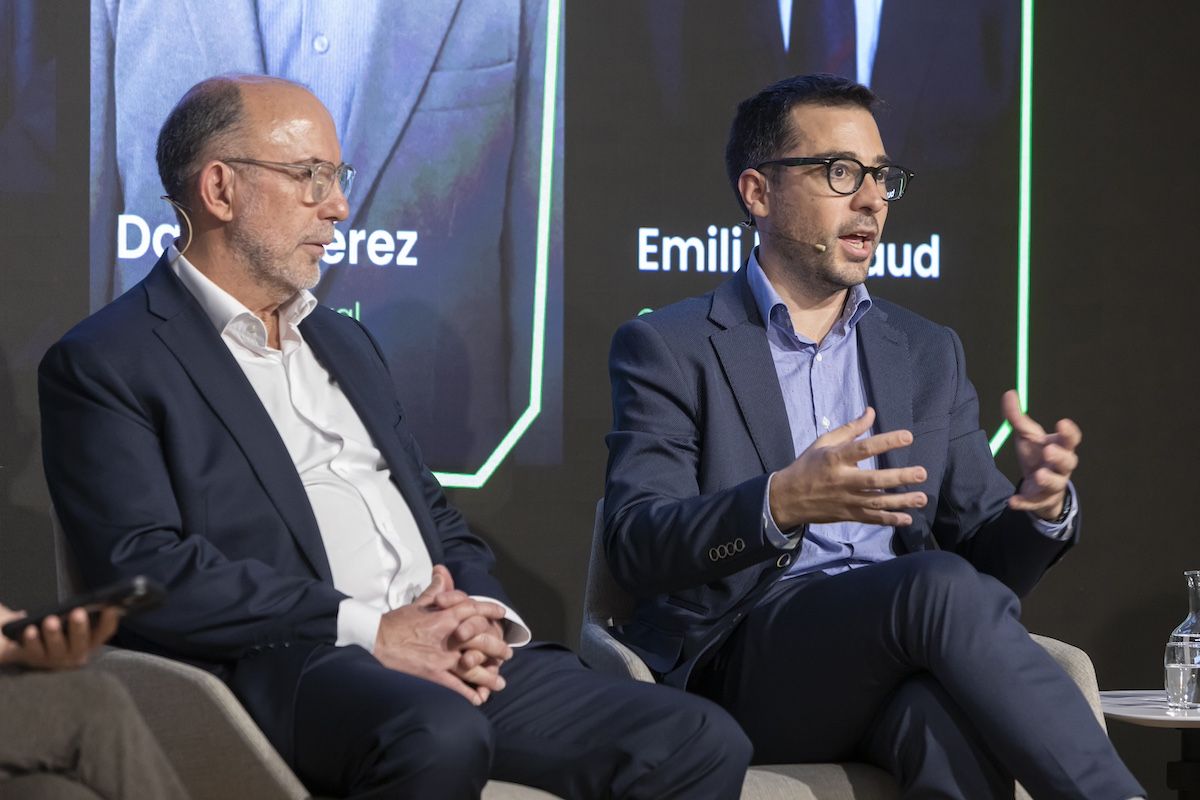
To travel this path, as a public company of the Generalitat, L'Energètica is responsible for promoting renewable energies and advancing in the decarbonization of the Generalitat ---"we must set an example"---. In addition to promoting its own projects, the public company participates with private partners, playing a role in which, again, social acceptance is key: "When a company from outside comes and arrives to occupy hectares, it generates rejection. Having a local partner allows for a bridge." Thus, the fact that L'Energètica is a minority partner in certain projects can facilitate their unblocking, to continue advancing in this transition.
Beyond electricity
As Vila has highlighted, the energy transition goes beyond electrification, and encompasses dimensions such as that of the fuels, key for the port sector and maritime transport. "When a shipping company wants to order a new ship, right now it doesn't know which type of fuel to bet on," with options gaining strength such as methanol andliquefied natural gas(LNG), and with hydrogen as a promise for the future.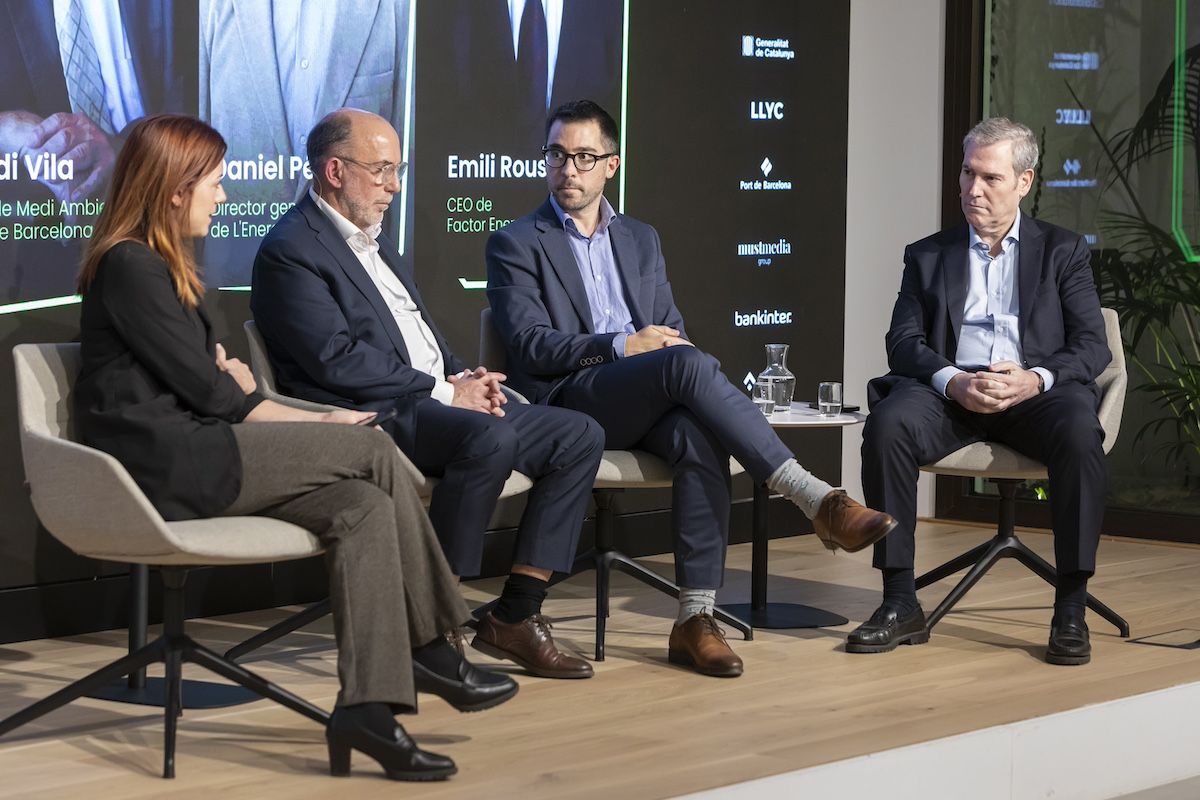
Taking into account all energy aspects, the Port has drawn up a transition plan that includes precisely the adoption of these alternative fuels as a key point. The sustainability strategy of the Barcelona port also includes the Nexigen plan, to bring electricity to its docks, so that docked ships can connect to the electrical grid and thus turn off their engines while in port.
The Port's plan also includes the installation of photovoltaic panels and the construction of an electrical substation within the port infrastructure. In this strategy —as in the Port's global operations—, public-private collaboration is crucial, as Vila has defended. "So far, we have made three electrical connection points on the docks; we need 30 more, which must be done in the next five years. And that will be done by private initiative with a public works concession," he announced.
All this in a context where the April blackout and its effects are still present for individuals and companies. According to Rousaud, "it was an extraordinary event that I believe will not be repeated in the future; it was the first time in history, and now the electrical grid is operating with a reinforced system." Taking advantage of this debate as a meeting point between the public and private sectors, the CEO of Factor Energia and also vice-president of Pimec took the opportunity to offer collaboration to the director of L'Energètica to seek ways for administration tenders to find formulas to give more room to small and medium-sized local companies, also from the European sphere.
The objective? To find ways to give weight to issues that go beyond the economic proposal, and thus support the local ecosystem and be able to emphasize issues such as energy transition, as Pérez reiterated: "We all agree that we must bet on renewables, but we must come down from the muses to the theater; we must come down to the territory. That is where the difficulty lies," and that is where the focus must be placed to transform it into an opportunity.
Add The New Barcelona Post as your preferred Google source for free
Stay informed with the latest news.
