
Barcelona begins to prepare and transform itself to act as World Capital of Architecture in 2026. As a first step towards this capital status and with the intention of beginning to build the legacy that the event will leave in the city, the City Council will reconvert a large party wall in each district into a unique and differential facade, with projects ranging from vertical gardens to colorful ceramic facades, including walkways intertwined with lush hanging vegetation and spaces designed to foster biodiversity.
The ten projects, which will transform spaces by intervening in a total of 17 party walls, stem from the ten winning proposals of the competition that the City Council launched in June, aimed at young architects from around the world. Through the Fundació Mies van der Rohe and carried out jointly with Unesco and the International Union of Architects, the competition received 439 proposals from 590 architects from 51 countries around the world. Of these, the competition awarded 30 proposals and granted two mentions without financial endowment. The 30 awarded proposals, presented by teams whose members represented 12 nationalities, received a total of 52,500 euros in prizes, with 3,000 for the ten winners, 1,500 for the second-place winners, and 750 for the third-place winners.
After the resolution of the competition jury, composed of prestigious architects from the international sphere, it is now time to "land the proposals, which will serve as the basis for the executive projects to transform these spaces," highlighted the Deputy Mayor for Urban Planning, Laia Bonet. To materialize them, the City Council will invest 5.3 million euros, with the forecast that the party walls converted into facades will be completed throughout 2026, as Bonet announced in front of one of these party walls, which will replace its anodyne bricks with a covering of ceramic, vegetation, and balconies.
To land these proposals, the City Council will initiate conversations with the owners of the homes where modifications are planned, and that is because the planned windows and balconies will only be opened if there is an agreement with the owners, who must assume 50% of the cost of the opening, while the City Council covers the rest of the intervention with these 5.3 million. "Now the conversations begin and the projects will be adjusted; it is a type of dialogue that is already part of the daily work of architects," remarked the chief architect of the City Council, Maria Buhigas. This dialogue will be carried out between the Institut Municipal del Paisatge Urbà i la Qualitat de Vida, the neighbors, and the architects who authored each of the proposals.
The transformation of these spaces will be part of the legacy of the 2026 Capital of Architecture, which aims to extend throughout the city, which is why one location from each of the ten districts has been chosen. With this purpose of maximizing its reach, the initiative will decentralize its programming to offer a wide range of activities throughout the city and with the collaboration of entities and institutions.
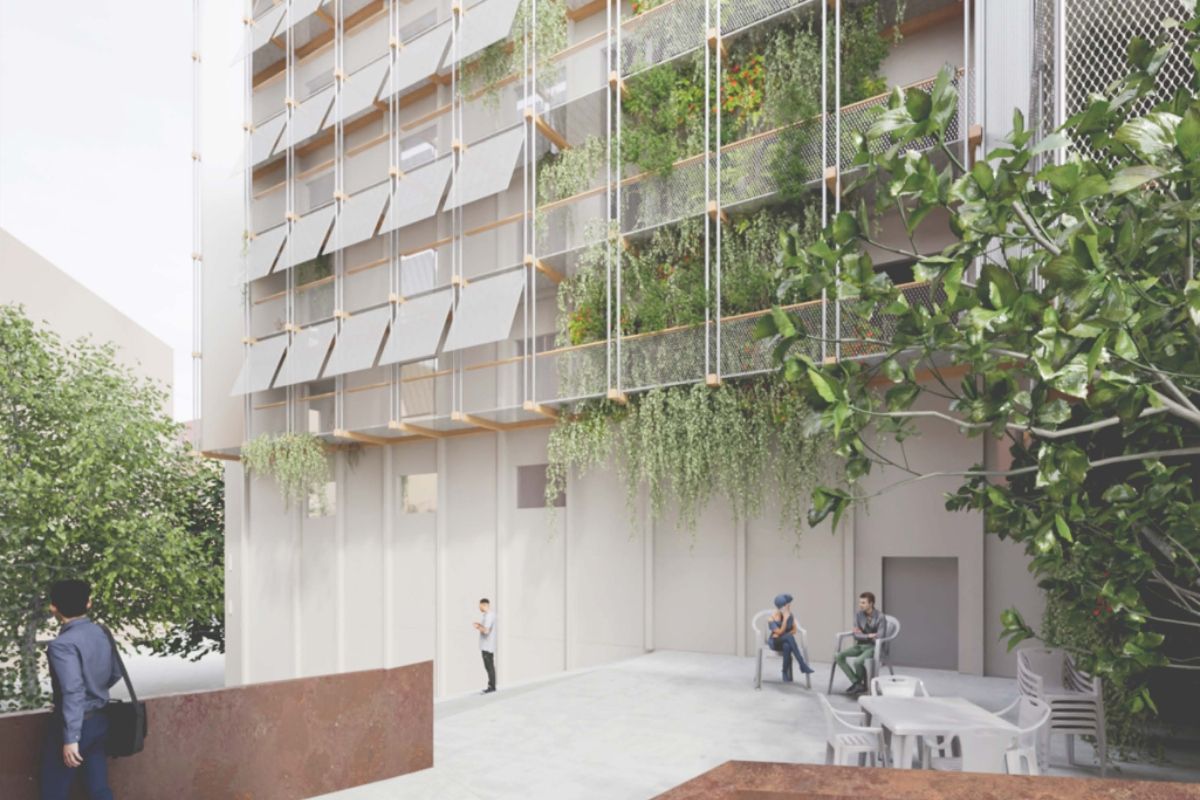
Specifically, Ciutat Vella will replace two party walls in Martina Castells square with roofs with openings and space to promote biodiversity, especially plants and birds. In the Eixample, the property at number 103 on Nàpols street will overlook the gardens of Carretera Antiga d'Horta with a new structure of walkways and hanging vegetation, while on Avenida Madrid with Lluçà street, in Les Corts, bricks will be replaced by balconies and windows.
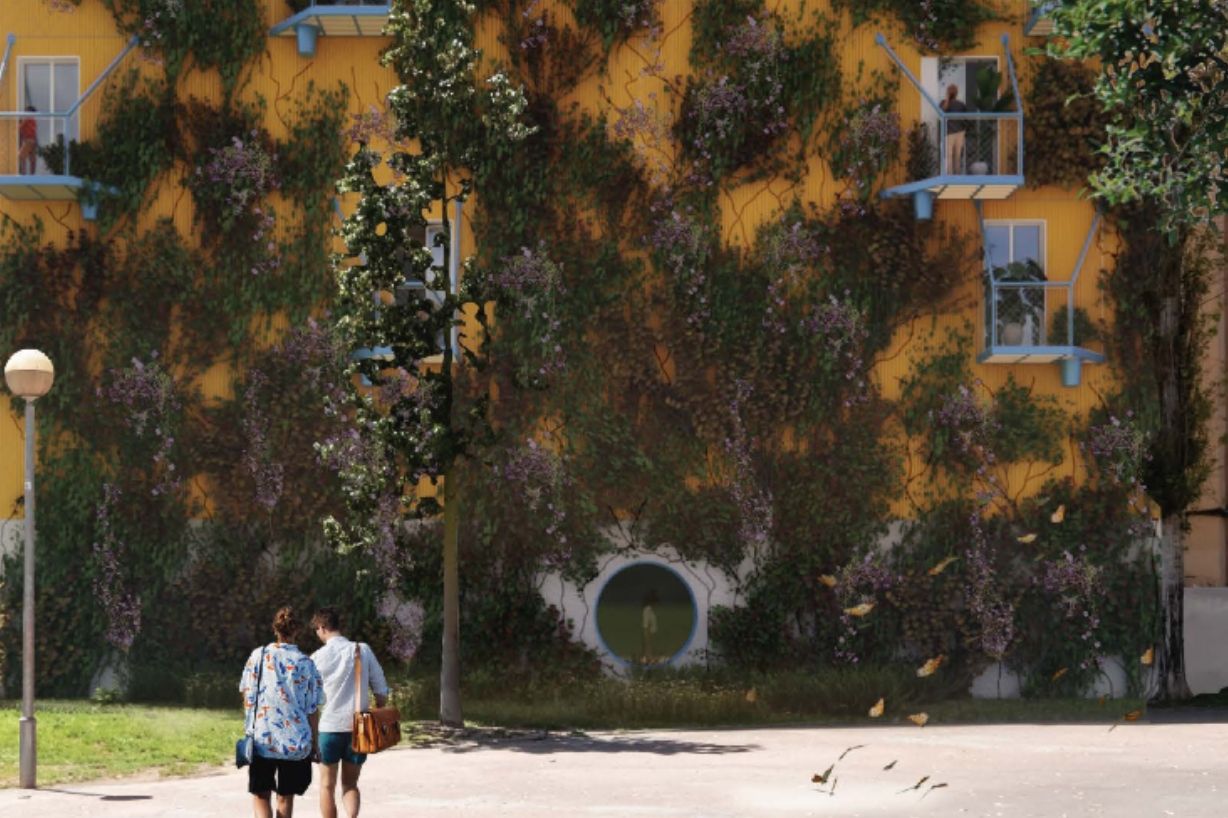
The gardens of Marià Manent, in Sarrià-Sant Gervasi, will transform two large party walls into vertical balconies of a characteristic blue that will contrast with the green of the vegetation, while large balconies will be the protagonists of the facade that the Caterina Albert gardens, in Gràcia, will gain, and a vertical forest will take over the party wall located in the Sagrera park, in Sant Martí. In Horta-Guinardó, two large walls will be covered with earth blocks to reclaim past techniques as still more than valid and energy-efficient options.
The Placeta de Charlot, in Nou Barris, will gain color and vegetation with the proposal, while that of Grau, in Sant Andreu, will use various materials to promote biodiversity and sustainability, including ceramics. Ceramics will also be the protagonist of the two large party walls on Quetzal street, in Sants-Montjuïc, before which Bonet has claimed that the proposals "are very diverse, but they all have one thing in common: the will to beautify the city and improve the quality of life of the people who reside in it."
To move in this direction, the City Council has identified another 50 party walls in which it proposes to intervene during this term, apart from the competition and within the party wall transformation plan that is already underway. And, as Buhigas has highlighted, "party walls are conceived to be covered by an adjoining building that sometimes does not arrive." In these cases, "we cannot settle for leaving it like that; what we do now is dignify these spaces and beautify them."
Add The New Barcelona Post as your preferred Google source for free
Stay informed with the latest news.
