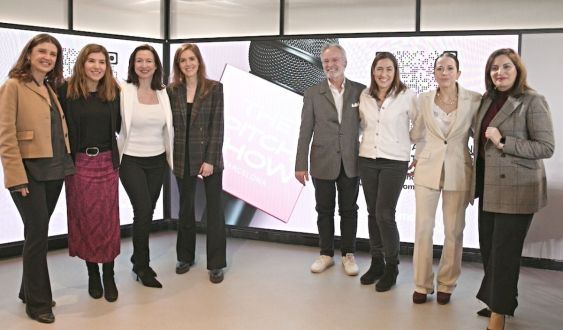
Only 2% of venture capital investment goes to startups led by women, a tiny figure that does not correspond to the also low proportion of emerging companies with female leadership, which represent 15% of the total in Europe. In Barcelona, the figure improves, but only to an insufficient 20% of startups led by women. In this context, Sheblooms has started operating in the city as a community for entrepreneurs and investors, with the aim of contributing to transforming these figures.
The platform aims to facilitate investment in initiatives led by women by generating a community of entrepreneurs with key resources to boost and consolidate their projects, as explained by Sheblooms director, Virginie Rogé. This free community is complemented by a paid program to facilitate capital raising with training, documentation, and access to its network of 800 investors, which include investors of all types: from business angels to family offices and venture capital funds. And Sheblooms has recently incorporated one more figure: that of the "micro-investor," which accepts tickets from 500 euros: "If we want more startups led by women, we must be open to everyone, and not be an elitist club."
With this same objective of opening up the female entrepreneurial landscape beyond professional investors, Sheblooms was presented in Barcelona in an event with a format designed to attract professionals from other fields and the general public, in which five startups led by women competed by combining a brief pitch with leadership tests.
The evaluations of a jury made up mainly of female investors and public votes resulted in a tie: Fabbric, led by Alba Rocafort and focused on optimizing the design and manufacture of fashion collections, and Envita, directed by Noelia López, which offers digital solutions for personalized care of the elderly, were declared winners. Upon being proclaimed winners, they have opened a campaign in Sheblooms to raise funding: so far, investors have expressed interest in investing up to a total of 80,000 euros. The final figure will translate into funds for both startups during the next week, as Rogé details.
Now, they are already focused on the next steps: the platform created in Barcelona will replicate this event in Madrid in April, while working to attract investment for startups through the platform. "We would like to help 20 companies raise capital in 2025", and then, multiply the figure, with one goal: "In the future we would like to create our own investment fund."
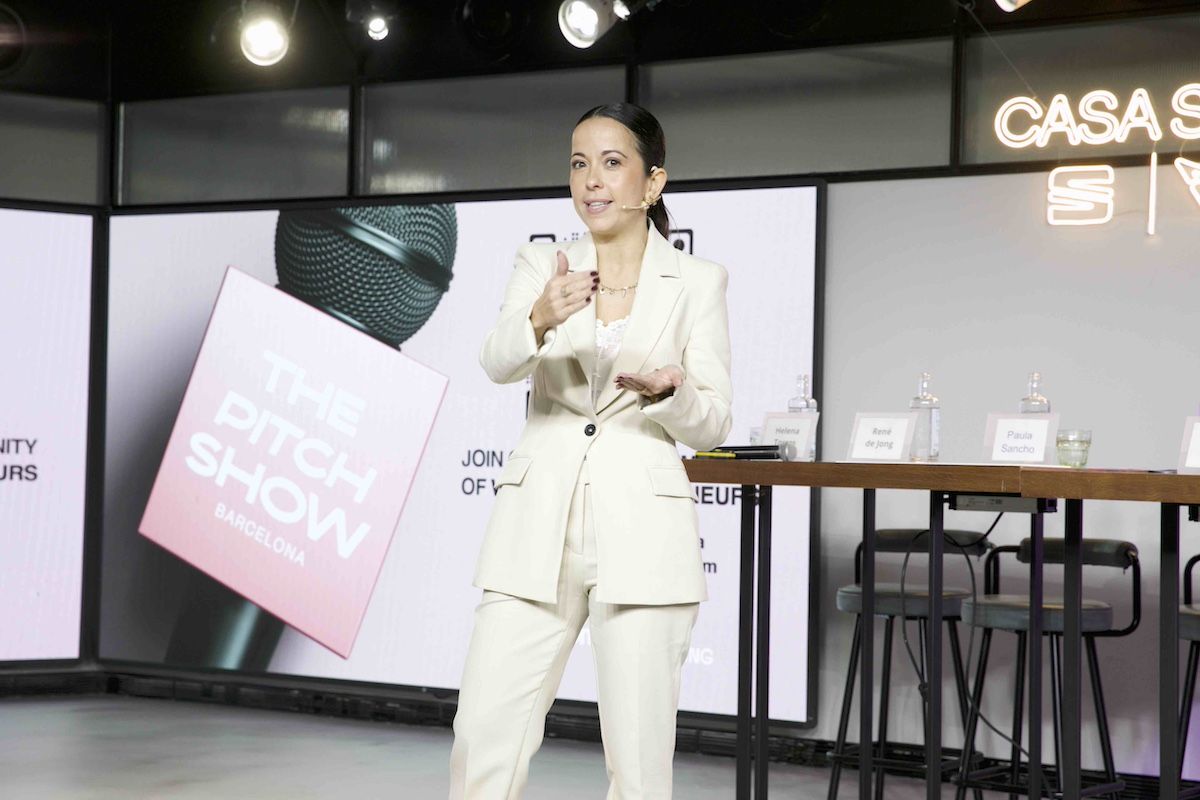
All of this to give female entrepreneurship a necessary push to turn the figures around. "We have to give it a push. It's a matter of time until more women start businesses and receive more investment, but, if we don't give it a push, it's going to take too long," warns investor and independent advisor Helena Torras. "I believe it's possible to reach a figure close to 50-50, but if we want to achieve it, we have to make this push and make an effort towards women's projects," through initiatives like Sheblooms and the also Barcelona-based Wa4Steam, as highlighted by the also member of the board of Barcelona Tech City.
Torras, who was a speaker and judge at the Sheblooms event, defends this position from the perspective she gained from having gone through all angles of entrepreneurship since she made the leap from traditional business in 2007. She started as a small investor in a project she ended up directing two years later. "Back then, they remembered me at events because I was practically the only woman, and now that no longer happens. We are far from being at half, but there are many more women entrepreneurs with powerful projects," emphasizes Torras, who then began to mentor startups, undertook other projects, and continued as an investor and independent advisor.

After having gone through the different facets of the entrepreneurial ecosystem, Torras is clear about the reasons why projects led by women only capture 2% of venture capital investment. In the initial stages of a startup, investors value the team more than the results —because often there is still no data to evaluate—, and the fact that most investors are men already conditions the figures, since "human beings tend to support something in which they see themselves reflected." Furthermore, the lack of role models and success stories makes it difficult for them to bet on women, despite various studies indicating that projects with at least one woman on the founding team have 63% more profitability than those led only by men, as highlighted by Torras, who has been considered one of the 100 most influential women in Europe in the startup and venture capital landscape.
"We need more women investors so that there are more funded female entrepreneurs and more success stories, so that there are more women who undertake and more women who move to the next phase," which is why Torras sees it as crucial to generate communities like Sheblooms. "We need this push, at least for a while, which I hope will be short. The ideal will be that we can stop doing it. We need the push to reach diversity, which is the goal," defends the investor who, in fact, believes that the best teams are those formed by a man and a woman, with her as CEO.
In every path towards diversity, Barcelona's entrepreneurial fabric plays a key role: "The city's ecosystem helps generate initiatives that go in this direction." And it is that "Barcelona has always been a pioneer in the entrepreneurial field and has been at the forefront," with the ambition of positioning itself as a city in which to undertake and in which to grow: "In Europe there are other extraordinary ecosystems, that's clear; but that Barcelona has something unique, also."
Add The New Barcelona Post as your preferred Google source for free
Stay informed with the latest news.