The message is clear. Seat cannot electrify the Martorell plant without the support of the administrations. The car manufacturer has been saying it for months and has said it once again. It plans to invest 5,000 million euros between now and 2025 to adapt the factory to this new production, but the executive and the European Union also have to do their part.
At the presentation of the 2020 results, marked by the impact of covid, its president, Wayne Griffiths, has given homework to Pedro Sánchez's Government, which must have it ready for this year: it is necessary to incentivize the purchase of electric vehicles, raising the market share from 4% to 10%, and more than tripling the charging points, going from 8,000 to 28,000 throughout the country. "Spain cannot lose this historic opportunity," Griffiths defended.
These ambitious goals for 2021 are part of Seat's Future Fast Forward strategy. It involves the participation of about fifteen companies, large and small, and from different sectors, such as CaixaBank, Telefónica, Iberdrola, Gestamp, Ficosa, Sesé, Delta Vigo or Antolín. The plan must lay the necessary foundations to boost the electric vehicle in Spain and revitalize its industrial sector. According to the car manufacturer's calculations, if it goes ahead, it would contribute between 20 and 30 million euros to GDP and generate between 300,000 and 500,000 jobs from 2030.
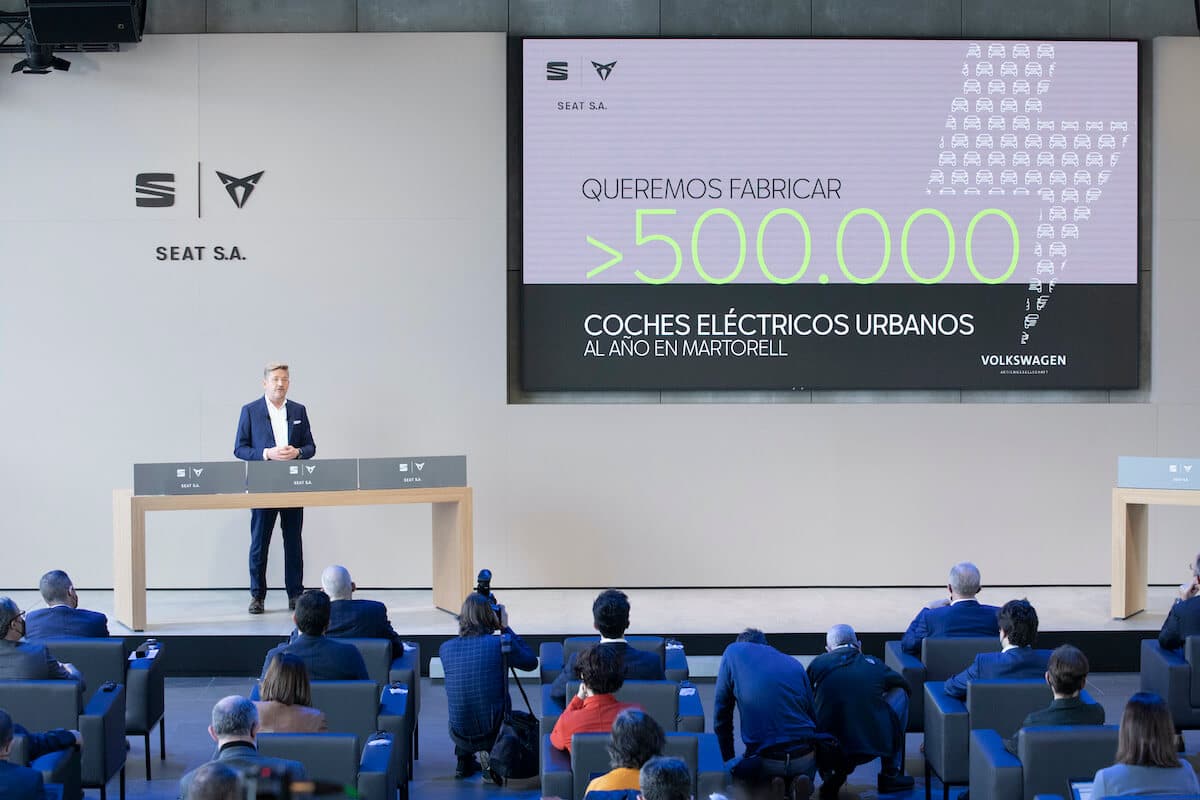
Seat's strategy foresees that the Martorell plant will manufacture more than 500,000 electric cars per year from 2025, thus absorbing its entire production capacity. "Martorell will be an electric plant," its president assured. The factory is expected to produce electric vehicles for the different Volkswagen brands, although the group has not yet specified which ones they may be.
Awaiting the battery factory
It has not yet been specified whether, finally, the group's battery plant for southern Europe will be located in Spain or exactly where, a key element to be able to produce electric cars in Martorell by lowering their cost. The Government announced a few weeks ago the creation of a public-private consortium to develop the first battery factory in Spain, hand in hand with Seat-Volkswagen and Iberdrola, which wants to be financed with Next Generation funds and has to find a technological partner.
That is why Griffiths has once again asked for the support of the executive, staged in the visit of Sánchez and King Felipe VI, and also of the European Commission to make it possible and allow the transformation of the automotive industry in Spain, the second most important market in all of Europe. Another factor that also needs to be defined is the construction of a plant to assemble the batteries, which the president of Seat has emphasized must be "very close", either in Martorell or in Barcelona.
New Seat urban electric car
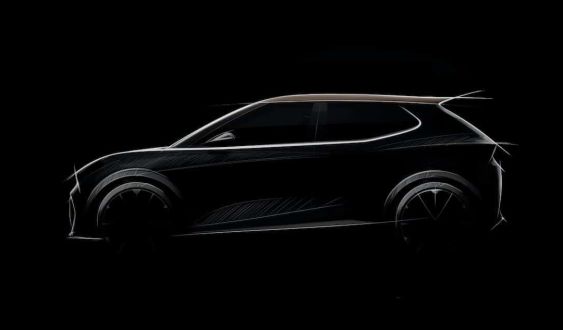
With this medium-term aspiration, the company has also announced that it will launch an urban electric car in 2025, with a price between 20,000 and 25,000 euros and the dimensions of the Seat Arona, a bet that should make electromobility accessible on a massive scale. However, it has not yet specified whether it will be manufactured in the Barcelona plant, although Griffiths has indicated that they want it to be made from here.
Likewise, it is necessary to know if it will be of the Seat or Cupra brand. The latter will debut in the electric market at the end of this year with the Cupra el-Borne, designed and fully developed in Barcelona, but which will be produced in Germany. By 2024, it will commercialize the Cupra Tavascan, also designed and developed in the Catalan capital.
Losses in 2020 after years of growth
The pandemic especially affected Seat, which registered losses in 2020 after continuous growth in recent years. The automaker closed the year with a negative result after taxes of 194 million euros, compared to 346 million in profits in 2019, and sales of 427,000 units, a 25.6% decrease. "2020 has not been an easy year," stressed the executive vice president of Finance and Information Technologies of Seat, Carsten Isensee.
Despite everything, Griffiths expects to increase sales this year and recover pre-covid levels, if the pandemic continues to be controlled and the vaccination campaign continues to advance: "In 2021 we have to return to profitability. This is our financial goal."
Add The New Barcelona Post as your preferred Google source for free
Stay informed with the latest news.
