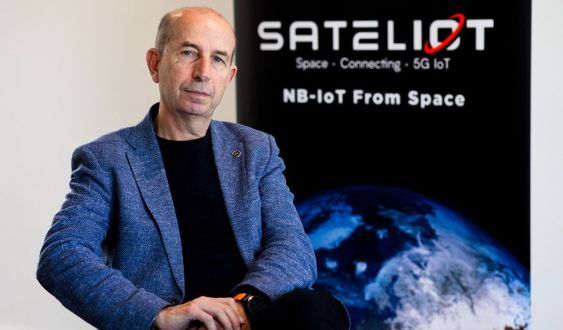
Bringing Internet to areas without coverage. With this objective, the Catalan startup Sateliot began developing satellites in 2017 to be launched into space and offer connectivity even to the most remote and inaccessible areas of the planet, to provide service to logistics companies, agricultural companies, or even for purposes related to defense or cybersecurity. An objective that is increasingly closer after the company has closed its second round of financing with which it has raised 70 million euros.
This investment will be allocated to the deployment of a constellation of more than 100 satellites to become the first 5G telecommunications operator focused on the Internet of Things ---IoT for its English acronym---. That is, to ensure that machines anywhere in the world can be connected to the Internet thanks to this constellation of satellites located in space at low altitude.
The company began its journey with the idea of creating a device that offered a more economical Internet connection than those available on the market at the time. To do this, they were inspired by the satellites used by telecommunications companies but adapting them to devices and equipment that did not need to be connected all the time, as a mobile phone does, but rather transmitted a few messages a day, such as machines for monitoring crops. Thus, in 2021 they deployed their first experimental satellites, and since last summer they have a constellation of four satellites in space to begin commercializing this service.
To now begin this commercial phase, after having overcome the experimental phase, the company has raised its second round of financing of 70 million euros, which has closed after the contribution of 10 million euros from Hyperion Fund, the fund promoted by Pablo Casado. The fund led by the former president of the Popular Party (PP), the first firm in Europe specialized in defense and aerospace, continues its investment phase with this operation, after investing 23 million euros last week in the Catalan startup Pangea Aerospace, focused on the development of propulsion systems.
In addition to Hyperion Fund, the round has also been raised after the Council of Ministers approved an investment of 13.8 million euros in the company, through the Spanish Society for Technological Transformation (SETT). This public body, known as Sepi digital, considered the technological equivalent of Sepi (State Society of Industrial Participations), was created in the summer to finance innovative solutions and companies in the field of digital transformation.
For the CEO of the startup, Jaume Sanpera, "the trust of SETT confirms that Sateliot is the European answer to the need for secure and autonomous satellite connectivity, with critical applications in both the civil sphere and in security and defense." In addition to SETT, the European Investment Bank (EIB) also injected 30 million euros into the company in December, an operation that represents the first loan executed by the European institution to a Spanish space company.
These investments are added to those of the Global Portfolio Investments fund, which contributed 10 million euros, and to shareholders such as Indra or Cellnex, who also participated in the company's first round in 2022, with which it raised 10 million euros. The Generalitat also participated in the financing of the company's project, through a loan worth 2.5 million from Avançsa.
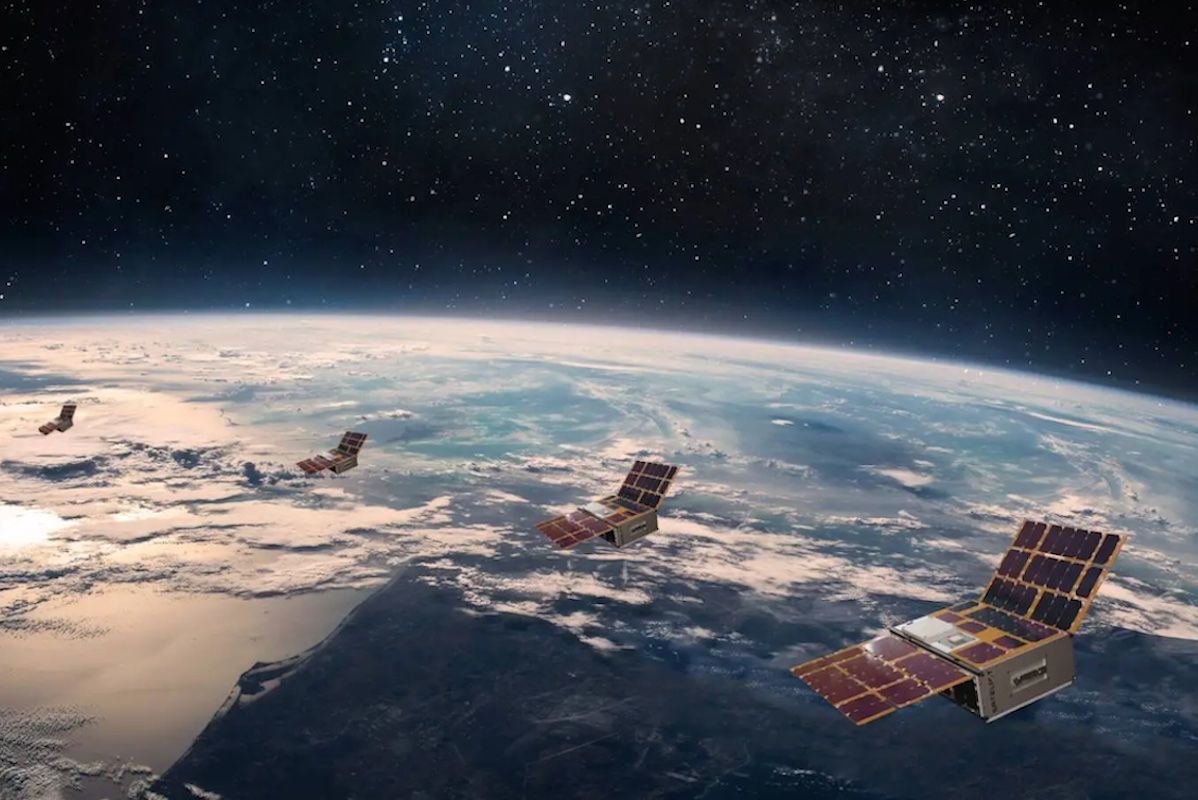
With the financing raised, the startup advances its plans in space to guarantee connectivity even in the most inaccessible areas. To achieve this goal, the company foresees the need to deploy a hundred satellites, although for now it only has six orbiting in space. Two of these satellites are publicly owned, the Enxaneta and the Minairó, which they launched together with OpenCosmos, another Catalan startup, as part of the Generalitat's NewSpace strategy, to strengthen the Catalan space system.
Catalan companies such as Sateliot or OpenCosmos ---which will create, together with the i2CAT research center, the first European 6G research laboratory in low orbit with a budget of 1.65 million euros--- are playing a key role in this new space economy. A booming economic sector not only in Catalonia but also internationally, as Europe fights to gain sovereignty in space, without having to depend on other powers such as the United States or China. "For Europe, the struggle for space must be a priority issue, as we cannot depend as we have until now on the United States because the priorities of this country may not coincide with those of Europe," Sanpera emphasized.
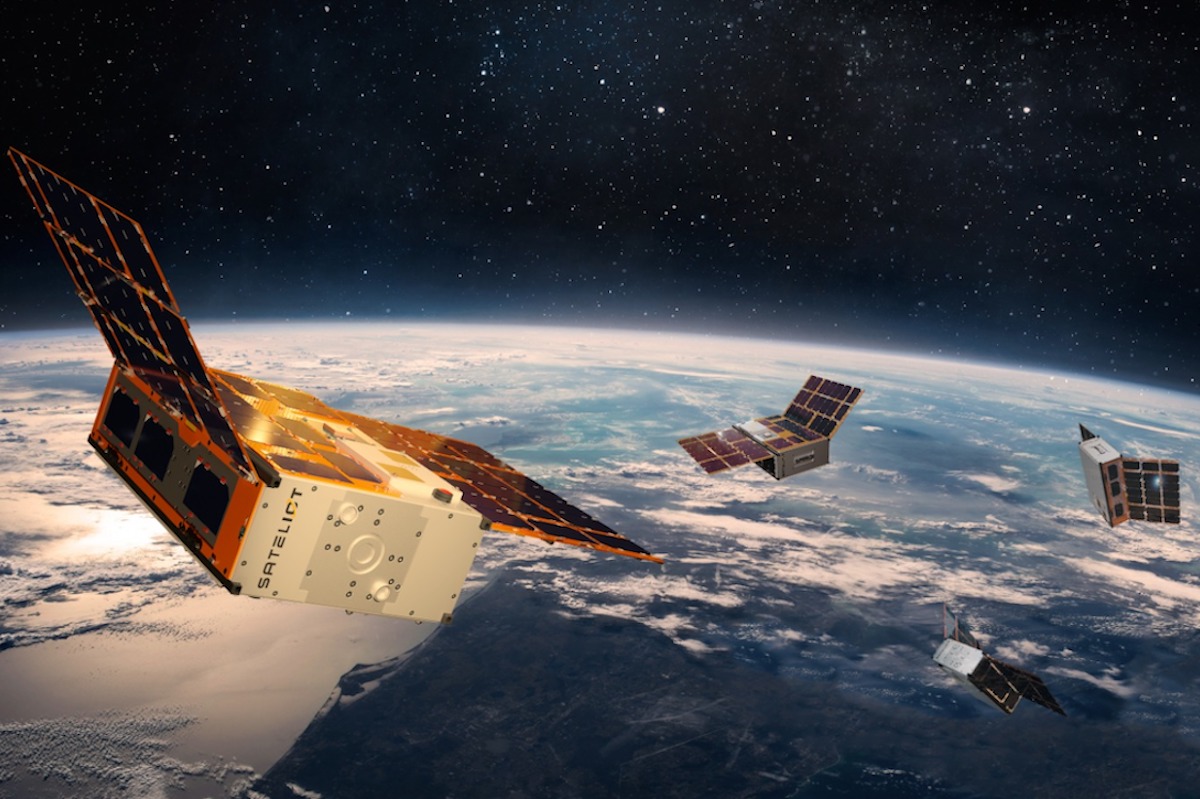
In addition to these two public satellites, the company also has four more in space ---launched in August last year with a Falcon 9 rocket from Space X, Elon Musk's company, also owner of X and Tesla--- with which it plans to start its commercial phase and begin invoicing this year.
270 million euros in contracts
To offer an optimal service, Sateliot estimates that it should have a constellation of one hundred satellites orbiting in space since these satellites can only guarantee the connectivity of a device when they are close to it. Thus, taking into account that they are rotating while the Earth also does, it can take a whole day for them to pass through the same point again, so right now they have little capacity to send messages. In contrast, with a hundred satellites in space, they could ensure that their clients' devices can be connected in real time, and send messages when desired, without having to wait for the same satellite to complete its full orbit around the Earth again.
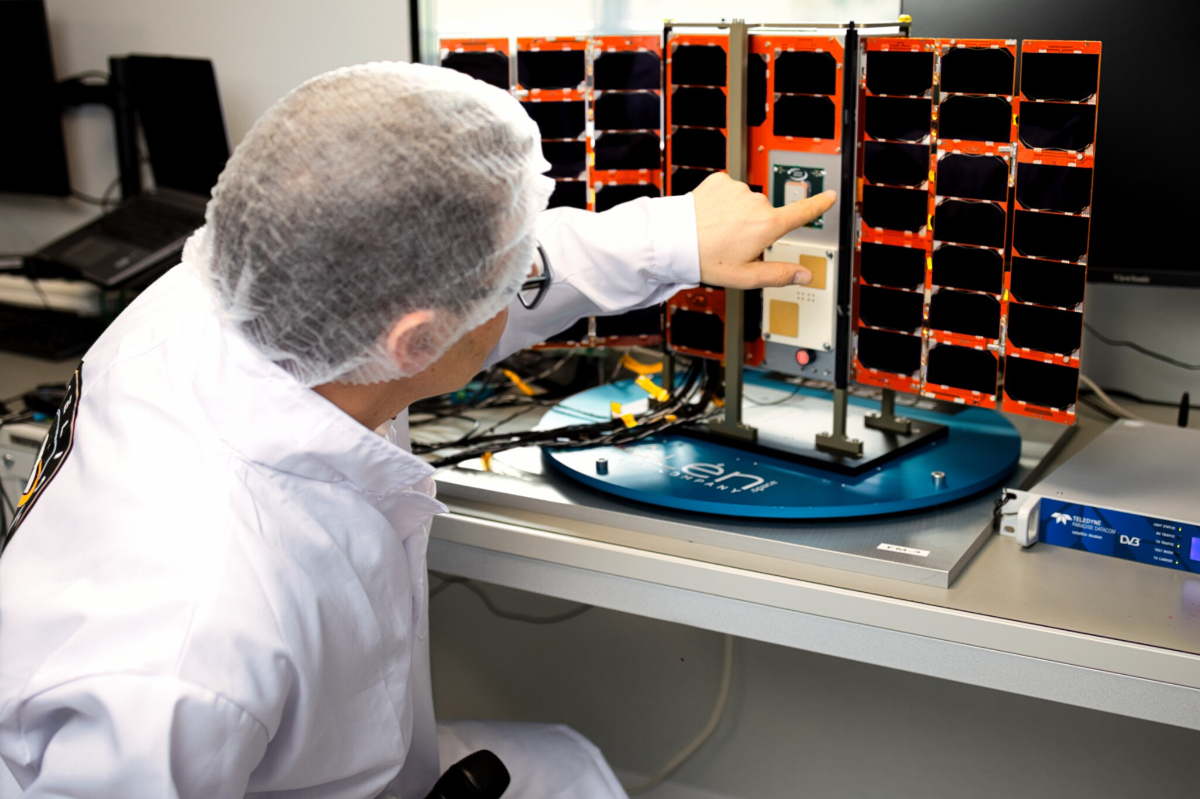
The startup plans to follow a wholesale commercial strategy, offering its service to telecommunications operators so that they, in turn, can close agreements with clients worldwide. However, for now, Sateliot has begun to close agreements with direct clients and already has 270 million euros committed in contracts with more than 400 clients from 50 countries around the world.
With these agreements, the startup expects to bill up to 1,000 million euros by 2030. Among the clients are companies of all types, from agricultural or livestock farms that wish to monitor their business, to infrastructures such as high-voltage cables or bridges. It can also be applied to cybersecurity or defense operations, to control assets such as soldiers deployed across the territory, trucks, or available medicines; as well as already studying the possibility of seeking other applications such as the connected autonomous car.
Add The New Barcelona Post as your preferred Google source for free
Stay informed with the latest news.
