
Roca Group will electrify the kilns with which it produces its popular sinks and toilets as a major step towards becoming a carbon-neutral company by 2045. The world leader in sanitary porcelain for the bathroom has announced a plan to replace the natural gas it currently uses in its factories with new kilns capable of generating temperatures of 1,250 degrees with 100% renewable electric energy in the coming years.
The group's first plant equipped with this technology is located in the Austrian town of Gmunden, near Salzburg, and five more installations are already planned in other European factories that will be launched between 2024 and 2025. Among them are the two sanitary porcelain factories that Roca owns in Spain, located in Gavà (Barcelona) and Burgos, where it produces the Gala brand. Both projects, which will be executed starting in 2025, have been included in the PERTE for industrial decarbonization promoted by the Government with Next Generation funds.
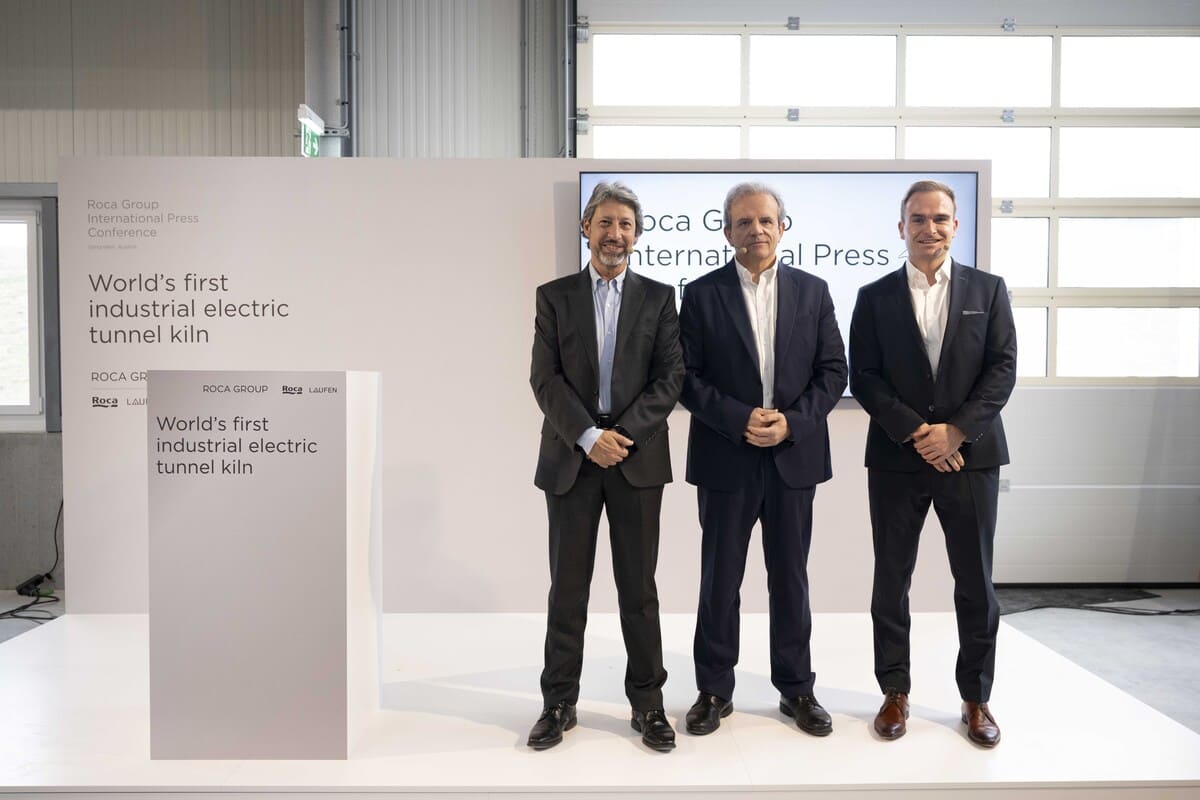
"Our goal is to transform the sanitary porcelain industry and lead the decarbonization process of the sector," said Roca's CEO, Albert Magrans, this Thursday during the presentation of the electric kiln in Gmunden, which is the first to be launched in this sector worldwide. "Four years ago, it was crazy to think that we could produce sanitary porcelain without CO₂ emissions," added Axel Krause, executive of the German company that built the electric kiln, Keramischer Ofenbau.
This feat, the result of more than four years of R&D work, has led Roca to acquire a 66% stake in this company, which will be responsible for developing all the electric kilns that the Catalan group will install from now on. According to Albert Magrans, Keramischer Ofenbau will continue to operate as an independent company, working for multiple clients as before, and will also offer this new technology to Roca's competing companies to accelerate the transformation of the entire sector. The entry into Keramischer's capital has been carried out through Roca Venture Fund, the fund endowed with 25 million that the group launched to promote emerging and innovative companies in terms of sustainability.
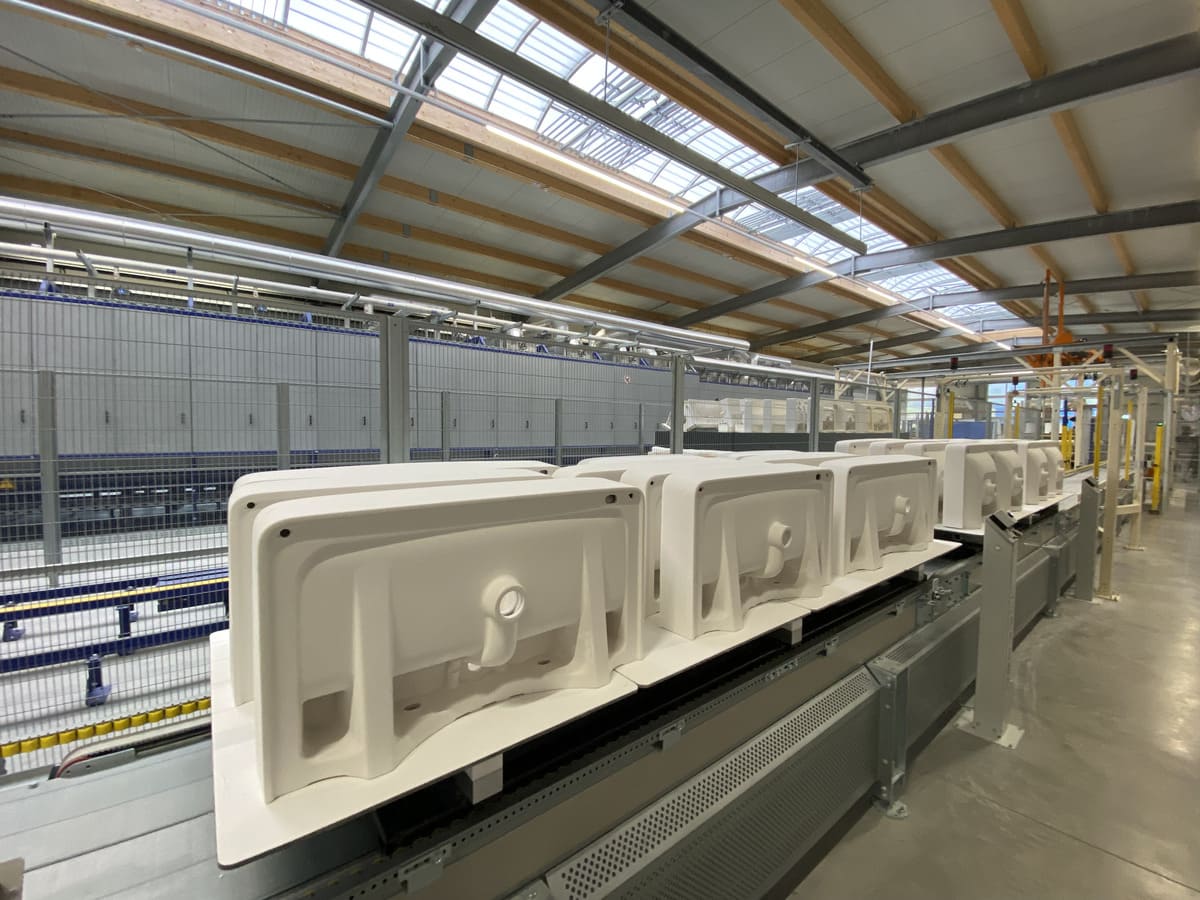
The Catalan family group has invested 10 million euros in executing this project in the quiet town of Gmunden, located in a valley surrounded by mountains and presided over by a large lake. Half of this figure has been allocated to the design and construction of the new automated electric tunnel for firing ceramic pieces, and the other half corresponds to civil works, as a new building had to be constructed to house the installation. The building is equipped with solar panels that generate 40% of the energy consumed by the plant. The remaining 60% comes from the purchase of certified green electricity, i.e., 100% renewable in origin. According to Roca, the electric kiln will prevent the emission of 5,000 tons of CO₂ annually. The old natural gas-fired kiln in Gmunden was definitively shut down barely a month ago and is already in the process of being dismantled, ushering in a new era.
The choice of this Upper Austrian factory to install this pioneering technology is not trivial. Gmunden is a region with a long tradition in the ceramic industry due to its abundance of clay and, for a hundred years, has hosted a factory that is part of the elite of the bathroom sector, as numerous technical innovations have emerged from it. Roca became the owner of the plant in 1999 when it bought the Swiss group Laufen. Today, Laufen is, along with Roca, one of the two global brands of the Barcelona-based multinational, which owns a total of 39 brands and has a commercial presence in 170 countries, with a turnover that reached 2,092 million euros in 2022. In that fiscal year ---2023 data is not yet available--- the group obtained a net profit of 42 million, 76% less.
"The Laufen factory in Gmunden, specialized in high-end products, is a true industrial laboratory that concentrates our greatest expertise in sanitary porcelain. We needed to have the best possible team to execute such an ambitious project," explained a satisfied Magrans, who also referred to the geographical proximity to Keramischer Ofenbau.
Thanks to everything learned with this pilot project, Roca is confident that it can now scale up the electrification of all its production processes much faster, which will lead it to invest in the installation of solar panels and sign multiple green energy purchase agreements (PPA), according to Carlos Velázquez, Roca's sustainability director. The challenge, he states, is enormous, as the group has 79 plants on five continents and not all countries have the same availability of electricity from renewable sources.
Furthermore, there is still much uncertainty about the role that green hydrogen will ultimately play in this ecological transition process. "Green hydrogen is not our first priority. For now, it is expensive and there is very little availability, but we will be prepared if this reality changes," says Velázquez. In this regard, he explains that the group already has a research program underway in alliance with the UPC, to evaluate the effectiveness of using hydrogen in its current natural gas burners.
Albert Magrans: "We are obsessed with sustainability and we have just demonstrated that it is possible to manufacture sanitary porcelain without emitting CO₂"In the last three years, the company has invested 50 million in sustainability actions that have reduced CO₂ emissions by 39% and water consumption by 47%. This figure will now be intensified with this commitment to electric kilns. "We are obsessed with sustainability and we have just demonstrated that it is possible to manufacture sanitary porcelain without emitting CO₂," he emphasizedMagrans, after pointing out that in 2024 the budget for environmental actions has increased to 26 million. A good part of this investment will be allocated to the commissioning of three new electric furnaces in Europe, although the location of the plants has not been specified. In 2025, they hope to be able to electrify the Spanish factories in Gavà and Burgos, once they have the resources from thePERTEdecarbonization.
The electrification of Gavà, pending an urban development project
In the case of Gavà, the project also depends on the culmination of the long bureaucratic process of the so-calledSpaceRoca, a macro-plan for urban and economic transformation of the area occupied by the historic factory of theBaixLlobregat and which also affects Viladecans. The project, which covers an area of 300,000 square meters, will allow both municipalities to reorder and improve the connection of their urban fabric and gain space for facilities and green areas. In parallel, Roca plans to build a new corporate headquarters and a research center, in addition to a new sanitary porcelain plant equipped with the most advanced technologies and which will incorporate an electric kiln like the one just launched in Austria.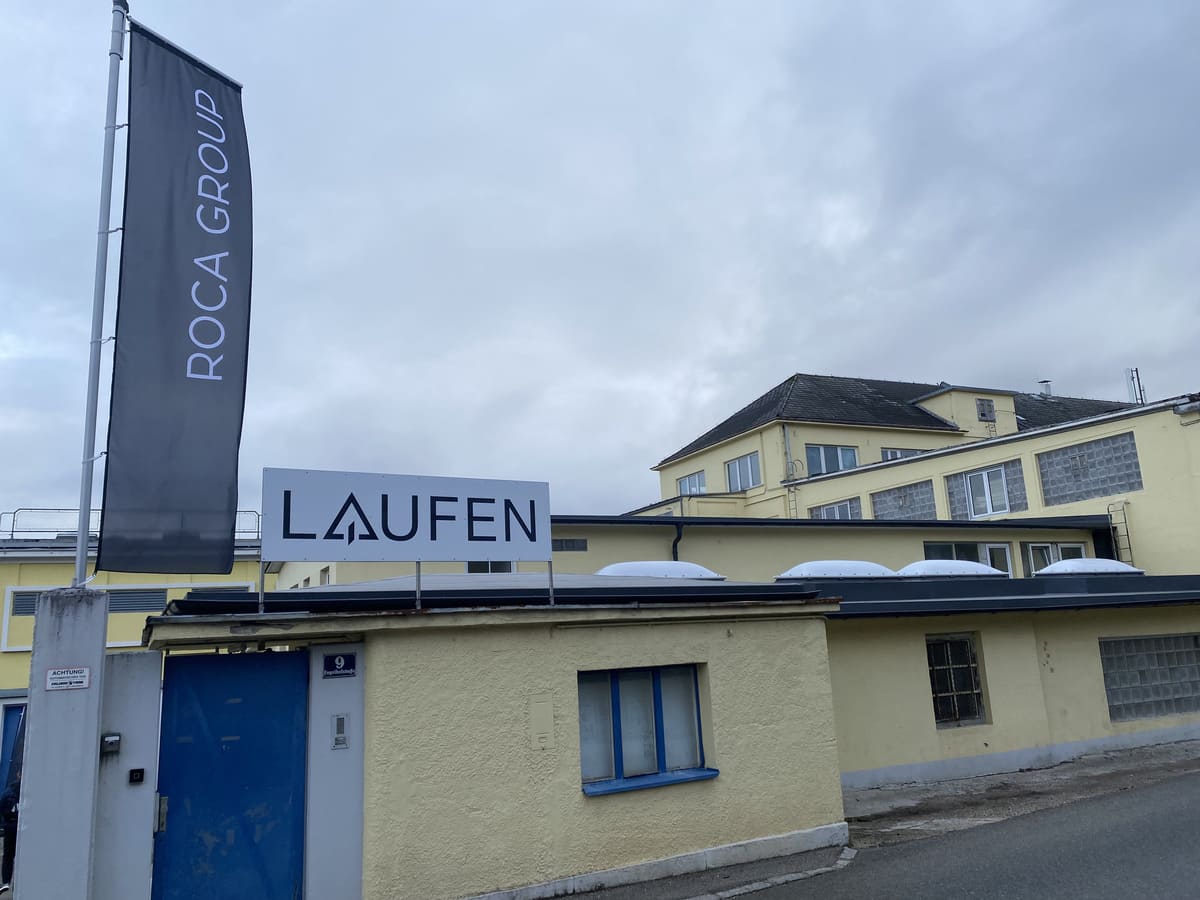
Add The New Barcelona Post as your preferred Google source for free
Stay informed with the latest news.
