Numbers or letters? For decades, this question has served to divide students within classrooms. Outside of them, this same logic has also ended up drawing borders between fields that have been presented as opposites: art and science, technology and creativity, data and emotions. But are these borders as clear as they seem at first glance? What happens when an artist enters a laboratory? Or when scientific research becomes the starting point of a work of art? What new questions can arise when these two worlds stop working separately?
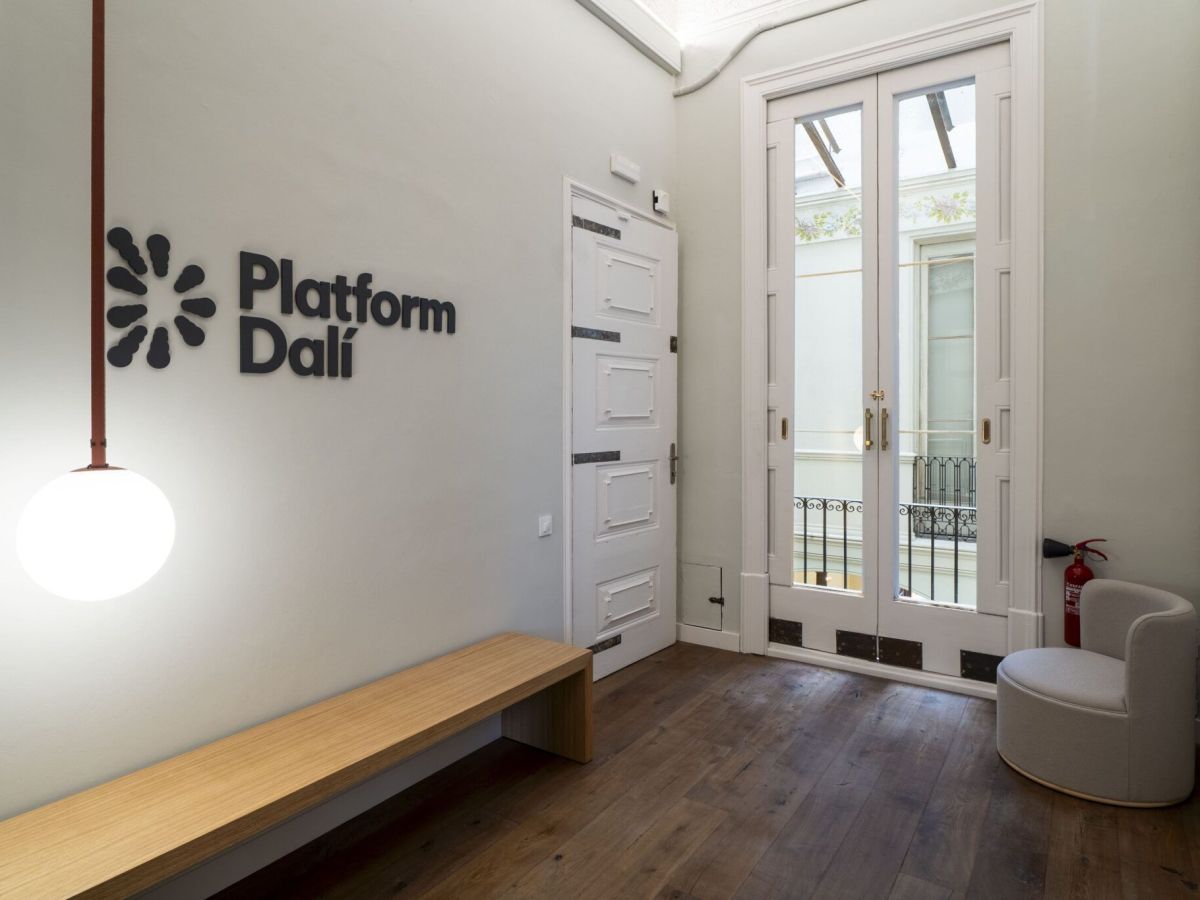
This is the spirit of Platform Dalí, the project promoted by the Gala-Salvador Dalí Foundation that has just inaugurated Espai Platform Dalí, its new headquarters at Ciutat Street, 7, in Barcelona's Gothic Quarter. More than an exhibition hall, the new headquarters aims to become a meeting point between artists and scientists, a laboratory of ideas where research and experimentation share space with creation.
The initiative focuses on a facet of Salvador Dalí that often remains in the background: his deep fascination with science. Far from understanding it as a field alien to artistic practice, the surrealist painter found in disciplines such as physics, biology or mathematics a source of inspiration to explore concepts such as matter or the passage of time. For Dalí, art and science were not separate disciplines, but two ways of exploring reality. And he expressed it thus: "the aesthetic phenomenon is deeply intertwined with the history of science, because both make possible a field of experimentation" (The Aesthetic Enigma, 1985).
This is precisely the thread that Platform Dalí picks up. Promoted by the foundation at the end of 2025, the program promotes connections between artists and researchers from leading research centers in the city such as the Barcelona Supercomputing Center, the Institute of Marine Sciences, the Institute of High Energy Physics, the Barcelona Biomedical Research Park or the Institute of Photonic Sciences. The objective is not for science to question art or for art to illustrate science, but to create a space where both disciplines can dialogue, ask questions and generate new ways of understanding the world, recovering one of Dalí's great commitments.
A laboratory to experiment
The opening of Espacio Platform Dalí is the first physical materialization of this program. Located in the heart of Barcelona's Gothic Quarter, the new space translates this desire to bring art and science into dialogue in the same physical place. The space has not been conceived as a conventional art gallery, but as a place of work and exchange: it is at once the headquarters of the program, the offices of the team that promotes it, and the studio of the resident artists, who develop their research and creation processes there.
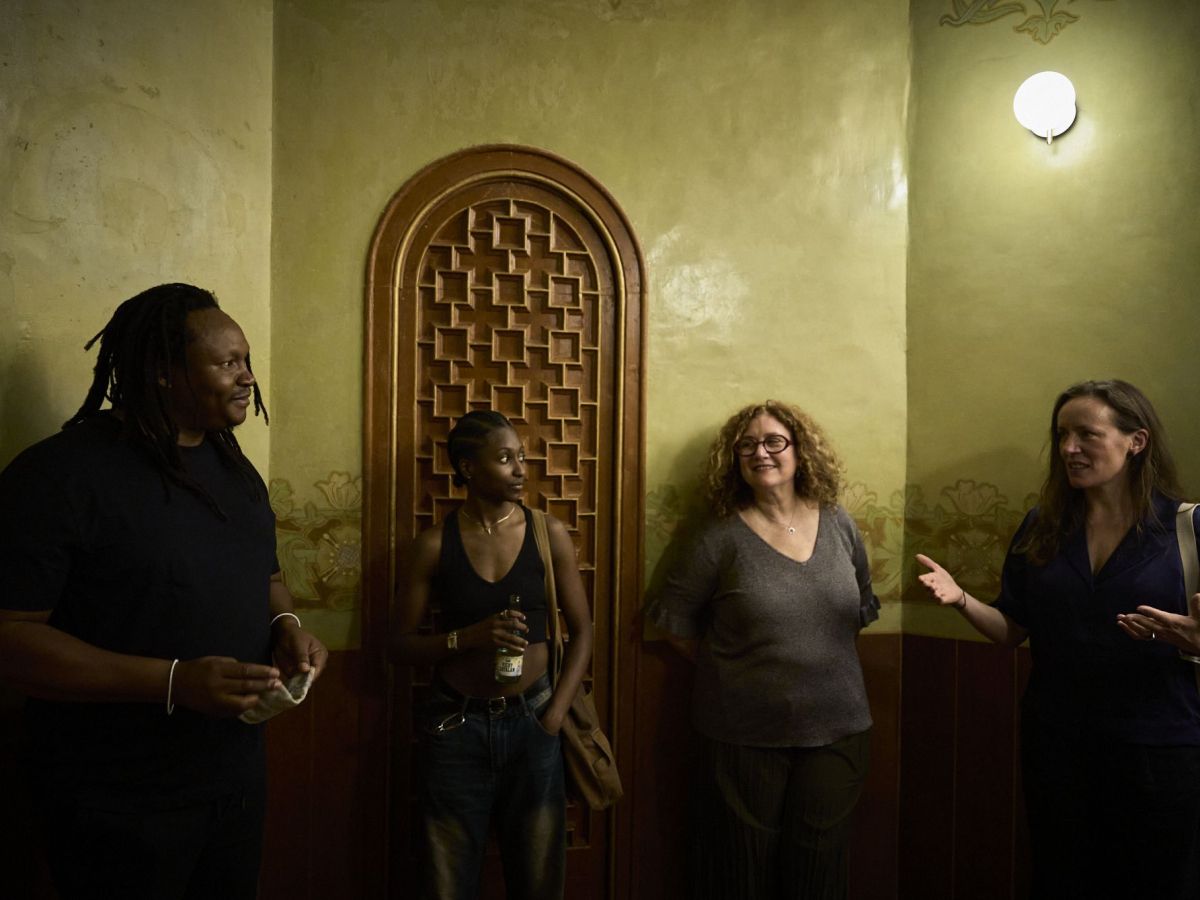
The objective is that the research processes of the artists residing in the program are not hidden behind the doors of a laboratory or a workshop, but are made visible through conversations, workshops, and exhibitions open to all citizens. Thus, starting in the fall, the facility will deploy a stable program of activities to integrate into the Barcelona cultural scene.
For now, the space opens to the public with a first exhibition that can be visited from last Wednesday, July 8, until July 23, on Tuesdays, Wednesdays, and Thursdays, from 4 to 6 p.m., always by appointment. The exhibition, conceived under the question 'What is real?', brings together the works of the first artists linked to Platform Dalí: Mexican artist Tania Candiani, one of the artists awarded a scholarship by the program until 2027; South African artist George Mahashe, resident at the Institute of High Energy Physics (IFAE), and the Catalan collective of programmers and researchers Estampa, in residence at the Institute of Marine Sciences (ICM-CSIC).
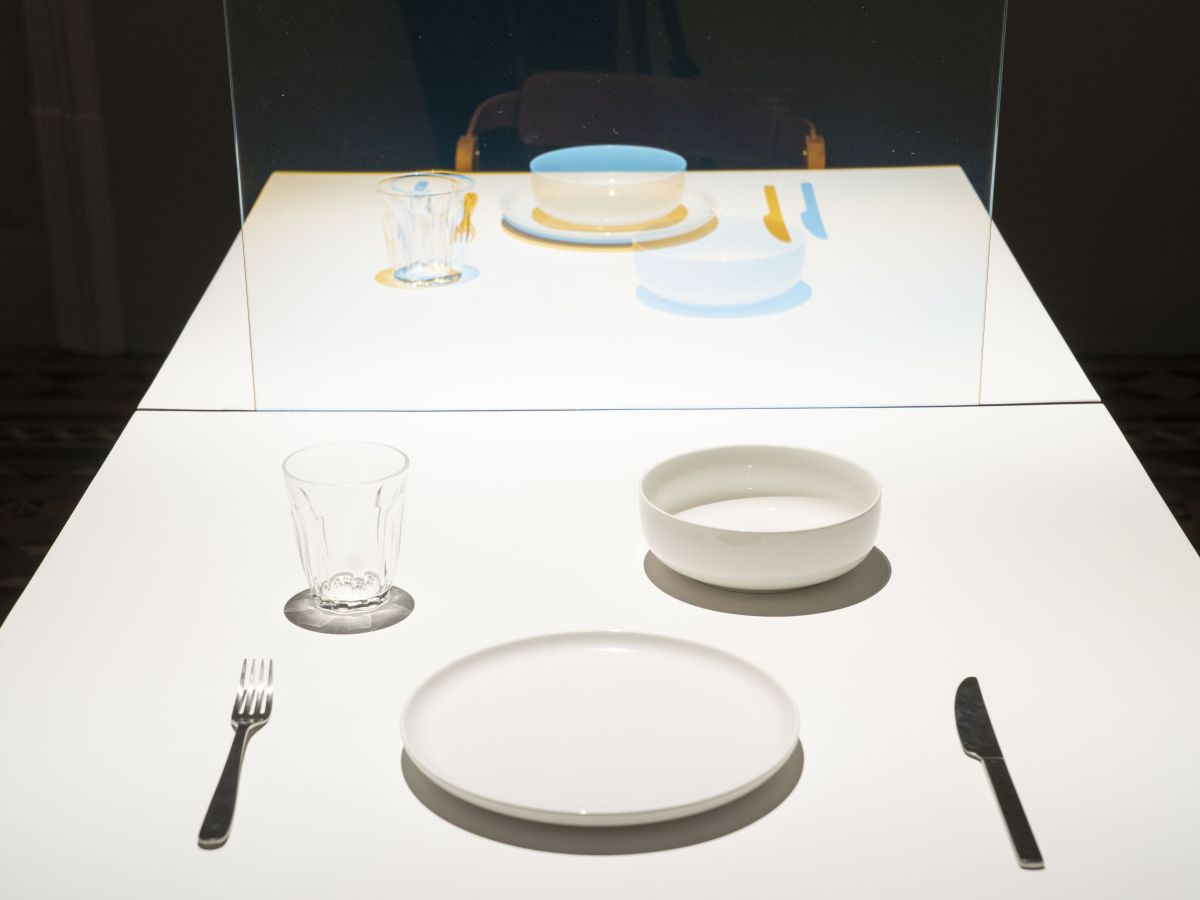
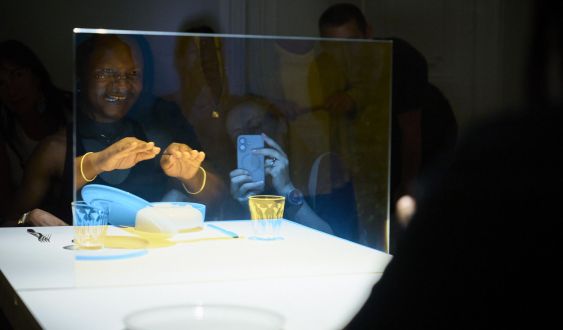
The works that inaugurate Espacio Platform Dalí are also a declaration of the project's intentions. Despite starting from very different languages, all the pieces share the same origin: scientific research. From here, they question how we perceive and interpret reality. A doubt illustrated by Taula d'espectres —one of the works installed in the new space—, where the Estampa collective invites two people to sit in front of an apparently normal table but, thanks to the play of light and optical effects, seems to be inhabited by specters.
The same collective of artists also presents Ekphrasis, a video that reflects on the limits between language and image and on the difficulty of translating into words what we see or feel. For her part, Mexican artist Tania Candiani exhibits HUM, an audiovisual piece that starts from a trumpet to explore how sound and its vibrations pass through matter. The exhibition is completed with the book defunct context: Ambivalence to important work, George Mahashe's publication, which compiles his last fifteen years of work marked by the dialogue between artistic practice and astronomical research.
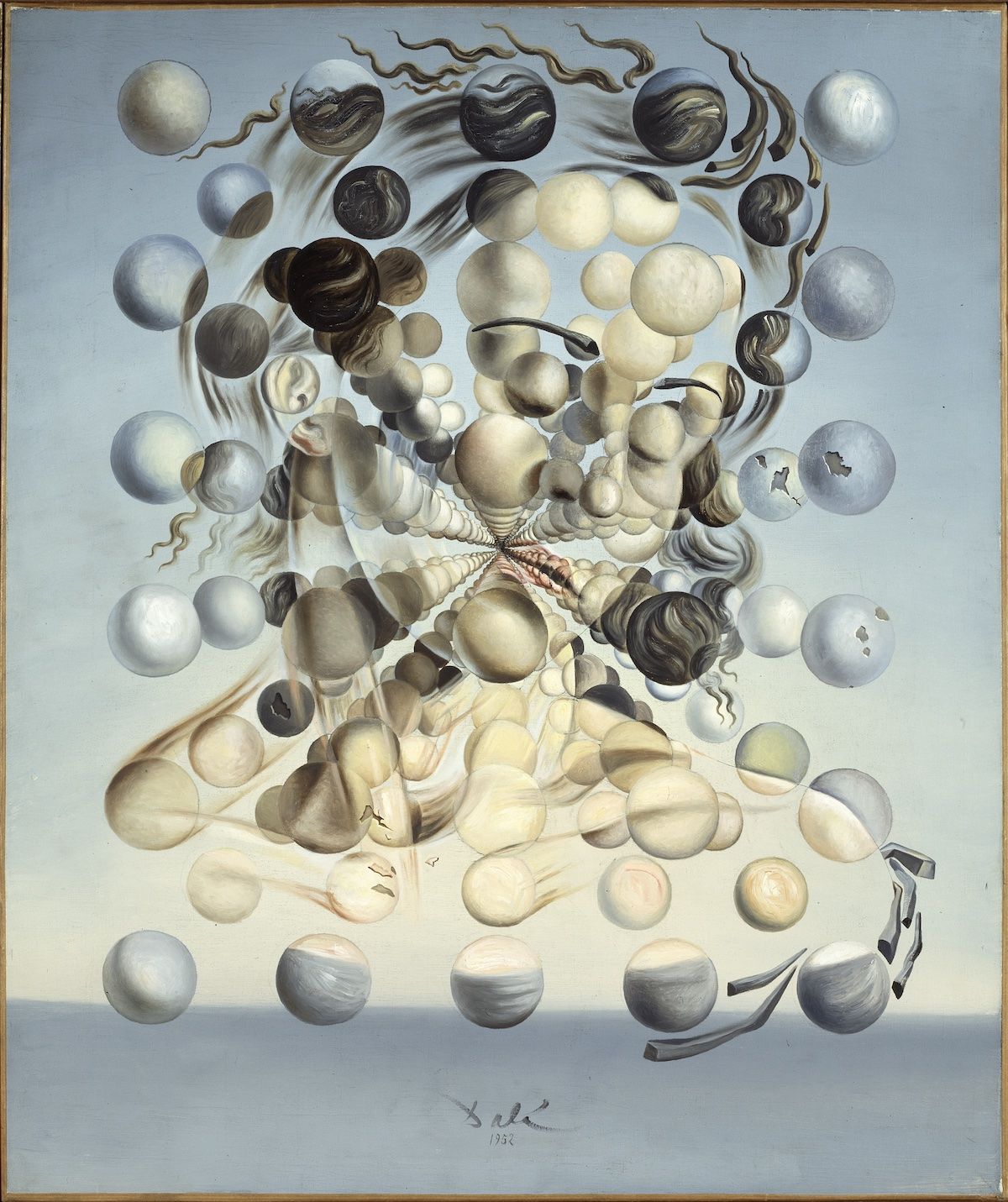
More than offering answers, the works invite us to formulate new questions. What is real? How can we understand what escapes our gaze? What limits does our perception of reality have? These are questions that science has tried to answer through research, but which have also interested artistic movements such as surrealism, promoted by painters like Salvador Dalí, who sought to explore everything that lies beneath visible reality. The same questions that, a century later, also become the starting point of the new space and the new platform.
From the laboratory to art
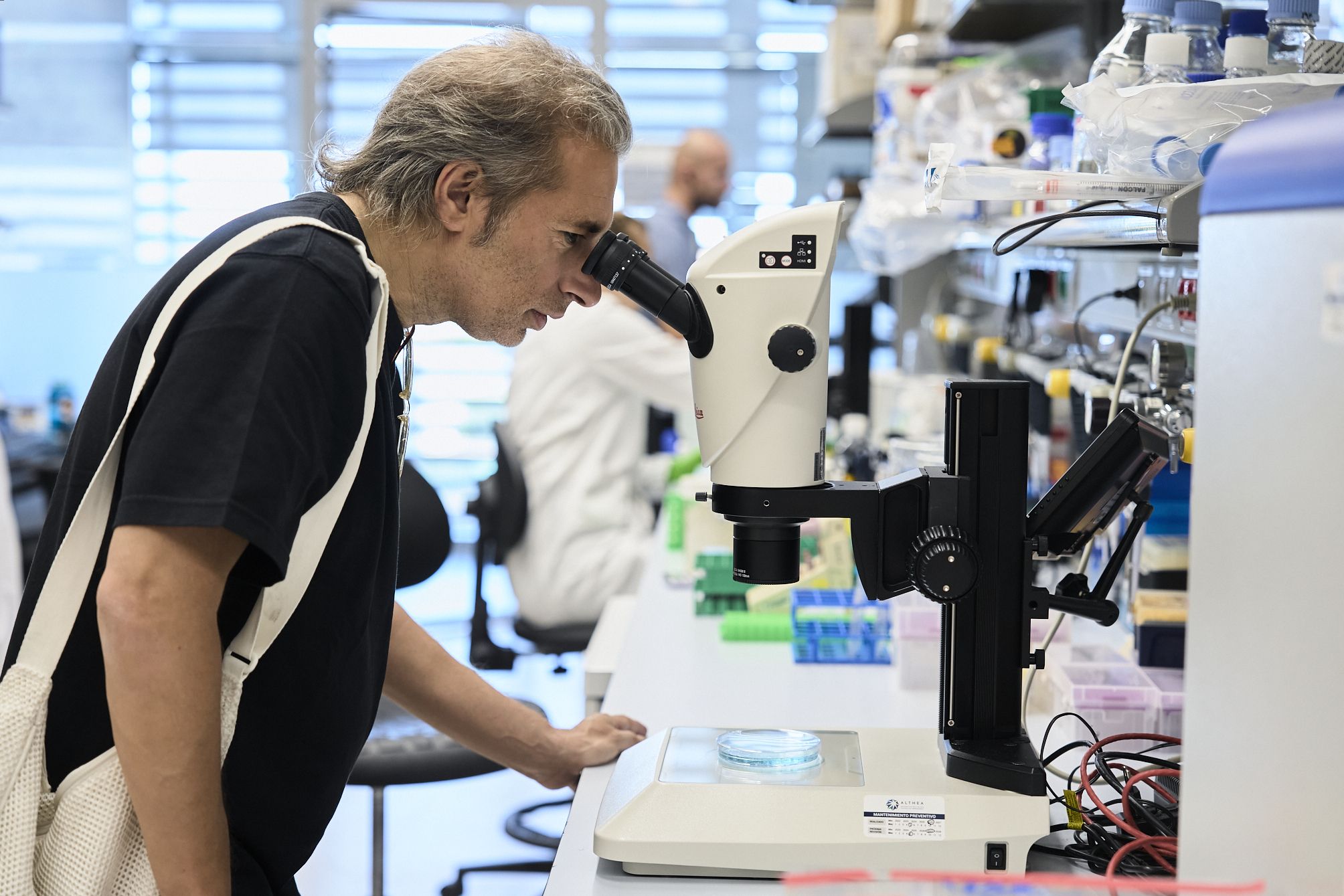
The opening of Espai Platform Dalí is just the first step of a long-term cultural project. After selecting the first scholarship artists —Mexican Tania Candiani and Sevillian dancer Israel Galván— and promoting the first artistic residencies, the Fundació Gala-Salvador Dalí has already opened a new call for residencies to incorporate new creators for the year 2027.
The call is aimed at creators from any discipline who want to explore the annual question "What is real?". During the residency, the selected artists will develop a research process in collaboration with researchers from the collaborating research centers, a dialogue from which new works will emerge.
"What exists beyond direct perception? What emerges from that which is strange and unexpected? What invisible relationships connect forms of life, matter, and consciousness?" With these questions, the director of Platform Dalí, Mónica Bello, summarizes the spirit of future residencies. The objective, she assures, is "to explore how art and science participate in the construction, mediation, and interpretation of reality."
But the program will not end with this call in 2027, but will continue to deploy grants, residencies, public activities, and new collaborations until it culminates, in 2029 —coinciding with the celebration of the centenary of the Barcelona International Exposition—, with a major exhibition. An ambitious calendar to demonstrate that when art and science stop being presented as two separate worlds, they can share questions, processes, and forms of experimentation.
Add The New Barcelona Post as your preferred Google source for free
Stay informed with the latest news.