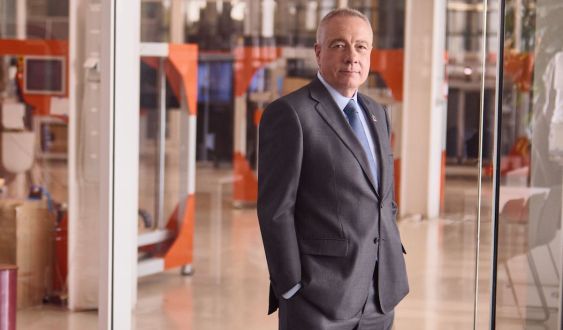
The DFactory, the industry 4.0 district located in the Zona Franca, is preparing for the celebration of the sixth edition of the Barcelona New Economy Week (BNEW). The event, which aims to establish itself as a meeting point for professionals and a connector of the different economic sectors that lead the economy of the future, will turn the DFactory into a real television set from September 29 to October 2. A set where more than 100 hours of content will be offered, including panels, debates, and sessions by 320 speakers, with the forecast of attracting more than 15,000 attendees.
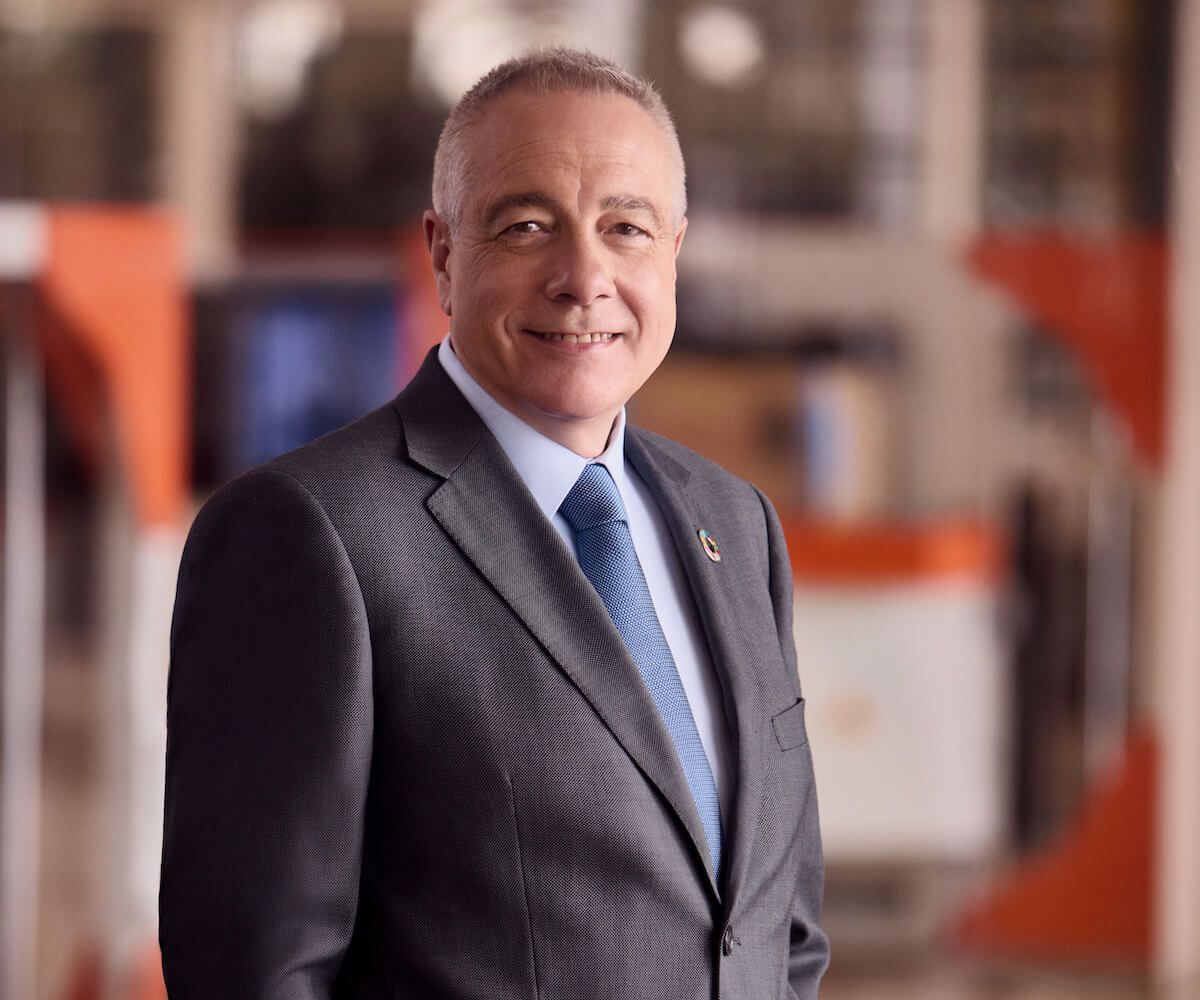
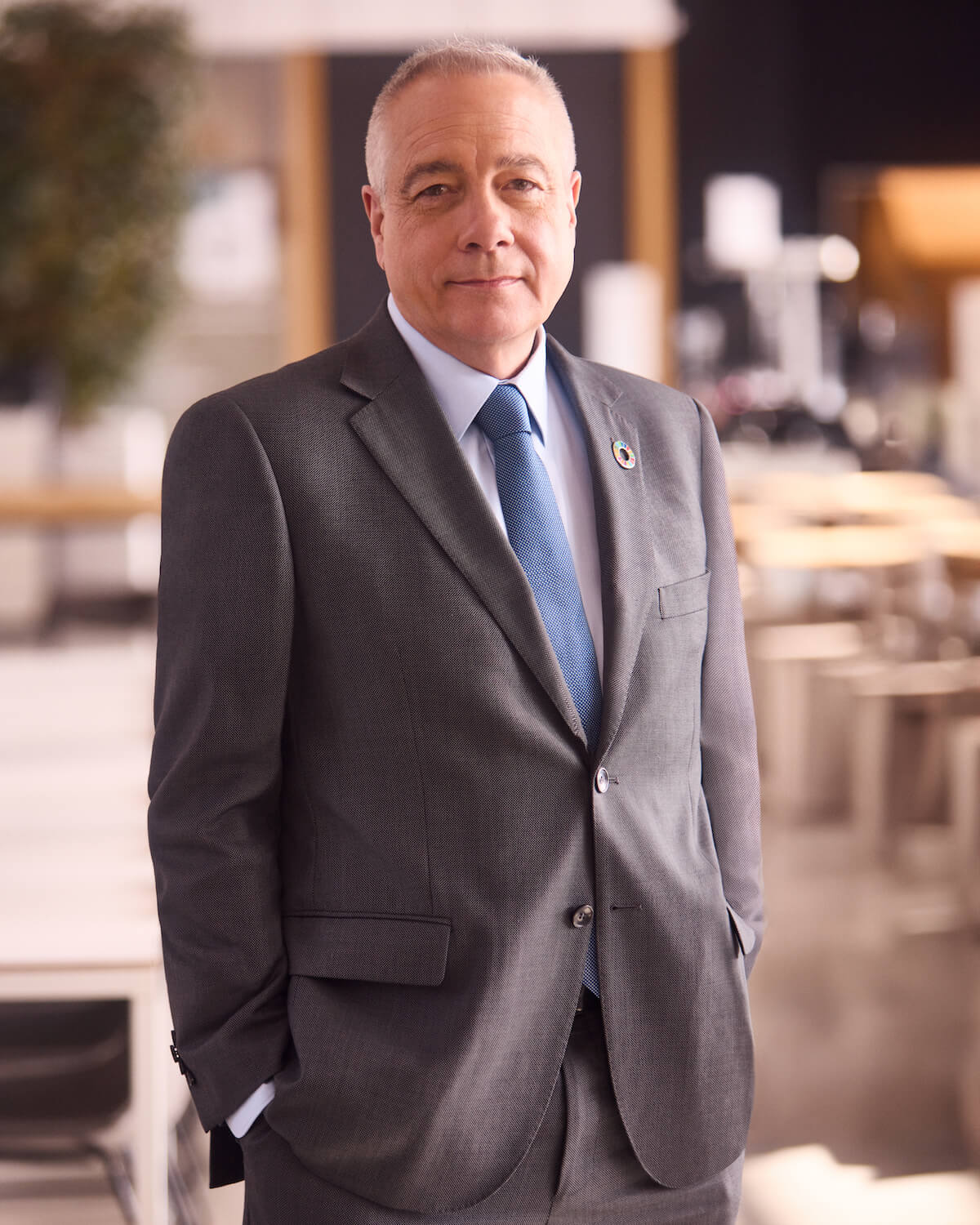
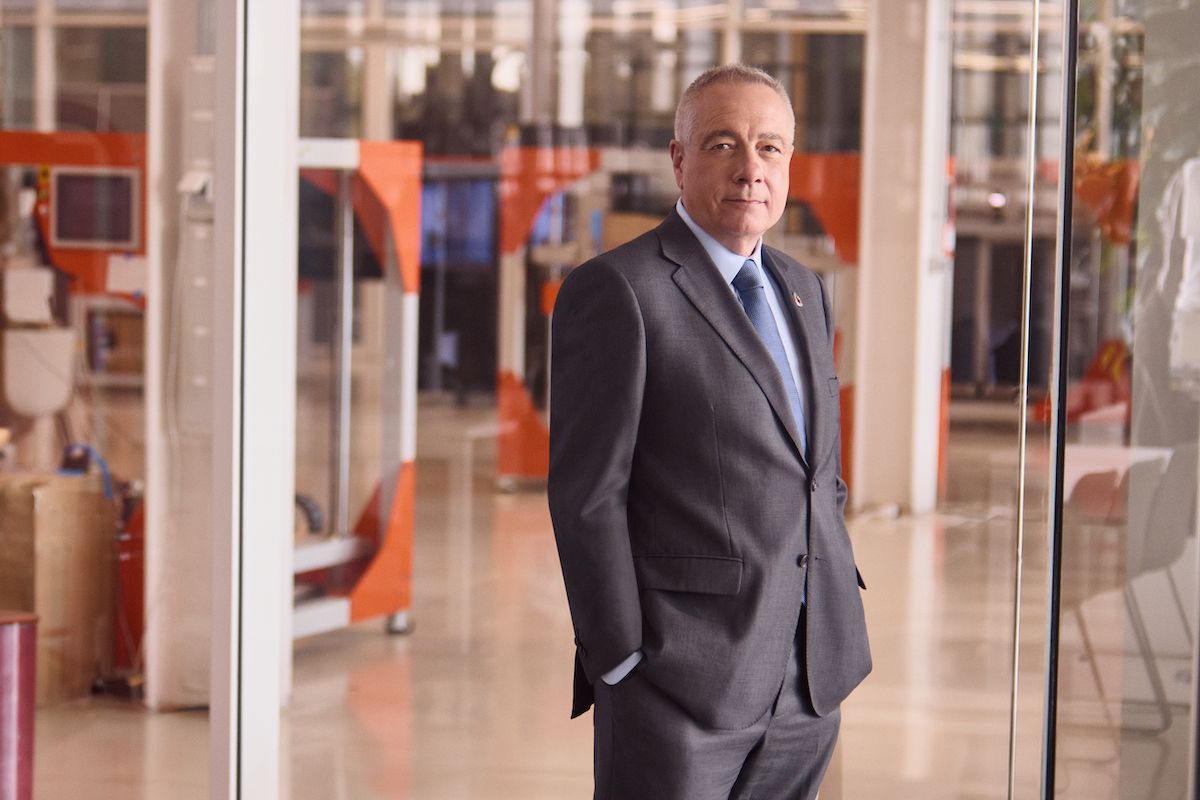
It will do so in a DFactory that has already reached its maximum occupancy capacity and is immersed in an ambitious expansion project to go from its current 17,000 square meters on the old Seat grounds to about 60,000 by the end of 2026, with an investment of about 50 million euros and the goal of consolidating itself as Barcelona's industrial lung. Since 2018, the Consorci de la Zona Franca de Barcelona (CFZB), the entity that promotes and manages the DFactory and BNEW, has been led by Pere Navarro (Terrassa, 1959) as special delegate of the State to the Consorci. A week before the start of BNEW, Navarro opens the doors of the DFactory to reflect on the new economy and the role that Barcelona and the Zona Franca must play in this new world order.
— BNEW. Barcelona New Economy Week. What is understood by new economy?
— A few centuries ago, social and economic changes occurred as new machinery and technologies appeared, such as steam or electricity. Now, however, technology and the economy are advancing so fast that, in fact, all sectors could be considered part of this new economy. Society is advancing at such a speed that one of the few guarantees of success is the constant capacity for adaptation.
— What role does BNEW play in this constantly changing society and economy?
— BNEW is a connector, a meeting space for professionals from different sectors where business opportunities are generated. And these contacts and business opportunities, in turn, generate companies and jobs. Throughout its five editions, more than 48,000 professionals and 2,500 speakers have gathered, and the creation of thousands of contacts has been fostered. In the end, BNEW wants to replicate in event form the mission pursued by the Zona Franca Consortium through its different facilities, that is, to act as a connector of companies, institutions, and organizations. Just as companies connect in DFactory and generate business opportunities simply by being located in the same space, the event also wants to act as an essential connector.
"BNEW is a living organism that, year after year, adapts to the world and its territory"— Why did the need arise to create an event like BNEW?
— In the midst of the pandemic, we decided not to remain paralyzed and to adapt to the situation. Thus, in the autumn of 2020, we celebrated the first edition of BNEW, which aimed to be a message of optimism and hope for the world, but especially for the economic sector after the shake-up that society had suffered that year. It was a demonstration of the great potential of the different economic sectors concentrated in the Catalan capital. For this reason, we also decided to opt for a powerful television deployment, creating a channel with several sets full of audience, cameras, and directors to ensure the timely maintenance of the conferences.
— Since the event was born in the midst of the pandemic, it was decided to opt for a hybrid format that combined an online channel with in-person activities. But it seems we have left the pandemic behind some time ago, and this hybrid format, for now, has not changed.
— The hybrid model, which combines in-person attendance and an online platform, allows the event to have a global reach. That is, a professional from New Zealand, who otherwise could not participate, can access an electronic platform where they not only attend conferences but also connect digitally with other professionals who are part of the event. In addition, it also allows us to bring together speakers who, otherwise, could not be part of the congress. But it is true that we also want to guarantee a certain in-person presence, not only because it creates more fruitful connections, but also because although BNEW is a fundamentally economic event, we also want it to become a meeting place for citizens, with diverse activities around the congress: from gastronomy to art.
— Aviation, health, digital industry, talent, sustainability, mobility, and experience. These are the seven axes that will mark this year's program. Why? Are these also the axes that mark this new economy towards which we are advancing?
— BNEW is a living organism that, year after year, adapts to the world and its territory. From the beginning, the intention was to mix different themes and sectors that, in other congresses, are treated sectorally and separately. For this reason, the event deals with such diverse topics as health or aviation, so that professionals from such differentiated sectors can relate and learn from each other, especially in a world as global and interconnected as the current one.
"Talent is not something that can be bought or manufactured in an industrial warehouse and, therefore, it is difficult to obtain and guarantee"— The themes, however, have been changing since the beginning. And, in fact, since the first edition, in 2020, until the current one, only one vertical has been maintained: digital industry. Is the forecast that in future editions the verticals will continue to change
— Every year we try to be attentive to the problems or trends of companies in order to address them. And as technology and the economy are constantly changing, BNEW's verticals must also adapt. It is true that there are issues that have concerned us from the beginning, such as talent, which we introduced in the second edition, in 2021. Talent is not something that can be bought or manufactured in an industrial warehouse and, therefore, it is difficult to obtain and guarantee. If we were to take a tour of DFactory now and ask companies what their main barriers to continued growth are, surely one of the most repeated would be the lack of qualified talent. Sometimes we have the impression that, with new technologies, such as popular artificial intelligence, jobs are destroyed, but comparatively many more are created, and also qualified ones, because there must be technicians who design and program these new digital tools.
— But in addition to these themes that have been repeated almost since the beginning, there are also newer verticals, such as aviation, which emerged for the first time in the previous edition and is repeated in this one. Why this new vertical?
— It is clear that the expansion of El Prat airport is a topic of debate and the Consortium wants to actively participate from BNEW, becoming a space for debate and reflection. But a space where the new aviation model towards which we are advancing is also explored, with less polluting aircraft, and where air transport acquires an increasingly relevant role.
"The Free Zone wants to become the industrial heart of Barcelona"— And what role should Consorcio de la Zona Franca play in this rapidly changing economy?
— The Free Zone was born with a very clear mission: to act as a free port and boost the economy of Barcelona and the country as a whole. Although this zone no longer acts as a free port, the Consortium wants to maintain the initial philosophy and establish itself as an important economic engine. Moreover, it wants to become the industrial heart of Barcelona. A heart that beats and sends its blood, its industrial strength, to all parts of its body, that is, to all regions of Barcelona. And when I say Barcelona, I mean the entire metropolitan area, that is, the Barcelona of five million inhabitants. In short, the Consortium must be the rocket that drives the metropolitan region and the new economy.
"DFactory is a model that can hardly be exported outside of Barcelona"— And one of the fundamental elements within this industrial heart that the Free Zone represents is the DFactory. What is the mission of this building?
— The DFactory is the global landing platform for Industry 4.0 in Barcelona. In this building, there are more than thirty industrial companies located, meaning they don't necessarily manufacture in the DFactory facilities, but they do so somewhere in the world and in a very innovative way. And here there are no start-ups, but large companies like Siemens or Kion, which work with disruptive technology, from robotics or artificial intelligence to 3D printing. And this building is unique in the world and, moreover, unrepeatable, meaning it is a model that is difficult to export outside of Barcelona.
— Why?
— Replicating the DFactory building in other countries is easy because its construction is highly industrialized and, in fact, it was built in less than a year and a half. But the ecosystem that has been generated in the Zona Franca cannot be replicated, due to its proximity to the airport and the Port, but also to a metropolitan area as economically powerful as Barcelona. In the city, we have a very fertile ground that is not found anywhere else in the world. In fact, we have all the elements to lead this new economy: infrastructure, connection, and talent. Ingredients that, if you mix them, you get, at least, a Michelin Star dish.

— In just four years since its opening in 2021, the DFactory has grown so much that its expansion has become absolutely necessary.
— Its expansion is essential not only for the Consortium but also for the city of Barcelona as a whole, which will gain square meters to attract innovative international companies. With this expansion, the DFactory will occupy, by the end of 2026, 60,000 square meters and will generate some 1,500 jobs, both direct and indirect.
— And what kind of companies will set up in these new spaces?
— On the one hand, companies already installed in the DFactory that need more space to continue growing and want to do so right here. But also new international companies that want to land in the city. In fact, we would like to focus on new sectors in which we have not yet had much impact, such as health, since Barcelona has managed to establish itself as an international reference city in this field, but also innovative companies in sectors such as food or agriculture.
"Our purpose is for the Free Zone to become a central space for the city's events"— In these meters, in addition to locating companies, a cube-shaped building for events is also planned. What kind of events would we be talking about?
— In this new DFactory space, events organized by the Consortium itself could be located, such as BNEW or SIL, the logistics fair promoted by the Consortium. But it is also a space that we want to be open to citizens and the world of culture. It is an area with great potential: where there are practically no neighbors, but which, on the other hand, is very connected to the city thanks to its metro station. Our purpose is for the Zona Franca to become a central space for the city's events.
— However, the DFactory expansion project is ambitious and will not stop here, but foresees a second expansion phase to gain even more square meters. When do you plan to launch this second expansion phase?
— We already have the land prepared and we know that the space generates interest from a large number of international companies and that, therefore, we could easily fill the 100,000 square meters that the DFactory would occupy when all expansion phases had been completed. But we also have to be responsible and careful, since the Consortium's decisions are made in a very consensual way. In its plenary, chaired by the mayor of Barcelona, the Government of Spain, the Generalitat, the political forces of the City Council are represented, but also entities such as the Cambra de Comerç, the Port of Barcelona, PIMEC or the unions.
"We must ensure that this new economy is more sustainable and that progress reaches society as a whole"— In total, the DFactory project will entail an investment of more than 100 million euros. Where does this budget come from?
— As a public company, our budget and income come from the rents we charge to companies that want to set up in DFactory or in other spaces in the industrial park. Therefore, it is important that we leave a legacy to future generations of a company that, taking advantage of its past and its potential, is not only economically profitable, but also offers a public service to society, generating business opportunities and jobs.
— And what is the legacy for the Barcelona metropolitan area?
— The Consortium must be the driving force, the industrial heart, of the new economy. But it must also guarantee that this new economy is more sustainable and that the business opportunities generated can reach society as a whole. That is, to break the digital divide and ensure that no part of the population, due to social, geographical, economic or family origin, is left out of this shared progress.
Add The New Barcelona Post as your preferred Google source for free
Stay informed with the latest news.
