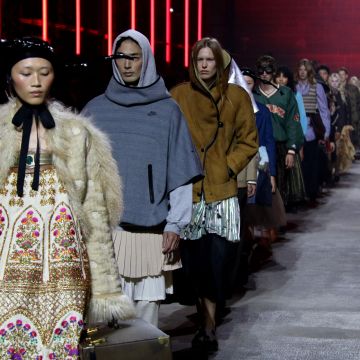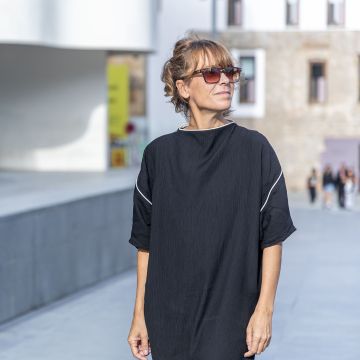
Each morning, and on those occasions when our appearance feels particularly consequential, we stage an act before the mirror that we imagine to be intimate and autonomous: choosing what to wear. Yet in an era of hyperconnectivity, an unsettling question arises: did we choose this look ourselves, or was the most powerful voice in that decision a Silicon Valley software engineer speaking through our Instagram or TikTok feeds?
Hitherto, the textile industry has usually been dissected through revenue graphs, e-commerce market share, sustainability metrics, and the like. Yet perhaps the defining shift confronting the sector is not logistical, but sociological. It is remarkably difficult to remain authentic today in a world that constantly bids to classify, tag, and manipulate us through digital marketing.
Today, the market has fractured into two diametrically opposed realities: those who buy clothes to camouflage themselves within the algorithmic mainstream, and those who treat fashion as a medium of expression to articulate their individuality and character.
Perhaps the defining shift confronting the sector is not logistical, but sociological.
The clothes buyer: delegated identity
In the first camp sits the clothes buyer, a consumer profile that has flourished under the barrage of non-stop digital stimuli. For this buyer, a garment is not a vehicle for cultural expression, but an instrument of social validation. Social networks have supplanted the pursuit of personal style with the tyranny of fleeting "trends". Aesthetics packaged under catchy labels emerge, go viral, and vanish within weeks.
Trapped in this feedback loop, the clothes buyer outsources their personality to an algorithm. They do not seek to stand out; they seek to fit in. They do not buy a piece for its tailoring or craftsmanship, but out of the dread of missing out on the "flavour of the month" or what is deemed "the thing to wear". This relentless appetite for novelty underpins a disposable relationship with what we wear.
The result is a collective homogenisation: armies of people dressed identically
The result is a collective homogenisation: armies of people dressed identically, replicating aesthetic clones dictated by a screen, queueing outside the boutique of whatever brand has become an overnight sales sensation fuelled by digital marketing campaigns extolling "art", "being artists", and the like. Brands where "the product itself hardly matters" – what they are actually selling is "belonging".
Nor is this dynamic confined to fashion; it permeates other sectors, including gastronomy. I have seen queues of people snapping selfies holding a slice of Basque cheesecake or a speciality coffee, purely to demonstrate that they are "where one is supposed to be".

The fashion consumer: curation as an act of resistance
At the opposite pole stands the discerning fashion consumer. For this profile, dressing is a language, a form of culture, and an extension of one’s inner life. This individual is no passive recipient of trends; they are the curator of their own wardrobe. Their primary engine is authenticity and the cultivation of an independent eye that remains impervious to the clamour of commercial notifications.
The fashion consumer understands the intrinsic value of design, cut, the drape of a fabric, and the narrative woven into a garment.
The fashion consumer understands the intrinsic value of design, cut, the drape of a fabric, and the narrative woven into a garment. It matters little whether a piece is considered "out of season" so long as it resonates with their identity. Their relationship with their wardrobe is built for the long haul. As architects of a thoughtful "capsule wardrobe", they would far rather own three iconic, enduring pieces than twenty interchangeable, poorly made T-shirts. For them, clothing is an investment in personal identity, a reflection of character rather than an ephemeral outfit.

Two mindsets, two marketplaces
This psychological divergence thoroughly reshapes the economics of the sector, giving rise to radically different purchasing behaviours. On one side, the clothes buyer feeds the machinery of ultra-fast, high-volume production driven by e-commerce marketplaces and fast-fashion behemoths. Their natural habitat is digital platforms dropping thousands of new arrivals daily at rock-bottom prices. It is a mode of consumption powered by late-night dopamine hits.
On the other sits the consumer sustaining that segment of the fashion landscape committed to design pedigree, sartorial heritage, and responsible manufacturing values like circularity and sustainability. This is the shopper who selects a label or designer through considered discernment, valuing brand lineage and craftsmanship in equal measure.
They are not hunting for a throwaway bargain; they are seeking out an archive piece, an iconic silhouette from their preferred independent designer, or garments fashioned from discontinued vintage textiles. This is the consumer who has turned pre-loved markets and curated vintage boutiques into destinations of devotion – a scene currently booming across Barcelona, following in the footsteps of trailblazing boutiques like Le Swing.
Equally, they actively champion brands that pair exceptional design with local production, where radical transparency and the Digital Product Passport (DPP) lend added ethical weight to every purchase, as exemplified by names like Ecoalf and Bobo Choses.
Common ground: the omnichannel reality
Regardless of consumer profile, today's purchasing journey is no longer a straight line running from a shopfront window directly to the checkout counter. Today, the decision-making process is a fragmented voyage deeply shaped by the digital ecosystem. Even so, 96% of us combine physical and digital channels: browsing on our smartphones as we walk towards a boutique, or trying on garments in-store only to complete the purchase online using a promotional code.
Today, the decision-making process is a fragmented voyage deeply shaped by the digital ecosystem.
Faced with this hybrid behaviour, many fashion brands – whether heritage houses, independent labels, or digitally native brands transitioning into physical retail – are renewing their commitment to the brick-and-mortar boutique as a defining counterweight to the algorithm and the ultimate showcase of their brand universe. In recent years, Barcelona has emerged as the epicentre of this movement with remarkable interior design concepts. Case in point: spaces by Mietis, Gimaguas, Thinking Mu, La Manso, Bassal. Store, Curated by, and Footdistrict, among many others, which have transformed the physical shop into a sanctuary of identity.

True luxury is discernment
Getting dressed today is a declaration of principles. In a world where manufacturing and buying clothes has become easier, faster, and cheaper than ever before, dressing identically to everyone else has become the default setting.
For that reason, genuine contemporary luxury is no longer measured by the figure on a price tag, but by the autonomy of the person wearing it. In the era of algorithmic clones, preserving one's independent judgement, treating fashion as culture, and resisting the impulse buy is the most elegant act of rebellion. The fashion of tomorrow will not be found in the next viral video; it is defended with character.
Add The New Barcelona Post as your preferred Google source for free
Stay informed with the latest news.