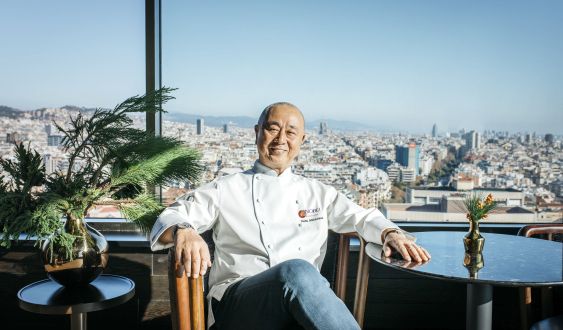
Nobuyuki Matsuhisa has spent much of his life crossing borders, yet when he sits across from you, he seems in no hurry. He speaks measuredly, holds your gaze, and listens with an almost hypnotic attentiveness. There is something about him – the pristine posture, the calm smile, that way of being entirely present – that stands in stark contrast to the sheer scale of everything bearing his name. Today, Nobu is a small universe unto itself, boasting more than 55 restaurants, 38 hotels, and an expanding collection of residences spanning the globe.
And yet, the more his empire expands, the more fundamental his philosophy of cooking seems to become. Flavour, people, respect, care. And, above all else, heart. For Nobu, the heart encompasses everything a recipe cannot put into words: the intention, the time, and the history tucked behind a dish. This same principle runs through our conversation with him at Nobu Barcelona, where we trace the arc of a career that began with a childhood dream of becoming a chef and culminated in a distinctive culinary vocabulary – rooted in Japanese tradition and refashioned by the flavours and freedom he encountered in Peru. It is a language recognised across half the world today, and one that countless others have tried to emulate.
– When did you realise you wanted to devote your life to cooking?
– As a boy, becoming a chef was my dream. While other children dreamed of being actors or sportsmen, I knew for certain that I wanted to be a sushi chef. Later on, I left school and started working. I studied Japanese cuisine in Tokyo. After that, I went to Peru, where the culture was entirely different. One day, someone invited me to their home to try Peruvian food, and it was like... wow! In Japan, I had never tasted flavours like that, and gradually my way of thinking began to shift. I held on to my Japanese mindset, but paired it with Peruvian influence.
– What surprised you most when you first discovered this cuisine?
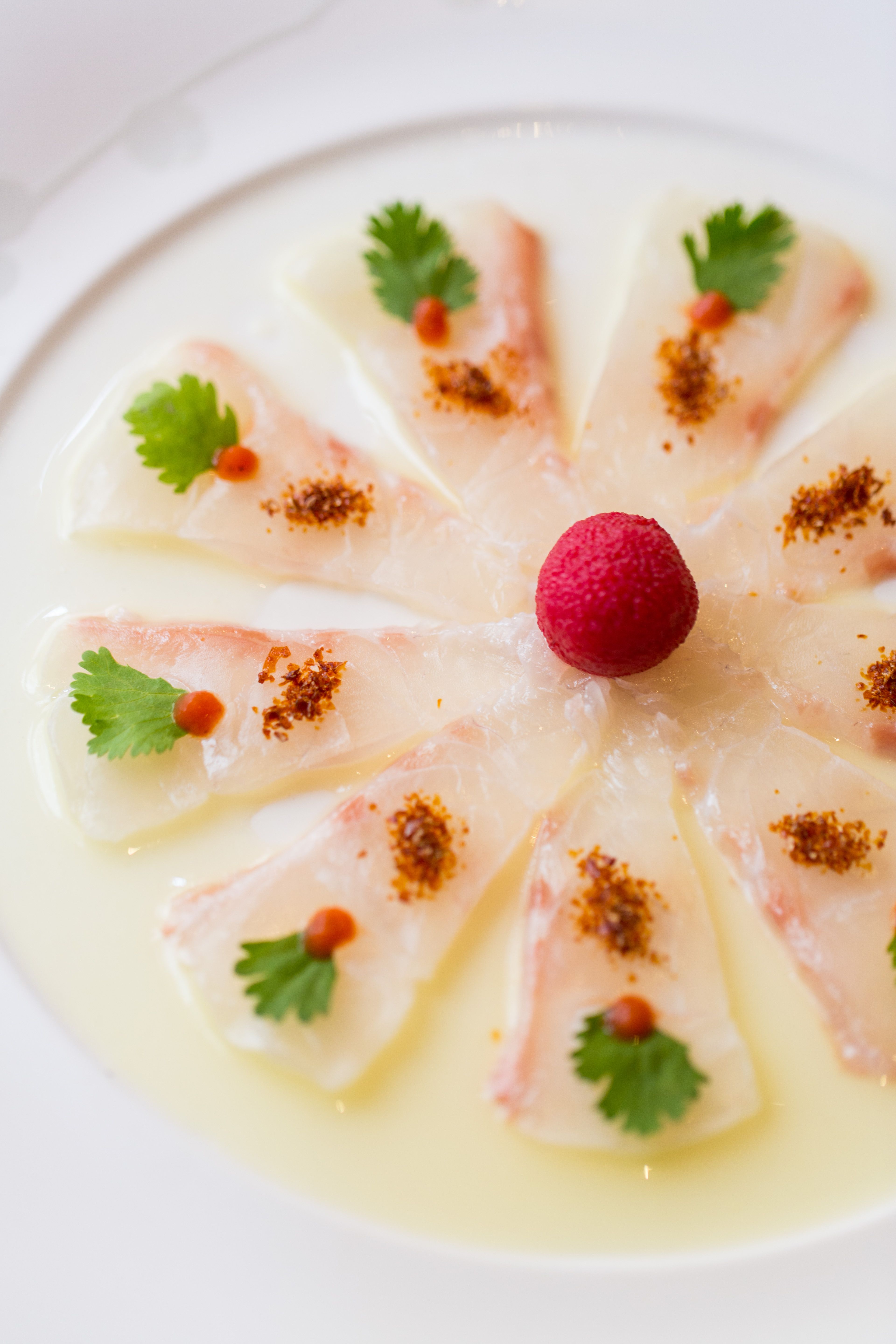
– Above all, the flavours. Japanese cuisine is very simple, very clean, and never uses ají, coriander, jalapeño, or garlic. The first time I tried coriander, I could barely stomach it; the scent felt far too pungent. But I made an effort to understand and respect the local food culture. I thought: "Right, I have to taste it, I have to give it a go." Step by step, I started thinking about how I could work with those flavours in my own way. In Japan, we would never have served sashimi with coriander and jalapeño, but I created that pairing, and later people all over the world began drawing inspiration from it.
– How does it feel to see so many restaurants copying dishes you created, like the black cod with miso?
– It makes me feel very proud. When I was young, I looked through books and watched television programmes too, and whenever I saw someone cooking something I liked, I thought: "Oh, that's brilliant, I must try to make it just like that." I started out copying, too. Besides, my cooking continues to evolve, even though I always strive to keep it simple.
“You can learn the recipe, but not what lies behind it”
– I must admit I have tried several takes on your black cod, but none has ever struck me as being quite as good as yours.
– Do you know why it isn't the same? Because of the heart. An imitation tries to replicate something, but it doesn't carry the same heart. My black cod went through countless trials, numerous attempts, before reaching the recipe we know today. The recipe is actually published in my books, and anyone can follow it. But that doesn't mean the result will be identical. You can learn the recipe, but not what lies behind it. They can copy my food, but they will never copy my mind.
– With so many restaurants, how do you ensure they all share that same heart? – I have many people who have worked alongside me from the very start. There are team members who have been with me since we opened the New York restaurant in 1994, some 32 years ago now. They grew up within this philosophy and understand what passion and challenge mean to us. Sometimes I tell them they can leave, but they never do (laughs). What is more, I have a fantastic team of corporate chefs who travel the globe monitoring quality and, if something isn't right, they set it straight. In a way, I am like the father of the restaurants, and they are my children. I am very fortunate.
– What is the first thing you notice when you visit a restaurant
– I look at the people. I observe whether they are comfortable, relaxed, how they converse, how they enjoy themselves. I also try to sense the heart behind the dishes. I don't care much for the interior or what kind of tableware they use; I always watch the food and the diners. In my own restaurants, I pay close attention to that as well: whether people are talking, smiling, laughing, and having a good time.
– After so many years at the stove, what does being a chef mean to you today?
– If I were to die and be born again, I would be a chef all over again. I love cooking, and to me, cooking means bringing joy to people. Let me tell you a true story. Before I married my wife, she made me breakfast one day – an omelette – and accidentally mixed up the sugar and the salt. It was terribly salty, but I had watched her prepare it. When I tasted it, I didn't think about the salt. I thought about her heart.
– How do you want your cooking to evolve from here?
– I want to keep things simple. Increasingly, I want to focus on wholesome dishes, without ever compromising on flavour. Sustainability matters to me as well, and for years now, I have practised zero waste. I deeply value the work of fishermen and farmers. I have also partnered with many producers right from the beginning, and those relationships mean the world to me. Business is business, but ultimately it comes down to trusting one another and never losing sight of quality.
– At 77, after a lifetime of travelling and cooking, have you ever considered retiring?
– Cooking is my entire life, so I want to keep working for as long as I can. As long as I can walk, why should I stop? I don't think about retiring. I want to keep giving my best all my life, right until I get to heaven.
Add The New Barcelona Post as your preferred Google source for free
Stay informed with the latest news.