Eight clues in, the decalogue comes to an end. The dishes, prices, producers, schedules, and personal projects have revealed a series of common threads among very different restaurants. The final two look a little beyond the present, towards their relationship with the past and the way authorship is being redefined within the restaurant.
The first of these final two clues focuses on how forms, recipes, and models that seemed to have been left behind are now returning through a contemporary lens. The last brings the series to a close with a phrase from Pep Palau, content director of the Gastronomic Forum Barcelona, that captures much of this shift: “The chef is dead”. The kitchen still requires judgment, responsibility, and direction. The restaurant, however, can no longer be understood through a single biography.
9. A culinary retrofuturism
In many of these projects, the future begins by looking back. According to Gianmarco Greci, from the Franca restaurant, the changes that can be seen in some restaurants are part of a much broader cultural trend. "I believe we are in a global cultural moment, in the worst case reactionary and, in the best, a kind of retrofuturism," he explains. This idea allows him to distinguish between nostalgia that idealizes the past and that which returns to it to give it a new reading. The phenomenon, he says, "ranges from clearly reactionary expressions, such as tradwives and food as a domestic mechanism, to the recovery of formats such as the trattoria or the bistrot."
Víctor Rodenas: "Now everything is macaroni, flans, fricandós or capipotes. But before everything was ceviches, burratas and tatakis. And I say: well, hallelujah that it is so!"
Greci recalls that bistronomy had already used the bistrot as a setting for contemporary cuisine, but still with a clear will for rupture and experimentation. Now he detects a different inclination. "There is a real desire to return to something of what the restaurant used to be," he explains, referring to more recognizable structures, such as the idea of a meal with a first course, main course, and dessert, and gives Le Veau d'Or, in New York, as an example. The past thus ceases to be simply what must be overcome and reappears as a material that can be revisited to imagine something new.
Joan Font i Torrent, president of the Catalan Academy of Gastronomy and Nutrition, interprets this change as a natural reaction after a period of enormous creativity and experimentation. "People are trying to find their place after an era of absolute splendor, in which brutal things have been done," he explains, referring to the revolution of techno-emotional cuisine led by Ferran Adrià. "After a generation of opulence comes a generation that revisits it. Why? Because the world is movement and because, after disruption, only evolution remains."
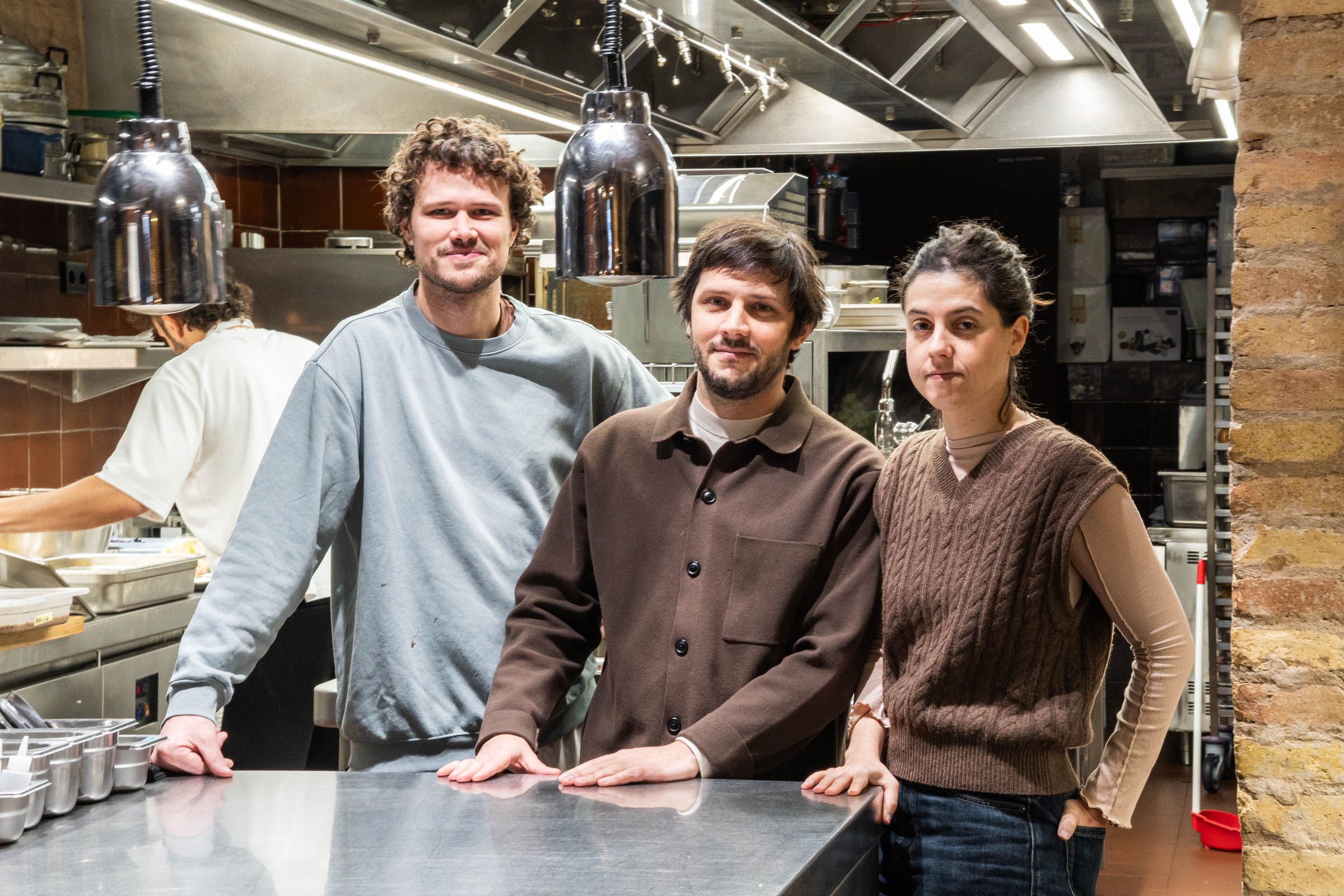
Víctor Ródenas, from Maleducat and Casa Fiero restaurants, describes this back and forth from the experience of someone who has lived it from within. He entered the profession when the great aspirational model was the gastronomic restaurant and now he is part of a scene that revisits many of its codes. "I have always seen it as a pendulum. We came from one thing and now we are reclaiming another," he explains. And he summarizes it with a certain irony: "Now everything is macaroni, flans, fricandó or capipota. But before everything was ceviches, burratas and tatakis. And I say: well, hallelujah that it is so!"
This movement between rupture, revision and return allows us to read the change in sensibility in broader terms. Bullinian deconstruction, playing with conventions and the will to question what a restaurant could be fit well into a postmodern sensibility. The current moment seems to approach, instead, a more metamodern terrain. After having deconstructed almost everything, a new generation looks again at the trattoria, the bistrot, grandma's cooking or the structure of first, second and dessert with contemporary eyes. It is in this coming and going between past and future where the retrofuturism that Greci speaks of acquires its full meaning.
10. The death of the chef
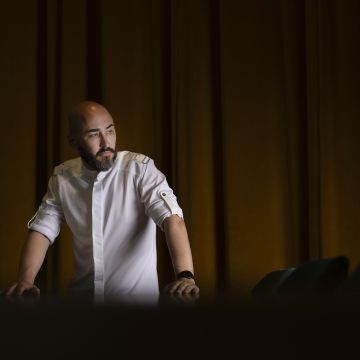
We reach the end of the decalogue with one of the most forceful phrases of all conversations. Pep Palau formulates it almost like an epitaph: "This new generation is perhaps the generation that is killing the chef". The idea points to the end of the chef as a creative genius and the sole signatory of the restaurant. What arrives at the table is, in reality, the result of a much broader chain of people and decisions, from the producer to the kitchen and the dining room. Palau speaks, in this sense, of a "shared care" and of a generation that understands the restaurant as a collective work. And he finishes it with a definitive phrase: "The chef is dead".
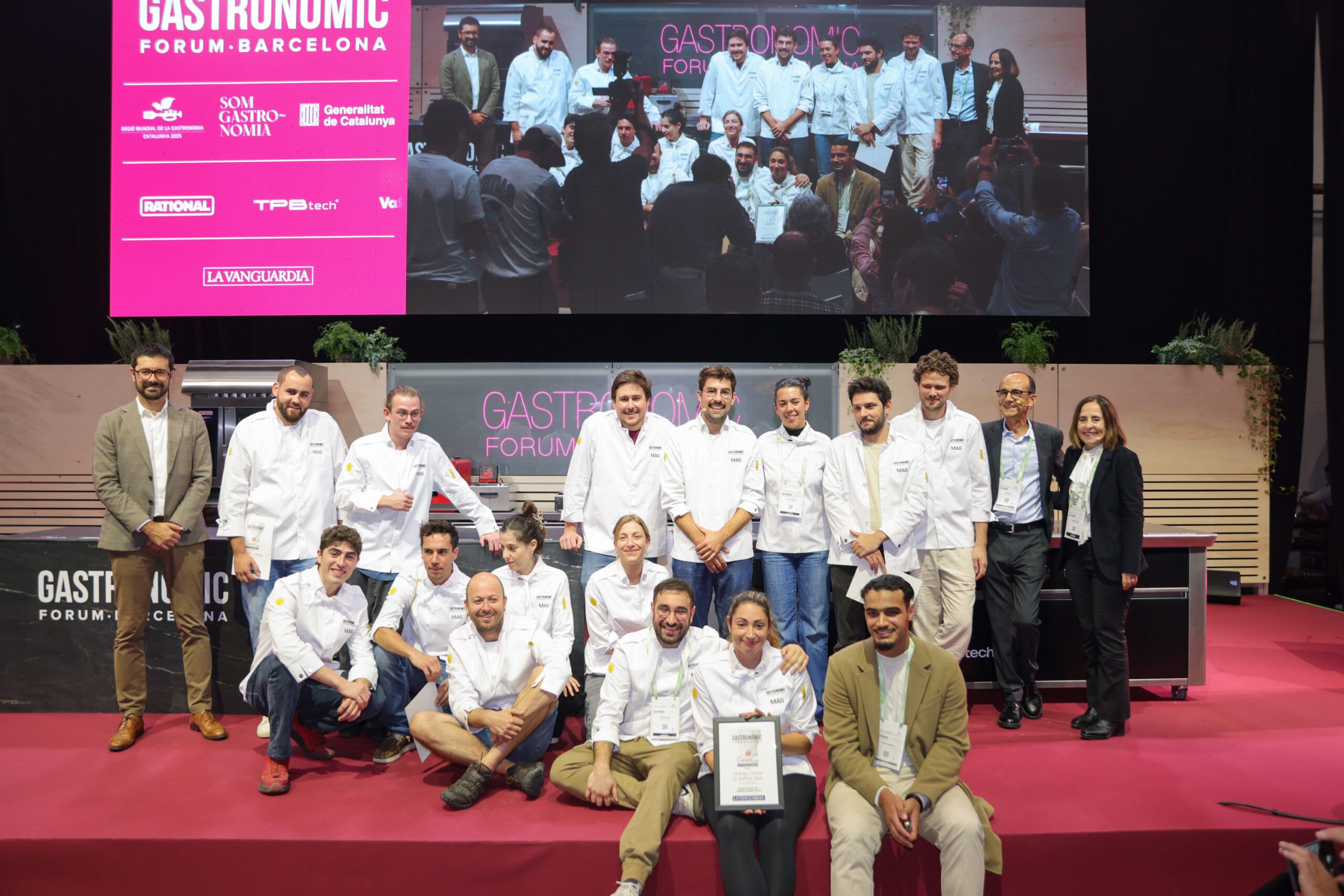
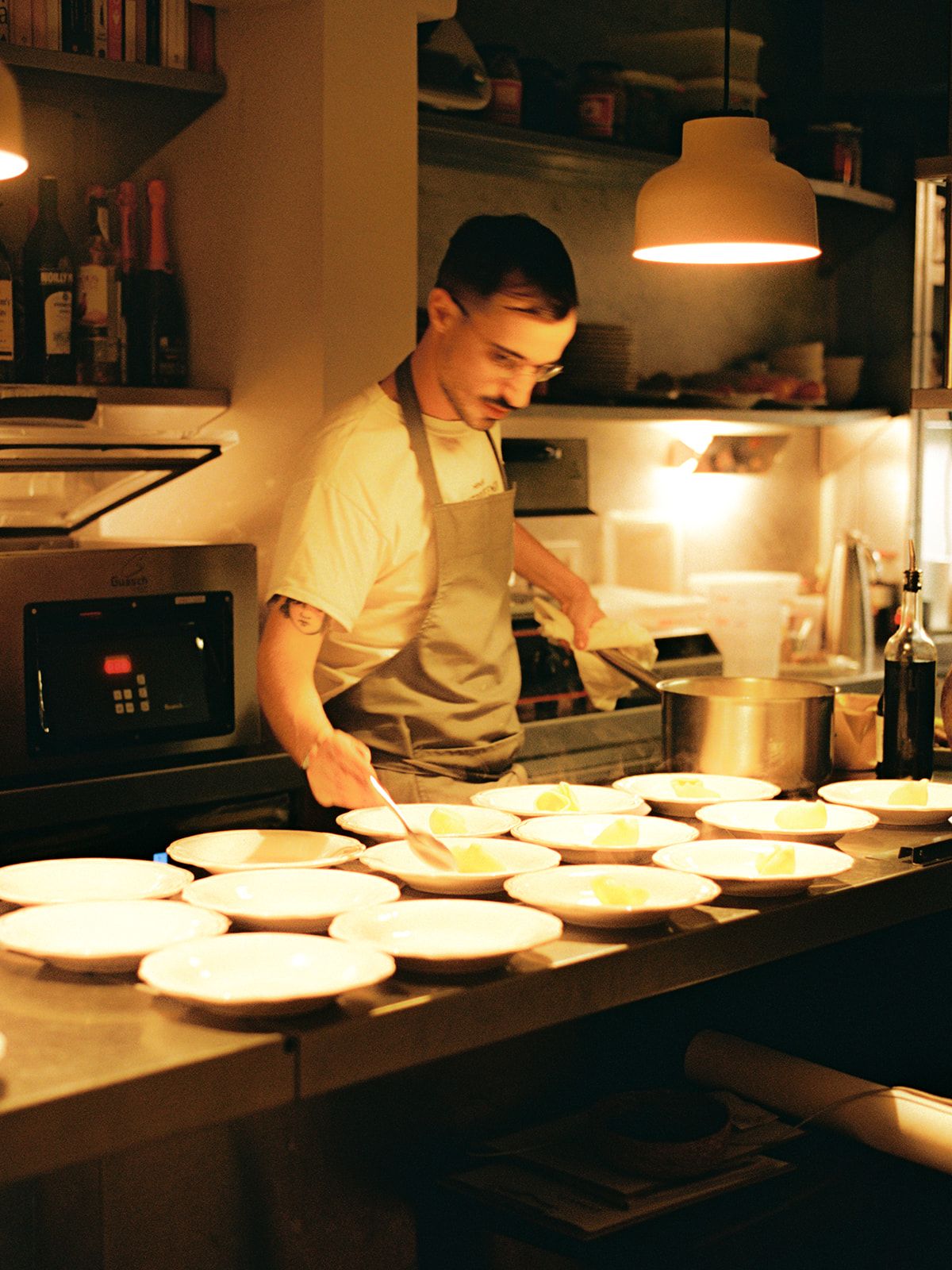
This more distributed authorship also translates into the way restaurants are organized. The old pyramidal structure of the brigade, codified by Auguste Escoffier and for decades almost military in its hierarchy, now coexists with much more flexible teams. Palau gives as an example the latest finalists of the Chef of the Year award from the Gastronomic Forum, among whom appear couples, trios and projects where leadership is shared and the boundaries between kitchen and dining room can become blurred.
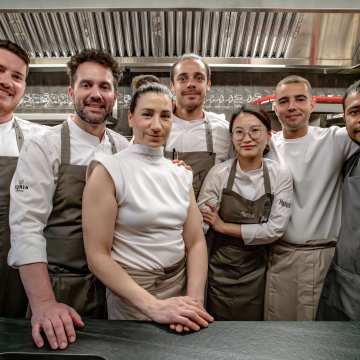
This way of understanding the restaurant can be seen both in establishments that have already appeared throughout the decalogue and in others that further expand the map. At Franca, the three partners, all chefs, understand the restaurant as a collective creation and move flexibly between kitchen and dining room. Both at Glug and at Mineral, the chefs also go out to serve, further shortening the distance between the two spaces. At El Rectangle, two chefs work alongside a sommelier and the boundaries are not rigid either. Other formulas are articulated around complementary couples, such as Piedra or Cal Quiquet, while Bar Dijous takes this shared will to a cooperative structure.
With these more flexible structures, the dining room also regains a prominence that for years had been relegated to the background. "Without a good waiter, no restaurant works. It must be a source of pride to say 'I am a waiter, I am a sommelier'," points out Marcel Pons, from Incorrecte. Artur Martínez, from TRÜ, takes it to the realm of experience: "I prefer to be treated well and not eat as well than the other way around." He also recalls that he has never worked alone and that, although one person may publicly represent a restaurant, there is always a team behind it. Marc Pérez, from La Sosenga, places part of the problem precisely outside restaurants, in media and social networks that continue to seek "rock stars" and reduce collective projects to a single face.
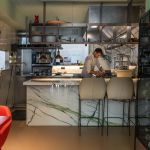
When authorship is shared, a final issue also arises: continuity. "I work so that there is a handover," points out Àlex López, from Arraval. "For me, the concept of heritage is capital." The chef speaks of a heritage made of ingredients, techniques, people, and knowledge, but also of belonging, and compares it to a farmhouse that several generations care for and transmit. He himself recalls his years working at the Monocrom restaurant as a time when he "planted many seeds" that others continued to water. And he summarizes it with a clear will for continuity: "I do want to be the next generation and I don't want the chain to break."
Looking to the future without losing memory
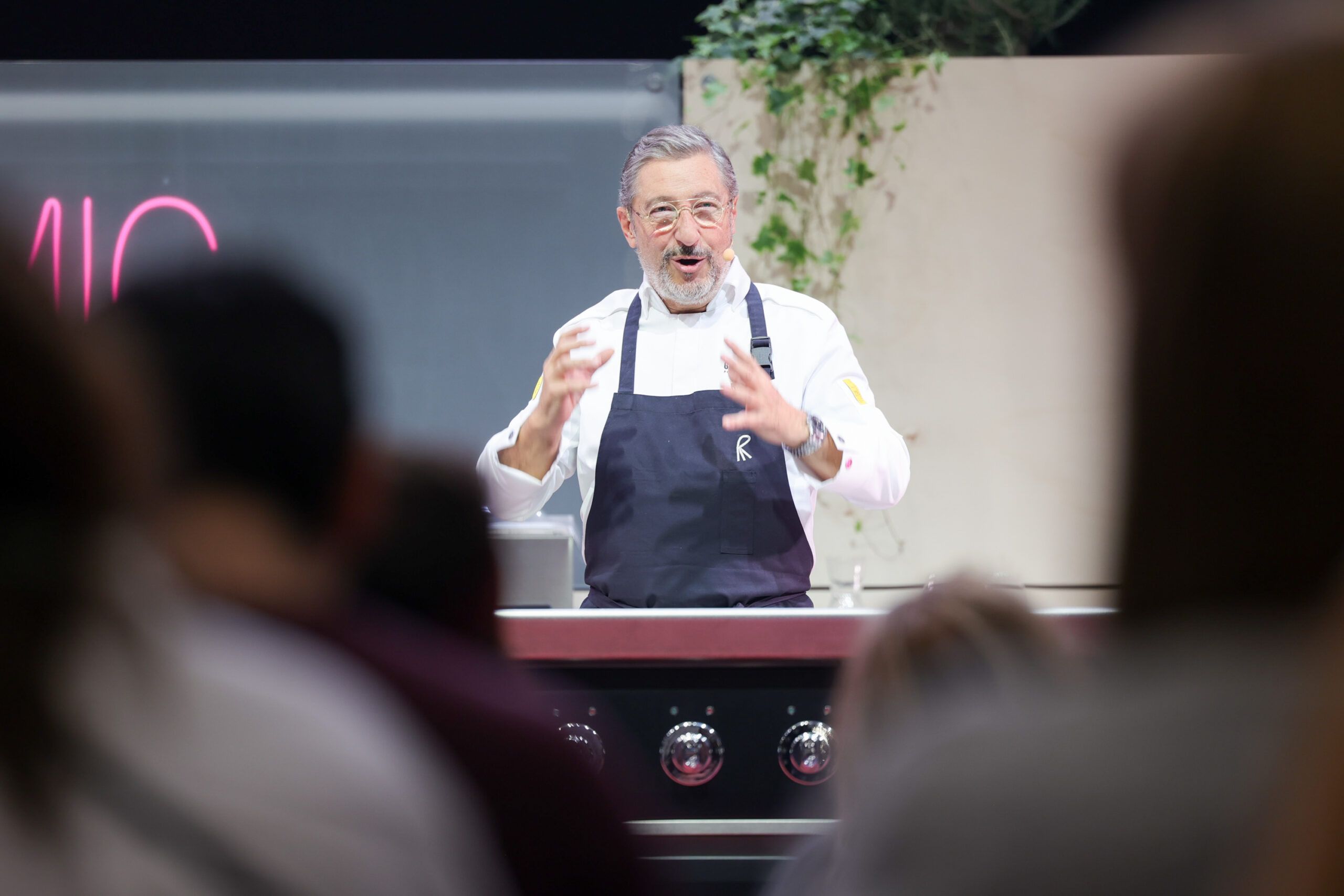
When Joan Roca defined at the Gastronomic Forum Barcelona what it could mean today to talk about new Catalan cuisine, he formulated an idea that encompasses a good part of the ten clues of this decalogue: "The living continuity of a tradition, reinterpreted with a contemporary gaze, ethical awareness, and creative spirit." Months later, the chef further specifies that definition in The New Barcelona Post: "Today, new Catalan cuisine cannot be defined only by techniques or creativity, but above all by a way of understanding the profession".
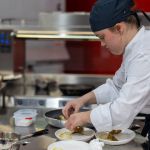
For Roca, this continuity does not consist of preserving intact what has been received. "It's not about preserving Catalan cuisine as a museum piece, but about understanding it, knowing its foundations, and being able to make it evolve from our time." To that first definition, he now adds territory, sustainability, respect for the product, knowledge, research, generosity, and responsibility. A responsibility that begins long before the dish reaches the table. "We cannot talk about local cuisine if we exploit the resources of the territory," he states, also claiming the value of the farmers, fishermen, ranchers, artisans, and producers behind it.
The same demand extends to the teams, one of the issues most repeated throughout the series. "For a long time, gastronomy has focused almost exclusively on the final result. Today I believe we must also ask ourselves how we arrive at this result, what conditions we offer to the teams, how we train young people, how we care for people, and what kind of professional culture we are building." He also extends the chef's responsibility beyond the kitchen. "We have an enormous capacity to influence consumption habits, the value we give to products, gastronomic culture, and also how a territory is perceived."
Joan Roca: "It's not about preserving Catalan cuisine as a museum piece, but about understanding it, knowing its foundations, and being able to make it evolve from our time"
And even creativity, a word that defined a large part of the previous great gastronomic revolution, acquires a different meaning for Roca. "Creativity can no longer be just about doing new things. It is also about finding new ways of cooking, consuming, relating to producers, and caring for our environment." His conclusion could also be that of this decalogue. "The new Catalan cuisine must look to the future without losing its memory. It must be creative, but also conscious; with ambition, but with roots. And above all, it must have the capacity to transform tradition without betraying it."
Add The New Barcelona Post as your preferred Google source for free
Stay informed with the latest news.