With 35 years of trajectory behind it, Música Reservata de Barcelona is one of the leading ensembles of early music in our country. They appeared in 1991 with the aim of exploring Renaissance and Baroque polyphony and, three and a half decades later, the group maintains its members intact and has a flexible, democratic working model without a fixed director.
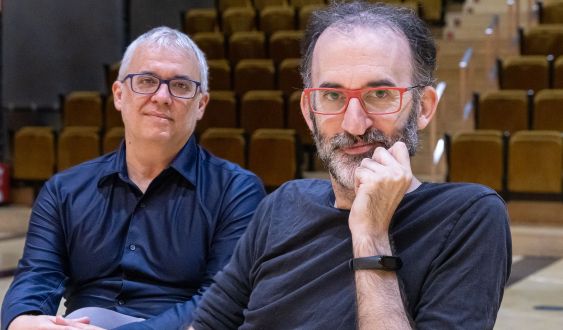
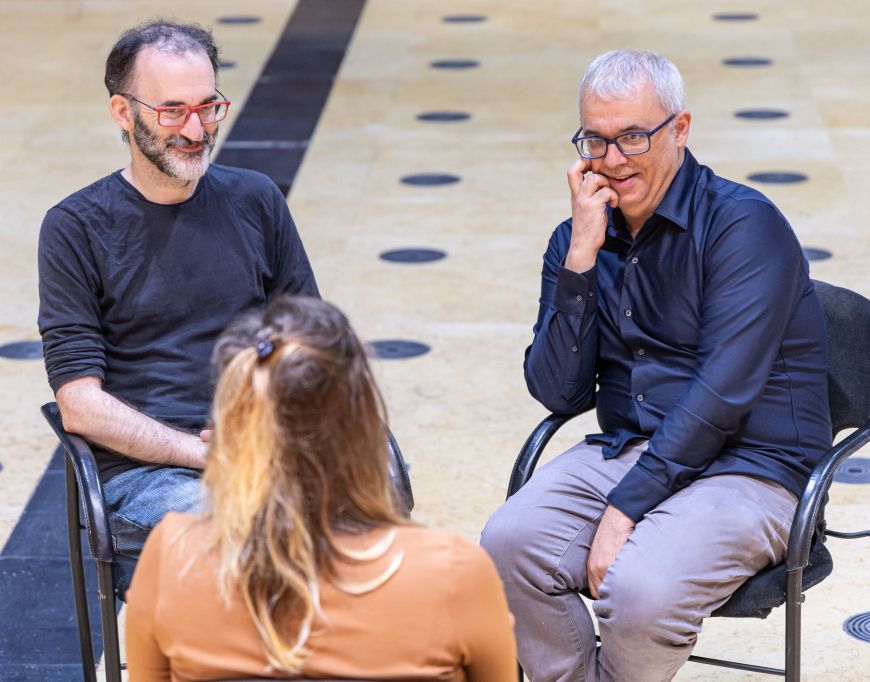
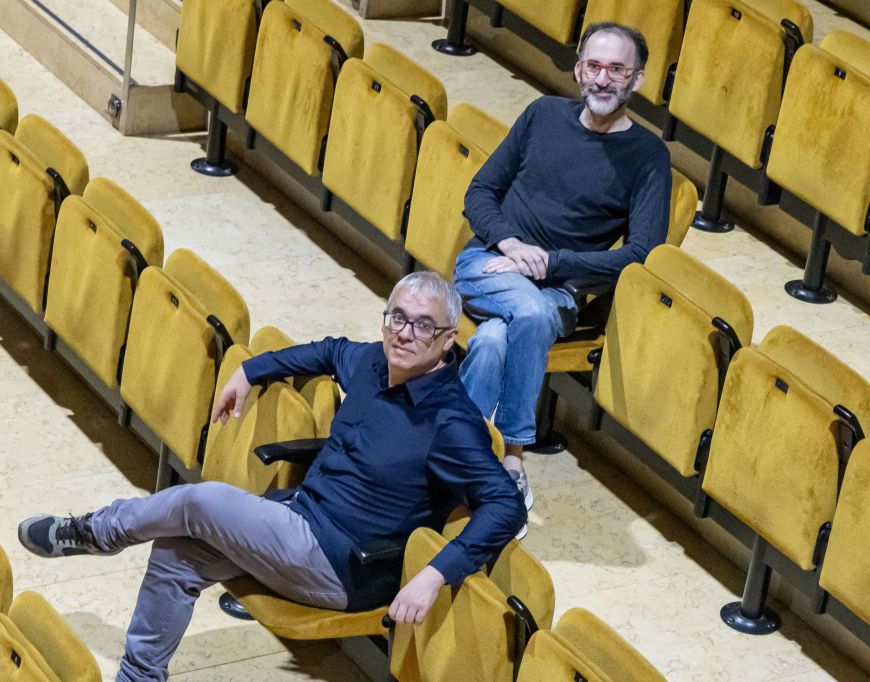
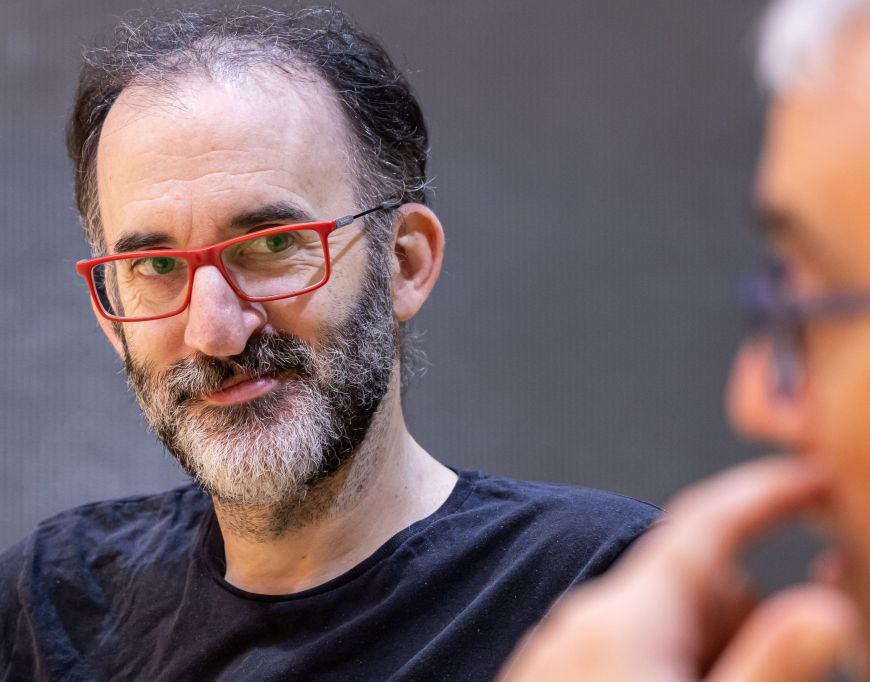
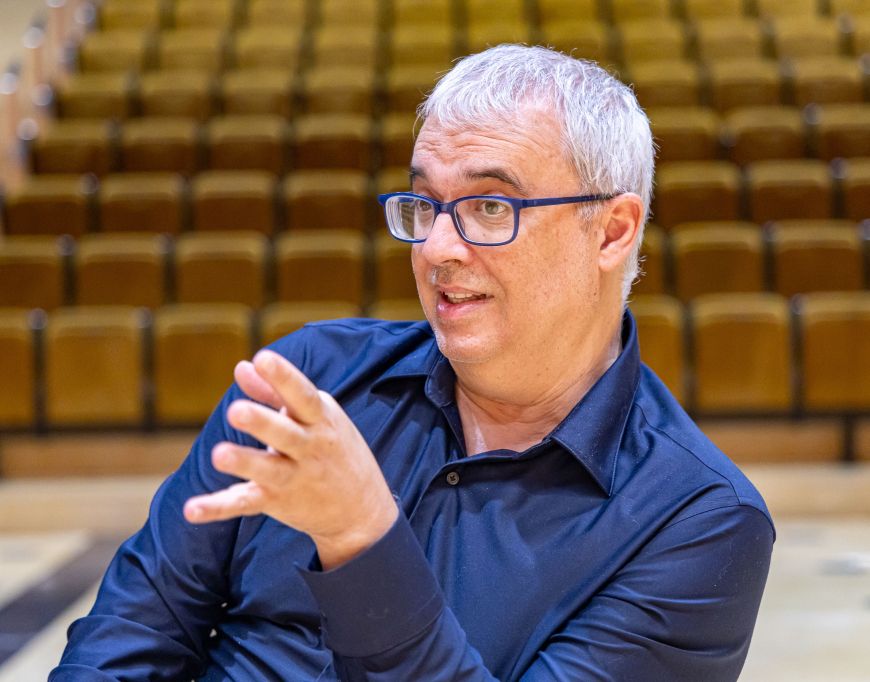
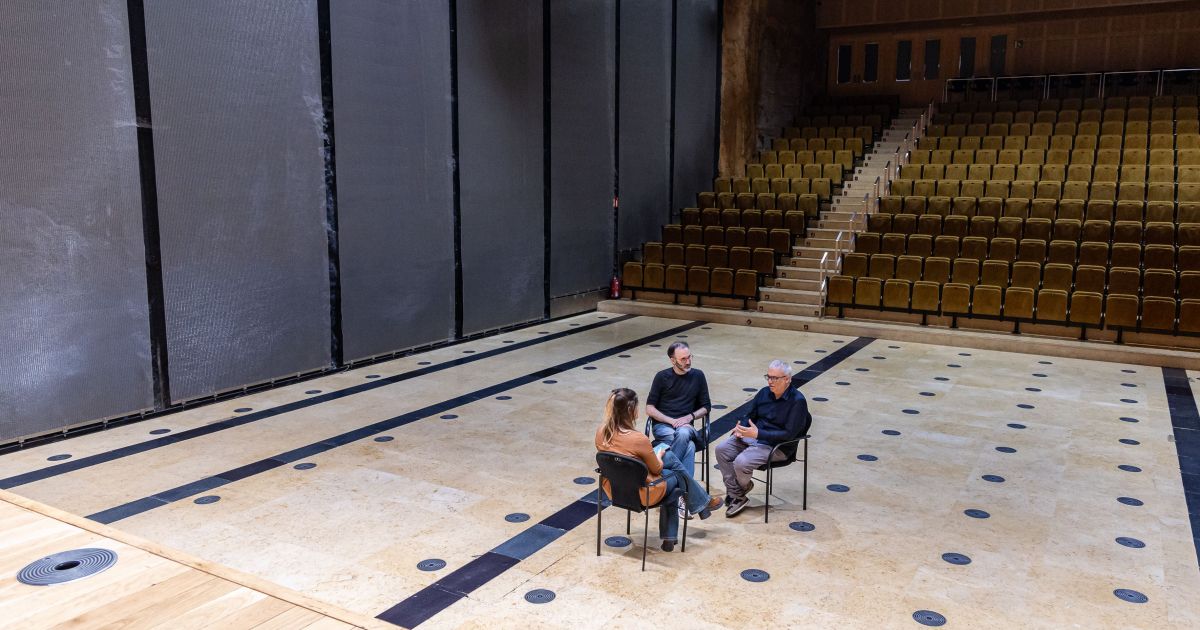
Sunday, October 18 at 12:00 h, Musica Reservata de Barcelona will celebrate its anniversary with a concert at the Petit Palau, within the Palau de la Música. I meet at the Petit Palau with Jordi Abelló, member of Música Reservata de Barcelona, and Esteve Costa, the guest conductor, to talk about their anniversary, about the current panorama of early music, and about the power of art as a refuge.
— This 2026 you celebrate 35 years of trajectory. How would you summarize all these years of Musica Reservata de Barcelona?
—Jordi Abelló: We are practically the same ones who started 35 years ago; we constitute the hard core. In general terms, we are eight singers and we work by productions: depending on whether the staff needs to be expanded or if we have guest conductors, as is the case with Esteve, more personnel are incorporated. Summarizing 35 years of trajectory is not simple.

The three founding members sang in the Orfeó Català and had the desire to explore other avenues, specifically early music. We have always dedicated ourselves to this genre, although occasionally we have performed contemporary works to connect both extremes. Our line has been constant: not to marry any composer or fixed repertoire, and to work the scores directly from the original sources. We have taken every opportunity to show our work, and being able to celebrate this anniversary at the Petit Palau is a great example of this.
"Our line has been constant: not to marry any composer or fixed repertoire, and to work the scores directly from the original sources" (J. A.)
— What program have you prepared for the anniversary concert at the Palau de la Música Catalana?
— Esteve Costa: We have structured the concert around texts of penitential chants, with music oriented towards Lent and Holy Week. The program shows the passion of Christ from different perspectives and protagonists, with a central large-format work: Scarlatti's Stabat Mater, a true tour de force of high musical complexity. All the pieces in the program correspond to Italian composers.
We focus on the Renaissance and early Italian Baroque. The oldest work is Palestrina's Stabat Mater and the most recent is Scarlatti's, which, despite being Baroque, is very much inspired by Renaissance polyphonic writing.
— How has the group changed since its beginnings in 1991 and what remains intact?
— J. A.: The core remains. Of the three founders, two are in this production. In the beginning, we were a smaller group and could travel much more easily. At that time, there wasn't as much offer of early music or vocal ensembles dedicated exclusively to this repertoire, which allowed us to do more concerts.
Now there is much more competition and excellently prepared professionals. Over time, we expanded the lineup to six and later to eight singers to tackle more complex works.
— To what do you attribute this increase in early music groups today?
— E. C.: It's a combination of factors, but the key element is training. Conservatories currently offer a specialization in early music that didn't exist in our country before. Many singers orient their careers towards this field from the beginning, and this favors the creation of specialized chamber choirs, quartets, or quintets. Furthermore, the proliferation of ensembles generates a natural dynamism: the more groups there are, the more concerts are organized and the more public interest grows.
— J. A.: And the same happens with instrumentalists. Before, to have a tenor sackbut, a cornetto, or a violone, you had to look for them in France, Switzerland, or England. Today we have these specialized musicians in our own environment.
"The more groups there are, the more concerts are organized and the more public interest grows" (E. C.)
— Has this increase in ensembles translated into more spaces and programming?
— J. A.: As for festivals, yes. Although many depend on municipal cultural policies and suffer certain ups and downs, many cycles and sections of early music have been consolidated within large events, such as the Granada Festival or the San Sebastián Musical Fortnight.
— And as for traditional concert halls?
— J. A. : The reference concert halls, like the Palau de la Música, have space for large productions. However, a large part of this music was originally composed for places of worship, which requires a very specific acoustics. That is why it is common for certain churches to be opened to host these repertoires.
— What is the main difference you find between performing this music in a church or in a concert hall?
— J. A. : It depends on the repertoire, but Renaissance and Baroque polyphony greatly benefits from the acoustics and resonance typical of religious spaces, very different from the response of a conventional concert hall.
— How would you explain the beauty of this musical period to someone who has never heard sacred polyphony?
— E. C. : Unlike current popular music —where there is usually a clear rhythmic and harmonic base over which a single melody stands out—, polyphony is characterized by the coexistence of several pure melodic lines that intertwine. This interaction generates harmonic tensions of great expressiveness. Beyond the religious component, the music speaks of deeply human emotions such as pain and suffering, so any listener can connect with it immediately if they experience it live.
"Beyond the religious component, music speaks of deeply human emotions such as pain and suffering" (E. C.)
— Your ensemble does not have a fixed artistic director, but rather works with guest conductors. How do you manage the musical work and the selection of conductors?
— J. A. : It depends on the demands of each program. In eight-voice repertoires we can self-direct, but certain projects require an external perspective and rigorous coordination. We discuss it among all members and look for professionals with whom there is a good artistic understanding.
— The historical concept of musica reservata refers to works of high expressive intensity intended for a small circle of initiates. Does the group seek to recreate this intimate atmosphere?
— E. C. : In this case, the group's name does not condition the interpretation space. The repertoire we present was conceived for liturgy in large basilicas in Venice, Rome, or Naples, not for private spaces. Nevertheless, in specific pieces like Allegri's Miserere, we will seek a spatial stereophony effect, dividing the formation into two choirs located at different points in the hall to reproduce the practice of the era.
— What criterion has guided the configuration of this anniversary program?
— J. A. : The starting point was the desire to interpret a major work like Scarlatti's Stabat Mater, lasting 25 minutes. From this central piece, we have articulated the rest of the program with works from the same period and of related themes. The concert has an approximate duration of one hour and ten minutes.
— Will there be instrumental accompaniment on this occasion?
— E. C: Yes, we will have a team of three instrumentalists (organ, cello, and double bass) for the basso continuo section in the early Baroque pieces. This provides a timbral richness and harmonic support that helps compensate for the hall's lower resonance compared to a temple.
— What is the fundamental stylistic difference between the Renaissance and the early Baroque?
— E. C. : In the Renaissance, the interweaving of horizontal lines predominates. In the early Baroque, the basso continuo is introduced, and the construction becomes more vertical, giving more weight to chords and intentional harmonic tensions to reinforce the expression of the text.
— J. A. : Another decisive factor is the treatment of dissonance. While in the Renaissance harmonic clashes were very measured, in the Baroque, dissonance is consciously structured as a dramatic resource to evoke all kinds of feelings.
"Works like the Miserere invite a state of practically contemplative meditation" (E. C.)
— Esteve, what has been the experience of conducting a group accustomed to musical self-management?
— E. C. : It has been a very fluid process. As they are professional singers specialized in the genre, my role has mainly been to coordinate, unify the interpretive criterion, and adjust details of precision or articulation of the text, always respecting the background and style that the group already has integrated.
— Finally, what mood would you like to convey to the audience at the end of the concert?
— J. A. : I would like the public to discover the relevance of a repertoire created four centuries ago. Despite the harshness of the texts, works like the Stabat Mater end with a message of light and hope. The goal is for the listener to leave moved and comforted.
"In this world we live in, where everything looks very bad, I firmly believe that our responsibility as artists is to offer doses of beauty" (E. C.)
— E. C. : Works like the Miserere invite a practically contemplative state of meditation. Our intention is to get the audience to forget for a while the reality of everyday life: not to look at their phone, not to think about pending messages to reply to or what they will have for lunch, and simply enjoy. In this world we live in, where everything looks very bad, I firmly believe that our responsibility as artists is to offer doses of beauty.
Add The New Barcelona Post as your preferred Google source for free
Stay informed with the latest news.