Everyone who has brought someone from outside to see the Palau de la Música Catalana has experienced the same scene: having to act as a tour guide and winding through the narrow streets of the neighborhood until finding the hidden facade. Having one of the great jewels of Catalan modernism hidden among narrow streets has its charm, yes, but also its limitations. And this is about to change from top to bottom.
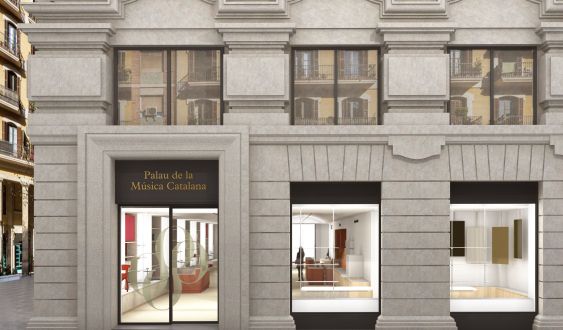
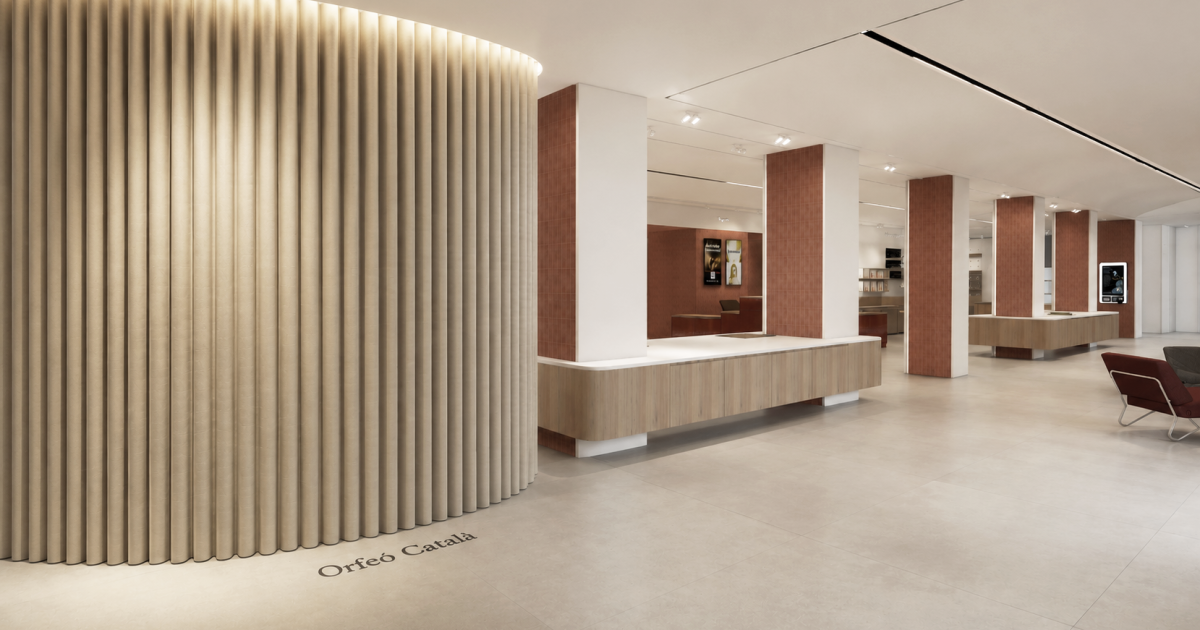
This autumn will see the inauguration of the Nova Porta del Palau, a new space of more than 350 square meters located at street level, specifically on the ground floor of number 54 of Via Laietana. The project arrives at the perfect moment: the transformation of Via Laietana into a more pleasant axis for walking is the ideal excuse to go out onto this main street. With the new access, the Palau seeks to stop being "hidden," in the words of its president Joaquim Uriach, and to bring cultural activity to street level.
A million visitors don't fit in a small ticket office
Beyond the improved connection, this transformation responds to a need for space. The Palau has not stopped gaining public in recent years: last year it approached a million visitors, a very striking figure if we consider that only five years ago it received 400,000 fewer. Between the daily programming, concerts, activities, and the constant flow of tourists and locals taking the guided tour, the traditional lobby had become too small.

To solve this, for the next 20 years they have rented two adjoining premises on Via Laietana and will invest 1.5 million euros. The new space will have two entrances: one from Via Laietana itself and another that connects directly with Palau de la Música street, right in front of the terrace. This will create a much more fluid interior corridor to go from the street to the theater directly and much more comfortably.
Until now, both the ticket sales offices and the small souvenir shop were located in the same lobby of the modernist building, causing queues and congestion at the entrance. But, with this renovation, both services will be moved to the new premises on Via Laietana and, therefore, the historic lobby will be freed up and gain space to reorganize visitors.
Fewer ticket sales, more cultural advice
And what will the New Palau Gate be like? Taking into account that currently 60% of visitors purchase their tickets in advance online, the new service point has been designed to offer personalized attention, where staff will accompany the public and advise them on the artistic and heritage offerings of the venue.
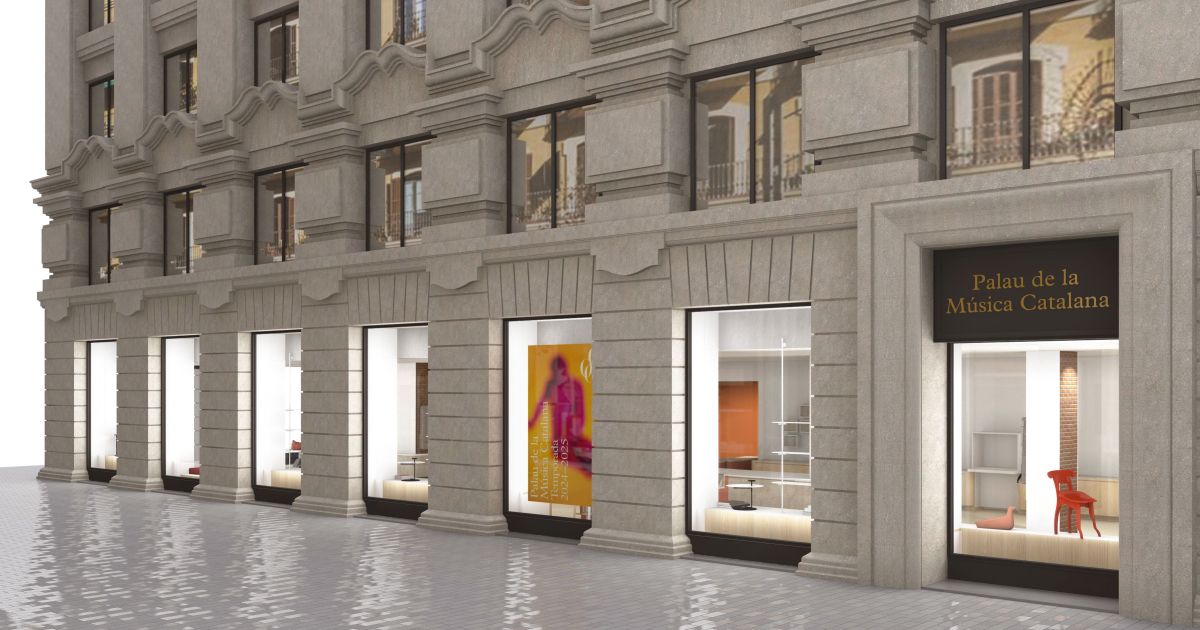
The space has been designed as an immersive and informative journey that functions as a gateway to the Palau universe. And best of all: it is not necessary to have a ticket for a concert or to have booked a guided tour; anyone walking along Via Laietana can enter freely from the street and take this journey that combines technology and heritage.
Through interactive screens, drawers with materials to discover, and reproductions of original architectural elements, visitors can delve into the great episodes of the institution's history: from the origins of Domènech i Montaner's building to the trajectory of the Orfeó Català and its Choral School. Likewise, the tour reserves a prominent role for disseminating the artistic work of the house and its more human side, showing the daily life of the Choral School and the community impact of the social project Palau Vincles.
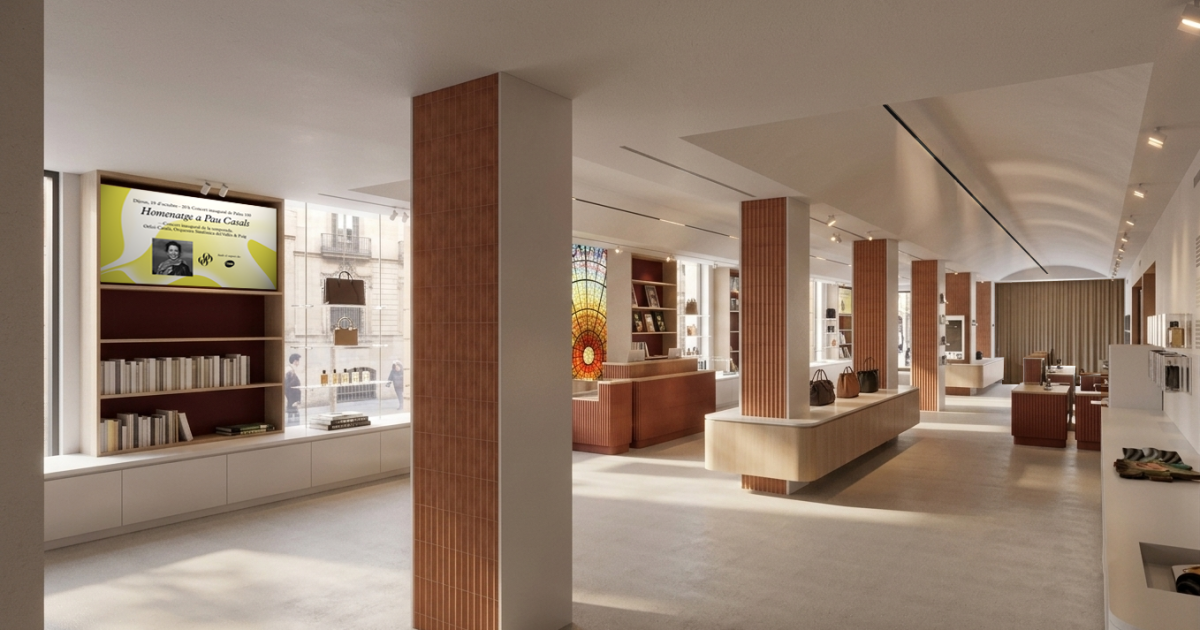
A different store with Laie
The new Palau Store, designed with Laie, will not be the typical souvenir shop either. It has been conceived as another corner of the tour, where books and objects are related to what has just been seen on the screens and at the information points. Instead of generic, impersonal collections, the store offers a carefully curated editorial collection, specializing in the history of the Palau, the architecture of Domènech i Montaner, Modernism, music, and the city of Barcelona.
In parallel, the space will offer a selection of exclusive products inspired by the most emblematic floral elements and stained glass windows of the building, thus committing to design, local production, craftsmanship, and sustainability criteria. The idea is that visitors can take home a tangible and quality souvenir of the experience lived.
A high-volume end to the visit: the new immersive room
The latest major new feature of this space will arrive in November, when the new immersive room will open, closing the guided tour route. It is a space designed by the Tiler Gab studio, intended for groups of up to 12 people, conceived as an isolated room where the public can concentrate solely on the music. To achieve this, the space is equipped with a Dolby Atmos surround sound system and intelligent lighting that reacts in real time to the frequency and intensity of the music.
For its launch, this room will premiere with El Cor Infinit, a work by composer Marc Timon recorded exclusively by the voices of the Orfeó Català. This first acoustic and sensory experience will only be the starting point, as the institution plans to change the musical repertoire over time to offer new proposals to the public.
It is not the first time that the Palau has expanded its premises. It already did so in the eighties with the major renovation of the Illa del Palau and more recently, in 2021, with the Espai Palau on Ortigosa street. This new door follows the same path: bringing the institution closer to residents and people walking through the center.
Add The New Barcelona Post as your preferred Google source for free
Stay informed with the latest news.