
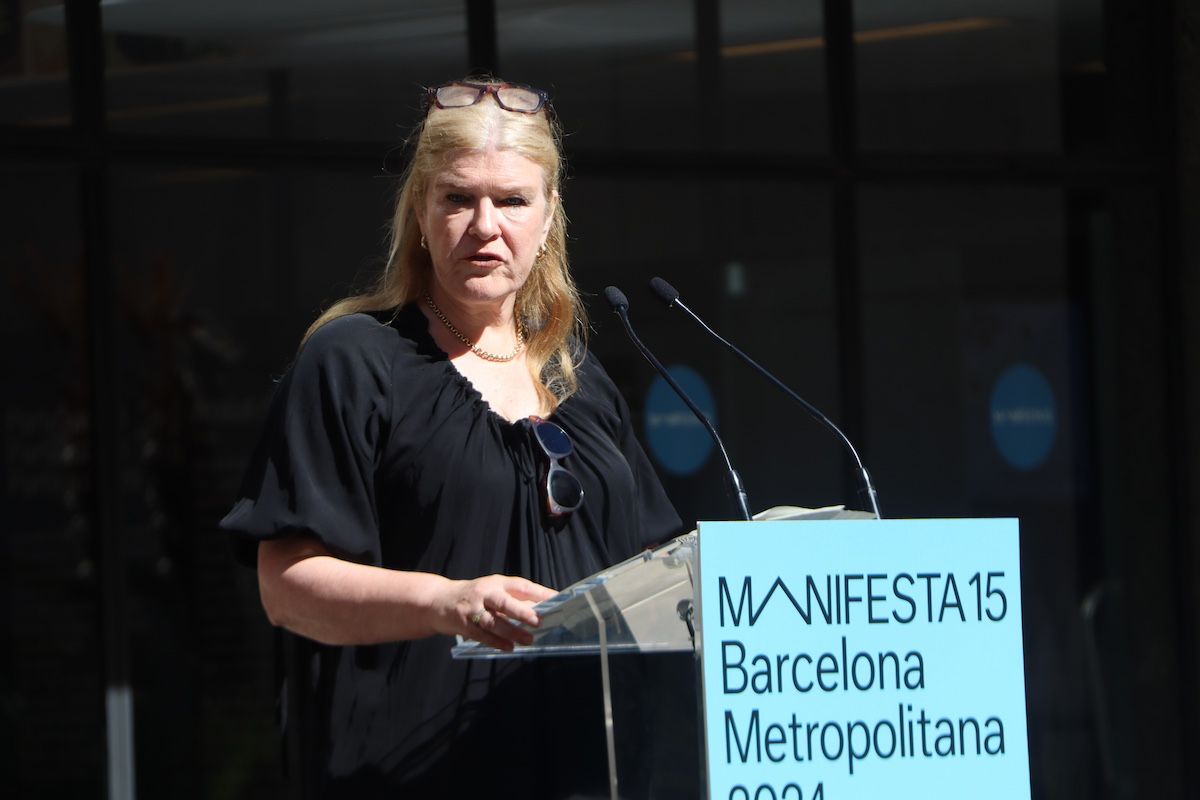
Hedwig Fijen, the founding director of Manifesta, knows Barcelona better than it seems. In this fifteenth edition, the nomadic biennial has sought to reclaim the peripheries of cities (of our city, to be more exact) and unite them with a reflection on the world we are shaping.
The commission or invitation came during the previous legislature, and perhaps that is why the interview addresses the crisis of values, ideologies, trends, challenges, power, gentrification, focusing on this biennial as a way to awaken consciences about life in cities. There are many questions, but Fijen also outlines many answers. And we even managed to talk, a little, about art.
--- Who are you and what do you do in Barcelona?
--- Mayor Ada Colau, in 2018, met Mayor Leoluca Orlando, a well-known fighter against the mafia, in Palermo during that year's Manifesta edition. It was then that she wondered how it was possible that important institutions and infrastructures are always located in the center of Barcelona, even though people, citizens, voters, live on the periphery. It occurred to her that a Barcelona edition of the biennial could bring thinkers and philosophers to develop this theme, and she commissioned art critic and historian Ángela Molina to explore the possibility. Especially based on the fact that tourism in Barcelona accumulates in the center, but people do not. The aim was to create a symbolic cohesion between the city and its periphery, to focus on that anomaly.
--- But that problem is not exclusive to Barcelona.
--- I come from Amsterdam, where this problem also exists, of course. There is currently a "parliament of mayors" who, when they meet, find that they suffer from very similar problems. One of them is the need to decentralize urban centers.
--- What do we understand as the center of Barcelona?
--- It's curious because, if we take it from a purely geographical point of view, the center would not be Plaça Catalunya but Plaça de les Glòries.
--- Yes, Cerdà also said so, but one thing is the geographical center and another is the heart.
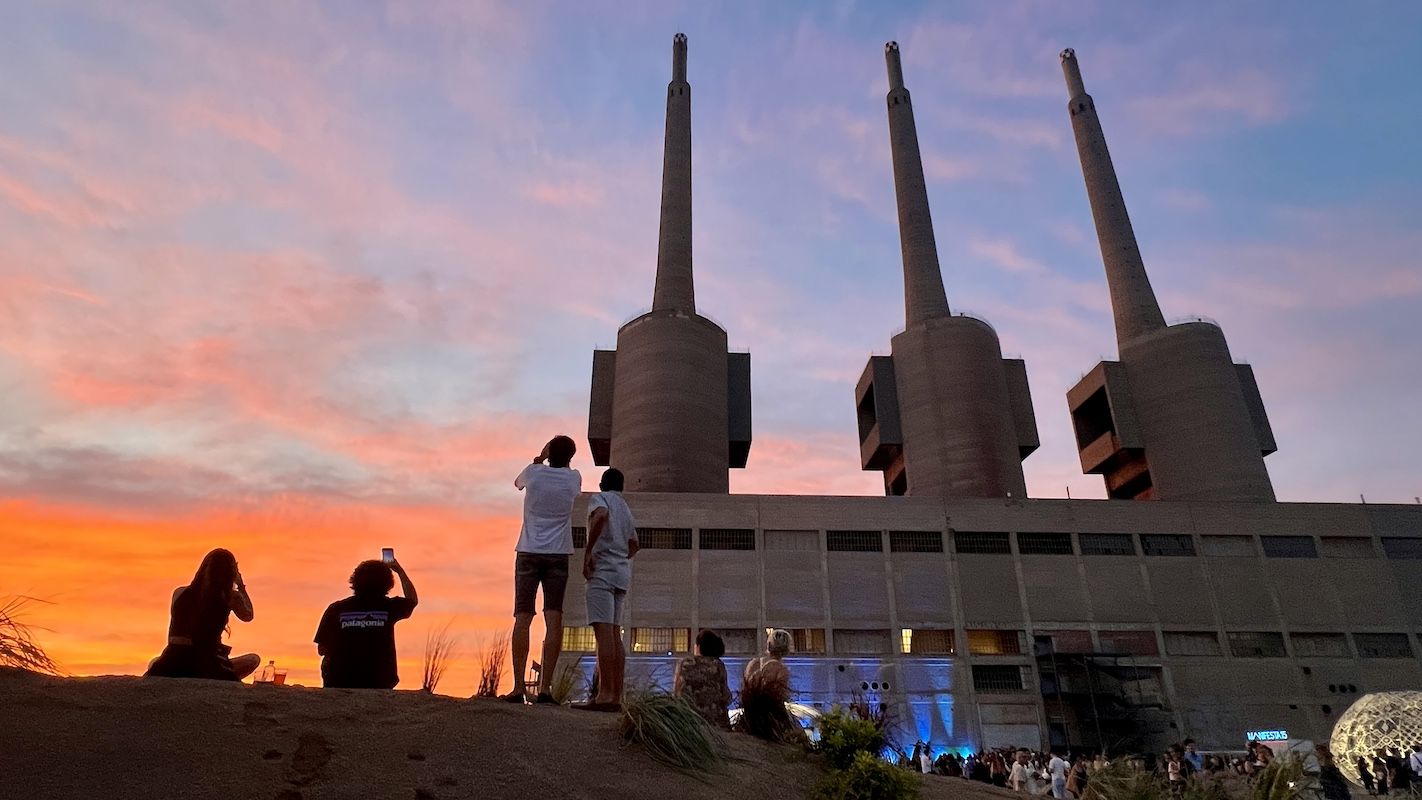
--- Exactly, because everything is conditioned by very clear natural limits: Llobregat, Collserola, and the sea. Precisely for this reason, we have chosen symbolic locations that identify this alternative cultural system. With councilor Jordi Martí Grau, we went to see the Tres Xemeneies of Sant Adrià, for example: it was incredible to see that industrial installation, so close to the beach, and unused. That building did pose a challenge for us. We had to find buildings that symbolized the problems, with an imaginative narrative. In them, we could talk about drought, global warming, mobility, the absence of trees...
--- There's a lack of parks in Barcelona.
--- Of course. I live in the Sagrada Família neighborhood and I suffer, above all, from the noise of Rosselló street with Nàpols.
--- But do only the buildings themed by Manifesta talk about the environment?
--- No: in the CIBA of Santa Coloma, we talk about feminism, for example. In La Ricarda, in Casa Gomis, it's shocking to see how every minute a plane flew over us! The important question, in the end, is how much we need to grow. Or degrow. Manifesta doesn't choose, Manifesta doesn't manifest: we just ask ourselves what would happen if we decided to degrow.
--- You spoke of a parliament of mayors, but here you have made a parliament of trees.
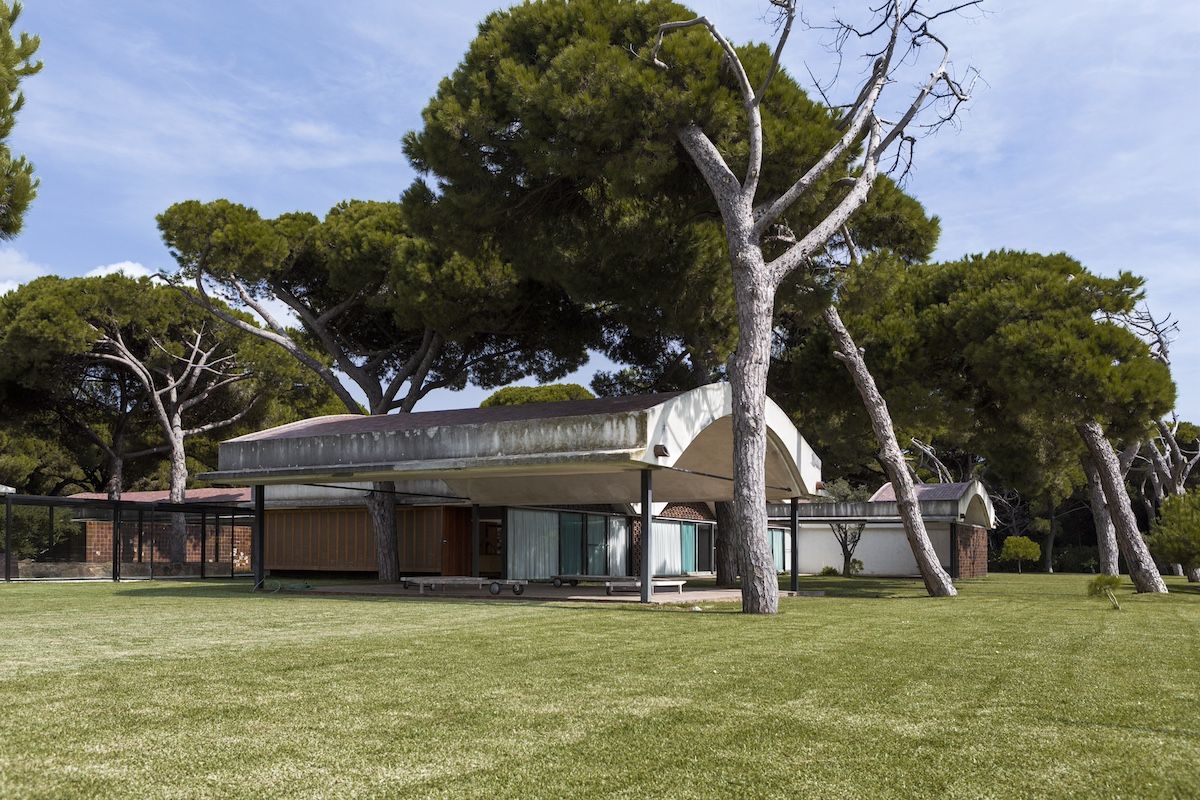
--- In Casa Gomis, precisely, a sculpture by Elmo Vermijs in the shape of a wooden hemicycle. Through it, we invite reflection on climate change, which can be read and interpreted in the rings of tree trunks. The tree is saying "city, you are killing me!".
--- And besides the trees, what do people say?
--- We held two citizen assemblies asking what attendees thought decentralization of the city meant. And everyone was excited about the idea of incubating their own, genuine project for Barcelona and its metropolitan area. This implied a high degree of local involvement, of course, and creating a legal entity. When we arrived, in fact, the first thing was to know where we are. And we asked a lot about history.
--- History?
--- Yes, of course. Where we are has to do with the antecedents: the Civil War, Franco, colonization, the street naming...
--- Do you also fight for changes in the street naming?
--- We help people reflect. They haven't changed enough. In Holland, as civilized as you see it, there is still an apology for slavery in street names. Our queen made money from slavery! And here, in this wonderful building where we have our headquarters, the old Editorial Gustavo Gil, we have an exhibition by Tania Safura Adam called Arxius Negres which talks about the silenced black community in Barcelona since the post-Franco era. Or Germán Labrador, a professor at Princeton, enlightened us about the imaginary of the Civil War, of the Second World War, of the Franco regime, and how this still affects the minds of citizens. What remains of that?
"There is no single system that can be acquired by everyone homogeneously"--- Not only did Francoism do it. Even today, names of squares of recent social phenomena are eliminated.
--- Everything became especially complicated after the Cold War, with the fall of the Berlin Wall. Nobody went to the East before, but starting Manifesta in Rotterdam helped create an accessible platform for both the West and the East as well as Central Europe: a union of knowledge and art. George Soros was one of the first to help us, because he was concerned about the cultural centers of the former Soviet Union and what could be saved from them.
--- Are you utopians?
--- Back then we were unrealistic and optimistic, I admit it. Especially about how the end of communism would unfold. I lived two years in Russia, in Slovenia... and I saw how not everyone converted to the capitalist system easily. People from outside started acquiring properties at a very low price!
--- Speculators? The first gentrifiers?
--- I'm just saying that there isn't a single system that can be acquired by everyone homogeneously. Dictator Tito, for example, was able to make an alternative identity endure. Even if it was wrong, possibly all of that was lost too quickly.
--- Franco died in bed, however.
--- Franco is still recent, but that's because there was no Nuremberg here. Why is Catalan society like this today? During the 30s you had one of the most advanced systems in Europe in education, the Escola del Mar, the Escola del Bosc... All of this was wiped out by Franco!
--- It seems that the Escola del Mar wanted to be recovered, recently.
--- Collboni considered it but it has not been possible.
--- So what should we do now? And what can Manifesta do?
--- Manifesta will be a success if it leaves a legacy. What will we have left in Barcelona next year, in five years, ten. Especially in terms of provoking discussion, like right now, where we provoke almost a daily article in the written media.
"The growth of tourism takes all the water from Barcelona, depersonalizes the center, makes the same shops and the same yoga center and the same coffee shop everywhere"--- And how do you see the future?
--- This is what Barcelona should be asking itself. What will be the future of the Tres Xemeneies? And of La Ricarda, and of the airport? And of this magnificent building where we are? Manifesta is an outsider, an observer who comes to stir up issues that are indeed political. That affect the politics of the insiders. We don't tell them "go live in Granollers," but we do make them wonder if there's anything interesting in these areas. And this is done by provoking activities, not just talking!
--- What are the main problems you have detected in Barcelona?
--- Mobility, first: can you believe I can't go to Sant Adrià with Barcelona's Bicing service?
--- Seriously?
--- Or the problems going from Mataró to Granollers, for example. Or the growth of tourism, which takes all of Barcelona's water, which depersonalizes the center, which makes the same shops and the same yoga studio and the same coffee shop everywhere, and on top of that makes rental prices go up.
--- What else?
--- We only intend to be a mirror of what is happening. And we want the police officer, the nurse, the worker in Barcelona to ask themselves why they can no longer live in the city. Think that the Tres Xemeneies is the last piece of ungentrified beach in Barcelona! What do we want then? Another W hotel? A park? A space for cycling?
--- Let's talk a bit about art: does Barcelona have a divorce with contemporary art?
--- I don't know that. I do know that, however much we are concerned about local problems or Catalan identity, it is necessary to be more open to international or global problems. And art and culture have a very decisive role in creating new narratives for cultures and institutions.
--- How is it that a biennial from outside has to come and ask us all these questions?
--- That's what I ask. How is it necessary for someone from outside to come and provoke these questions? You have museums, you have universities, you have talent... And you have problems!
"Art cannot be considered a hobby: culture and art are investments in cohesion"--- Has there been a need for much public investment for this edition?
--- All public investment has been reinvested. Three million to rehabilitate infrastructure in the metropolitan area, two million for salaries, one million for education and outreach. Think that 40% of the projects are Catalan, and that 99% of our team is Catalan! And we have asked the University of Barcelona to carry out an audit to analyze the efficiency of the public investment made. Most likely, the return will be double the investment made, and in fact many cities call us because we are a very transparent entity.
--- We also have a biennial, but of thought, for all these reflections.
--- But art cannot be considered a hobby: culture and art are investments in cohesion, something very necessary in a liberal society. Oh: and getting off the mobile screen.
--- We agree on this.
--- Right?
Add The New Barcelona Post as your preferred Google source for free
Stay informed with the latest news.
