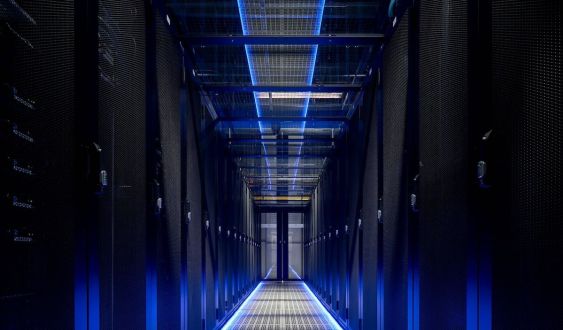
Every technological ecosystem requires powerful data centers that guarantee connection between both local and international actors, including Barcelona's. So much so that these data centers represent essential infrastructures for the digital world, and contribute to positioning cities and regions on the international scene. In this technological scene, Barcelona stands as a strategic point for the industry, with eight operational data centers. All of them add up to an installed power of 66 megawatts, almost double the 34 megawatts of a year ago.
With this increase, the city and its metropolis gain ground, going from representing 14% of the Spanish market in 2023 to 18% in 2024. Thus, last year Barcelona remained the second region with the largest capacity in terms of data centers, only behind Madrid —which accumulates 55% of the state total—, in a context where other regions are experiencing accelerated growth. This is the case of Aragon, which now represents 10% of the total, as detailed by the president of the Spanish Association of Data Centers (Spain DC), Emilio Díaz.
But, what are data centers? What happens inside those windowless and semi-bunkerized buildings that are emerging around the metropolitan area? What function do the thousands of cables and racks that form long corridors that replicate identically throughout the center have? "We are like the railway lines of the mid-19th century, essential for moving goods from factories. If you set up a factory and cannot move the product, it makes no sense. Now, data centers are that critical infrastructure," illustrates the CEO of Equinix in Spain, Eulalia Flo.
"Any communication, video call, whatsapp, no matter how much it starts to transmit wirelessly, later needs cables and a physical infrastructure, and that is what is often forgotten," emphasizes Flo, who summarizes that "data centers are the home of the digital; they are where the digital happens." Given the forecast that this digital world will continue to expand exponentially, data center developers are accelerating the launch of new centers, as Equinix does.
The American company, which operates in 70 markets and has 270 data centers worldwide, has recently opened its second data center in the Barcelona area, in which it has invested 50 million euros and which has 2,500 square meters. Located in L'Hospitalet de Llobregat, it became operational in December, and already has 15% of its installed capacity occupied. As this figure increases, the multinational will execute new investments: "We have plans to continue growing in Barcelona."
"Data centers help Catalan companies have a digital presence worldwide," says Flo, and goes further: "They also attract companies to Barcelona." And, according to the multinational's executive, having players like Equinix in the city makes it easier for large companies to choose to operate from the Catalan capital. The company, which has about 60 employees in Barcelona, some with international functions, has 130 clients in its two data centers in the metropolitan area, with more than 60 communications operators, "making it the most interconnected data center in Catalonia, and one of the most interconnected in Spain."

And Barcelona is a strategic point both for its business and technological ecosystem and for its international connectivity, with key infrastructures such as the Barcelona Cable Landing Station. "It is the point where Europe connects with Africa, and where Africa also connects with America," illustrates Flo, originally from Badalona and also vice president of Spain DC.
Given this connectivity and international potential, Barcelona attracts investments linked to data centers and new operators who want to set foot in the Catalan capital, such as Templus. The Spanish company has been the last to land in the Barcelona metropolis, and has done so through the purchase of the BitNap data center in L'Hospitalet de Llobregat. "The start of our activity in Barcelona has been very positive, and our data center is already offering advanced interconnection to more than 120 clients and 20 telecommunications operators," explains the CEO and co-founder of Templus, Ignacio Velilla.
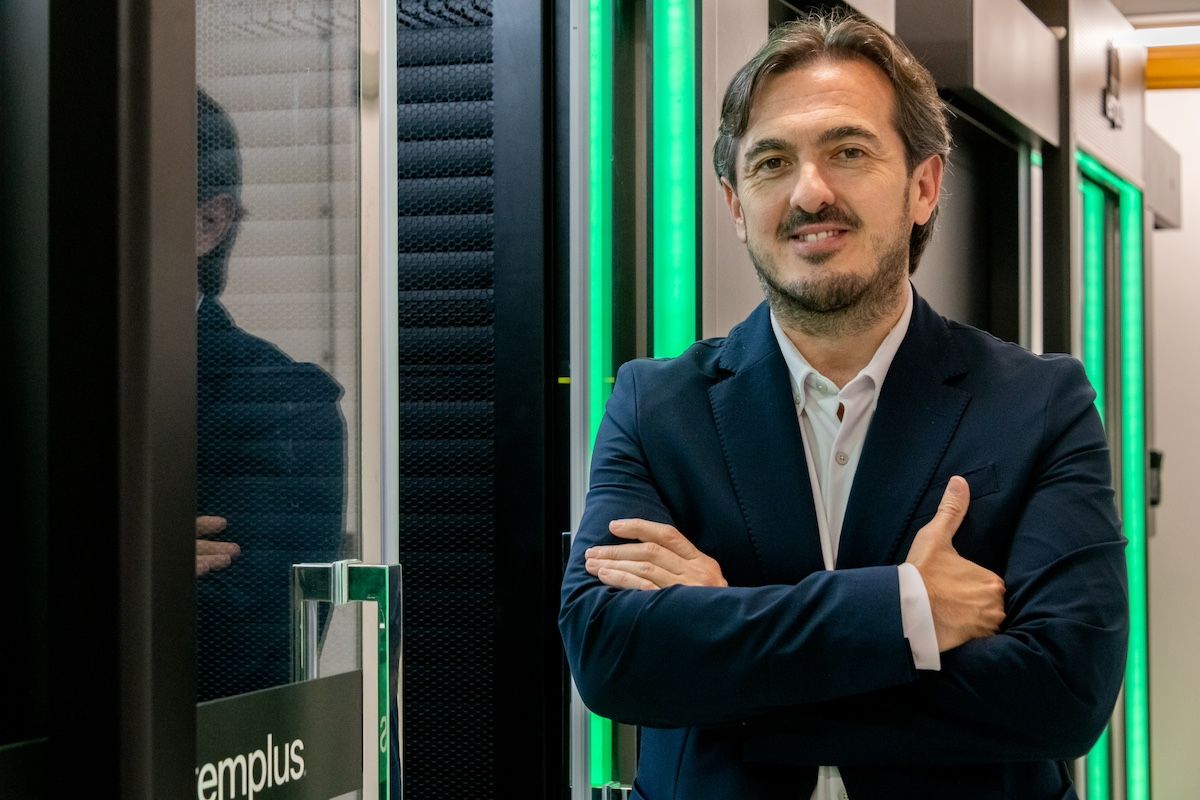
Now, Templus explores new growth opportunities in Catalonia, as Barcelona and its surroundings are "one of the main business markets in Spain and a key strategic point for the technological and business sector." The company, created in May of last year and with data centers in six cities nationwide, aims to exceed 20 centers on the peninsula this year.
And the data center sector is expected to continue growing, and it is confident it can do so at an accelerated pace. In Catalonia, growth forecasts predict a positive trend whereby, if the current pace is maintained, the installed power will approach 200 megawatts by 2030, "consolidating its position as one of the main technological hubs in Spain," according to the president of Spain DC.
For this, however, three key elements are required: "ease of land, access to energy, and administrative ease." Along with the need to have the right talent, "the main challenge for the growth of the data center sector is access to energy," remarks Díaz, also CEO of Nabiax.
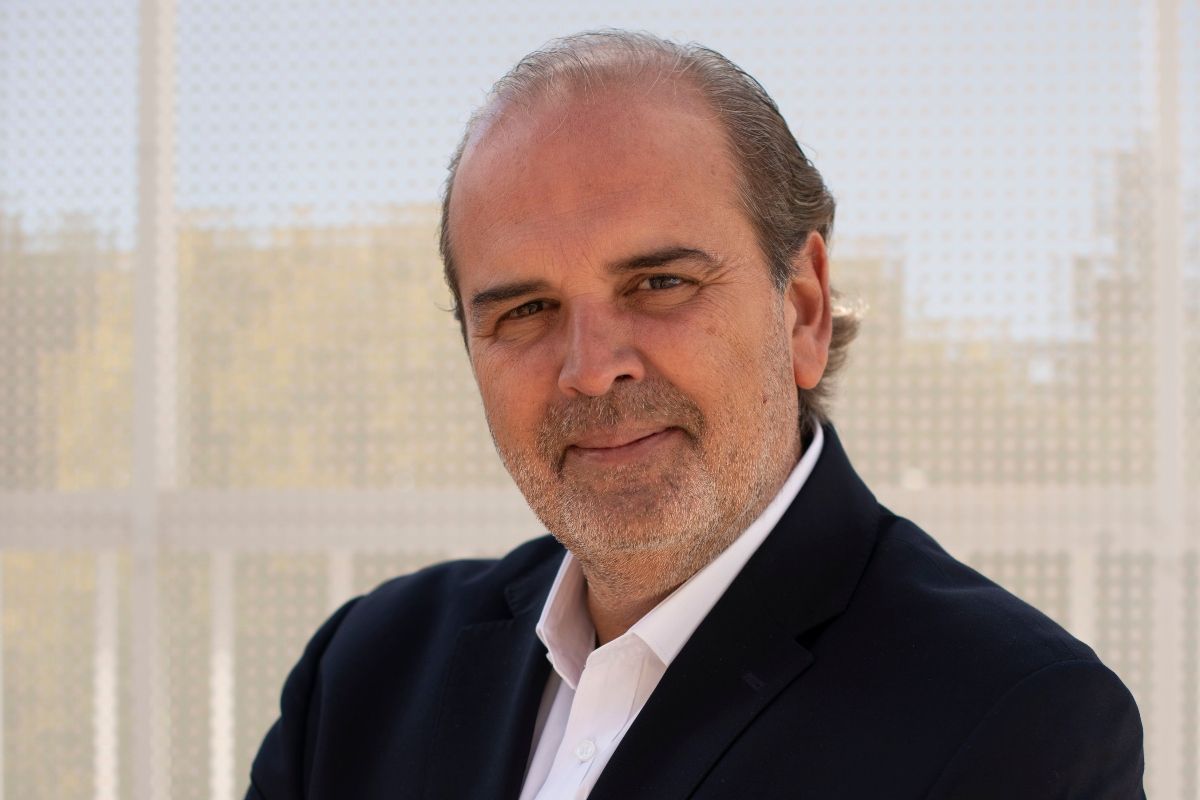
And as Flo reminds us, everything digital requires energy, from AI, biomedicine, and supercomputing to a meme or a whatsapp: "And data centers do not consume that energy, what we do is take it and give it to the digital." Therefore, he warns of the need to adjust electrical planning and investments to digitalization: "If we want to have a digital transition strategy, energy must be included in the equation; it is an enabling factor."
"Energy must be planned for the world of the future, not for that of the 19th century," and taking into account the needs of that "unstoppable boom" of technologies like AI, according to Flo. In this regard, Díaz emphasizes that data centers are fundamental for digital transformation, as they enable the development of advanced technologies such as AI, automation, and data analysis." Thus, the power of these infrastructures must grow in parallel with the technological ecosystem in Catalonia, which has strengthened its international position over recent years, according to Díaz: "To maintain competitiveness and continue attracting investments, it is crucial to continue expanding installed capacity and improving the conditions for the development of new data centers."
Add The New Barcelona Post as your preferred Google source for free
Stay informed with the latest news.
