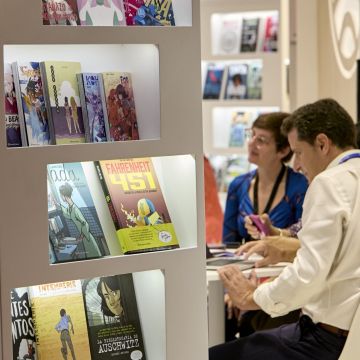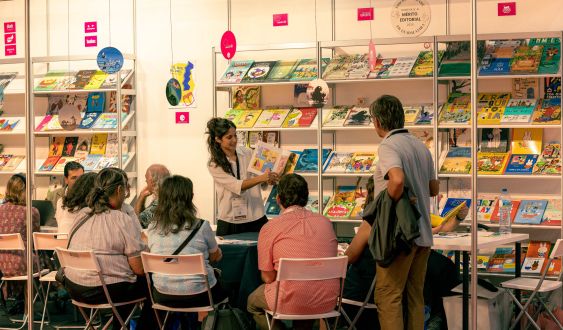
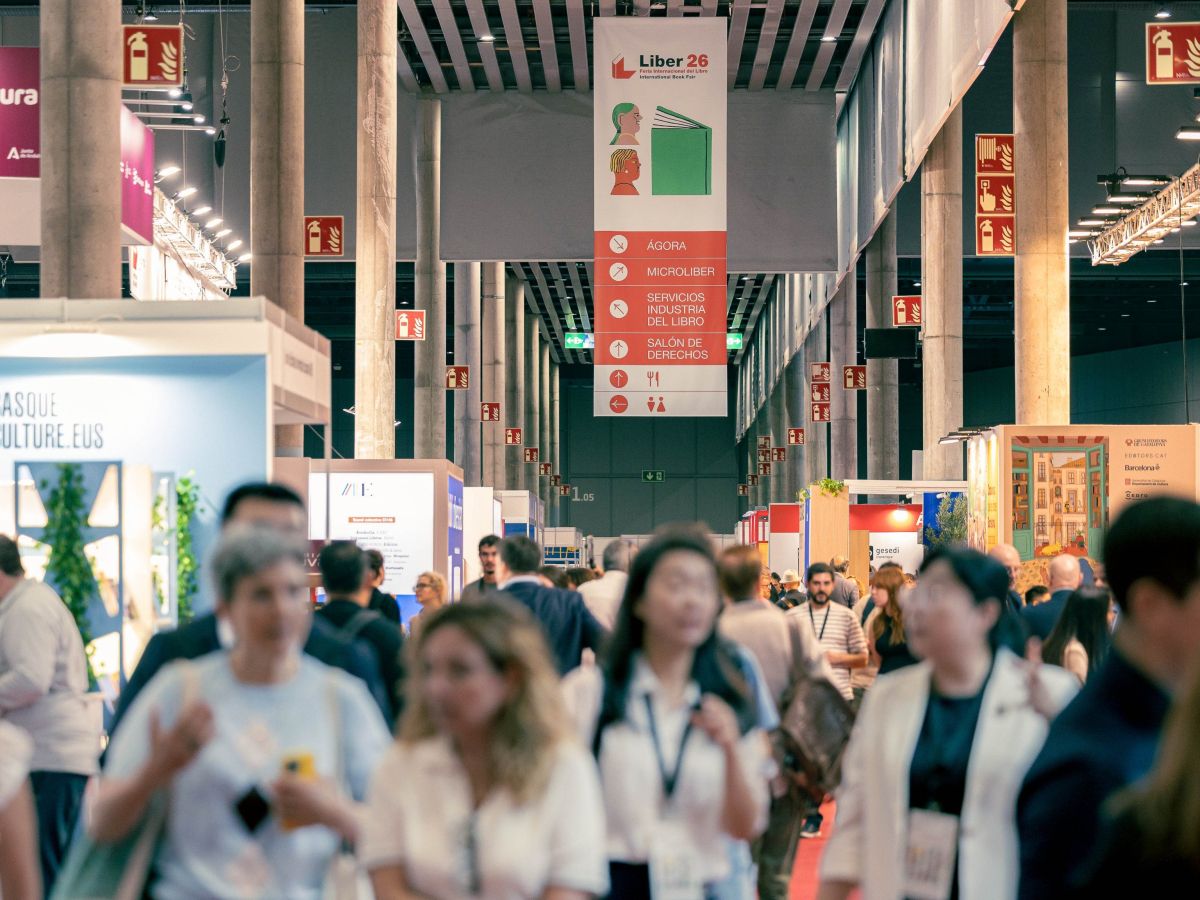
Books with wings hang from the ceiling in one of the display stands at the entrance of Liber, the professional book fair for the Spanish publishing industry that takes place at Fira Barcelona’s Gran Via venue through Thursday. Suspended above the visitors arriving at the fair, they seem about to take flight, ready to reach new readers and land in other corners of the world. It is enough to walk a few meters through the corridors of Fira Barcelona for this image to make sense: these days, Liber becomes a huge, diverse bookstore, with books at every stand and visitors browsing the shelves, leafing through copies, meeting with publishers and searching for stories that can reach new readers beyond their borders.
But Liber is not just a place to look at books. Here, people come in search of stories, readers, markets and, above all, connections that allow books from Spain’s publishing industry, for which Liber serves as a major showcase, to travel beyond its borders.
The international dimension of the professional fair can also be seen in the figures: 250 exhibitors from 19 countries participate in this 44th edition, from independent publishers to major groups such as Penguin Random House and Planeta, as well as imprints specializing in children’s and young adult literature, education, textbooks and religious publications. The organization expects more than 9,000 visitors over the three days of the fair and has invited more than 700 professionals from 70 countries —including librarians from institutions such as the University of California, Berkeley, and Stanford—, with more than 4,000 professional meetings already scheduled.

And it is enough to walk among the exhibitors to realize that the books of the Spanish publishing sector —not only published in Castilian, but also in Catalan or Basque— have already begun to travel. English constantly creeps into conversations and meetings, while publishers from Ukraine, China, Chile, Peru or Turkey succeed each other in the corridors. But there is also a wide local representation, concentrated in the collective stand Catalonia, country of books. Barcelona, city of literature, shared by the Barcelona City Council, the Catalan Institute of Cultural Companies and the Guild of Publishers of Catalonia. In this display stand coincide imprints such as Barcelona Llibres, the City Council's publishing imprint, alongside Edebé, Tibidabo Editorials, Editorial Kairós or Edhasa.
All this international diversity that is concentrated these days at Liber is explained, in part, by the weight of the Spanish publishing sector, one of the most important book markets worldwide. José Manuel Anta, general director of the Federación de Gremios de Editores de España (FGEE) —promoter of Liber—, speaks of an “exception” in the international panorama: the sector has chained more than twelve years of sustained growth, while other markets face more difficulties.
Books also travel without moving
This weight of the Spanish publishing sector is also reflected in its capacity to go abroad. In fact, the international dimension of the sector is such that the FGEE estimates that exports are already approaching 400 million euros. A dimension that these days becomes visible at Liber, in the corridors, in meetings and encounters between professionals from different countries.
Among those seeking these connections is Olena Odynoka, deputy director of international cooperation at the Ukrainian Book Institute, who is participating in Liber for the third time. “The Spanish market is one of the largest in the world and for us it is very important that our works are translated and present in these markets. The fair allows us precisely to continue strengthening these connections,” she explains.
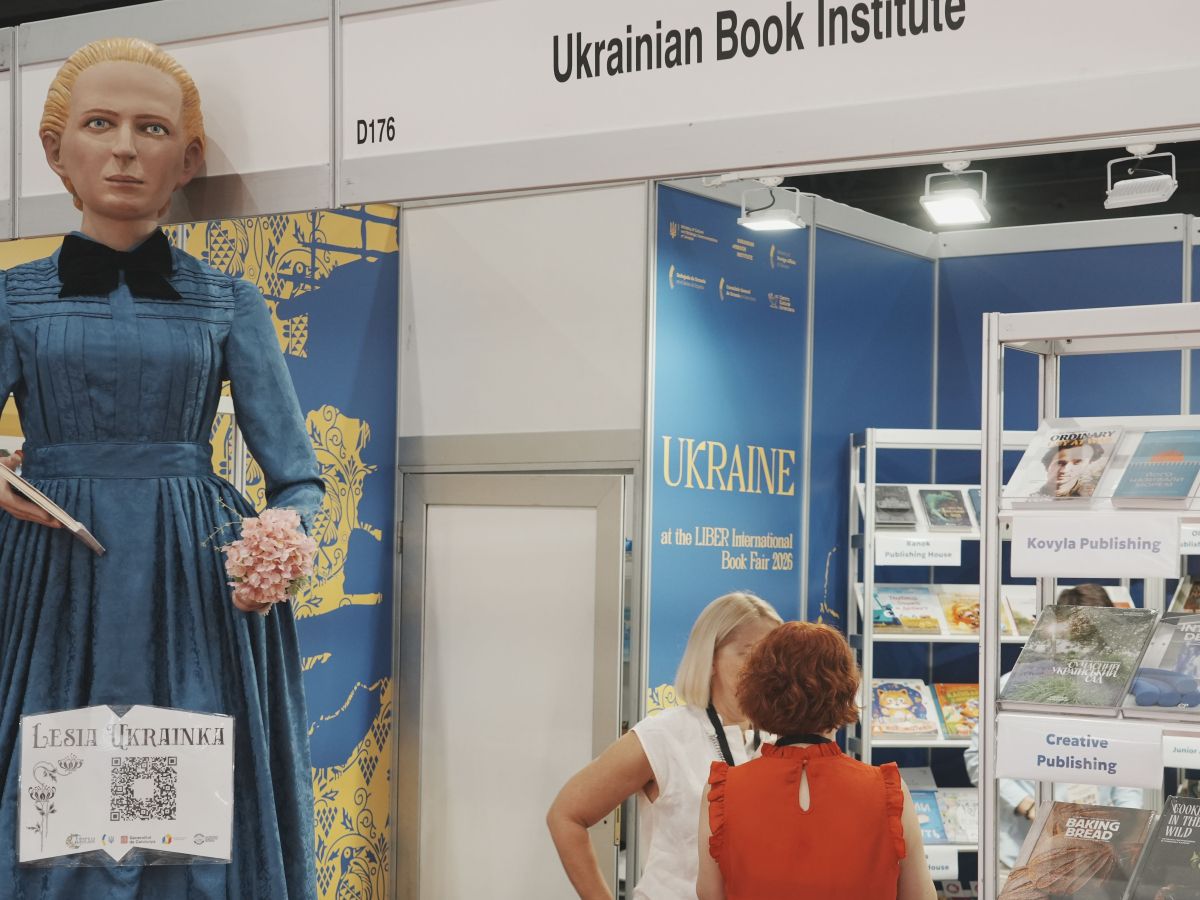
For the Ukrainian publishing sector, these connections are especially important after the losses caused by the war. Odynoka estimates that 13 million books were destroyed during the summer, about a third of its market, with more than 23 million euros in losses. Now they are looking for ways to recover, from crowdfunding campaigns and state support instruments to the training of new translators, some avenues they also seek to reinforce these days at Liber.
But the book, for Odynoka, has a value that goes beyond figures and the reconstruction of a market. "The book offers a refuge for the mind, because it allows one to escape reality," she expresses. And in these rainy days in Barcelona, the image acquires an almost literal meaning. While the rain falls on the other side of the doors of Fira de Barcelona, the corridors of Liber become small refuges. Among shelves, meetings, and books changing hands, it is enough to stop for a few pages to get away, even if only for a moment, from what is happening outside.
"The book offers a refuge for the mind, because it allows one to escape reality"
The ability to establish connections has also brought Macarena Morales, editorial director of the Chilean group Muñeca de Trapo, to Liber for the first time. She arrives from Chile with a full agenda of meetings with Spanish publishers and with the intention of "establishing synergies" and co-editing books. But she acknowledges that not everything happens in the planned meetings: "It is in improvised encounters where the most interesting ideas emerge." Part of her children's catalog, she explains, was born precisely from encounters that arose at other international fairs such as Frankfurt or Guadalajara.
But these synergies do not always consist of bringing a book from one country to another. Sometimes a story travels in the form of a translation, a new edition, or even jumps to another format. These are other ways of getting a book beyond borders and, increasingly, they are part of the international business of the sector. It is precisely this movement that reinforces a new space at Liber: the Rights Hall, launched in the previous edition of Liber, held in Madrid — since the event alternates each year between the two cities — and which now arrives in Barcelona.
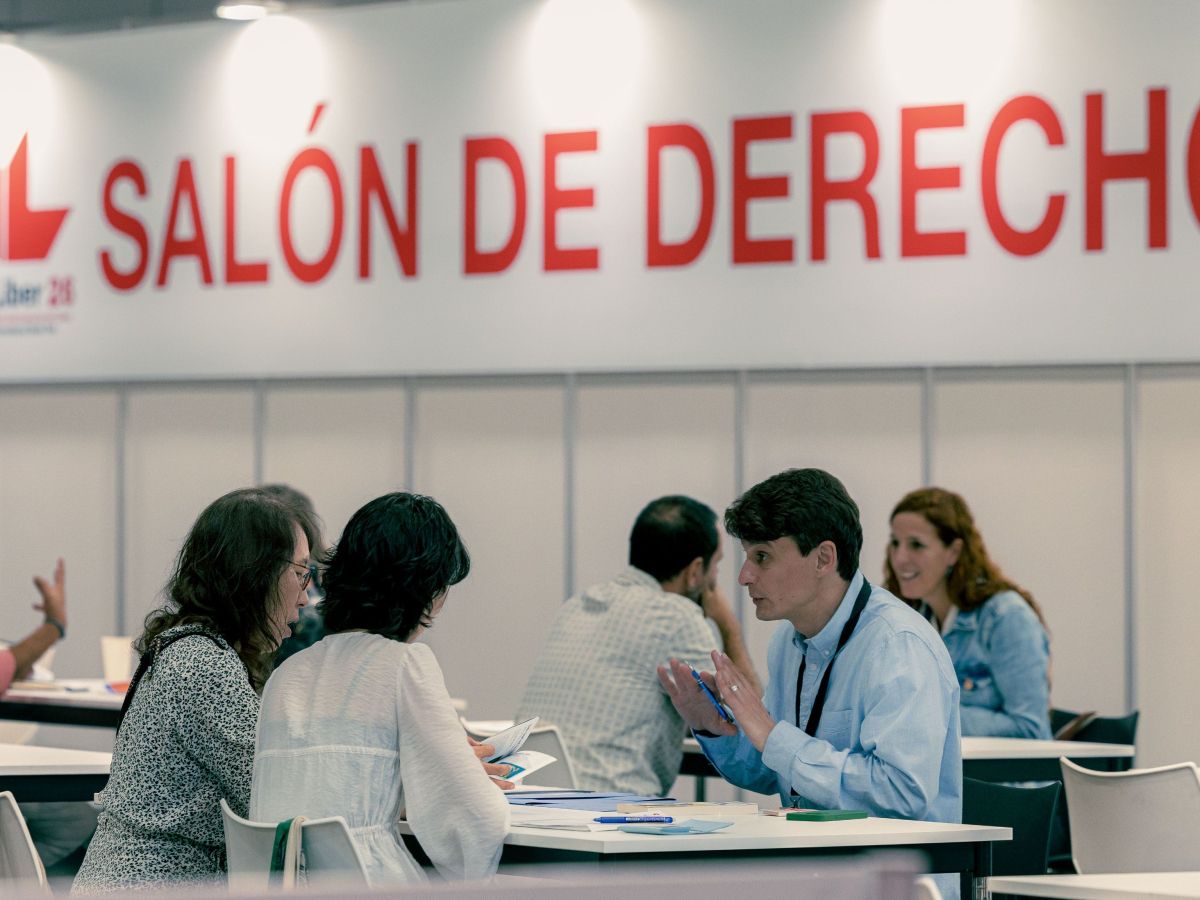
More than 600 meetings are already scheduled in this space, where conversations between publishers take place for hours to sell and acquire rights and ensure that a work reaches another language, another market, or even another format. At the tables of this Hall, editors from Azerbaijan, Germany, South Korea, the United States, Indonesia, and Taiwan, among other countries, meet. A business that, although sometimes invisible, according to the FGEE, moves around 100 million euros a year.
From young adult books to artificial intelligence
In addition to being a showcase for the sector, Liber is also a place to discuss the changes that are traversing it. Among the corridors and conference rooms, recurring themes appear such as artificial intelligence, copyright, sustainability, accessibility, and new reading formats, from audiobooks to digital books.
And, amidst these reflections on the future of the book, one of the sector's concerns also emerges: young people and their relationship with reading. The latest PISA reports have warned of difficulties in understanding long texts among 15 and 16-year-old students. Manuel González, president of the FGEE, summarized it thus in an interview with The New Barcelona Post: “Young people are the segment of the population that reads the most, but this does not necessarily mean that they understand better what they read.”
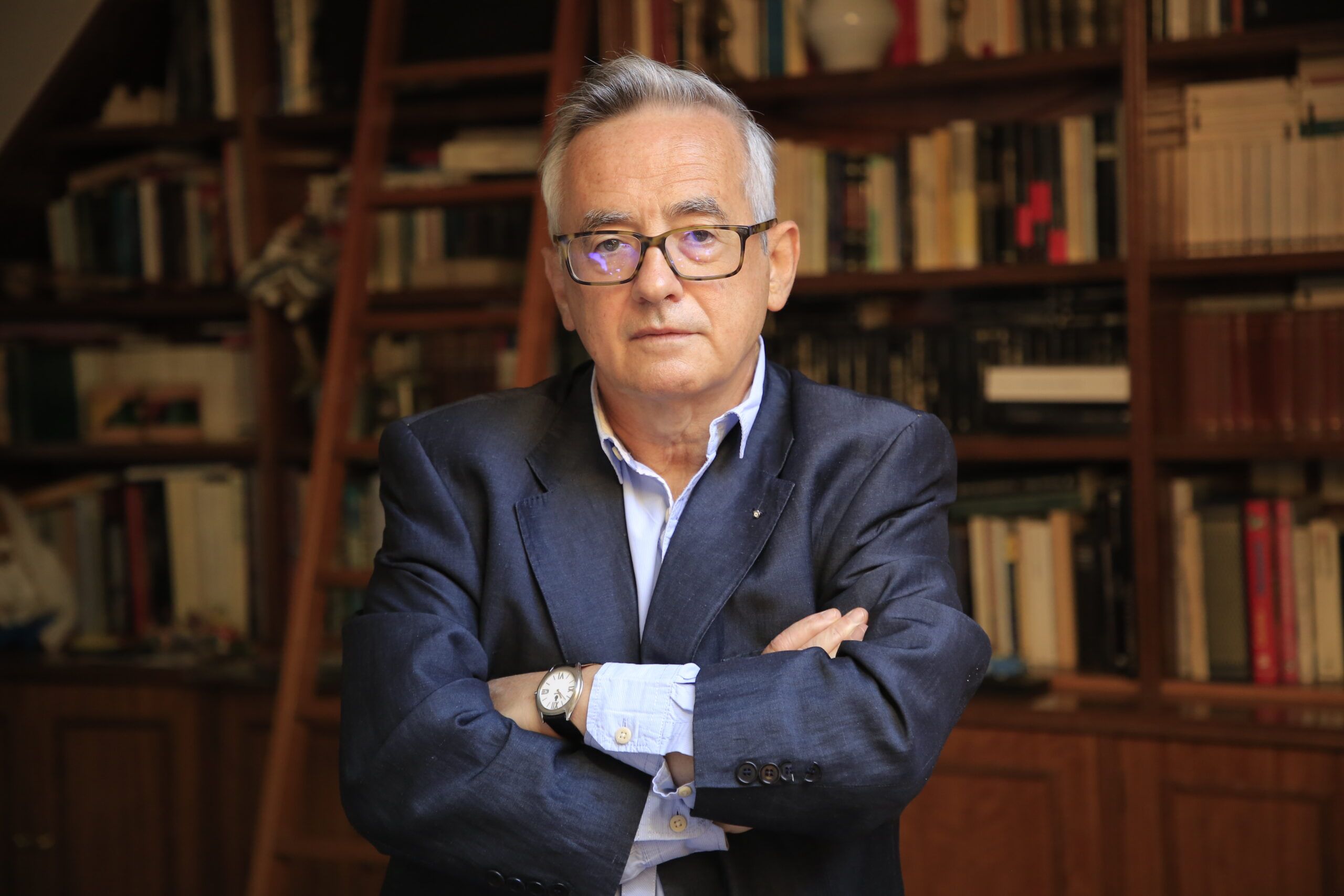
For this reason, young adult literature also occupies a part of the fair's reflection, not only to talk about young people as readers but also to question the idea that they need simpler stories and languages. “The great cliché of young adult literature is that the language or themes must be simple, but we see that adolescents are not only prepared but demand complex themes,” said Carlos Mayor, translator and editor. This is just one of the issues addressed these days at Liber, which brings together more than 80 activities and around 150 speakers to discuss the present and future of the sector.
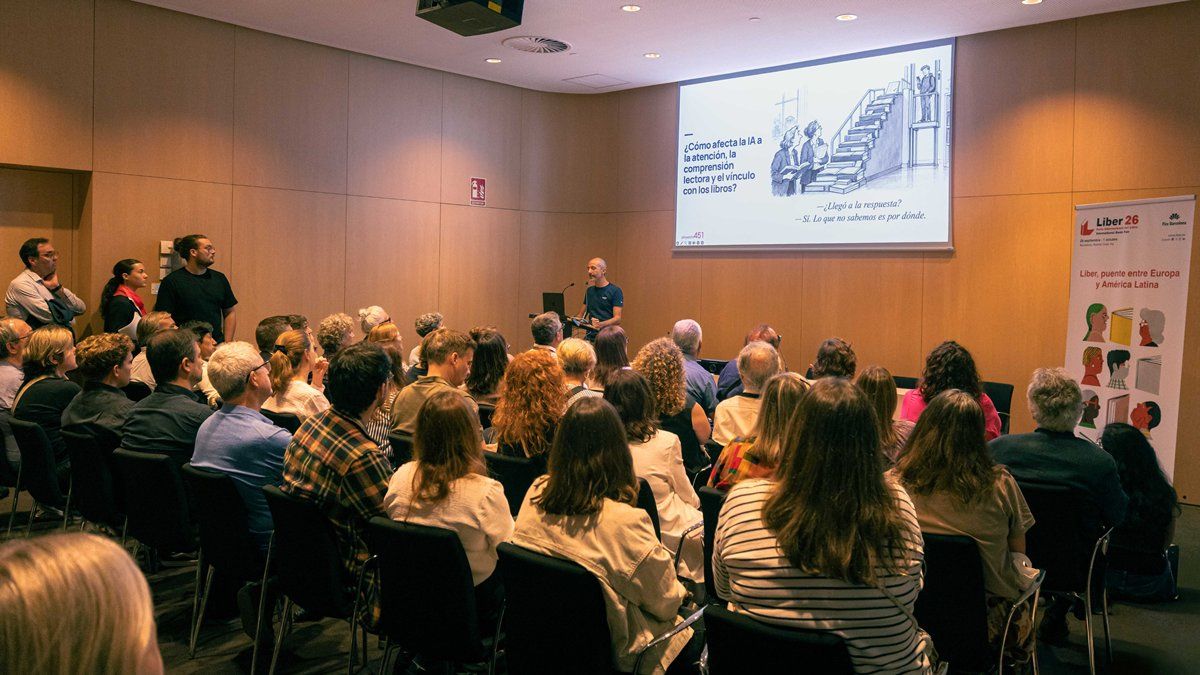
While conferences continue in the rooms and conversations take place in the corridors, above the entrance to Liber these winged books remain suspended in the air, as if they were about to take flight. Inside, every meeting and every connection opens a possibility: another language, another country, another format, another reader. And so, among books that change hands and connections that cross borders, stories find new places to land.
Add The New Barcelona Post as your preferred Google source for free
Stay informed with the latest news.