
Life issues (long and fortunately sweet to tell) have led me to change my residence from the Eixample grid to the Gothic Quarter. Most friends, upon hearing the news, have wrinkled their noses disapprovingly and with the haughty compassion of someone who seems to tell you that you don't know what the hell you're getting into. Indeed, for most Barcelonans, Ciutat Vella has become a transit place where natives can only surf among tourists, trash, and noise and, at most, go out partying and deposit a urine sample in a corner.
It is undeniable that the Gothic Quarter has suffered the wear and tear of tourist overcrowding in the 90s and at the turn of the century (as, incidentally, any historic center of a highly visited city like Barcelona), but it is also true that the apparent degradation of the neighborhood is also the responsibility of Barcelonans who have given up living in a beautiful part of their city. Mass tourism must be reproved when appropriate, but we must also amend ourselves when we relegate a neighborhood to being guiri fodder, especially when it is a place where our history and contemporaneity live in a unique harmony in the city.
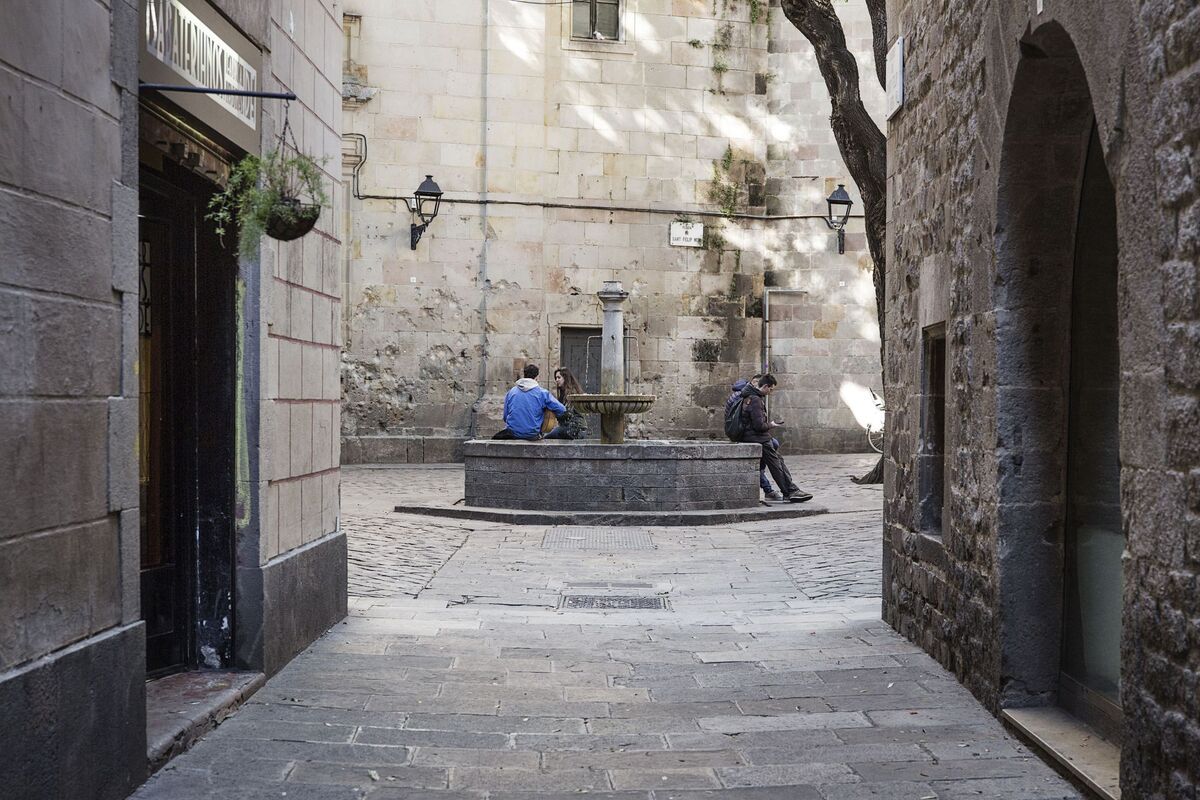
My Gothic Quarter begins in Sant Felip Neri, still today one of the most beautiful places in the world where one can sit by its fountain and spend a joyful time even feeling the pain that oozes from the war wounds that sprout like freckles from the facade of its church, bombed on January 30, 1938, by Italian aviation, causing the collapse of the building and the death of forty-two people, most of them children (the Memoria Enterrada association has started this year a citizen participation project to catalog buildings damaged during the Civil War; they have found 13 in Barcelona, some very close, such as in Plaza Garriga i Bachs, the old Hospital de la Santa Creu or Egipcíaques street; any citizen of the territory can collaborate if they discover any).
But the beauty and the wound of history unite with the most creative present; a few meters from the square, in Orígens, Crafts and Design you will find handmade products made in Barcelona, the kind that if they were fished in Copenhagen or Stockholm would make you burst with snobbery (the backpags and wallets from Oobuda and the accessories from Mediodesign are a true marvel).
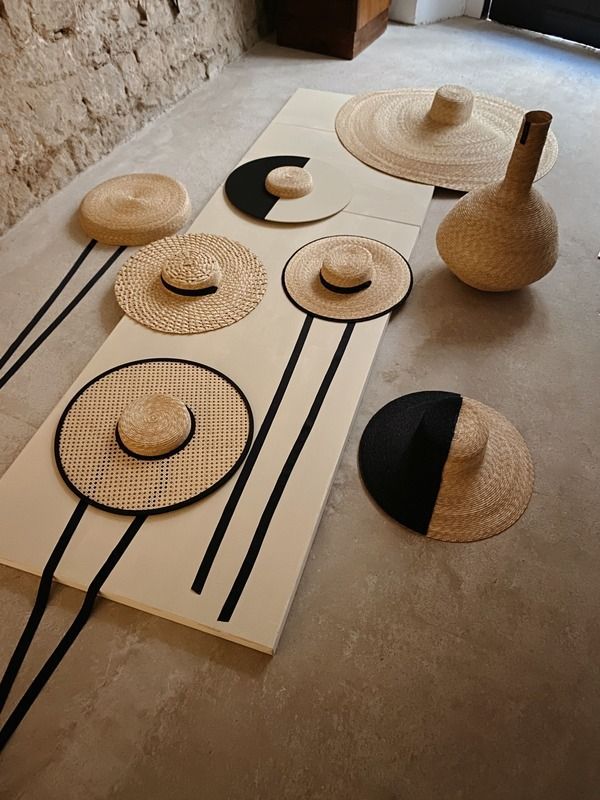
Turning right, on Baixada de Santa Eulalia (number 3), is the workshop of Eli Urpí, a comprehensive artist, painter and designer, who has taken her beautiful straw hats with painted wooden wings and prints all over the world; she is also the author of a collection of sculptural women's clothing that is a delight to admire and own. Together with her partner, photographer Nacho Umpiérrez, Eli has made her art, founded on the tradition of the seamstresses of Baix Penedès and on the work of the great artist María Maza, travel directly to Browns and Harrods in London and also to the Lane Crawford stores in Shanghai and Hong Kong. This is a prototypical example of the art and excellence of establishments in our city that engage in a direct dialogue with the world but still await our militancy.
One of the most paradigmatic cases of what I am telling you is the very high level that the new cocktail bars that populate Ciutat Vella have reached, some of them in the highest places on the list of the 50 best bars in the world announced annually by William Reed Business Media and which, even if they were not there, should be celebrated as one of the city's luxuries.
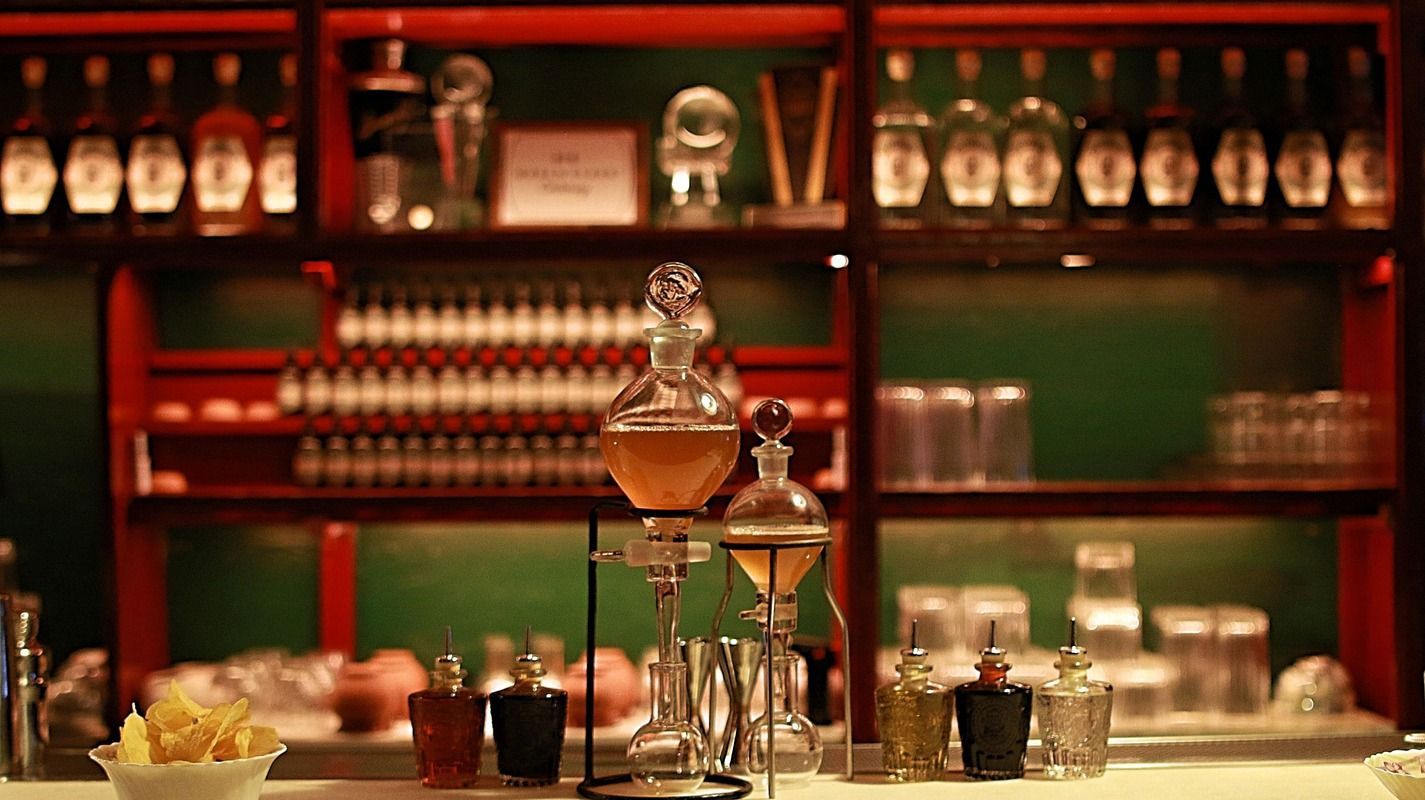
In the 2020 list, Paradiso in Born (Rera Palau, 4) remained, and Two Schmucks (Joaquím Costa, 52) burst into the heart of Raval. Often our admired British critics miss the mark, because although the excellence of these two venues is unquestionable, the best alcoholic goldsmithery in Barcelona (at the unfair number 52 in the ranking) is undoubtedly Dr. Stravinski, an establishment that, due to the elaboration of its own distillates, the creativity of its artisans (and a small ancestral secret reserved for the most select friends, who are also the most macabre spirits), should already be a universal reference, but which is transcendent for the most important thing a cocktail bar must have; the aura, the air of sanctuary that is breathed in it and that we only find in places like Oriole in London's Smithfield Market, a perfume that is a mixture of the ancestral anguish of a village cellar and the silk stockings of a woman who celebrates maturity by illustrating the skin of the most daring young people. Abandon the usual bars and their tedious gin and tonics, for God shakes the shaker at number 5 Mirallers Street.
Unfortunately, Barcelona residents have become accustomed to Ciutat Vella only making headlines when one of its oldest businesses disappears. The list of recent years is as illustrious as it is painful: in the heart of the neighborhood, El Gran Café de Avinyó disappeared, the Schilling Café-Bar on Ferran, and others that are still breathing but look moribund, like the Casa de les Sabatilles, in Baixada de la Llibreteria. Although the City Council has cataloged businesses like these with the label of emblematic —protecting some of their architectural aspects, furniture, and activity license— the way to ensure their survival is for Barcelona residents not to treat them as a museum object, but to consume their products and treat their owners with the generosity that they and their families have given us. As colleague Isidre Estévez already wrote in this same digital newspaper, 92% of Barcelona's emblematic businesses are in Ciutat Vella and their presence is not only aesthetic, but they ensure (think of the magnificent sweets from La Colmena) the future of centuries-old traditional trades.
The way to ensure the survival of emblematic businesses is for Barcelona residents not to treat them as a museum object, but to consume their products and treat their owners with the generosity that they and their families have given usI ask the readers of my Punyalada to return to Ciutat Vella and also that we revive and revivify by exploring its streets and taking care of them as if they were an endangered species. Our city is also an ecosystem and its neighborhoods dialogue in harmony; it is useless to preserve the magnificence of the Eixample or to infuse artificial intelligence into 22@ if the historic center of the city, the ground zero of our urban living, is evicted from its natural owners.
I have decided to travel to Ciutat Vella to spend the next years of my life, and this descent is not a path to hell but a very joyful staircase towards one of the most unique and commercially attractive neighborhoods in the Mediterranean. My soul will continue to be a daughter of the Grid, but now my mechanical spirit will also be infected by the smoke that magically emerges from the depths of El Call, by the oriental aromas that arise from the kitchen of Bistrot Levante in the Placeta de Manuel Ribé, and by the most noble peace of the wood cut by the artisans of the Jornet family in Carrer de la Palla. What more can I ask for?
It is useless to preserve the magnificence of the Eixample or to infuse artificial intelligence into 22@ if the historic center of the city, the ground zero of our urban living, is evicted from its natural ownersCiutat Vella is not a museum, it is a luxury we have right under our noses. One must be very dim-witted not to populate it with life. Read thisStab, follow their phrases in the streets, give them a piece of life and, whatever the chosen route, end the afternoon by devouring an Old Fashioned in the Ascensor bar on Bellafila Street. I await you, with dagger raised and prose in flames.
Add The New Barcelona Post as your preferred Google source for free
Stay informed with the latest news.