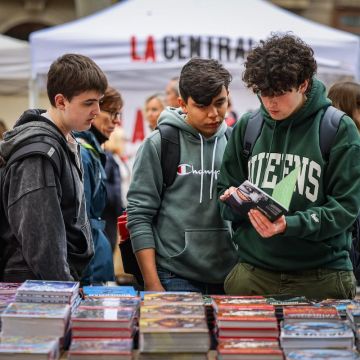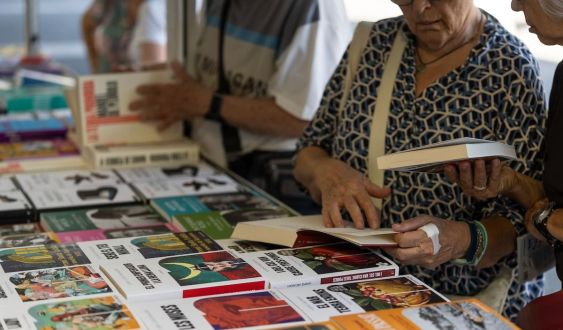
Given the sheer number of books being published all the time, endlessly expanding the reading universe, two eyes seem hardly enough to take it all in. But maybe even four wouldn't be enough. Because while we're finishing that novel that's been sitting on the nightstand, new ones have already arrived; while we're discovering one author, others are consolidating their place in the literary universe; and while we're standing among the shelves of a bookstore trying to decide what to read next, new books keep arriving and demanding their share of space.
And among those books constantly demanding their share of space, more and more are written in Catalan. New voices, new publishing houses and new stories are broadening the Catalan literary landscape year after year. A literary universe that, every September, steps off the shelves to meet readers at La Setmana del Llibre en Català (Catalan Book Week).
In its 44th edition, under the slogan "So much to see, so much to read," the literary event once again turns Catalan-language books into the star of a great "civic celebration," in the words of Oriol Magrinyà, president of Editors.cat, the organization behind La Setmana. And it does so with a particularly ambitious edition: 282 publishing houses spread across 332 stands will fill the 9,000 square meters of Passeig de Lluís Companys, between the Arc de Triomf and Ciutadella Park, over ten days, from September 18 to 27.
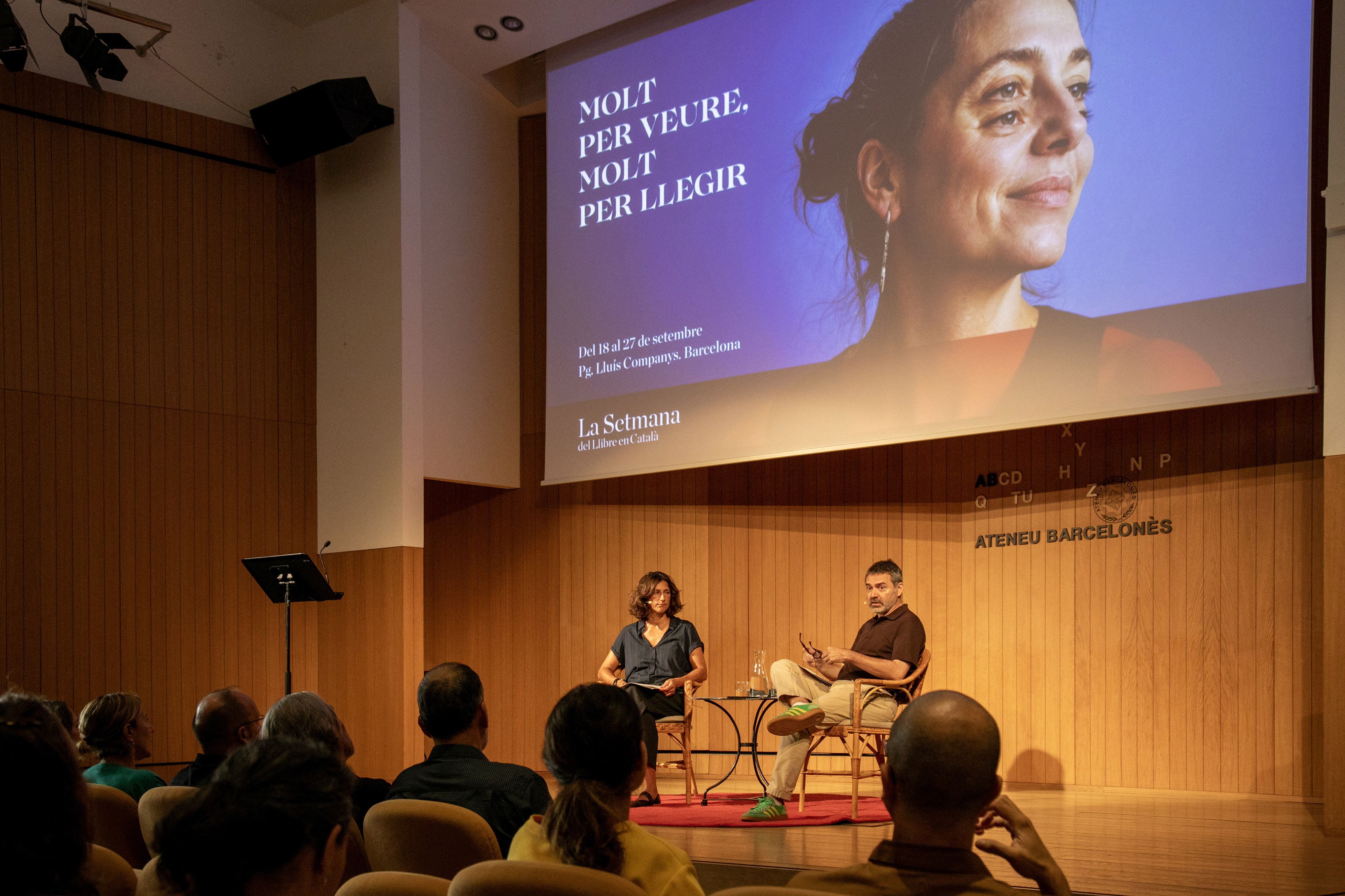
It's a large-scale event, hard to take in with a single glance. That's precisely why this year's promotional campaign for La Setmana del Llibre en Català captures the idea through a figure as striking as it is expressive: a girl with four eyes is the star of the poster. Four eyes to take in, all at once, everything the Catalan publishing scene has to offer. Four eyes that, even so, may still not be enough to catch it all.
Because Catalan-language literature is broad enough to pull our gaze in more than one direction. This year's La Setmana will bring together fiction and poetry alongside essays, politics, cooking, crime and historical fiction, science fiction, dystopia, comics, manga, theater and travel guides. A diversity that reflects just how much the range of Catalan-language books has expanded in recent years, making it increasingly easy to find the kind of reading you're looking for in the language, whatever the genre, author or story.
But this variety isn't limited to new releases either, and there will be plenty, courtesy of authors taking advantage of September to launch new books, among them Albert Om, Laura Gost, Ester Invernon and Ada Castells. It also spans translations, reissues and rediscoveries that further widen the map of Catalan-language reading.
Alongside new releases, La Setmana will also make room for titles such as Homer's Odyssey, back in the spotlight thanks to Christopher Nolan's new film adaptation, as well as works by Stefan Zweig, Luigi Pirandello and Ryu Murakami, and rediscovered works by classic Catalan authors such as Jacint Verdaguer, Joan Salvat-Papasseit and Joan Vinyoli. New releases, reissues and classics alike will arrive courtesy of 282 publishing houses from Catalonia, but also from the Valencian Community, the Balearic Islands and Andorra.
The great showcase of Catalan-language literature
But the diversity and breadth of Catalan-language literature isn't measured only in square meters, books on display, publishing houses or attendance figures (last year, more than 100,000 people came through La Setmana, and organizers hope to match that turnout again this year). The strength of this event also extends beyond its ten days of programming, in the way it helps give visibility to Catalan-language books and strengthen their presence throughout the rest of the year.
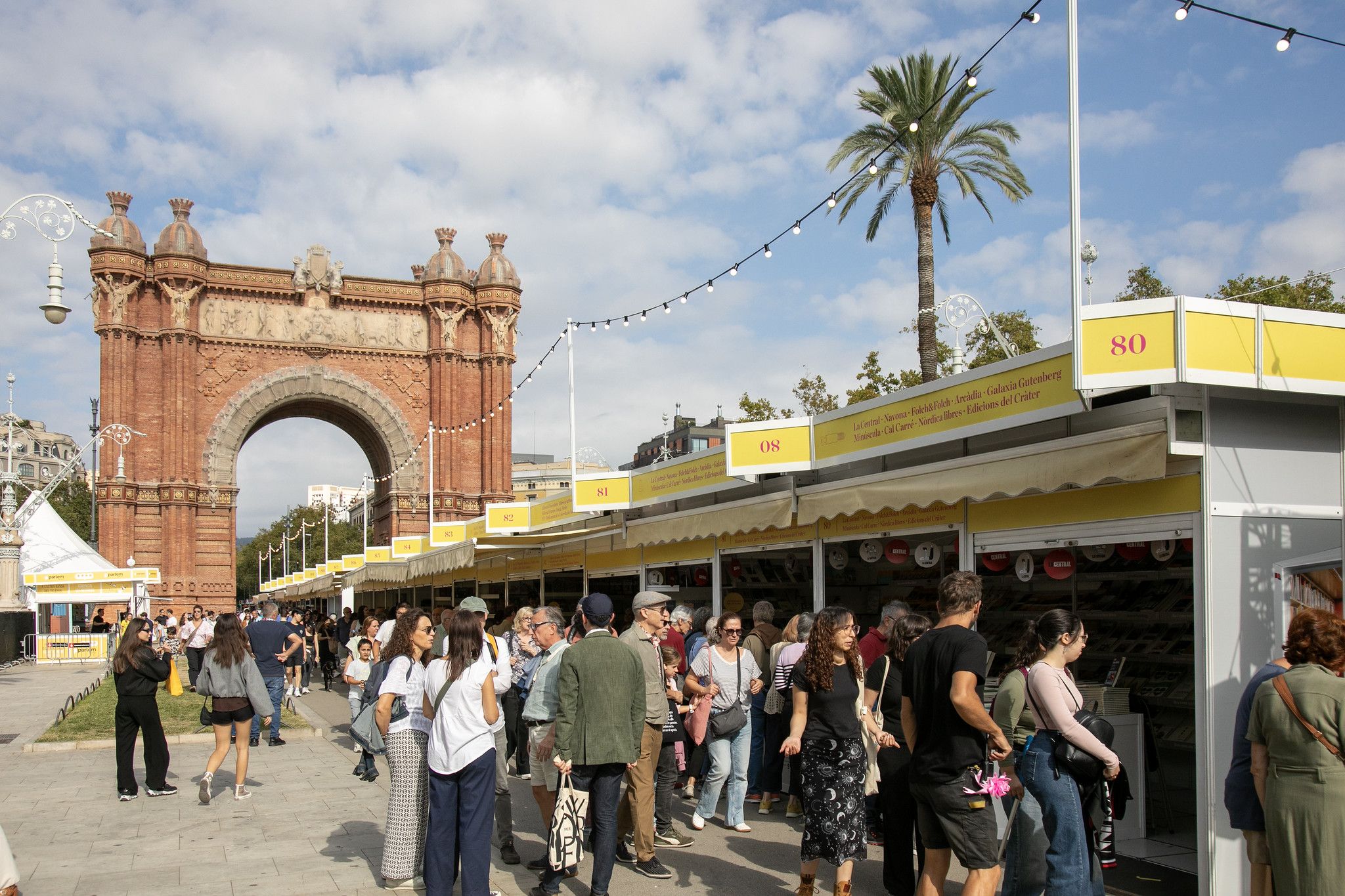
At a moment Magrinyà describes as one of "linguistic emergency," La Setmana wants to serve as a "counterpoint" and a display of optimism: a space that puts before readers the variety and vitality of an increasingly broad and diverse literary landscape. But that vitality doesn't stop at the showcase. La Setmana also wants books to reach readers' hands, and for that visibility to translate into greater interest in Catalan-language books.
Organizers stress, however, that the success of La Setmana isn't measured solely, or even primarily, in terms of sales. Its main value, Magrinyà notes, lies in the visibility it gives Catalan-language books and its ability to connect readers with a publishing offering that often stays more hidden the rest of the year.
La Setmana wants to serve as a "counterpoint" to "the linguistic emergency" and a display of optimism: a space that puts before readers the variety and vitality of an increasingly broad and diverse literary landscape
That doesn't mean the commercial impact is any smaller, though. Magrinyà ranks the event as the third-biggest book-selling occasion of the year, after Sant Jordi, which last year generated €26.7 million in sales and sold more than two million copies, and the Christmas season. And the effect of La Setmana extends beyond the titles sold at the stands on Passeig de Lluís Companys: the visibility it generates also helps drive sales of Catalan-language books in bookstores across the region, as the president of Editors.cat has remarked.

The challenge of turning Catalan into a reading habit
But the challenge doesn't end with making Catalan-language books more visible or expanding what's on offer. The real challenge is turning that presence into a habit, making Catalan a language people regularly read in, especially among younger readers. Today, roughly three in ten books sold in Catalonia are in Catalan, a proportion that has grown slightly in recent years.
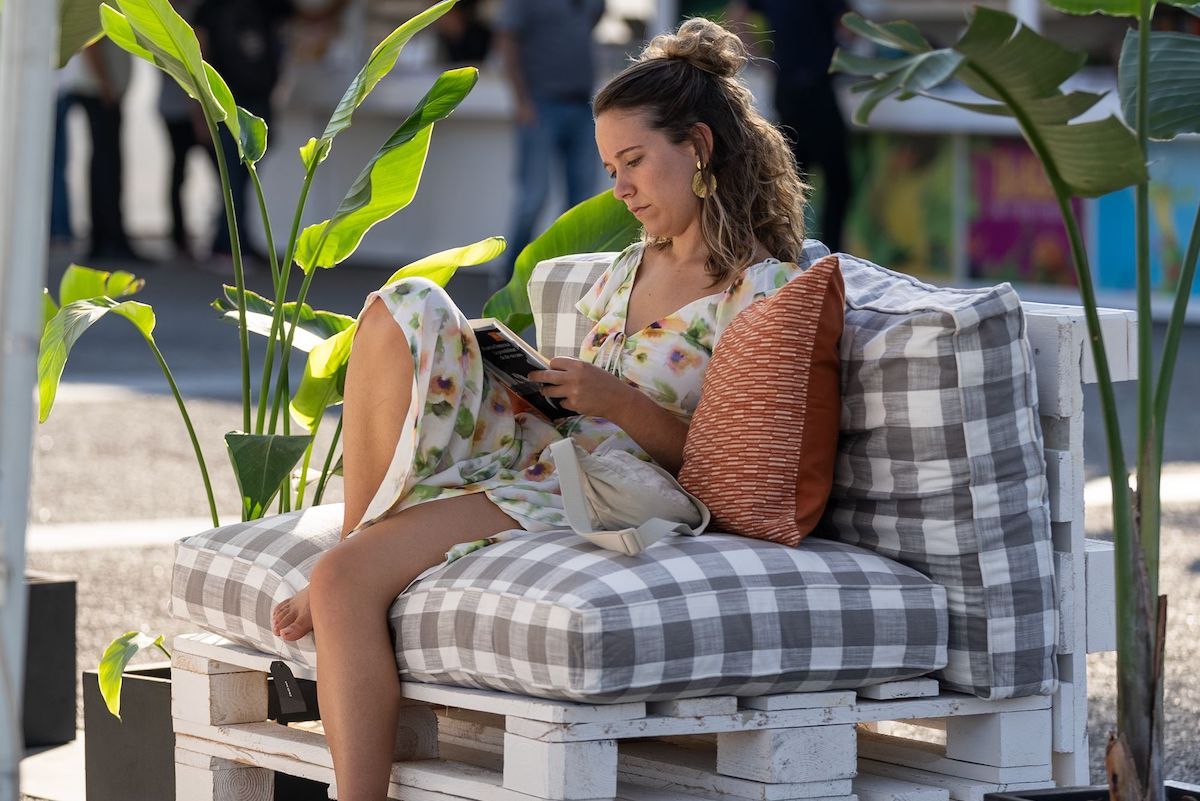
Reading figures, however, show that Catalan still isn't the majority language among readers, and the gap is especially wide among young people. While 73.9% of people over 14 read at least one book every quarter, only 33.9% say Catalan is their regular reading language. Among young people aged 14 to 24, that share drops even further, to 27.2%.
For this reason, getting Catalan-language books into the hands of more young readers is precisely one of the priorities La Setmana wants to reinforce through a program spread across eleven spaces and stages. Among those eleven spaces, three stages will be dedicated exclusively to young adult and adult audiences, alongside a family space for children up to age 12 and the Petita Lectura (Little Reading) area.

Another major addition to this year's edition reinforces that same commitment to younger audiences: the program now includes the Casa de Creación Digital (Digital Creation House), which will bring together booktokers and literary content creators and host events such as a live reading club with Juliana Canet and Marina Porras. The stages will also make room for more reflective literary conversation, with in-depth interviews led by the team behind the Mentrimentres podcast.
Young readers, however, aren't the only focus. This year's program also introduces new features such as the Oficios del Libro (Book Trades) tent, dedicated in its first edition to the world of libraries, while keeping one of the activities most closely tied to bringing authors and readers together: book signings. More than 200 authors will pass through the stands to sign copies, among them prominent names in Catalan literature such as Llucia Ramis, Ramon Solsona (recipient this year of the Premi Trajectòria awarded by the event), Màrius Serra (this year's other award recipient, with the Premi Difusió), Empar Moliner and Regina Rodríguez-Sirvent, who will share the spotlight with international authors such as Clare Pollard, Colm Tóibín and Palestinian writer Adania Shibli.
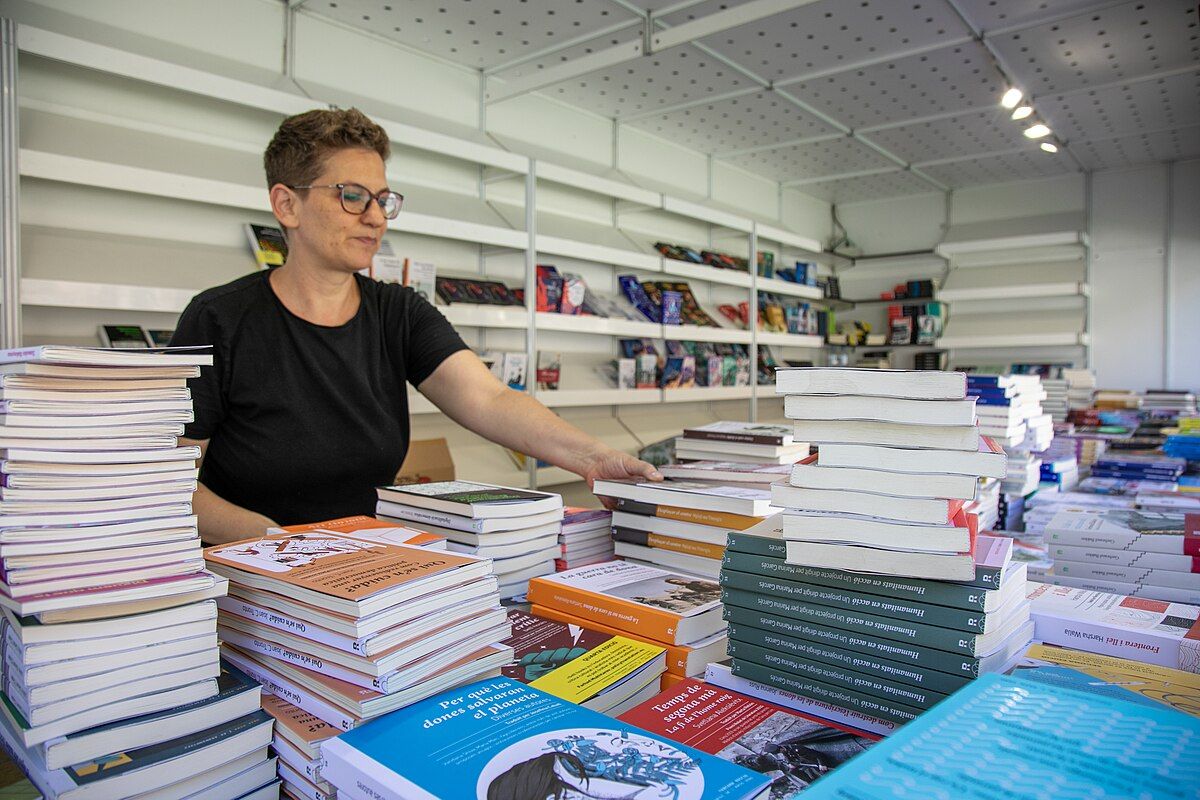
This year, moreover, La Setmana's ambitions don't stop at Passeig de Lluís Companys: organizers will launch a pilot program to bring some events outside Barcelona, to bookstores and other venues, with the aim of extending the event's impact beyond its ten days in September. All of this comes with a budget of around €700,000, of which 65-70% comes from the private sector, mainly through fees paid by exhibitors and sponsors. The goal is for La Setmana to be far more than a ten-day event, and to keep a diverse, ever-expanding body of Catalan-language literature visible all year round.
Add The New Barcelona Post as your preferred Google source for free
Stay informed with the latest news.