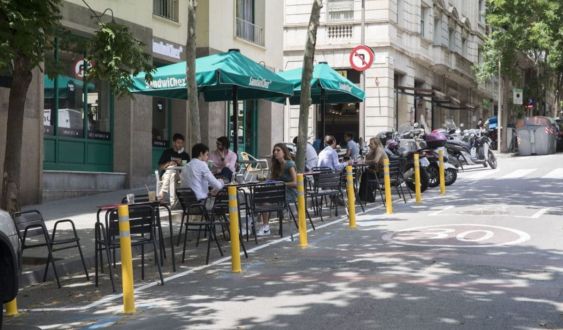
The health crisis has made some Barcelona urbanites reflect on whether residing in a city is the most ideal place to live. But the truth is that Barcelona has made an effort to adapt to the new scenario left by the pandemic, accelerating some changes that were already underway in public spaces and in the way we move. In some streets, for example, space has been gained for pedestrians, bicycles, and bar terraces, especially at the expense of cars, although at the same time private vehicles have been strengthened in recent months to the detriment of public transport due to fear of the virus. Let's see what new realities the pandemic leaves us at street level.
[subscribe_newsletter_esp]
- We move more by car and bike
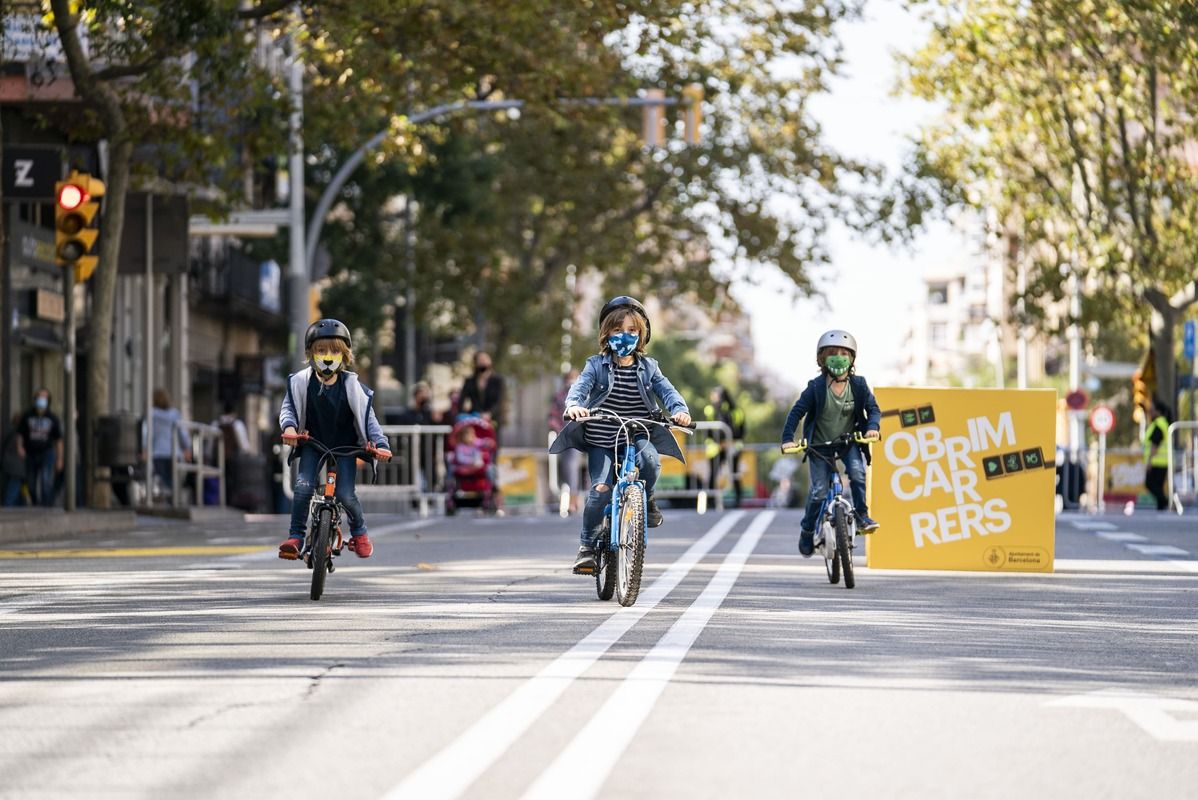
Registrations are a separate chapter. While waiting for the year to close, it can already be concluded that they have fluctuated a lot depending on the month, tending downwards, but they have also experienced upturns, such as mopeds before the implementation of the ZBE, which is initially presumed to have a very limited effect on reducing pollution. It could even amount to little if road traffic increases in the coming months. In the case of bicycles, daily behavior is more uneven, as it is more subject to weather conditions. Although it is already colder, in the pre-Christmas week bicycle circulation was reduced only between an imperceptible 0.2% and 15.7%; the rest of the days of the same week the decrease remained at 2%.
To better understand the scope of these data, we must turn to those on the use of public transport. Although it operates at full capacity (except, for example, night hours in the case of the metro, which no longer extends its hours on Fridays and Saturdays), demand is still far below what it was at the beginning of the year, and daily it reaches between 50% and 60% of what it was then. In addition to the fear of the virus in crowds, it also has to do with the rise of teleworking and the increase in unemployment. The Autoritat del Transport Metropolità (ATM) estimates that in 2021 demand will still be between 68% and 80% of pre-pandemic values, and warns that 2021 could end with a deficit in the system of 750 million euros. The administrations have committed to addressing it, but have not specified how, and have decided to freeze transport fares for users for the new year.
- We have gained space for citizen enjoyment (and we still want more)
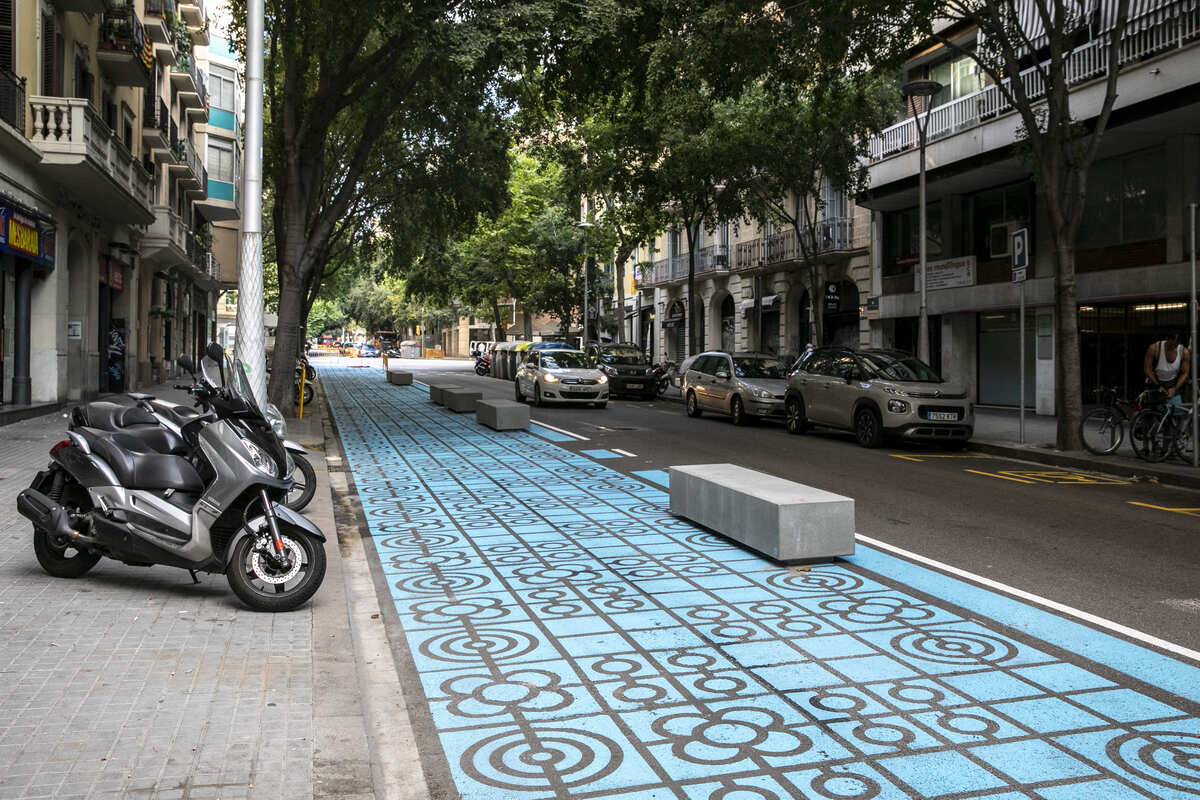
In the case of terraces, the mayor, Ada Colau, and her Barcelona en Comú team in government had maintained a struggle with the Gremi de Restauració to set limits on their proliferation, but the incorporation of the PSC into the government this term, and especially COVID, have meant a turning point. Now the City Council has already expressed its willingness for the terrace expansions of recent months to be permanent. According to municipal sources detailed in The New Barcelona Post, bars and restaurants have formally requested 4,380 extraordinary terraces, of which 3,129 have finally been granted and 1,074 have been denied. Of those approved, 1,299 have been placed on the roadway, which has involved eliminating 4,122 parking spaces (including those for cars, motorcycles, and loading/unloading) out of approximately 190,000 that existed on public roads a few months ago.
All these initiatives have not been without controversy. Some neighborhood associations have expressed concern that the public space used for terraces is increasing, while there have also been criticisms from drivers. Some have criticized the proliferation of concrete blocks to separate the car lane from the pedestrian lane on Consell de Cent, or the new jersey barriers that protect some terraces that now occupy the roadway. Especially after the death of a motorcyclist who was hit by a car and ended up impacting a concrete barrier placed to protect the terrace of a bar on Balmes street. The accident is still under investigation.
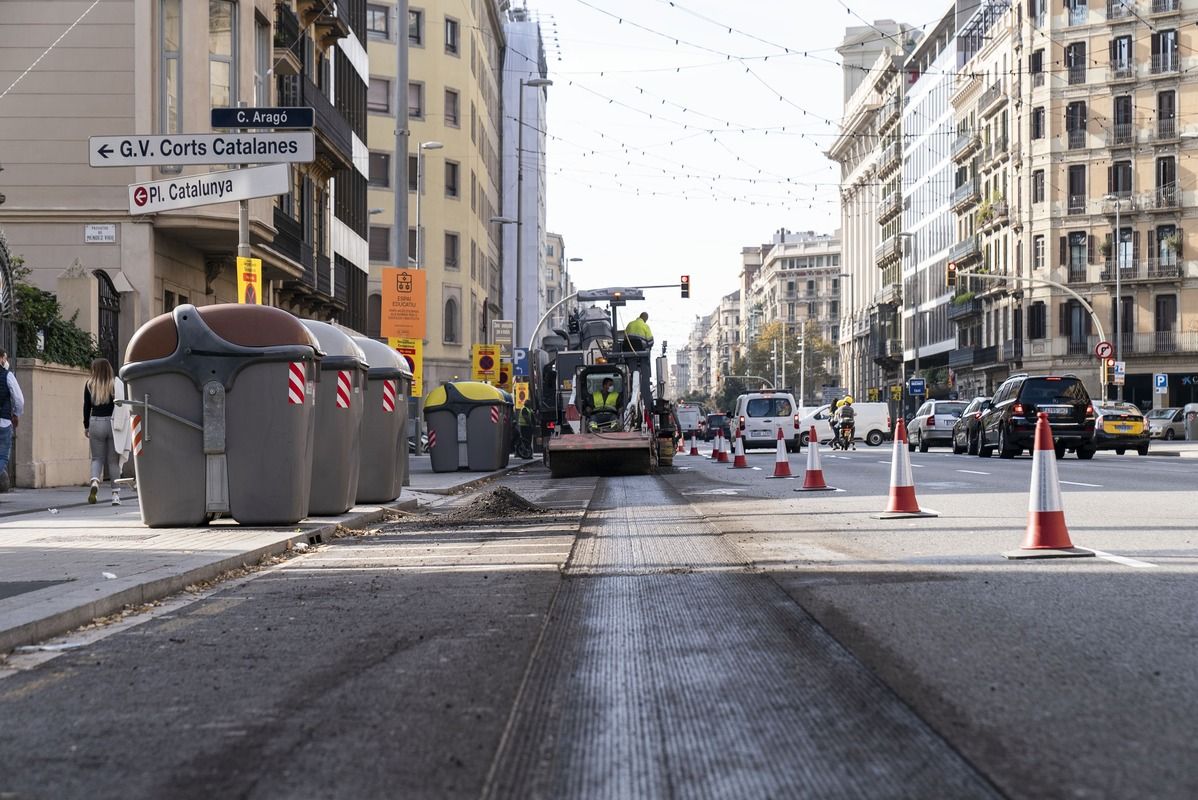
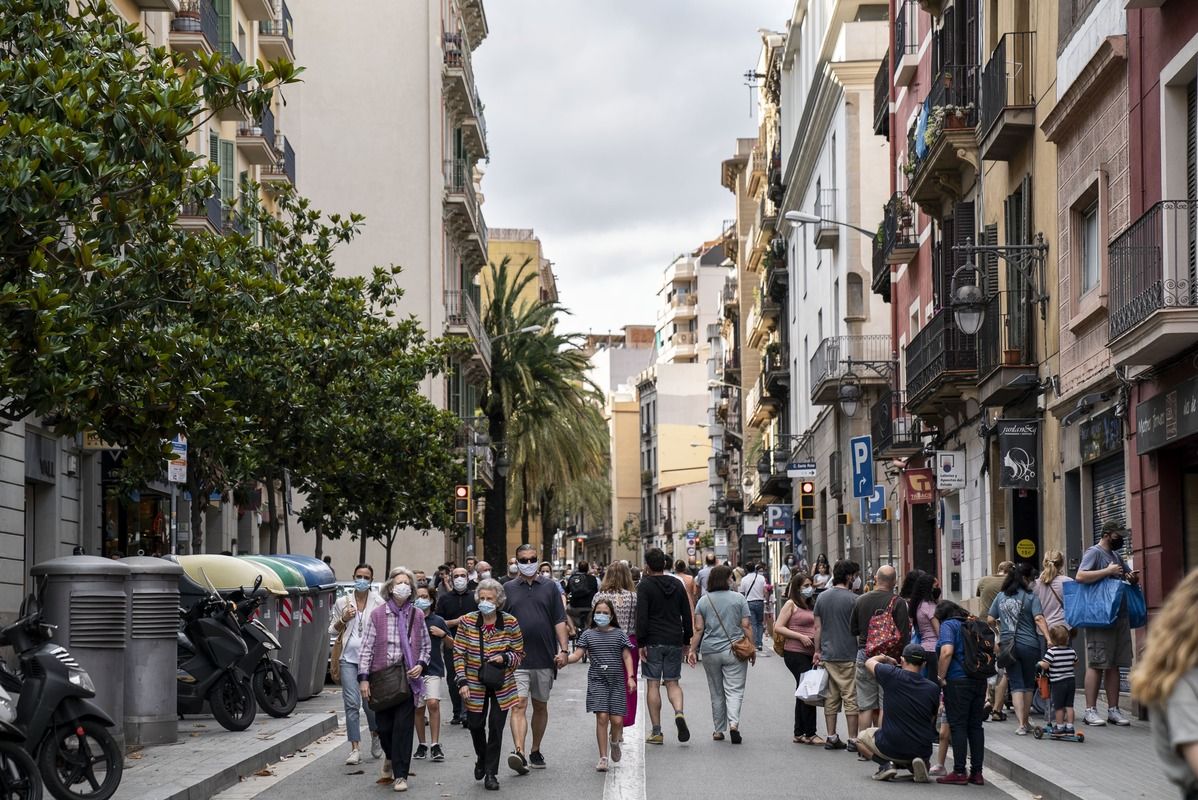
In any case, as post-pandemic municipal initiatives to take space away from cars have proliferated, demands to persevere in the reconquest of public space for pedestrians and bicycles have also appeared or gained new strength. On the one hand, schools are mobilizing to demand "safe environments," without cars or pollution around. On January 15, they have called a new protest in about twenty schools to demand this with the support of citizen initiatives such as Eixample Respira and Sant Martí Respira. On the other hand, there are groups that demand new bike lanes (on Via Augusta and in the Vallvidrera tunnel, or on Passeig Maragall) and those that want more traffic-calmed streets (on Milà i Fontanals, in Gràcia, or on Avenida Madrid and Carrer Berlín, in Sants-Les Corts). On Avenida Meridiana, they also ask to accelerate plans to reduce car lanes.
- From mass tourism to the local visitor rediscovering their surroundings
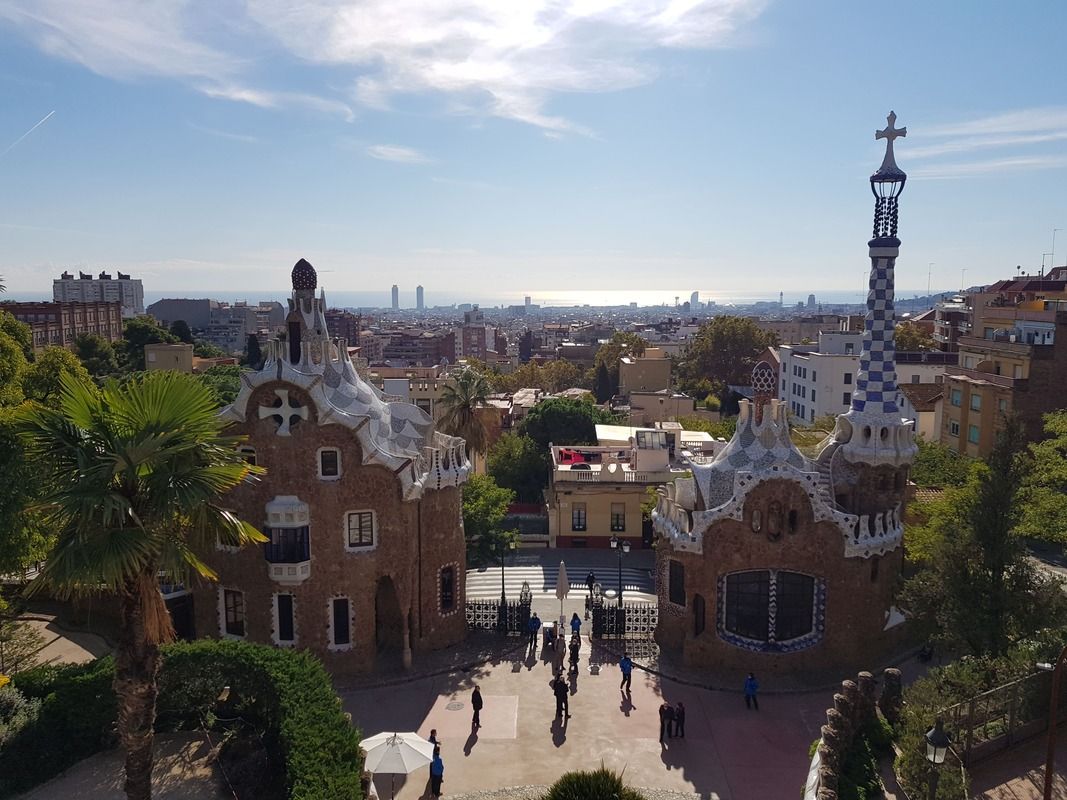
This year's tourism evolution shows how delicate the situation is. Hotel overnight stays are a good indicator. Until October, 1,749,771 tourists have slept in hotels, staying an average of 2.37 days. Only in the first quarter of 2019 was the figure recorded in almost all of 2020 already surpassed, concentrated mainly in the first two pre-pandemic months. Another relevant indicator, that of passengers at El Prat Airport: until November, 12.2 million passengers have been registered; in all of 2019, 52.6 million were reached, setting a historical record that is now very far away.
The lack of visitors has affected the center, but it is not giving up. At the end of this year, the Baixa a la Rambla campaign was presented, which aims to encourage Barcelonans to reconnect with the emblematic promenade, but it will probably take time to regain the trust of residents. There are residents and entities that are asking for a plan to rethink the center, especially because they believe that the pandemic's setback has confirmed what some voices had been warning for a long time: that tourist monoculture may not be the best path for a city.
- Ensure that no one is left behind despite the difficulties ahead
The question is what will happen when these extraordinary measures end, as well as what will become of all those people who worked without a contract or who were already vulnerable and who may already be facing difficulties. One of the keys will be the behavior of the real estate market: evictions have not ceased, but the central government has approved the prohibition of evicting vulnerable families without alternative housing until at least May 9. For now, amidst all this situation, initiatives from entities and citizen self-management have emerged that try to alleviate it (in the parish of Santa Anna, self-managed neighborhood networks that deliver food in various neighborhoods or the tireless work of multiple entities and organizations, such as Caritas), although they ask administrations to be more involved.
Surely in 2021 the pandemic cannot yet be reversed even though there is already a vaccine for the coronavirus, but possibly there is still room to try to mitigate the economic difficulties that are coming. Despite everything that happened in 2020, Barcelona maintains most of its great assets intact and is well positioned to take advantage of the economic reactivation thanks to its creativity, its talent, its tourist and cultural potential, its commitment to science and research, and its powerful entrepreneurial ecosystem, among many other aspects.
Add The New Barcelona Post as your preferred Google source for free
Stay informed with the latest news.