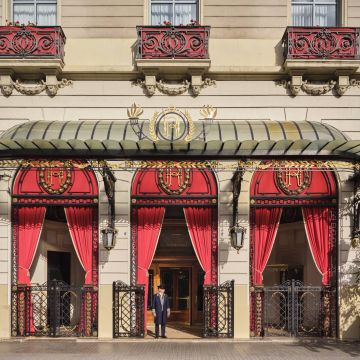
The Lledó family was an important lineage in the history of Barcelona. The city remembers them with a street in Ciutat Vella. The street is narrow and pedestrianized, one of those that fascinate travelers in search of special corners in the capital of Catalonia. Some stop at the doorway of number 7 to read the stone plaque commemorating the birthplace of Francesc Moragas, founder of La Caixa. As they read the plaque, they discover that the building is a hotel: the Mercer, the subject of chapter 26 of Hotels with History, the series we publish every two weeks in The New Barcelona Post.
The Mercer opened in 2012, although its roots run deep into the city's history. The Moragas family lived right there, on Lledó Street, next to Sant Just Square, when Francesc was born on December 13, 1868. He was the son of a lawyer and the grandson of a notary, born into a Barcelona bourgeois family with a long tradition in the legal profession. Nothing in that childhood suggested that this boy would go on to found, in 1904, the Caja de Pensiones para la Vejez y de Ahorros (Pension Fund for Old Age and Savings), the institution from which CaixaBank would emerge a century later. The plaque on the façade commemorates his birthplace. The building, however, then—and still today, converted into a hotel—held a much older history than that of the Moragas family.
Barcino
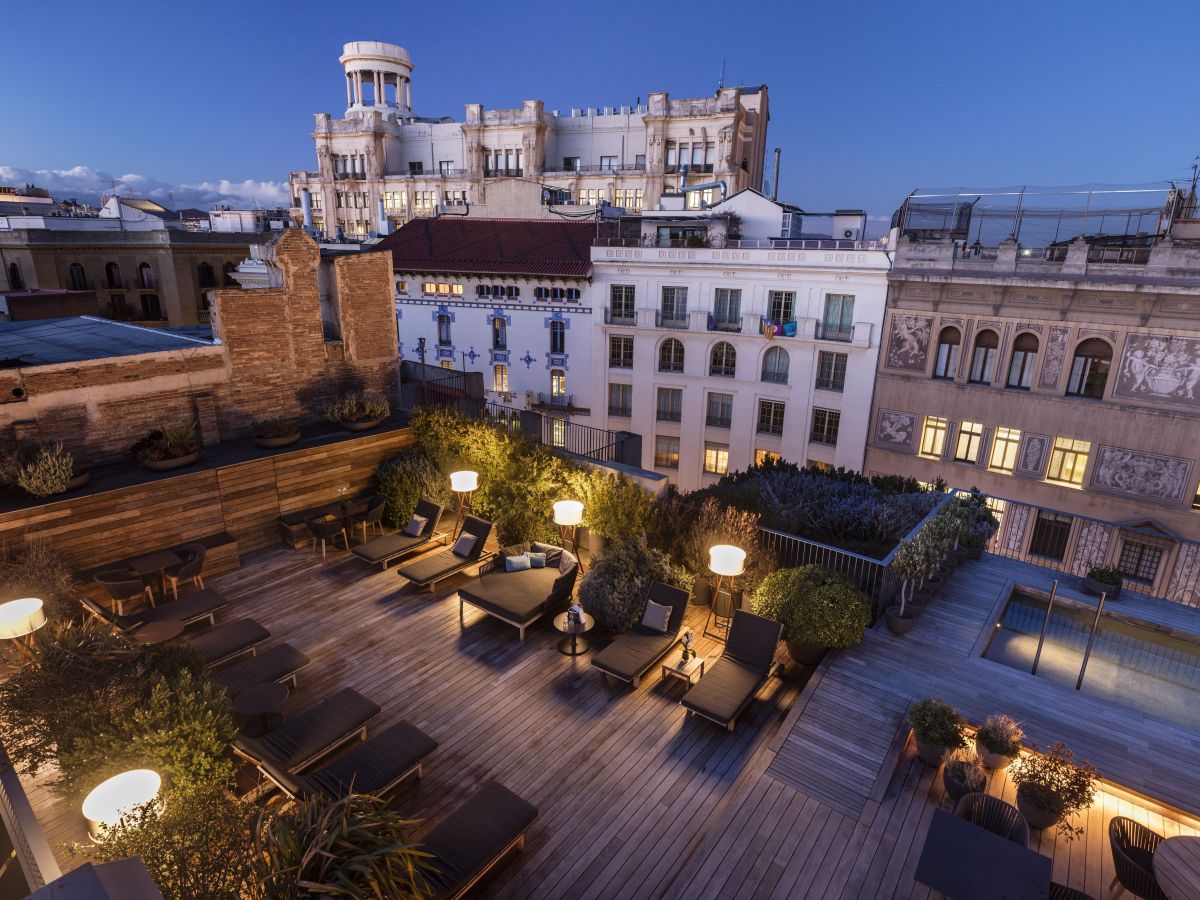
Under the feet of those who today order a cocktail, dine, or sleep at the Mercer, there is, quite literally, a piece of Barcino. The hotel stands on a section of the Roman wall that protected the city from the 1st century onward, and that ancient stone is still there, visible twenty centuries later. During the restoration works, layer by layer, evidence of almost two thousand years of urban history emerged: Roman remains, a pair of pointed arches from the 14th century that now preside over the atrium and are practically unique in the city, and 18th-century wooden ceilings in some of the rooms.
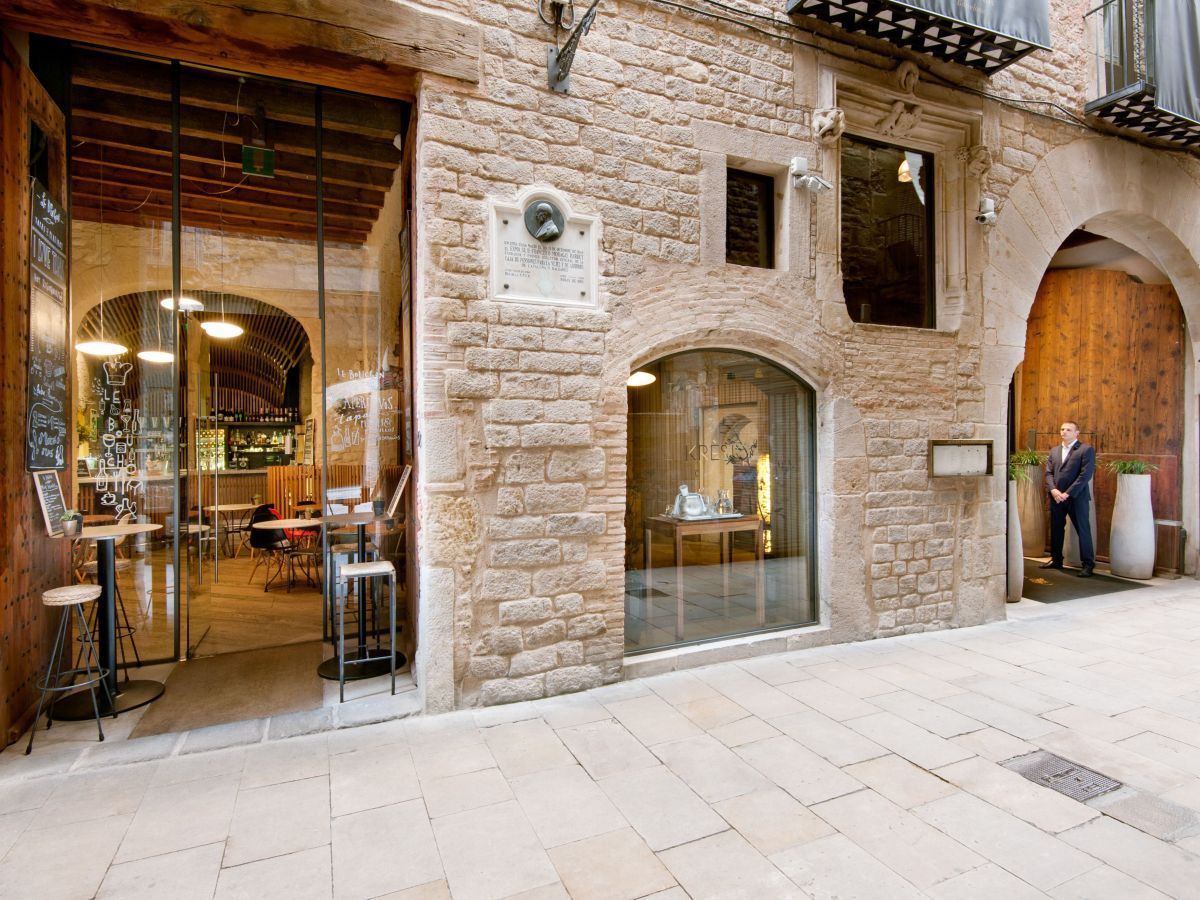
Before becoming a hotel, the building was a medieval palace, home to a wealthy family of the Catalan bourgeoisie, different from the Moragas, one of those who in the Gothic quarter built house upon house and century upon century, never completely demolishing what came before.
Rafael Moneo
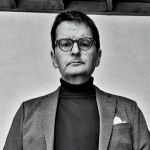
That "never completely tear down what came before" could be the motto of the entire career of the man in charge of the rehabilitation operation: José Rafael Moneo Vallés, born in Tudela, Navarra, in 1937. Moneo was the first Spanish architect to win the Pritzker, the award that the profession considers its particular Nobel. He received it in 1996, mainly for the Cathedral of Our Lady of the Angels, in Los Angeles, a concrete project with which he competed with names like Frank Gehry or Santiago Calatrava. Sixteen years later, in 2012 (incidentally, the same year the Mercer opened its doors), Moneo would add the Prince of Asturias Award for the Arts to his recognitions, another acknowledgment of a career that by then had already spent three decades building a body of work recognizable by a very specific obsession: that of erecting buildings that dialogue with the history of the place where they stand without merely copying it.
It is noticeable in the Bankinter expansion in Madrid, from the seventies, in which he combined old brick and modern structure; it is noticeable in the large hall of columns and light lanterns that he added to Atocha station; and it is noticeable, above all, in the expansion of the Prado Museum, which he won by competition and resolved by incorporating the old cloister of the Jerónimos into the museum's route.
Architectural note for the curious: the first Pritzker was awarded in 1979. Since then, the only Spaniards who have won it were Moneo and RCR Arquitectes, the studio from Olot, Girona, led by Rafael Aranda, Carme Pigem, and Ramon Vilalta.
The architect, the city and the Mercer
With Barcelona, Moneo has a long relationship: he has been a professor at the University of Barcelona, he signed L'Illa Diagonal in the nineties, L'Auditori in 1999 and, already in 2014, the Torre Puig. The Mercer, however, is a commission of another nature: it was not about building from scratch, but about restoring a heritage of great architectural value, integrating it into the architecture of a contemporary five-star hotel and giving the city and its visitors a unique building. Moneo did not work only with an architect's criterion: the restoration had the collaboration of the Heritage of the Generalitat de Catalunya and the University of Barcelona itself, whose historical and archaeological studies allowed to precisely date the different periods through which the building had passed before anyone dreamed of converting it into a hotel.
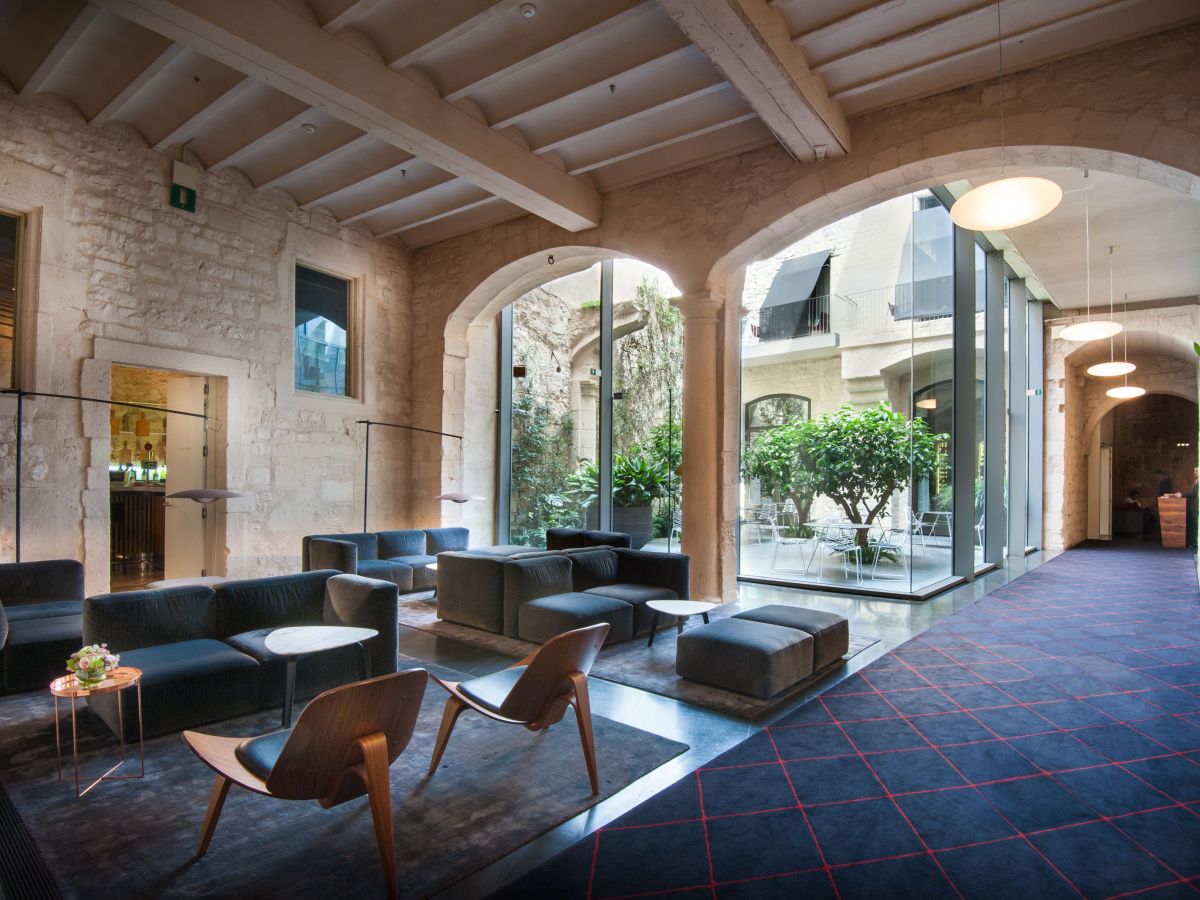
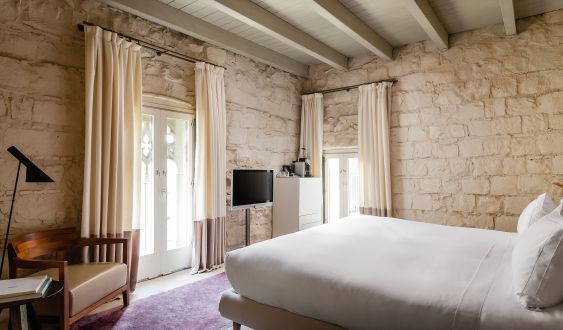
The result, declared a Monument as attested by a small sign at the entrance, has 28 rooms and suites distributed over several floors. In each of them, some historical element coexists with contemporary comfort. The most spectacular is the Gran Suite, installed in what was the noble floor of the palace: 150 square meters divided between a 95-square-meter suite and an adjoining junior suite, where the domestic scale of the original house can still be seen.
However, the corner that best summarizes the spirit of the Mercer is more discreet: a small library located in the very patrol path of the bastions of the Roman wall, with medieval frescoes on the walls that came to light during the restoration. It is difficult to find a place in Barcelona where you can read a book leaning, almost literally, on two thousand years of history. The sober-lined furniture that now dresses the hotel coexists with the paintings of the Sabadell painter Agustí Puig. It is a contemporary counterpoint to so much ancient stone.
The Mercer was also the first five-star grand luxury hotel of a chain that had begun its journey in 2005 with a much more modest establishment: eleven rooms in an 18th-century palace in El Born. The group's founder, Pedro Molina, has on more than one occasion summarized the philosophy behind this venture: he did not want soulless hotels, incapable of telling their own story or connecting with the city that hosts them.
In the case of the Barcelona Mercer, that soul did not have to be invented. It was there, under the arches, under the frescoes, and next to the wall itself, waiting for an architect with a Pritzker to decide to let it breathe again within the walls of a 21st-century hotel, wall to wall with the house where, decades earlier, the man who founded La Caixa was born.
Add The New Barcelona Post as your preferred Google source for free
Stay informed with the latest news.