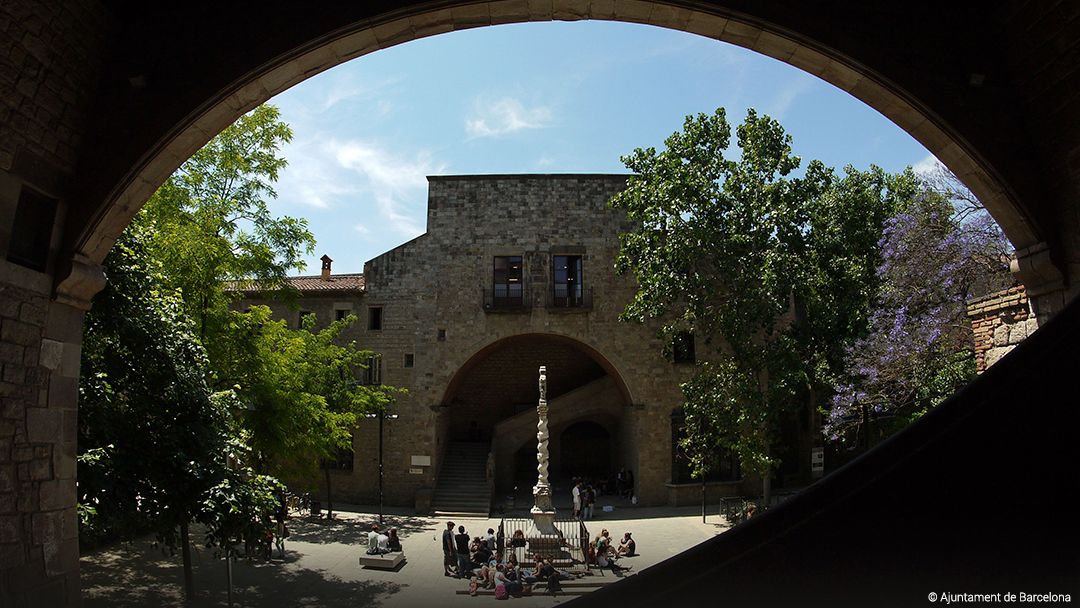
The history of theater in Barcelona is as fascinating as it is curious. It all begins in a specific space, the Hospital de la Santa Creu which, in the 16th century, was the only stage where theatrical performances took place in the city of Barcelona. This old hospital (which was located on Hospital Street, 56 in the Raval neighborhood and, precisely for this reason, the street has this name) programmed plays to raise money and be able to pay for the medical care of the hospital's patients.
Now, in the middle of 2026, it is La Perla 29 that inhabits this old space converted into the Biblioteca de Catalunya. A perfect full circle and which, depending on how you look at it, can even be poetic justice.
The Hospital de la Santa Creu, the only theater in the 16th century
The history of theater in Barcelona is linked to the charitable work carried out by the Hospital de Santa Creu. It was in 1579 when King Philip II gave the Hospital the exclusive right to organize plays and charge tickets for them. This is how the Casa de Comèdies was built, constructed on La Rambla in 1597 and which, years later, would be renamed the Teatre de la Santa Creu and, years later, the Teatre Principal.
Prior to the construction of this first theater in the city, companies usually performed itinerantly in squares or streets. But, thanks to the inauguration of this professional space dedicated exclusively to theatrical performance, actors and actresses were able to settle inside, charge admission and, finally, make a living from their profession.
The theatrical monopoly of Santa Creu lasted for almost three centuries. But the cultural and artistic activity of the city began to become more notorious and this forced the city to open new spaces for theatrical exhibition. The Llotja de Mar was the second space enabled to host this type of representation and it was due to the wedding between Archduke Charles III of Austria and Elisabeth Christine of Brunswick-Wolfenbüttel in 1708. The Italian set designer Ferdinando Galli Bibbiena converted the inner courtyard of the building into an improvised theater to perform Il più bel nome by Antonio Caldara, which was the first Italian opera premiered on the peninsula.
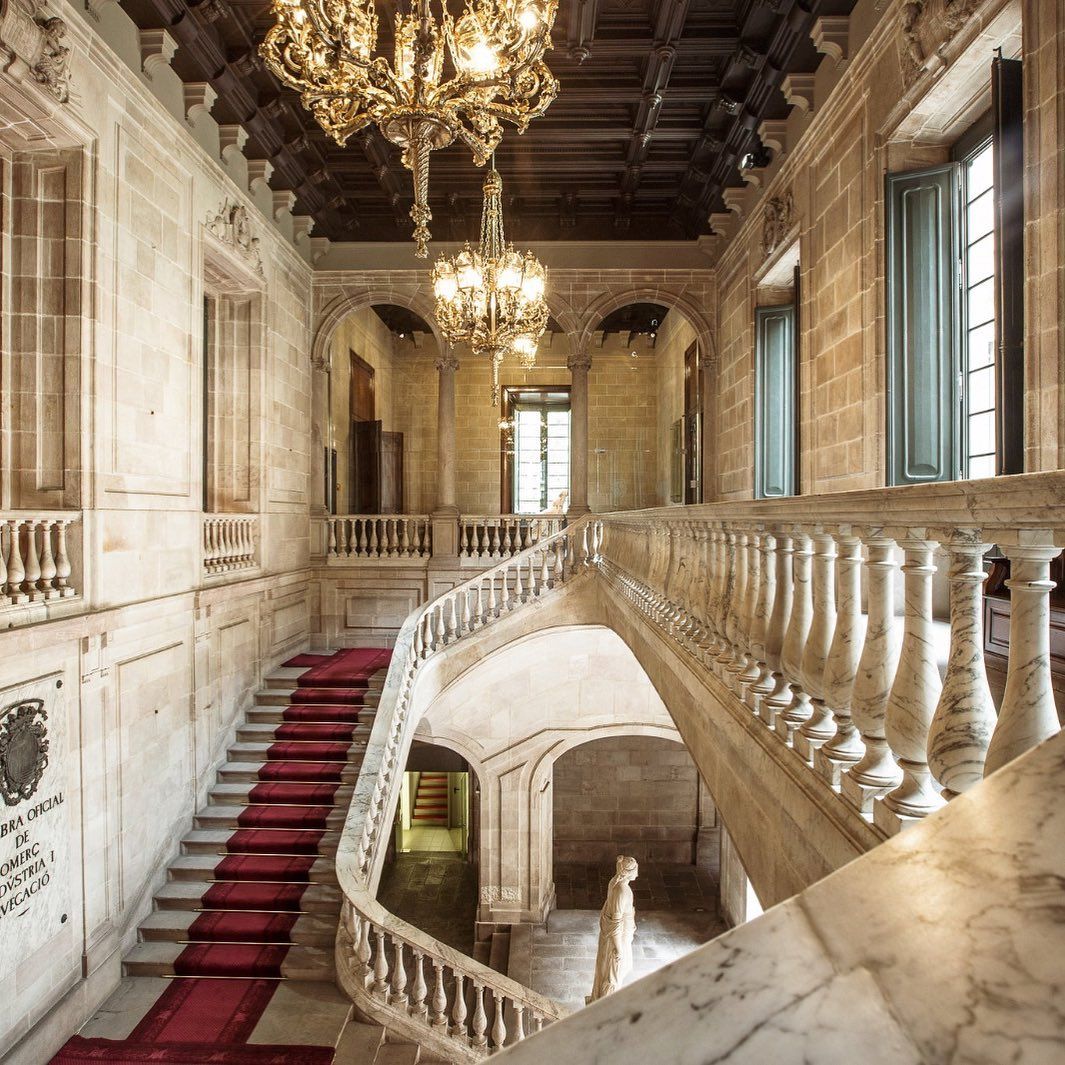
The aristocracy and bourgeoisie of the 18th century also wanted to enjoy the performing arts and learn about the new trends coming from Europe. But in Barcelona at that time, the official circuit was totally controlled by the Hospital and the works performed there were controlled, censored, and limited. Therefore, faced with this situation of control and censorship, the wealthiest families did something very intelligent: they brought the theater home. This is how a clandestine theater circuit began, taking place in bourgeois salons and palaces, and which, unintentionally, created a new trend: proximity theater.
The 'war of theaters' and the birth of costumbrista comedy
In 1833 the government eliminated the exclusive privilege of the Hospital de la Santa Creu to perform plays in Barcelona and, overnight, any person or entrepreneur had the power to build and open their own theater. But this opening was only symbolic because, no matter how many permits were obtained, the truth is that in Barcelona at that time there was no physical space to build a building of this caliber. Let's remember that, at that time, the city was enclosed within walls and many of the lands were ceded to religious orders.
But in 1835 came the disentailment of Mendizábal, that is, the State expropriated the estates, lands, and buildings that belonged to these orders. This caused the old and immense convents that were in the center to be completely demolished and, therefore, empty plots began to appear in the urban core. The bourgeoisie, seeing the business opportunity, began to buy these lands and to turn them into large scenic spaces.
The combination was explosive: legally new theaters could be opened and, suddenly, there was land available in the best area of the city. This is how great theatrical spaces were born that still stand today, such as the Gran Teatre del Liceu (built in 1847 on the plot that had housed the Trinitarian convent) or the Teatre Romea (built in 186 on the plot of the convent of Sant Agustí). La Rambla went from being a simple promenade next to the wall to becoming the great theatrical avenue.
But what happened to the theater of the Hospital de Santa Creu? Far from disappearing, what it did was reinvent itself. The old Casa de Comèdies changed its name in 1849 to become Teatre Principal, a space that wanted to compete with the new and dazzling Liceu. And the population of Barcelona was divided into two opposing sectors: the "liceistes", attendees of the Liceu and linked to Italian opera and bourgeois elegance; and the "croats", the audience of the Principal, more linked to text theater and Spanish theatrical tradition.
This theatrical rivalry in the society of the time was captured by Serafí Pitarra (the nickname of the Catalan playwright Frederic Soler) in his work Liceistes i croats. It consisted of a play that took advantage of this social "conflict" to speak satirically about the Catalan bourgeoisie.
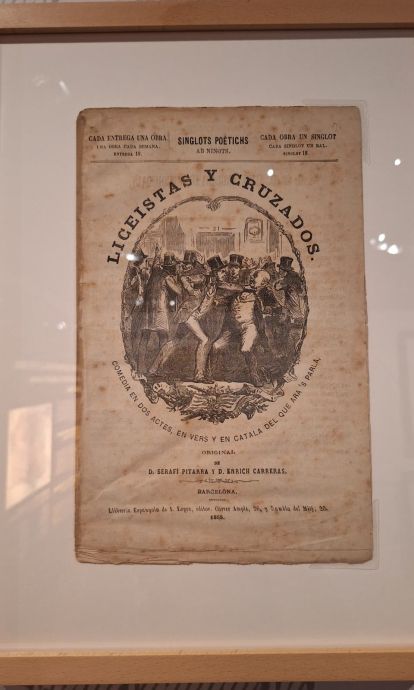
But his work marked a before and after in Catalan theater, as it inaugurated the "xalets" movement, that is, including colloquial and plain Catalan on stage, the one spoken in the streets of Barcelona. Thanks to this movement, the costumbrista comedy emerged on the Barcelona scene, a type of humorous theater with social criticism that had the Romea as its main stage.
Culture in the open air
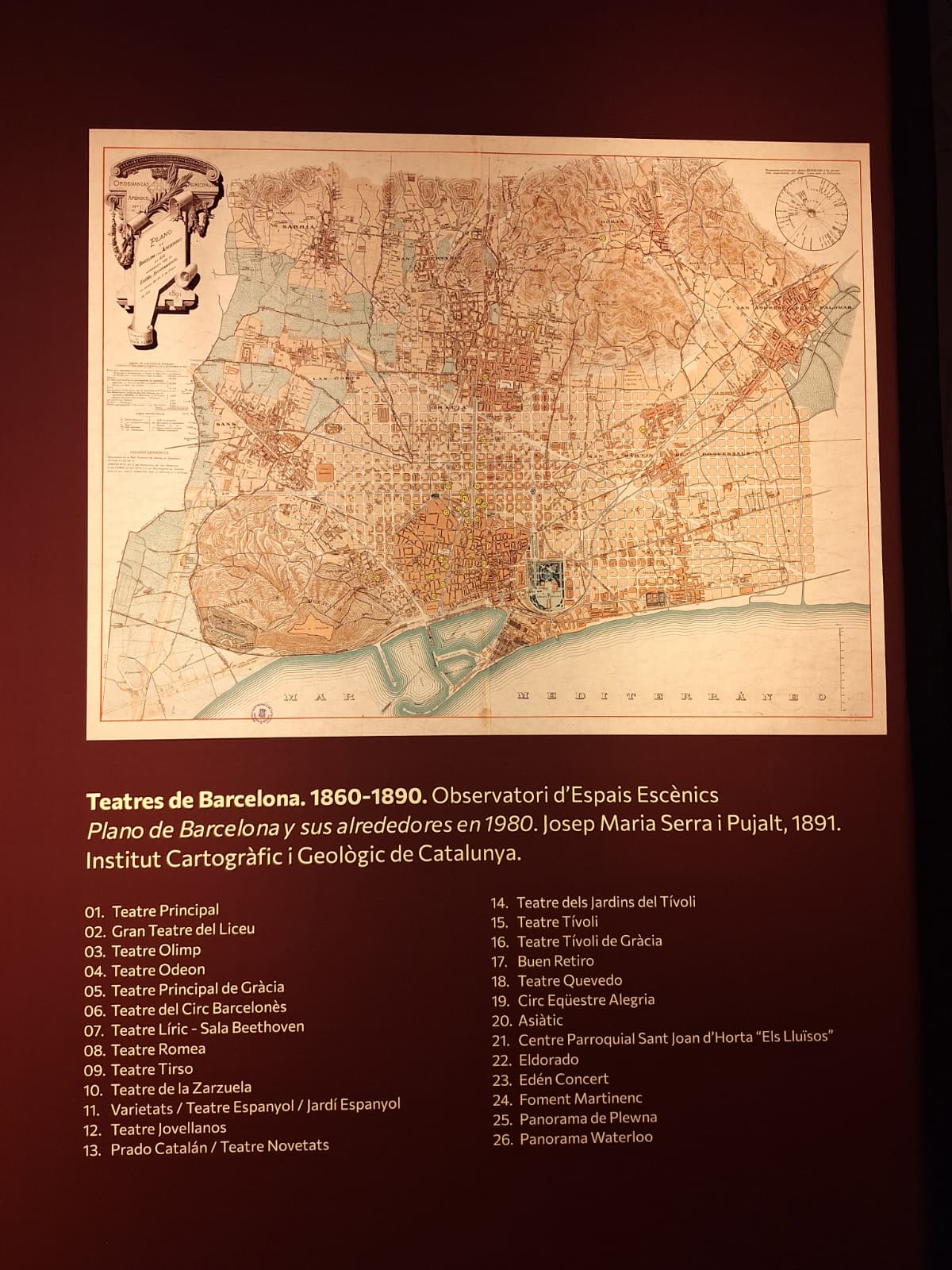
The city of Barcelona began to demolish the walls that enclosed it and began to expand through the Eixample designed by Ildefons Cerdà. This opening led to culture also taking a turn and new exhibition spaces appearing, such as, for example, summer theaters.
We are already in the second half of the 19th century. Passeig de Gràcia began to be built and, along with it, different gardens were born that connected Barcelona with the town of Gràcia. In the gardens of the Champs Elisées, the Criadero or the Tívoli, green areas, restaurants, attractions and, of course, open-air theater stages were installed, which became fashionable during the summer months. These stages were, at first, ephemeral tents (envelats), but, over time, they ended up being built and baptized as "summer theaters".
The Teatre Tívoli emerged from these summer theaters. The old construction that drew from an "envelat" eventually became the space that we can still enjoy today in Barcelona.
The varietés of Paral·lel
But... what about Paral·lel? This avenue has been, for years, considered as the "avenue of theater in Barcelona". But its origin is a little later because this great artery that delimited the city was, for years, an open field at the foot of Montjuïc. And, precisely for this reason, the land was cheaper, the authorities more permissive and overly complex construction licenses were not required. This is how the theatrical boom in Paral·lel began.
Traveling comedians and small entrepreneurs saw the business opportunity. They did not have enough capital to build theaters on La Rambla or Passeig de Gràcia, so they set up wooden structures (shacks) on this avenue in Barcelona. This was the case of the Teatre Circ Espanyol which started as a large wooden circus tent and ended up becoming a stable theater in 1892 thanks to its great success.
The workers of Poble-sec, Raval and Sants left the factories after long 12-hour shifts. They needed a cheap and nearby leisure space. Paral·lel offered tickets at popular prices, wine, beer and shows that lasted until late at night. The Paral·lel revolution had begun.
Over time, this avenue became a space where the anarchist proletariat from the factories of Poble-sec and Sants coexisted with the bohemian bourgeoisie of the city. Everyone came to discover this more "rascally" side of the Barcelona scene and delight in the performance of iconic cupletistas like Raquel Meller or attend plays that made political satire full of humor and social criticism.
The European avant-gardes of the XX century
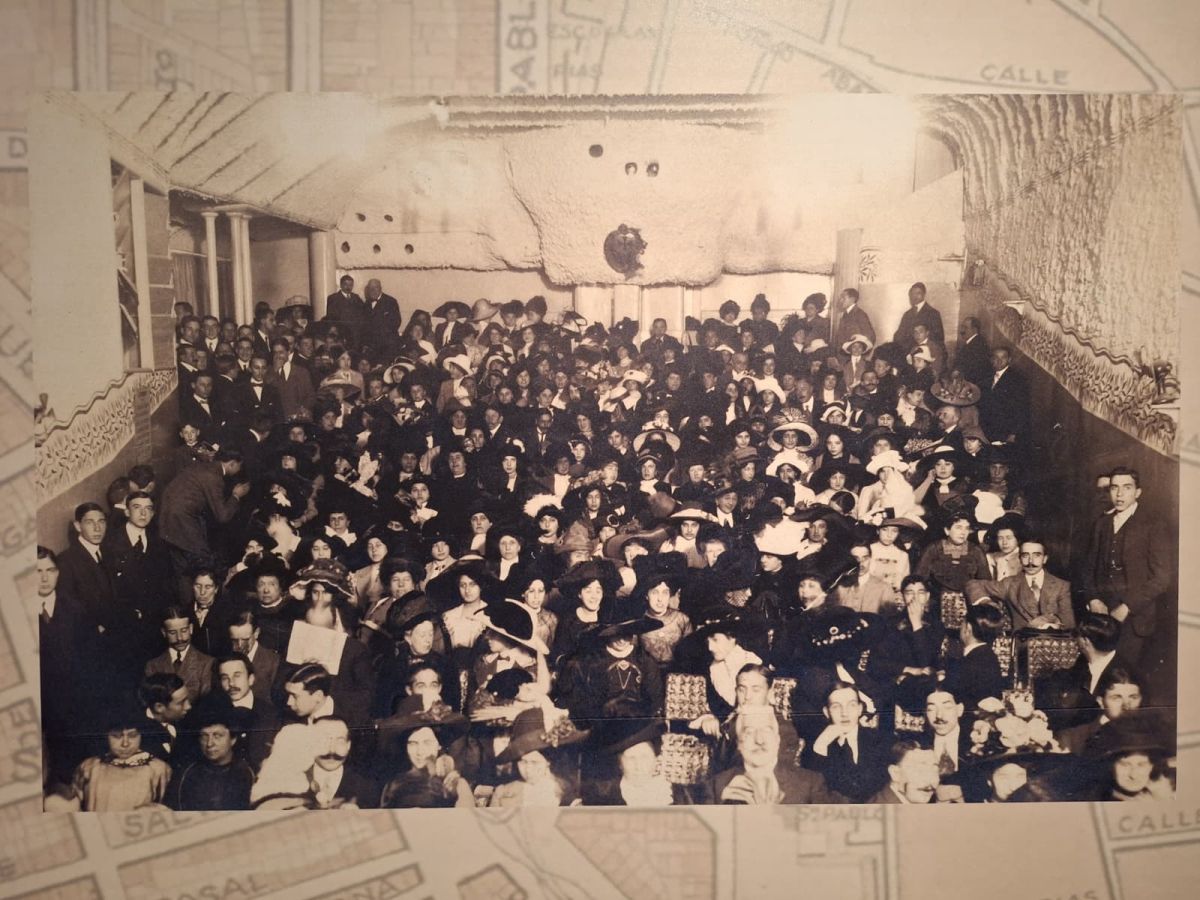
At the beginning of the 20th century, the avant-garde currents from Europe arrived in Barcelona and this impact was reflected in the city's theaters. The Sala Mercè (1904) was promoted by the painter Lluís Graner on Les Rambles. It was born as an attempt to create a space where painting, music, literature and the nascent cinema converged.
The project featured the design of Antoni Gaudí and the scenography of modernist artists. The result was a room that looked like an artificial grotto that was baptized by the press of the time as "the cave". The projections and live performances that were represented there sought to offer an immersive sensory experience.
Adrià Gual and the Teatre Íntim also sought unconventional scenic spaces, influenced by Noucentisme. To them we owe the historic representation of Goethe's Iphigenia in Tauris in the gardens of the Laberint d'Horta (1898), or the staging of Verdaguer's Canigó in the Les Arenes bullring (1910).
Institutionally, the Noucentista movement motivated the creation of the first large public network of theaters. The Mancomunitat de Catalunya and the City Council even called an international competition to erect the Teatre de la Ciutat on the recently opened Via Laietana. It was intended to be a public building that would house the national theater and dramatic schools. But Primo de Rivera's coup d'état prevented its development.
Clandestine theater during the Civil War and Francoism
After the Civil War and the beginning of the Franco dictatorship, theater in Barcelona began to work clandestinely. Its objective was clear: to be a trench of linguistic resistance and to continue betting on innovative theater, despite official censorship.
The Agrupació Dramàtica de Barcelona was created by Lluís Orduna and supported by figures such as Frederic Roda. It operated from 1955 to 1963 as a national theater structure in clandestinity, as it organized an itinerant circuit of theater in Catalan language that was performed in private spaces, guild headquarters, and historic palaces (such as Palau Moja or Palau Dalmases). They even premiered the great authors of European existentialism and absurdism (Ionesco, Beckett, Brecht) before being shut down by the authorities in 1963 after the staging of Joan Oliver's La meva teta.
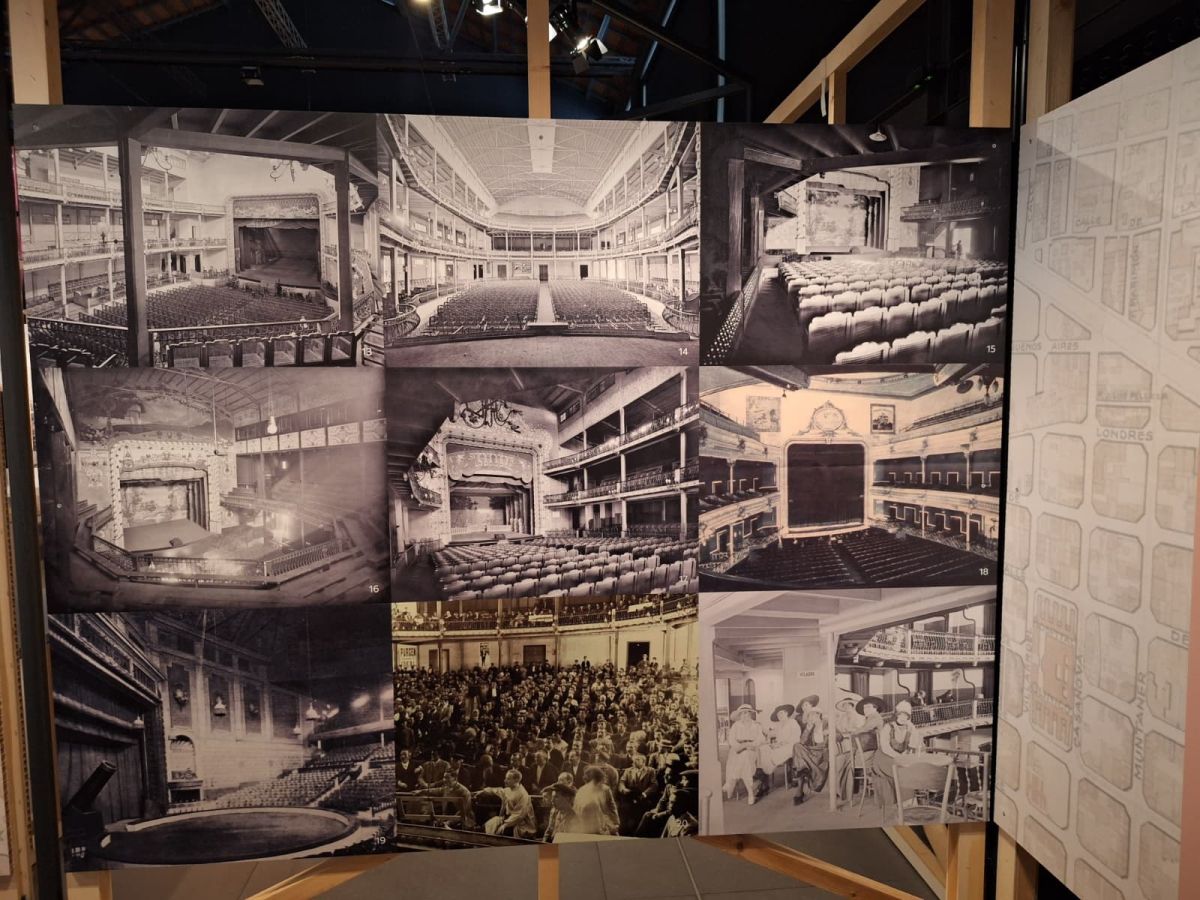
In 1960, Ricard Salvat and Maria Aurèlia Capmany founded the Escola d'Art Dramàtic Adrià Gual (EADAG), and installed their rehearsal room and stage in the dome of the Coliseum cinema. EADAG introduced the theories of Bertolt Brecht and dialectical theater to Spain, training a whole generation of actors, directors, and playwrights.
In parallel, in the seventies, the Teatre Capsa on Aragó street, under the direction of actor and businessman Pau Garsaball, became the reference venue for the most daring and protest-oriented independent theater of the era. The most innovative collective creation companies of the time passed through its stage, such as Els Joglars, Comediants or Teatre de l’Escorpí, as well as national and international avant-garde playwrights whose works challenged the moral and political codes of the regime.
But it was in the Poblenou neighborhood, specifically at the Casino L’Aliança del Poblenou, where the so-called Operació Off Barcelona took place in 1967. The neighborhood's associative fabric and independent creators carried out an alternative program with avant-garde works, physical theater, collective creation, and shows full of music and celebration. The result was a massive and unexpected success: thousands of working-class young people filled the hall day after day.
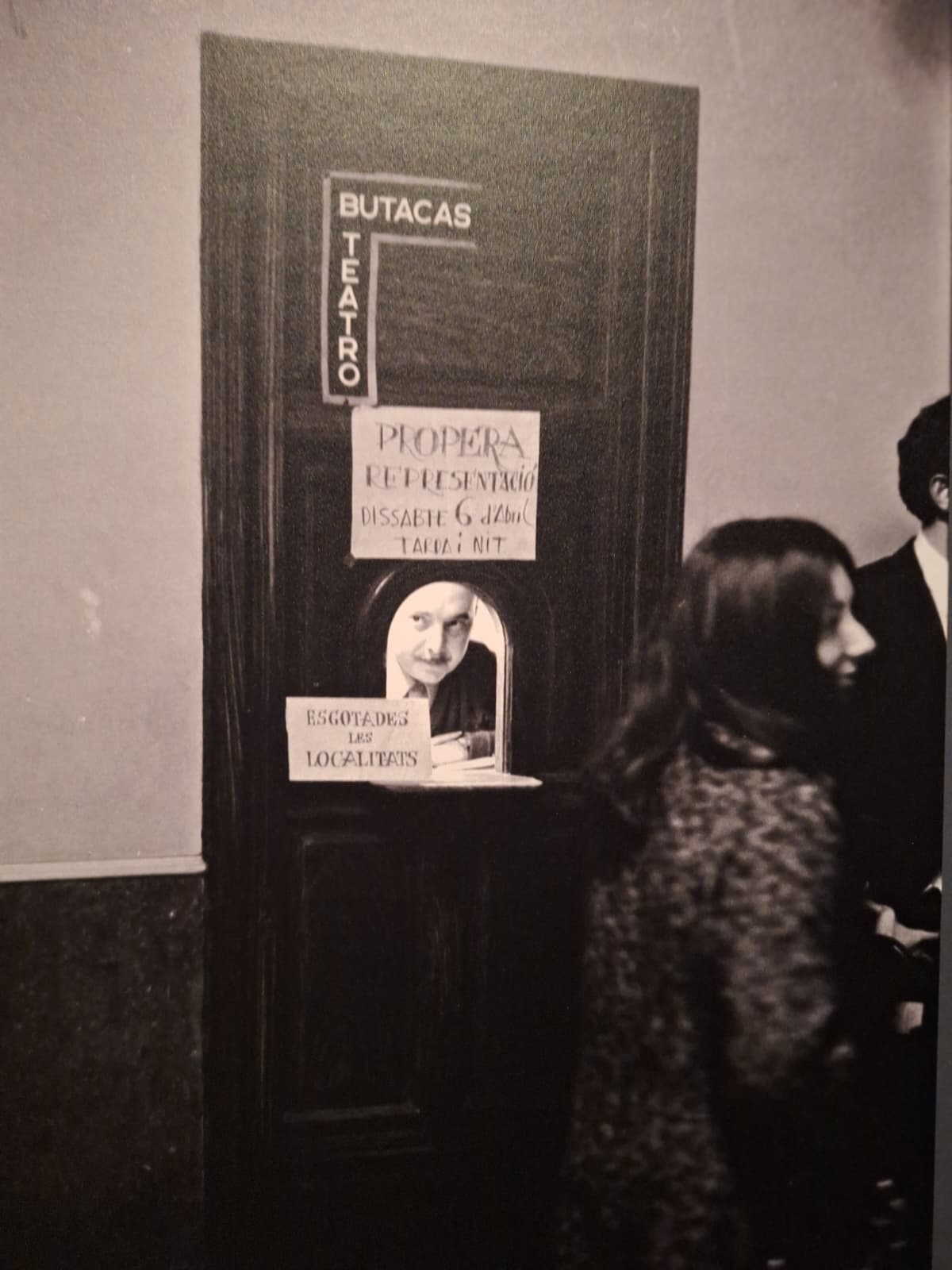
This success demonstrated something very important: the young and popular audience did want to consume culture, but not the usual boring theater. They were looking for stories that spoke of their reality with fresh, visual, and modern languages.
From neighborhood cooperatives to contemporary scene
During the Transition, independent theater joined forces with the neighborhood movement to take to the streets, dignify the profession, and recover popular theater. This is how the Teatre Lliure was born in 1976. A collective of actors, directors, and set designers led by Fabià Puigserver, Lluís Pasqual, and Pere Planella settled in the headquarters of the old workers' cooperative La Lleialtat de Gràcia to found this space.
The Lliure broke with the separation between stage and auditorium thanks to a modular wooden space to defend its idea of theater: a model of collective creation, technical rigor, and public service. The Lliure became the great reference of the European scene.
For its part, the Mercat de les Flors became a scenic space in 1983 thanks to the impulse of Peter Brook to stage The Mahabharata. Similarly, in the summer of 1976, the Assembly of Actors and Directors of Catalonia (which was the independent theater collective organized at the end of Francoism) decided to "occupy" and recover the abandoned open-air amphitheater of Montjuïc (built for the 1929 International Exhibition). And that's how the amphitheater of the Teatre Grec became the heart of the city's summer festival: the Grec Festival Barcelona.
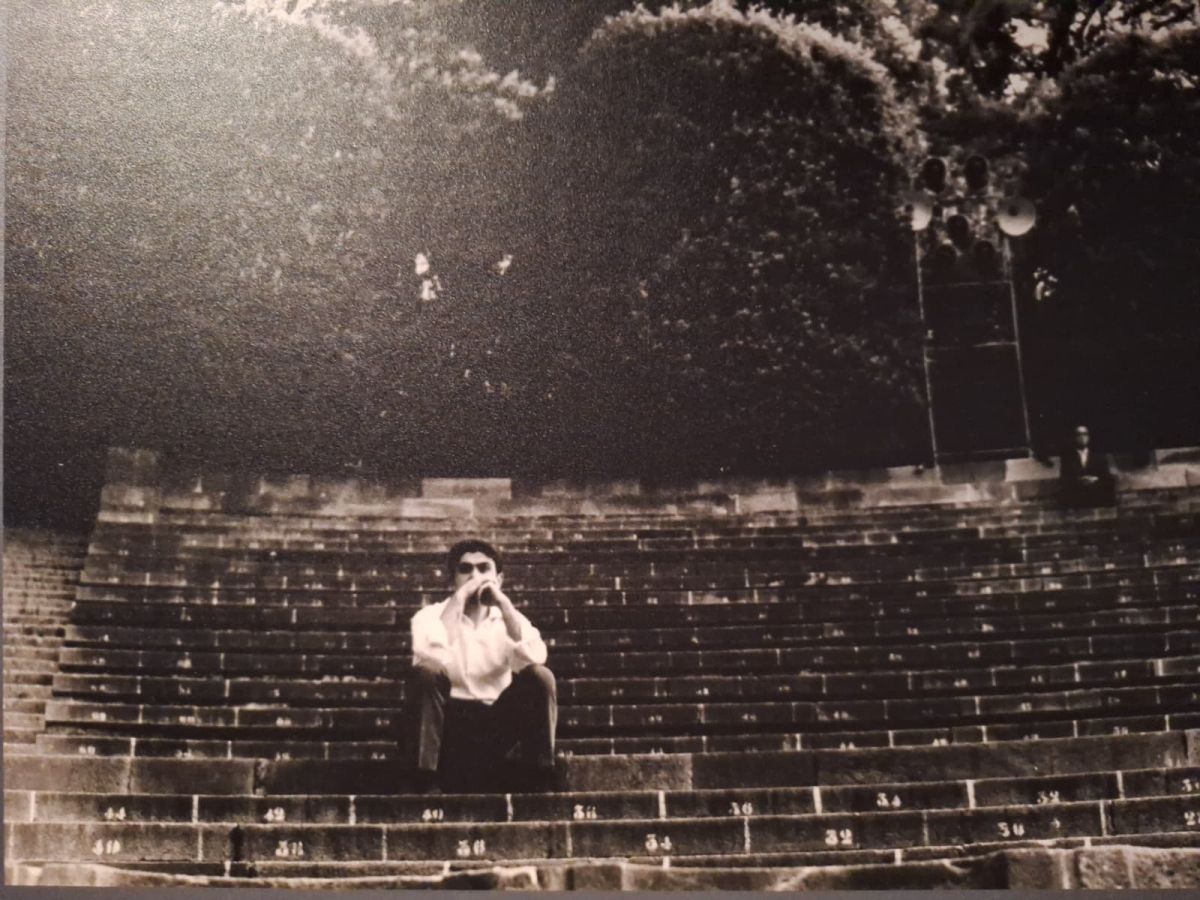
In recent decades, Barcelona has continued to grow with new theatrical institutions, such as the inauguration of the Teatre Nacional de Catalunya (TNC) in 1997, designed by Ricardo Bofill and promoted by the Generalitat to enhance and make visible great Catalan artists such as Lluís Pasqual, Josep Maria Flotats, Fabià Puigserver, and prestigious companies. Flotats was appointed its first founding director. He designed the artistic concept and directed the inaugural play in the Sala Gran in November 1997: Angels in America by Tony Kushner.
Another clear example is the Sala Beckett, which after decades of activity in Gràcia, 10 years ago moved its headquarters to a rehabilitated old cooperative in Poblenou to become the great workshop of contemporary dramaturgy. But there are many current theaters in Barcelona: from the large buildings managed by Balañà or by Focus, to the network of local theaters united by On el Teatre Batega.

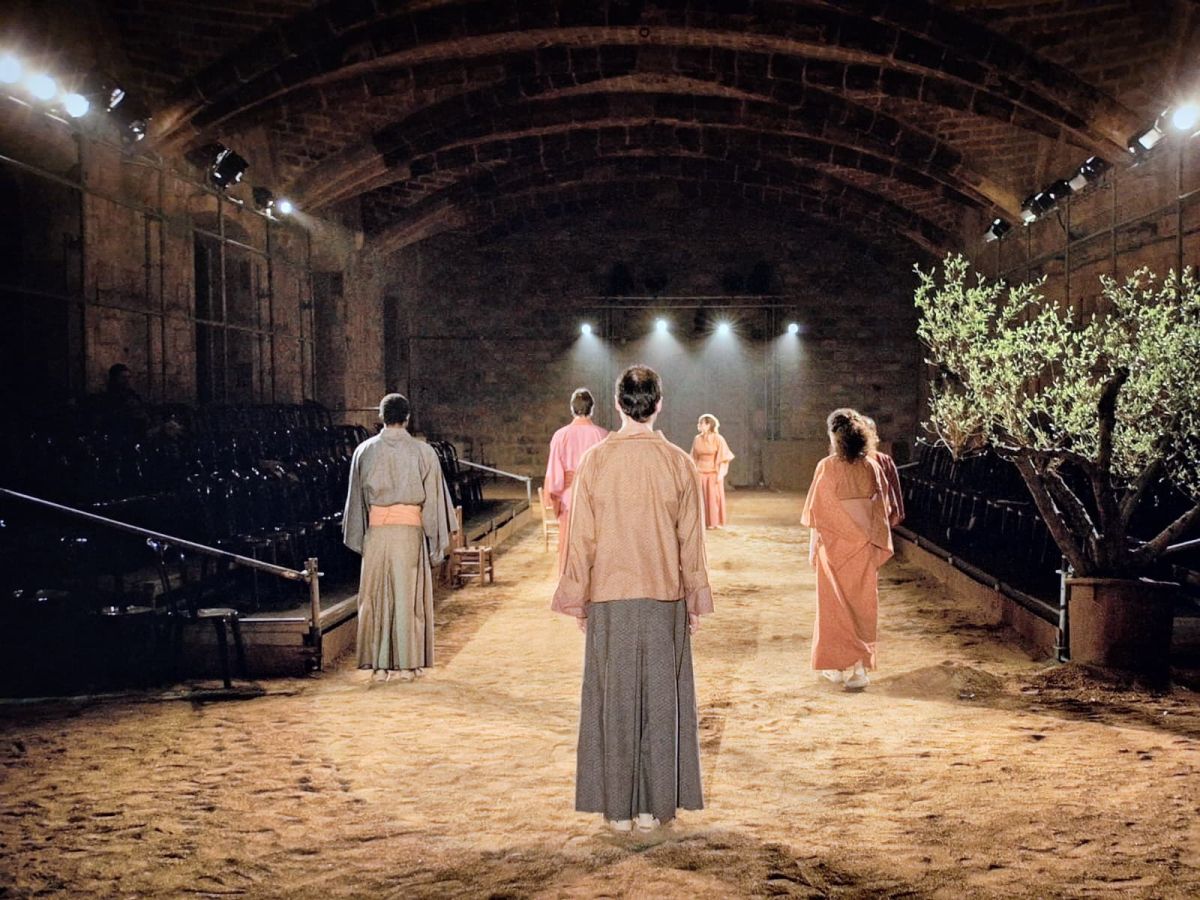
The circle of Barcelona's cultural history closes poetically in the 21st century: the company La Perla 29, directed by Oriol Broggi, has established its space in the Gothic nave of the Biblioteca de Catalunya. This is the same enclosure of the old Hospital de la Santa Creu, the exact place where the first theater in Barcelona was born in the 16th century.
The exhibition 'Barcelona: city and theater' at CC El Born
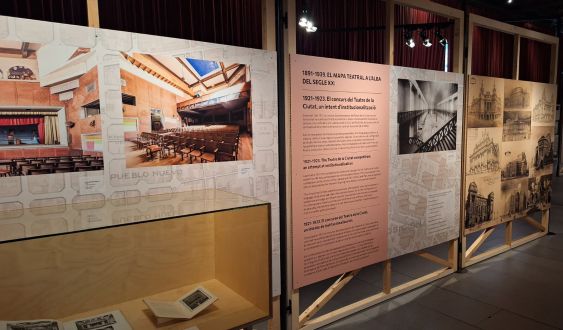
The exhibition Barcelona: city and theater, curated by Antoni Ramon Graells and Ivan Alcázar Serrat, takes this journey through the history of theater in our city. Through maps and cartographies, the exhibition shows the evolution of the theatrical business that goes from La Rambla to Passeig de Gràcia, passing through the mythical Paral·lel avenue or the old towns of the Barcelona plain.
This exhibition is part of the World Capital of Architecture that Barcelona will host during 2026, and highlights the urban and architectural heritage of the theatrical scene. Because, as we have seen, theater in Barcelona has been, and continues to be, the artistic heart of the city.
Add The New Barcelona Post as your preferred Google source for free
Stay informed with the latest news.