When speaking of Barcelona's Gothic, attention usually focuses on the cathedral, Santa Maria del Mar, or the streets of the Gothic Quarter. But there is another great Gothic building, next to Port Vell, that has gone much more unnoticed: the Llotja de Mar. Headquarters of the Barcelona Chamber of Commerce and a regular venue for meetings, institutional events, and business congresses, for decades it has been an almost inaccessible building for the general public, as entry required being part of an event, having accreditation, or waiting for an exceptional open day. Now, for the first time, the Chamber is opening the building to the public on a regular basis, giving residents and visitors the chance to discover one of Barcelona's most remarkable historic sites.
More than a monumental building, the Llotja is the testimony of a city that grew looking towards the sea. For centuries, within these walls, businesses were closed, decisive institutions for Barcelona's economy were created, and some of the most singular episodes in the city's history were experienced. The Taula de Canvi, one of Europe's first public banks, was headquartered here; according to tradition, it is also the origin of the word bankruptcy. But the Llotja was also witness to tumultuous episodes: after the War of Succession, the great Contracting Hall ceased to be the space for merchants to become a military barracks for the Bourbon troops.
Few buildings accumulate so many layers of history under one roof. And yet, this history has remained for decades hidden from the eyes of many Barcelonians. Unlike what happens in cities like Valencia or Palma, where their Llotjas are part of visitors' usual itinerary, Barcelona's has continued to be primarily a space linked to the institutional and business world. Despite hosting congresses, corporate events — and even cultural events like Sónar+D or fashion shows —, its interior could only be visited on specific open days or through guided tours offered by Cases Singulars since 2021. From now on, however, any citizen will also be able to access it regularly, without the need to join a guided tour or wait for an exceptional occasion.
This will start to change this week. Starting this Thursday, the Chamber will open the Llotja de Mar regularly, with free admission from 11 am to 5 pm, Monday to Sunday, whenever institutional activity allows it. It will also expand guided tours —at a price of 16 euros— to the noble halls during periods with less business activity, such as summer, Easter, or Christmas. The objective is to bring citizens closer to a heritage that the president of the Chamber, Josep Santacreu, still considers “quite unknown” outside the business world. “Just as religious Gothic can be visited, civil Gothic must also be able to be visited and vindicated,” he defends.
Where Barcelona learned to trade
But before delving into the multiple layers of history that the Llotja hides, one must first go back to its origin: to a time when Barcelona was one of the great commercial powers of the Mediterranean and needed its own space to organize its mercantile activity. It was King Pere III the Ceremonious who, in the mid-14th century, promoted the construction of this building intended for merchants. Contrary to what its current monumentality might suggest, the Llotja was not born as a palace or as a symbol of power, but as a workspace where merchants could negotiate, close contracts, and resolve disputes.
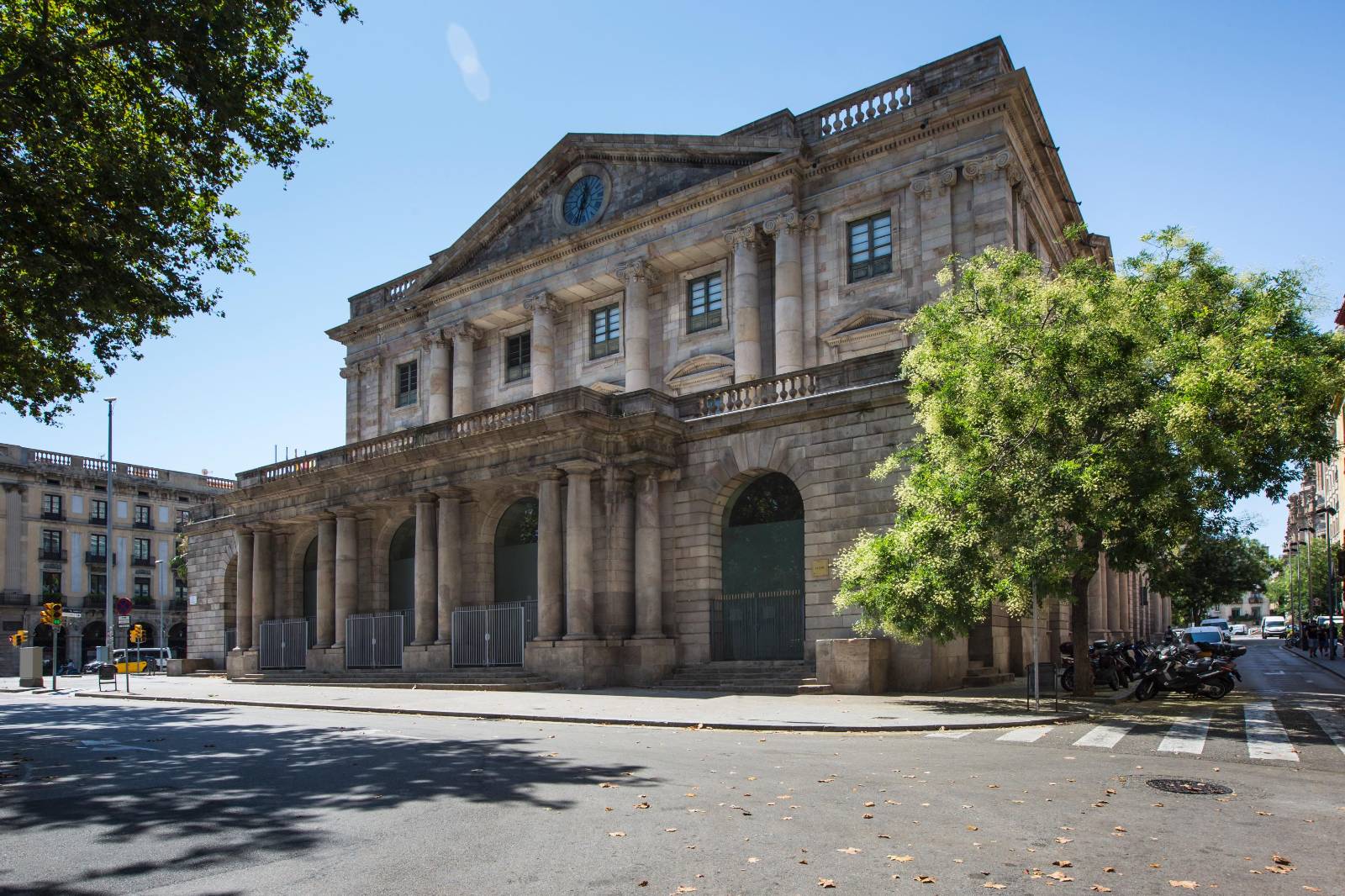
Over the centuries, however, that space designed to facilitate trade became one of Barcelona's great economic and civil institutions. The Consolat de Mar; the Taula de Canvi; and, later, the Reial Junta Particular de Comerç, promoter of the country's economic and industrial modernization, were based here. Since 1886, the Llotja has also been the headquarters of the Barcelona Chamber of Commerce, an institution that helps maintain an unusual continuity: more than seven centuries after its construction, it is still the space from which economic activity is conceived and promoted.
It is precisely this intense institutional and business activity that has made the Llotja, until now, a building not very accessible to the general public. But once you cross its doors, the first thing that surprises you is its monumentality. The painted ceilings force you to look up; on the walls, sculptures coexist with frescoes and each space invites the visitor to stop. But almost nothing is merely decorative: each room preserves some clue to its more than seven hundred years of history.
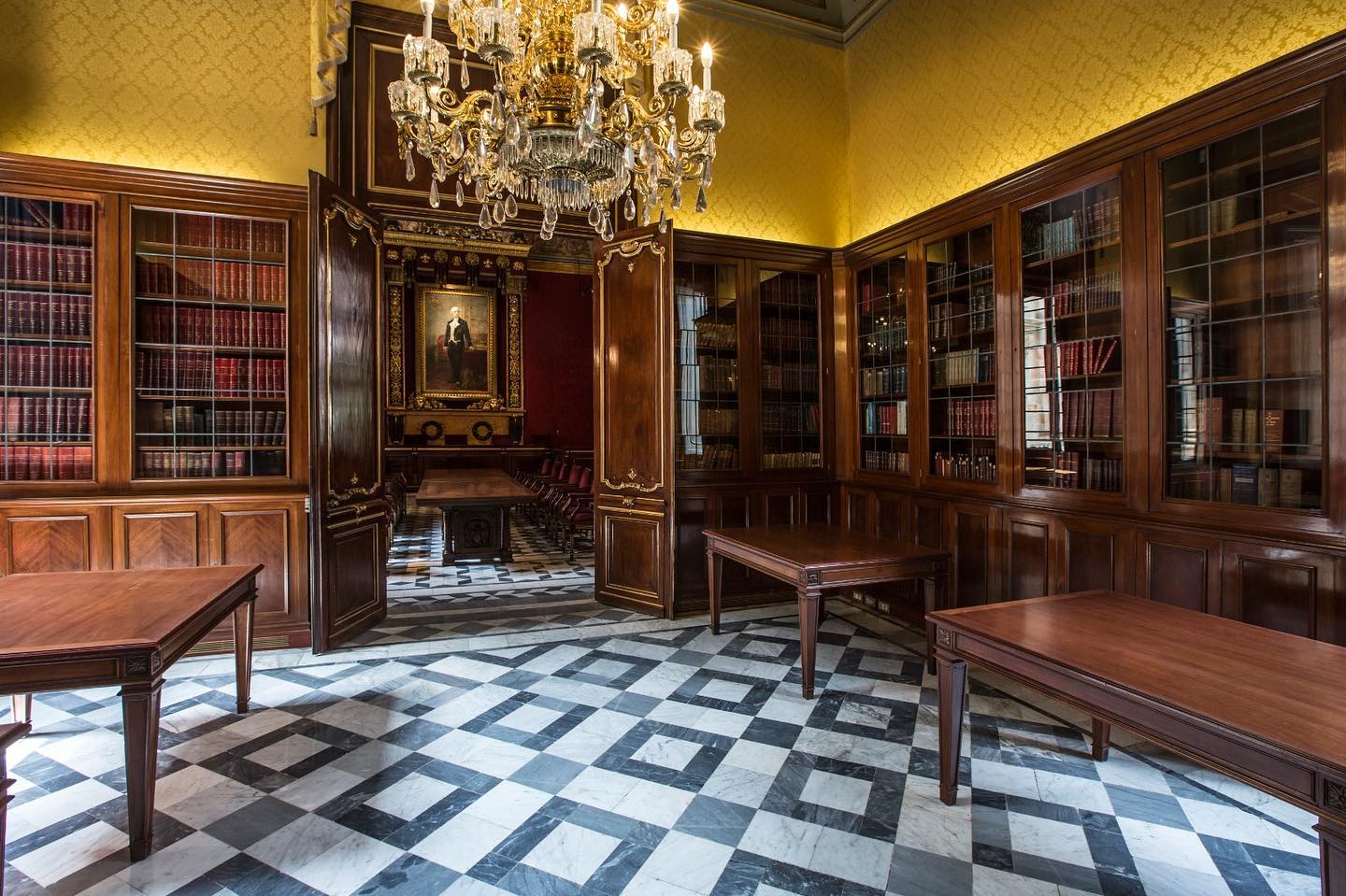
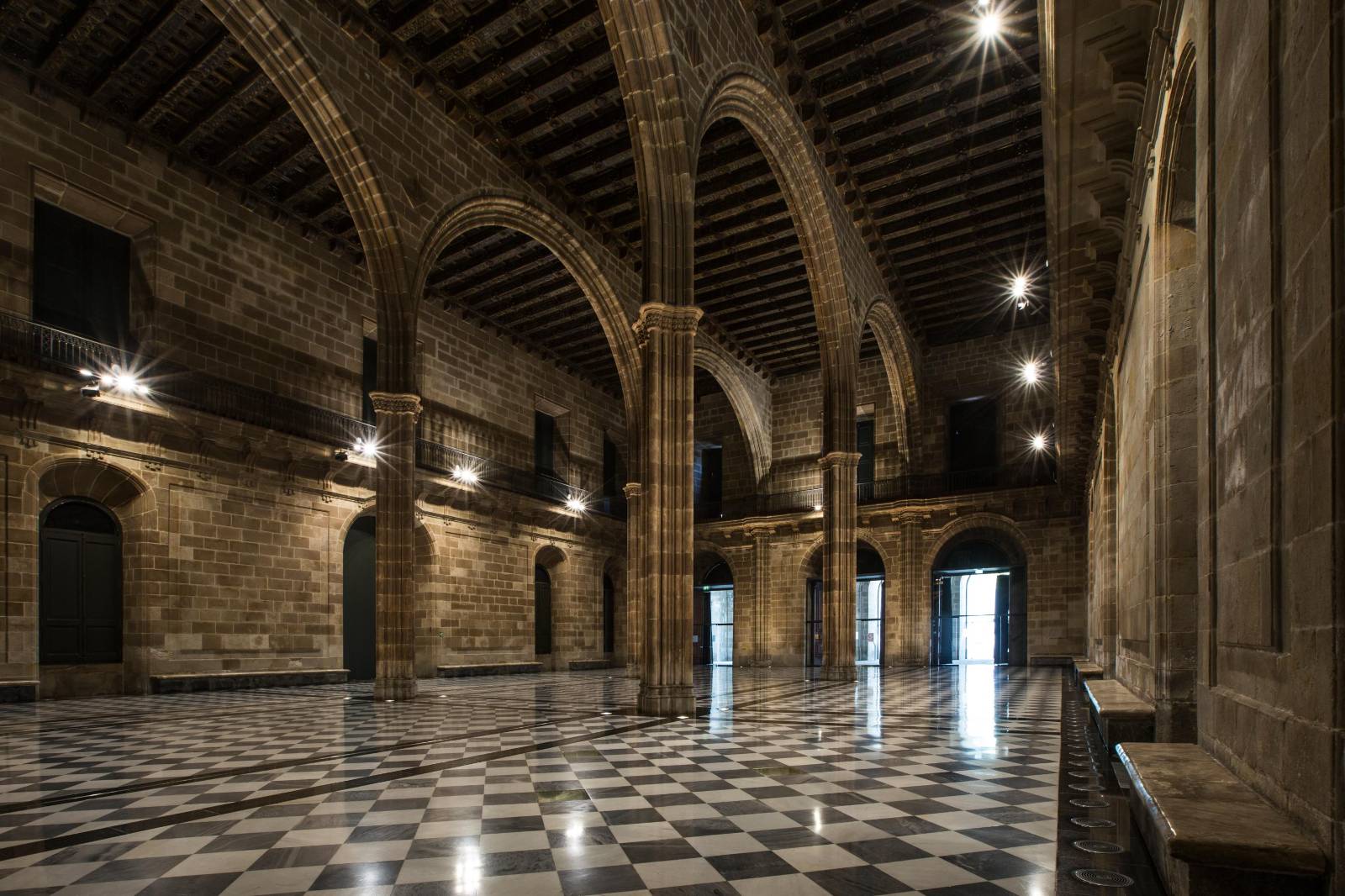
The tour begins in the Saló de Contractacions, the heart of the medieval Llotja and the large space where the commerce of Gothic Barcelona pulsed. The dimensions, the slender stone columns, and the wooden ceiling, where the coats of arms of Barcelona and Catalonia can still be traced, are impressive in this space. For centuries, merchants negotiated goods arriving at the port here, and the Taula de Canvi, one of the first public banks, operated there. Tradition has it that when a banker went bankrupt or acted fraudulently, the authorities publicly broke his bench or counter so that he could not continue to practice. From that gesture—breaking the bench—the word "bancarrota" (bankruptcy) would have been born, which Italian merchants would eventually spread throughout the Mediterranean. Years later, in 1708, this Hall was also the setting for the premiere of Il più bel nome, the first documented opera performed in Catalonia.
Seven centuries later, the hall, profoundly renovated while maintaining its original aesthetic, still preserves traces of this past. Small glass panels on the floor allow observation of the original Montjuïc stone pavement, hidden beneath the current Carrara marble cladding, incorporated during the great neoclassical reform of the 18th century. That renovation came after one of the most tumultuous episodes in the building's history. After the War of the Spanish Succession and the implementation of the Nueva Planta Decrees of 1716, the Llotja lost its commercial function and was converted into a military barracks. Where merchants once closed deals, Bourbon troops came to sleep. It was not until 1772 that the Royal Particular Board of Commerce promoted the recovery and expansion of the building, which would eventually give it much of its current appearance.
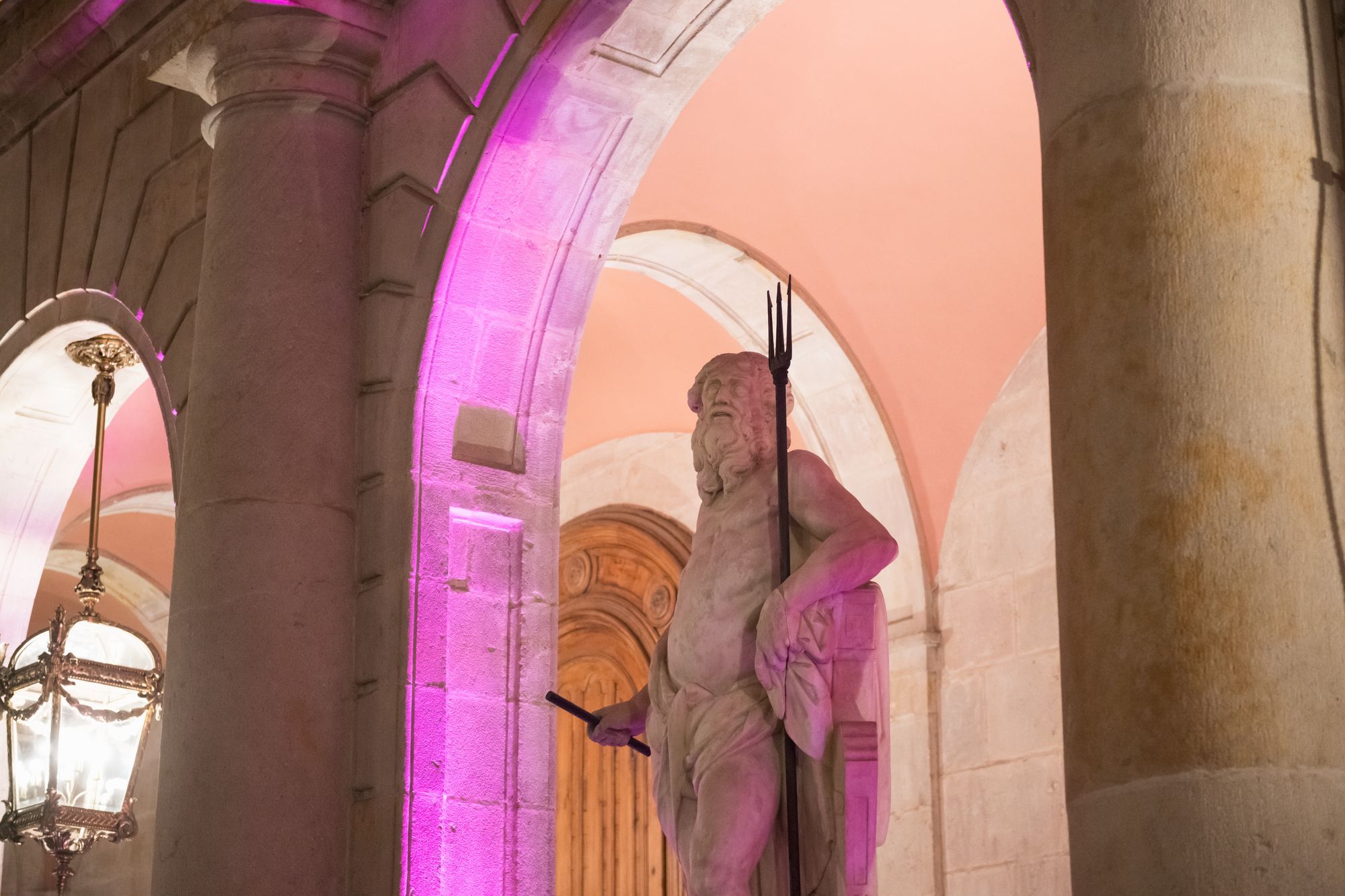
From there, the visit continues to the Orange Tree Courtyard, presided over by the Neptune fountain and four surrounding sculptures representing the continents known at that time —Europe, Asia, Africa, and America—. But beyond its symbolism, the fountain also hides some of the Llotja's most curious anecdotes, such as when, during a royal visit, a French prince took the small ship that crowned the sculpture, or when, during one of the city's great celebrations, the fountain flowed not with water, but with wine. Small stories that remind us that the Llotja was not only the great business center of Barcelona, but also one of the settings for major celebrations.
From merchants to artists, scientists, and innovators
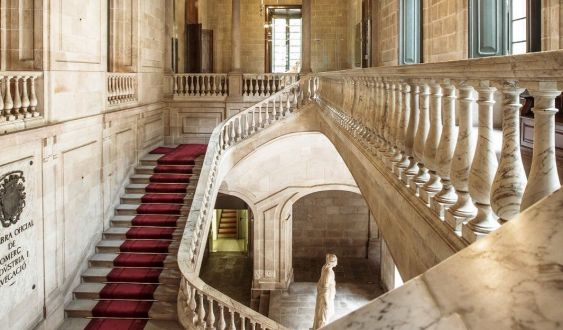
From this courtyard begins the monumental marble staircase, conceived to impress visitors and lead them to the noble halls. It is there that the Llotja tells another stage of its history. The neoclassical reform not only transformed the building but also made it one of Catalonia's great centers of knowledge. It was here that the Royal Particular Board of Commerce promoted the Free School of Drawing —the embryo of the current Escola Llotja—, but also twenty technical, scientific, and artistic chairs to supply the lack of higher education after the Decree of Nueva Planta. Figures such as Antoni Gaudí, Marià Fortuny, or, later, Pablo Picasso passed through its classrooms.
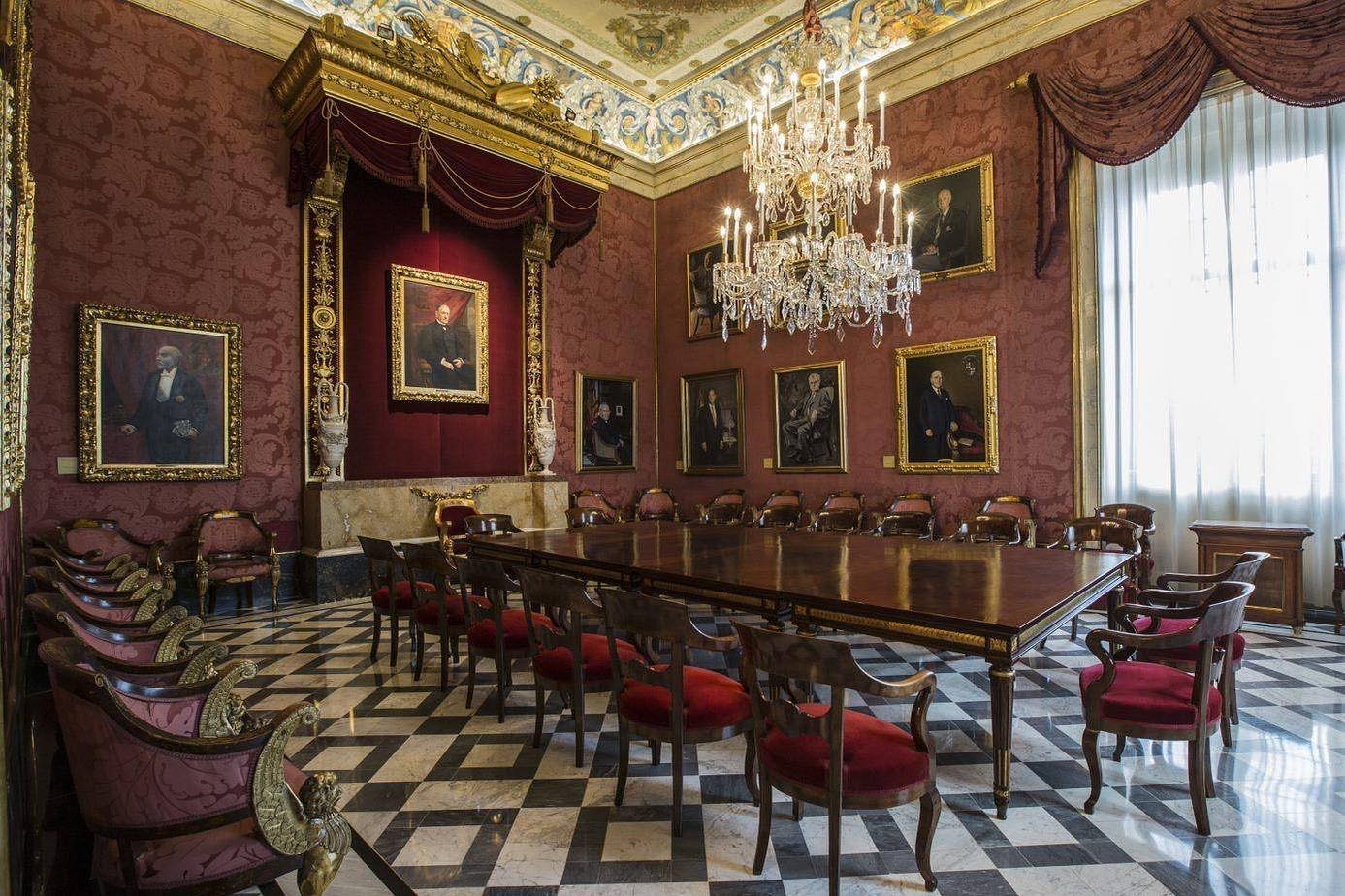
And this artistic legacy is still very present. A part of the building is today the Royal Catalan Academy of Fine Arts of Sant Jordi, with a remarkable collection of paintings, sculptures, drawings, and frescoes that span several centuries of Catalan art history, from ancient works to pieces by contemporary artists. But art extends further, with monumental paintings, sculptures, frescoes, and profusely decorated ceilings in the Golden Hall, the Lucretia Hall, or the Consulate of the Sea Hall.
Beyond an artistic space, the rest of the professorships promoted by the Board of Trade also turned the Llotja into a true innovation laboratory. Here, the chemist Josep Roura carried out the tests that allowed, on the night of Sant Joan in 1826, the first gas lamp in Barcelona and throughout the State to be lit. And only a few years later, in 1839, the facade of the Llotja became the protagonist of the first photograph taken in Spain, captured by Ramon Alabern from the rooftop of Casa Xifré.
But the visit also allows us to understand that the Llotja is not a building anchored in the past. Behind the monumental halls, the Chamber's work rooms, the president's office, and where the institution's daily activity takes place, continue to function. It is in this context that Josep Santacreu makes a brief reference to current events: "As you can see, there are no silver chairs here," he comments in the Plenary Hall, alluding to the seats reserved for companies that contribute to the Chamber's financing and which have been the focus of debate in recent days. An almost anecdotal observation that reminds us that, seven centuries after its construction, the Llotja continues to be a place where its past is discussed, but also its present.
Add The New Barcelona Post as your preferred Google source for free
Stay informed with the latest news.