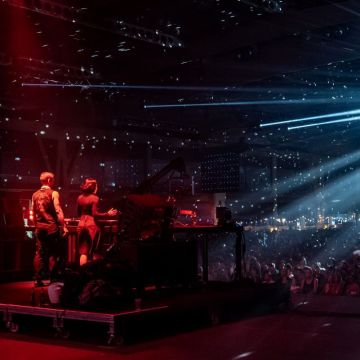
La Llotja de Mar, a neoclassical space in our city, becomes the most modern and technological place in all of Europe. Because this year's Sónar+D has moved to its halls and courtyards to debate the future of digital music. Past and future go hand in hand at this festival that wants to recover humanity in a world where technology seems to occupy everything.
Spaces like the Stage+D or the Expo+D dialogue with artists and engineers to set the roadmap for contemporary electronic music. AI is so present in our lives that it is starting to generate fatigue and, given this panorama, it is time to take the helm and decide what kind of use we want —and should— make of the most advanced technologies.
Debates, experiments, workshops, and live performances have been part of Sónar+D in an edition inaugurated by a Catalan artist who faithfully represents the spirit of this edition: the jazz pianist Ignasi Terraza who co-improvised blindly with a UPC algorithm.
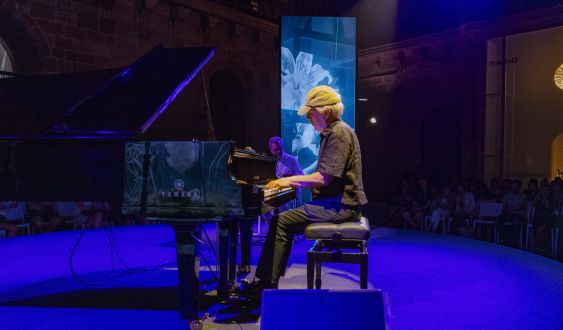
The inauguration of Sónar+D with ImprovIA by Ignasi Terraza
The kick-off of this laboratory has been, for the first time, with a concert instead of the classic conference. On the Stage+D stage, we were able to witness ImprovIA, a real-time dialogue between the Catalan jazz pianist Ignasi Terraza and an artificial intelligence system developed by UPC professor and researcher Philippe Salembier.
The staging of this experiment only featured a piano, a computer, two microphones, and a mutual listening loop. The machine received the sound of the piano in real-time and, capturing its essence, intensity, and rhythm, returned a musical replica instantly. Salembier avoided the use of artificial background effects to ensure that technology was another member of the band and could converse with Terraza on equal terms.
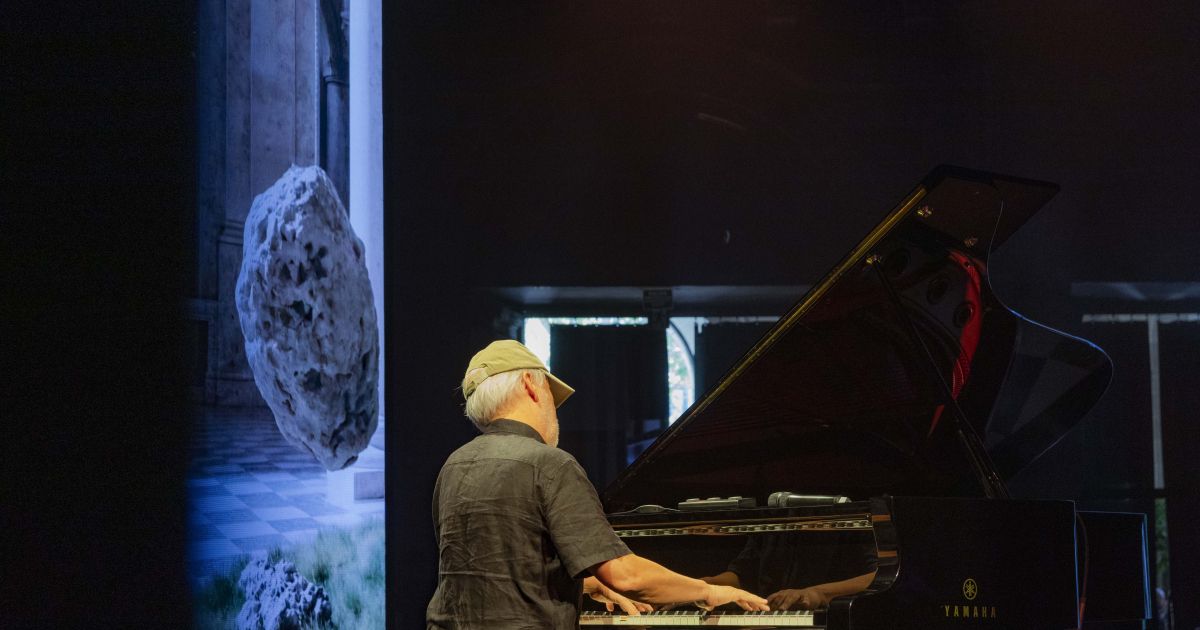
The result was a free composition without labels. Traversing jazz, piano, and genres yet to be named, the concert was a very organic and natural musical dialogue. Towards the end of the performance, the symbiosis was so absolute that it was impossible to decipher the origin of each note or the order of the responses. Thus, a question was thrown into the air: who was improvising with whom?
AI & Music Open Forum: The empty chair debate
After the inaugural concert, the AI & Music Open Forum (part of the European S+T+ARTS initiative) took over. The staging already broke the rules of traditional presentations: a stage with four chairs, three of them occupied by figures such as François Pachet, Anna Xambó, and Rob Clouth, and a fourth chair completely empty. The discussion was very dynamic, because it was not a closed meeting of experts, but an open talk: any audience member who wanted to contribute an opinion, ask a question, or challenge an argument could occupy the empty chair.
Beyond the opinions of each speaker, the forum served to show that we are in a shift in sensibility within the digital culture sector: there is a certain widespread boredom and fatigue among artists regarding the media and promotional "noise" of AI, but it is positively valued as an instrument to streamline raw work and enhance the final result.
Many of the creators present have been experimenting with machine learning since 2020, and the surprise effect has expired. In the end, the forum served to ground the discourse: the real value of AI is not the game of making it copy human creativity, but its ability to accelerate technical processes. The fact that AI allows programming in a single day technical tasks that previously required weeks is its best virtue: it saves raw work to give humans back the time needed for pure research and creation.
Beyond AI
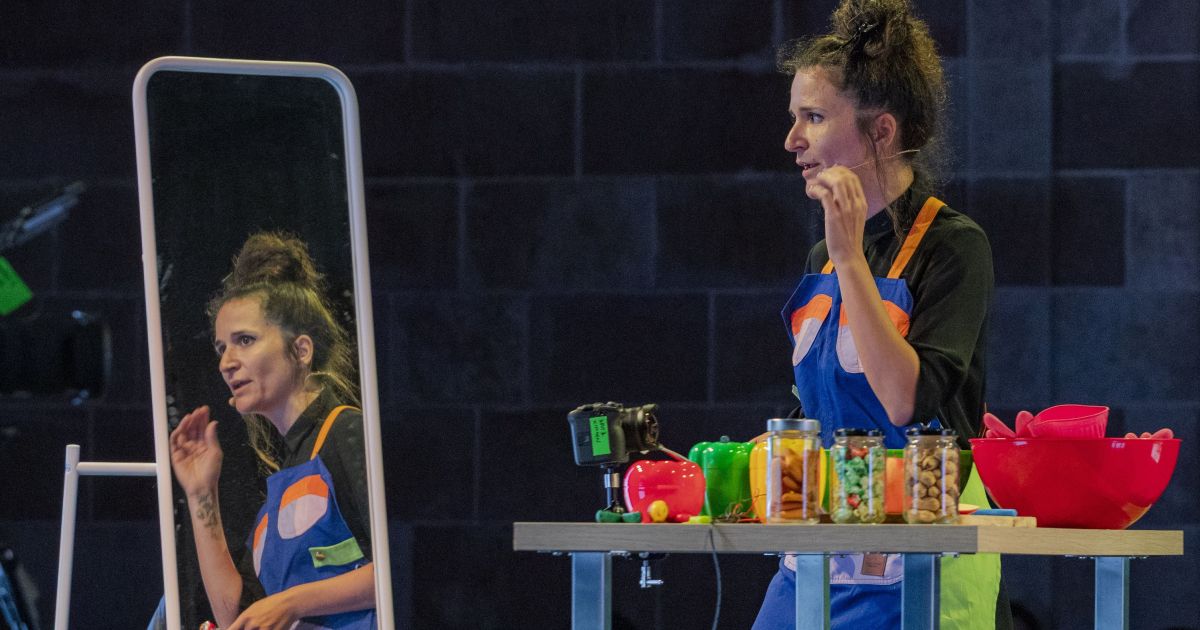
This desire to regain human control has spread throughout the rest of the building. On one hand, Beyond the Screen clearly showed the artistic reaction against the "dictatorship of the perfect pixel," with artists like Mónica Rikić (who appeared accompanied by an assistive robot on stage) or Roxanne Harris (who projected her own algorithmic codes onto her back while performing).
On the other hand, the Digital Gardens and Dark Forests section brought to the table how to break with the current Internet model, a space controlled by large corporations and dominated by metrics. And it did so with proposals like that of Filipino artist Chia Amisola, who shows us how to opt for artisanal and personal websites in the style of the old GeoCities.
As much as AI and algorithms run, sensitivity, improvisation, and creativity continue to be exclusively human.
If Sónar+D is the laboratory where Barcelona imagines the future, this year it has become clear that the future involves regaining control. It is true that technology is running faster than ever, but at the Llotja de Mar we have seen that, as much as AI and algorithms run, sensitivity, improvisation, and creativity continue to be exclusively human.
Add The New Barcelona Post as your preferred Google source for free
Stay informed with the latest news.