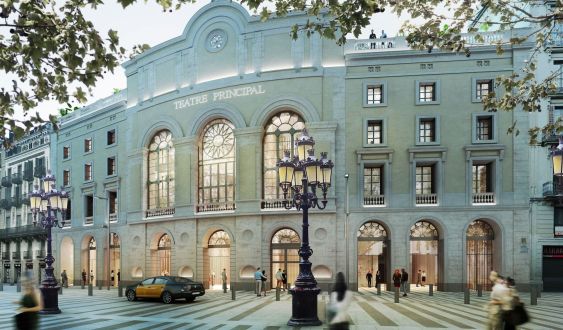
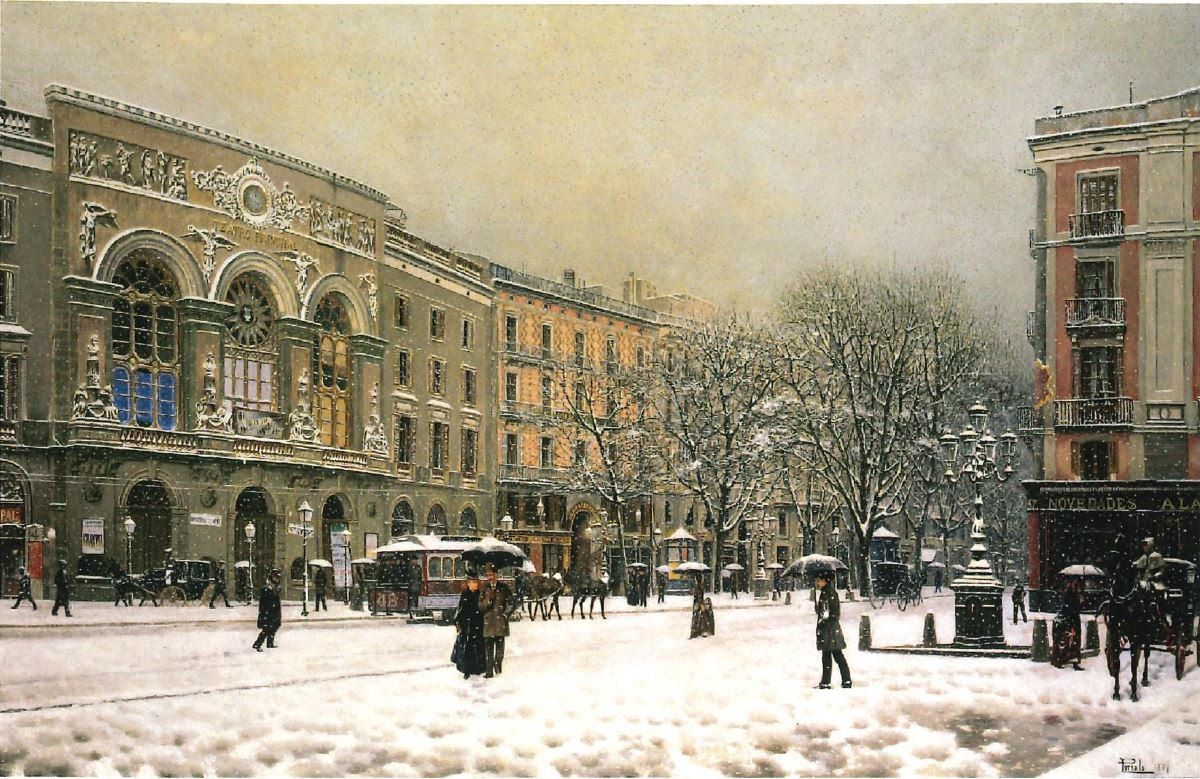
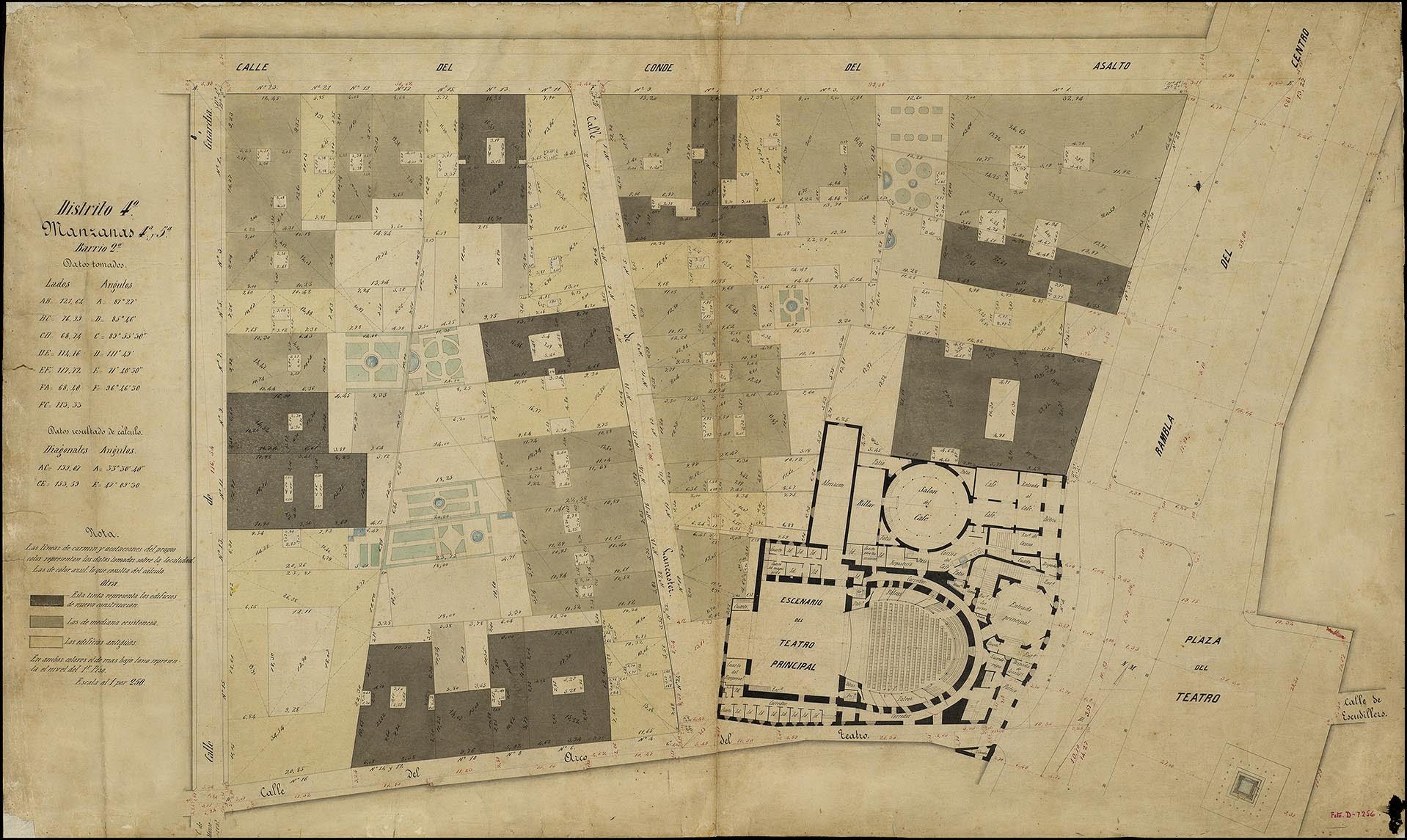
Old Teatre de la Santa Creu or also Teatre de l'Hospital, the oldest in the city, originally Casa y Corral de las Comedias, 16th century, and with a wooden stage in the middle of the orchards. Not even in 1714 did the authorities manage to close it. All of these were renovated wooden and stone buildings that kept burning down, until the Corral de las Comedias (or Opera Houses) became the Teatre de la Santa Creu and entered into competition with the new Liceu. It became the Teatre Principal in 1840, at which point it adopted the facade it currently preserves (designed by Francesc Daniel Molina) and the famous Venus Dome. The space reserved for the theater also dates from that era, although it has undergone so many modifications that the Batlleiroig architects prefer to circumscribe the original heritage to the facade and the dome. Later, from operas, it became a standard-bearer for the renewal of Catalan theater (which is why it has the statue of Pitarra in front of it).
What are they doing? Well, to begin with, restoring the splendor to the facade's windows (which had been cut back from the inside due to the way the fronton court was installed) and giving La Rambla a striking and almost transparent building again. And that's because the fronton (Jai-Alai, which means "joyful festival" in Basque) and the small Latin Theater are much later additions, as are the famous Monforte billiards or the unspeakable adjoining rooms. So, we will have very tall windows. Good. Then, the arcades on the ground floor will openly connect with La Rambla, at the same level as the promenade and without lighter shops (Colibrí) or discotheques (Pan-am's) obstructing the entrance. A large lobby, a grand entrance in the form of arches. Arc del Teatre Street. Las Ramblas will enter directly into the building.
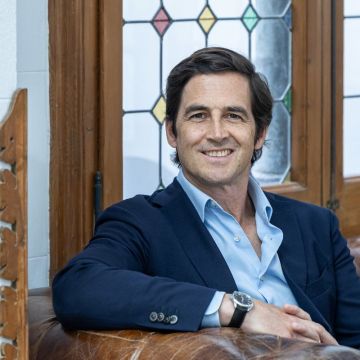
They will reserve smaller format shows (jazz, chamber music...) for the Latino, which will surely change its name (it doesn't seem like Bad Bunny will perform in this venue). It will have a capacity for about 200 or 250 people, unlike the main hall, with a capacity of about 850, or the new fronton space, intended for very large formats. José Trenor explains to us that he has been behind this story for seven years, and I can attest to that. Once he confirmed that no new hotels could be built (he mainly dedicates himself to that business), he thought, along with the Balañá family, that something had to be done with the Principal. Save it, yes, but with viable content. He flirted for a year and a half with Cirque du Soleil to establish an artistic residency there, but it would have been —he explains to us— a mistake. It was more worthwhile to bet on live music, musical theaters, comedies, dance, immersive installations, corporate events, or restoration, all with combined schedules and formats. It is the first time, in fact, that a heritage theater will have such eclectic content and be exclusively dedicated to culture. In fact, in this sense, it will be a unique building in the world.
With collaborators like Ventura Barba (Advanced Music) or Jordi Sellas (Nostromo Live, IDEAL), they have the idea of contacting producers and companies to fill this entire space with content. Autumn 2028, yes. Zero public funding (although there are bank guarantors and everything has been signed six months ago). This story has no turning back: we will have a Teatre Principal.
While they show us the large theater hall (art deco, two levels, the two upper ones having disappeared due to the construction of the fronton), they explain to us that there is even an artistic intervention now in front of the Cathedral, by Susana Solano, who has asked them for rubble directly from the construction site to complete her pieces. And they point out where the services, stairs, elevators will go... a kind of labyrinth where it will be impossible to get lost. We will even find a mural by Pilarín Bayés, now covered, painted on ceramic and with a theme related to the old fronton.
In the fronton, Rick, people gambled. In fact, a fronton above a theater makes no sense if there wasn't a great passion, either for the sport or for speculating with fortune (or misery). Next to this magnificent remodeled space (perfectly soundproofed and preserving the characteristic green paint of the large wall) there will be a kind of foyer, or "Liceu's hall of mirrors," to understand each other, which will now respect the upper part of the facade windows and where people can have a drink between shows. Before moving on to the Venus Dome, they show us spaces discovered in the area of the old inn (where it seems there was also a small training fronton), with unprecedented views of the Palau Güell. We have the feeling that a hidden, secret, or directly stolen history is being returned to us.
We will have a Teatre Principal if (and only if) we also do the favor of recovering La Rambla
The Venus Dome is a marvel. Tall, neoclassical, pantheonic, mysterious, sensual, and cinematic. They intend to restore it with good taste (I trust they will avoid the original pink of the lower part, which I seem to glimpse under the layers of paint) and, literally, avoid the pastel effect at all costs. Believe me, it is an absolutely unimaginable space in the city. 1840, already designed then for minor events (and now they will have to decide what kind of events it will host). A large wooden chandelier hovers over our heads like a venerable object, a fetish of unknown symbolism. The Dome is an unprecedented bubble, a secret corner or, in any case, open on very few occasions, which from now on will be accessible to everyone. Especially, to the Barcelona public.
An investment of 50 million, to be recovered in ten or fifteen years. José Trenor, remember this name, and then we will discuss whether we like this work more or if we like these contents less. We will have a Teatre Principal, we will have it because a private individual wanted it that way and we will save it from abandonment if (and only if) we also do the favor of recovering La Rambla. We are running out of excuses: this should not be a hostile, exotic, tourist-only, or distant territory. La Rambla is now a little more ours. Now, beyond the electoral pavement works, it is up to us to finish recovering it completely.
Add The New Barcelona Post as your preferred Google source for free
Stay informed with the latest news.