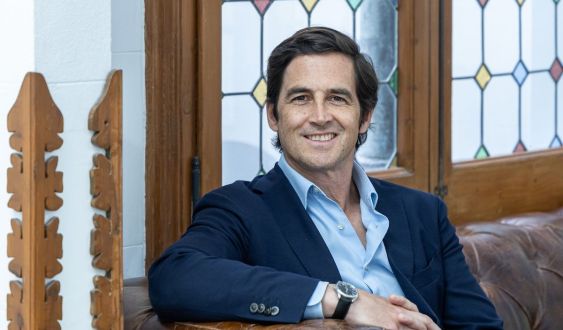
Historically in Barcelona, there always appears some character who, providentially, saves the city from its temptations of stagnation. Here, this capacity to surprise almost always corresponds to private initiative (the public can help, but it is always too subject to political dynamics). José María Trénor could limit himself to doing business, but he has also chosen to create a narrative. To change the city in what he can change it. This marquis with a hotel vocation and a passion for the city has been transforming historic buildings into unique experiences for more than two decades: from the Praktik Hotels to the dazzling Hotel Cotton (located in the old palace of the cotton merchants on Gran Via), and now to the colossal challenge of rehabilitating and bringing to life the Teatre Principal, Trénor speaks of tourism without euphemisms, of Barcelona without easy nostalgia, and of culture as the best possible use of large urban spaces.
— Let's start with the Cotton House Hotel, a luxury boutique hotel in the center of Barcelona. Would you define it that way?
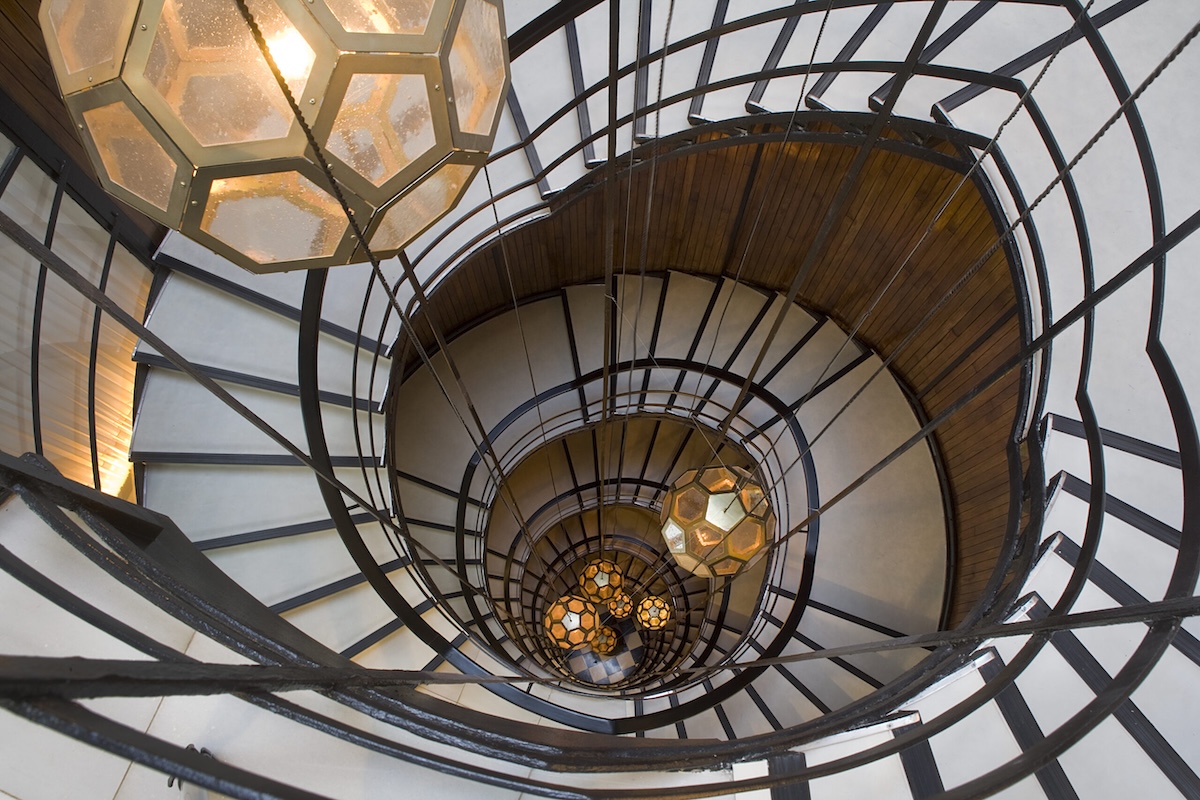
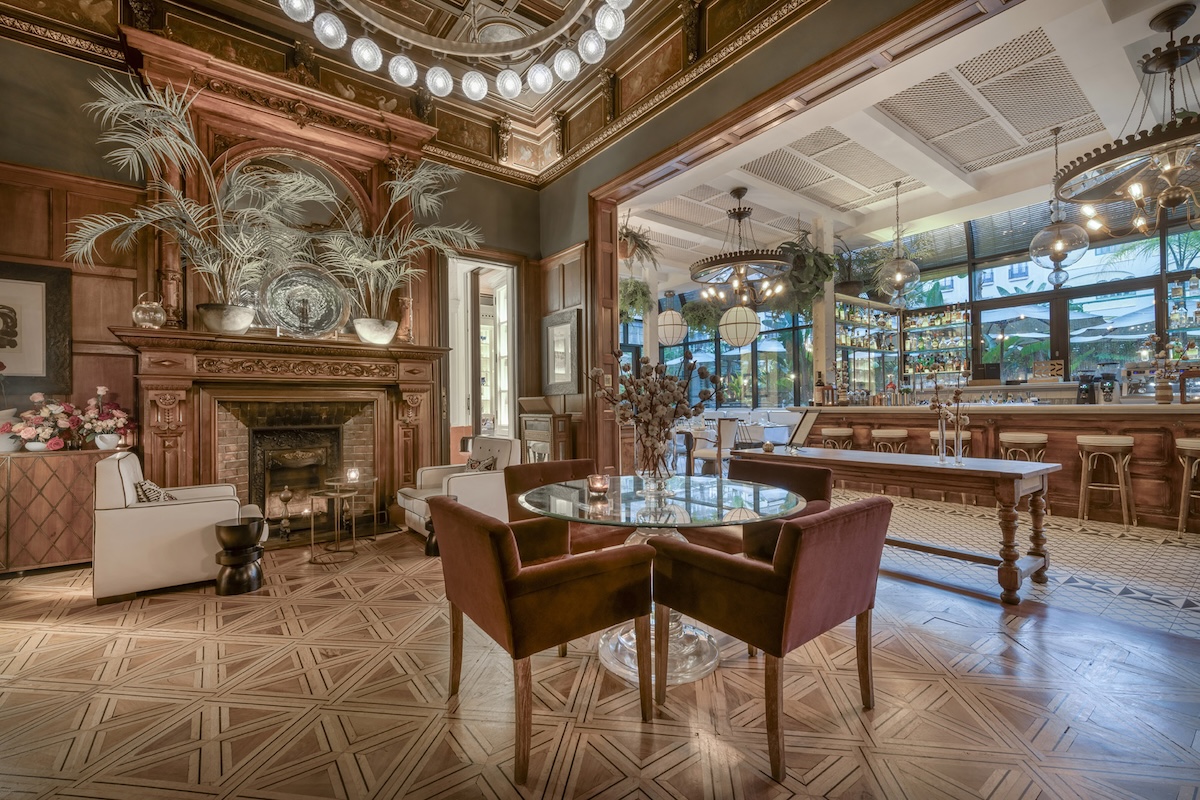
--- The Cotton House is one of the buildings that most exudes and defines the best of Barcelona, or of an era of Barcelona. That spiral staircase, the interior terrace which is a marvel, the balconies... I like to think that a building that for so long only a few could enjoy (the cotton merchants, my landlords) thanks to a hotel can now be visited by the whole city. I like hotels to manage to be a place where, in addition to accommodating people from outside, Barcelonians can enter. At least once. The Cotton has that quality: even if you don't stay overnight, it's a place to be, eat, have a drink...
— From a heritage and restoration point of view, was it difficult to honor the history of the building?
--- No, the truth is it wasn't difficult. The most valuable heritage we found in very good condition, especially on the main floor. The ceilings were well preserved, the parquet only needed sanding and restoration. And we were lucky to have the fantastic interior designer Lázaro Rosa Violán, who understood that this building didn't need much more, that it didn't need to be over-decorated. I don't remember any discussion on the subject of heritage, quite the opposite. The history of the Cotton served as a common thread to find the name of the hotel, the perfumes, the textile part...
— You also have a new corner for the Santa Eulalia tailor shop. What does it consist of?
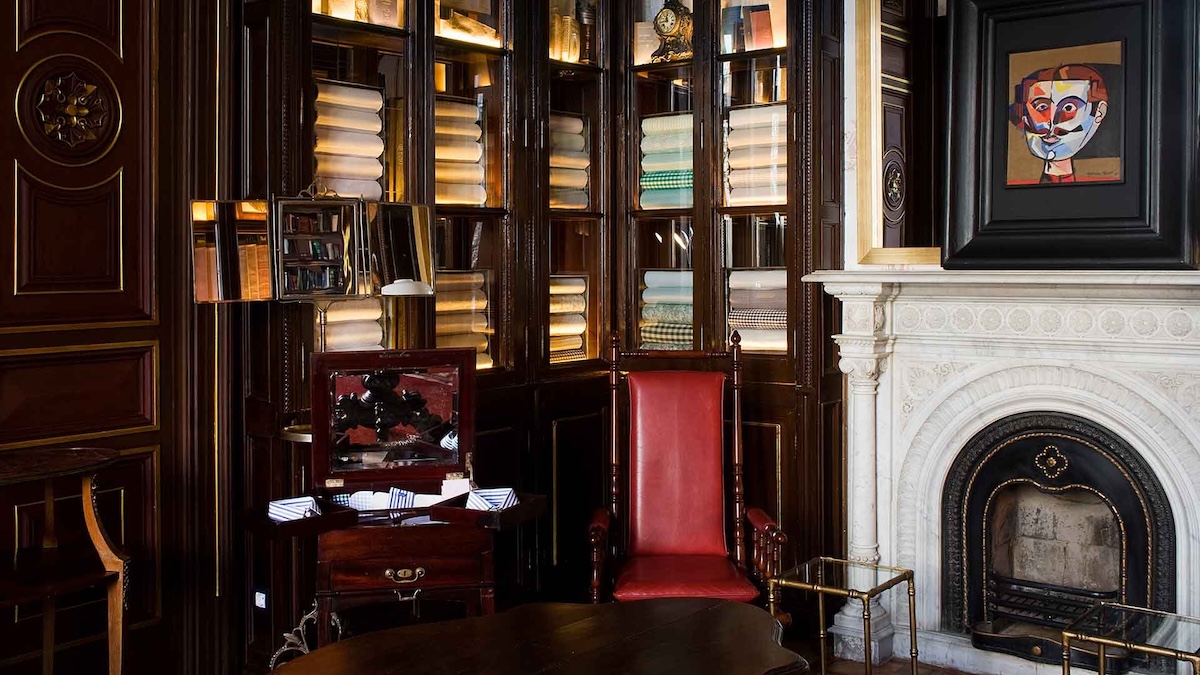
--- Yes, we have a Santa Eulalia corner where clients can, for example, order a custom-made shirt with a tailor. It's a whole story that we recreate, which explains the beautiful era of Barcelona and what it continues to be. And I insist that the interior designer achieves it: he makes the spaces friendly, where the goal is not just to show them but to make people want to go and stay.
— If this initiative hadn't existed, what do you think would have happened to the building?
--- The tenants would have remained, which included the office of the Textile Association, AITPA. Far fewer people would enjoy it than now. It was a meeting point where they met, nothing more.
— You came from a very specific tradition with Praktik Hotels. Does Cotton signify a leap in category, a paradigm shift?
--- I started with Praktik, which aims to offer affordable accommodation well located in the city center, 22 years ago when we opened the first hotel. And then it evolved: for example, with the Bakery, which perhaps best exemplifies what to do with a hotel reception, which is sometimes an underutilized space (a well-located commercial premise, but not taken advantage of). So I thought: why not complicate our lives a bit, and give it content that adds value to the building and the life of the hotel? In addition to making rooms, try to tell a story. And with that logic, I arrived at Cotton. My first plans there were to make a Praktik, I would get 135 rooms. Then I was dizzy at the thought of making a five-star hotel. But I soon realized that something didn't fit: something of higher quality had to be done.
— Do you think Barcelona lacked five-star hotels?
--- No, there were some. There's the historic Majestic, the Sofía, the Juan Carlos, the Claris, the Arts that makes the international leap... But in the case of Cotton, it was what that building deserved. I like to think that it was from the building itself that I thought about what was worth doing. And that's what I followed.
"Quality tourism is associated with economic capacity, and that's not exactly it. People who come to Barcelona do so for the culture, gastronomy, architecture, beauty... and we have to live up to that"— Speaking of complicating life, you had your well-known lawsuits —on the Drassanes plot, where Praktik planned to build a luxury hotel that the City Council ended up blocking—.
--- Enough has been said about that era. That was a hotel, and it could have been a hotel. Now it's a student residence opening in September, but I think a lot has already been written on the subject.
— Is Barcelona now less complicated for business initiatives than, say, eight years ago?
--- I think we are in a very good time. The private sector can say that it is better received and that more things can be done with the administration. It is true that hotels cannot be built, unfortunately, and in the residential sector, things are not easy either. In that sense, I think this city still has a way to go.
— Is tourism in Barcelona well managed? Is the citizen's complaint exaggerated or are there real reasons?
--- Several things are being done well. To understand it: a city like Barcelona, Amsterdam, London or Mallorca always has tourist pressure, and the coexistence between residents and visitors is difficult. If you add to that the fact that in the last fifteen years tourists have been able to stay in non-hotel buildings, it is clear that this coexistence becomes complicated. Because then you don't enter a hotel, you enter a building where people live, you don't know who is in your doorway, who is at the door opposite. And that generates tension. But it is being regulated, all cities are doing it, Barcelona too. What I hope is that the right path is found so that tourism stops being stigmatized, which is what matters most to me.
— What is the profile of the Cotton's client? Tourist, business traveler...?
--- When they talk to us about quality tourism, that expression always grates on me. Our clients, both those who pay 500 euros at the Cotton and those who pay 90 at a Praktik, are all quality tourists: they want to enjoy Barcelona for the same things that you and I want to enjoy. They want to have dinner at Cañete, explore the city... Quality tourism is associated with economic capacity, and that's not exactly it. It's true that at some times of the year, bachelor parties with some noisy group may appear, but it's not common. People who come to Barcelona do so for the culture, gastronomy, architecture, beauty... and we have to live up to it.
— Do people from Barcelona stay in your hotels out of curiosity or whim?
--- Some with young children want to escape for a weekend without leaving the city, and that's fun. I recommend it: being a tourist in your own city for a day forces you to see Barcelona from another angle, and you discover things. You let yourself go. And that way you don't have to go very far.
— Any news at the Cotton or in the rest of the projects?
--- No new hotel projects in Barcelona. We are opening something nice in Valencia, a small hotel, but not in Barcelona. There is always the challenge of new things: now there are dinners, the Santa Eulalia corner (which celebrates its hundred years this year and we want to do things together), in the library we do tastings, we bring the best of the city for those who stay. And there is also space rental for events. There are permanently small challenges.
— And the big question: it seems that the Teatre Principal is serious. Can you tell us anything?
--- On January 5, the facade works began. The works are therefore underway and the theater will be completely renovated.
—For when?
--- My goal is that by the autumn of 2028 we will already be programming and having plays and concerts.
"People go down to La Rambla to go to the Liceu, we are going to make them come back to also go to the Principal"—This will be immense.
--- Well: as you know, it's my big project and my big personal challenge.
— Will it be different from what we've seen so far?
--- Everyone has seen things around the Principal, everyone has memories. It's a building with a story, too. What I can say, and it's something that fills me with pride, is that it will be the first time in 400 years that absolutely all the spaces of the Principal (the main hall, the Panams hall, the old billiard room, the fronton, the Teatro Latino, the Cúpula Venus…) can be enjoyed at the same time through culture. Culture will occupy all spaces, and never before had the theater housed so many spaces with a cultural use.
— Recovering La Rambla, too.
--- People go down to go to the Liceu, we are going to make them return to La Rambla to also go to the Principal. It's an extraordinary challenge, and in the coming months, as we advance with the work, we will announce who is joining and how. With the utmost ambition.
Add The New Barcelona Post as your preferred Google source for free
Stay informed with the latest news.