
We begin a new local mandate for the 2023-2027 period, which will be key in many aspects, and in particular for the consolidation of the necessary transformation course in our cities to face the climate emergency.
First, it is important to remember that the deadline established for the completion of the extraordinary funds of the post-coronavirus recovery plan for Europe, in which the acceleration of the green transition plays a central role, is June 30, 2026. Within this mandate, therefore, is when the investments associated with the NextGenerationEU funds must be made possible. Any disorientation in direction or any hesitation in the ambition of the policies and projects to be deployed can be severely penalized with the loss of access to these extraordinary resources (in the full magnitude of the adjective) and the worsening of the delay we suffer compared to other countries and cities in our environment.
Likewise, the end of the mandate will coincide with the end of the programming period for the funds that are usually distributed among the states of the Union, formerly known as structural funds. Taking into account the evolution that the European project is experiencing and the uncertainties in which the global economy finds itself, it cannot be assured that, in the subsequent period, from 2027, the financing opportunities for large-scale investments or policies will be the same. Another fundamental challenge for our administrations, and local ones in particular, given that in this period we have as our main reference the green transition covered by the European Green Deal and the multiple commitments we have acquired internationally, so there are quite clear objectives to achieve and it is necessary to strive to meet them by taking advantage of the available resources.
We can also consider that this mandate is crucial to advance in everything represented by the United Nations 2030 Agenda and the 17 Sustainable Development Goals (SDGs) in which it unfolds. Whoever does not arrive with their homework done three years before the established deadline will hardly be able to get them on track in the remaining time. And, if as it seems, it will be difficult for the widespread achievement of the goals to be a reality within the agreed timeframe, it will likewise be the time to get to work to define the new agenda that must update and replace the previous one. On this occasion, we hope, with a protagonism of the cities commensurate with what their role has been and still is when it comes to acting to land the 2030 Agenda in policies, services, and projects that shape the changes demanded by its goals.
Following this claim of the role of the urban world when facing global challenges, and as we have already stated on multiple occasions from the Barcelona Metropolitan Strategic Plan in the case of our city, the green transition must indisputably be addressed at the metropolitan scale and must be a just transition, that leaves no one and no territory behind.
In our case, as is also known, we start from a duality such as having an institutionalized metropolitan area for 36 municipalities and 3.3 million inhabitants, while the "real" metropolis would extend over more than 150 municipalities and reach 5 million inhabitants, but without institutionalized governance.
In this sense, making a brief parenthesis, it is necessary to remember that the 2023-2027 mandate will also mark at its core the fifteen years since the creation of the Barcelona Metropolitan Area (AMB) and it seems a propitious moment to make an in-depth evaluation and to outline its future trajectory, in which inevitably it will be necessary to put on the table, with the urgent involvement of the Generalitat, mechanisms of coordination and greater balance with the rest of the metropolis and with the whole country. The government agreement for the AMB that incorporates all the major parties represented in the Metropolitan Council in the drafting of the Action Plan for this period should be an opportunity to address this debate with the serenity, but also with the firmness it deserves.
The 2023-2027 mandate will also mark at its core the fifteen years since the creation of the AMBReturning, however, to the green transition, it is necessary that all the municipalities that make up this metropolitan area move forward together and, at the same time, an integrated vision is adopted together of what this green transition represents. Currently, of the 199 municipalities that we have taken into consideration in the preparation of the Metropolitan Commitment 2030, which includes what can currently be considered the metropolitan region of Barcelona plus those of the comarca of Penedès, only about thirty have declared the climate emergency with an associated package of measures, about twenty more have only made the declaration (without an action plan) and a few more have defined some specific measures without going through the declaration phase that would provide a strategic framework.
How to face, then, issues that clearly do not know administrative borders like pollution linked to mobility? There is no doubt that this is a challenge of metropolitan scope, and with effects even beyond. For example, the plain of Vic is one of the areas in Europe with highest levels of tropospheric ozone concentration, coming from metropolitan traffic, which affects the respiratory tracts and dries out crops. In 2019, for example, in the summer months the alert level was exceeded 6 times in Vic, as well as in the Montseny area.

Among the main measures to face this situation we have the Low Emission Zone (ZBE) largest in Spain, with 102 km2, and the only one of metropolitan character, since it covers the municipalities that surround the city of Barcelona touching the ring roads; but it does not cover the whole AMB, far from it, as the main municipalities of the region (Mataró, Granollers, Sabadell, Terrassa...) have repeatedly demanded. State regulations have made the ZBE mandatory for municipalities with more than 50,000 inhabitants, a category in which the mentioned cities would enter, but without a joint vision and coordination and, above all, without applying similar solutions to the rest of the municipalities that are part of the metropolitan conglomerate, the effectiveness of these measures is questionable.
34% of displacements in the metropolitan region are made by private vehicle, of which 450,000 people enter the city of Barcelona by private vehicle every day. There is, therefore, a fundamental relationship between pollution and mobility to and from Barcelona: displacements between Vallès Occidental and Barcelonès alone already exceed by 20% all displacements between metropolitan counties. Displacements with Baix Llobregat almost double them. It is evident, therefore, that apart from restrictions (and here it will be necessary to see how the debate on the establishment of an urban toll is addressed in this mandate) public transport alternatives and more and better transversal connections are needed, which directly and comfortably link the municipalities of the so-called Metropolitan Arc and its surroundings. The Generalitat and the Metropolitan Transport Authority, therefore, have many tasks in this period beyond the definitive implementation of T-Mobilitat, and the understanding and cooperation of the metropolitan municipalities (inside and outside the AMB) will be necessary to commonly face the claim for the investments stipulated in the Infrastructure Master Plan or the Rodalies Plan.
34% of displacements in the metropolitan region are made by private vehicle, of which 450,000 people enter the city of Barcelona by private vehicle every dayIt is also increasingly important to have shared criteria and harmonization of regulations on issues such as urban freight distribution, which represents 20% of traffic and 40% of emissions in the city of Barcelona, a situation that will very likely be reproduced in the rest of the major metropolitan urban centers.
Leaving aside the always controversial chapter of mobility, the other major area in which it is necessary to deepen in terms of green transition is energy. As we already explained in a previous article, studies carried out by the AMB indicate that its level of electrical self-sufficiency would remain below 15%, while the Generalitat estimates that it is necessary to multiply by 18 the installed renewable power in the country to achieve climate neutrality.
Studies carried out by the AMB indicate that its level of electrical self-sufficiency would remain below 15%In this way, with a Catalunya inexplicably located in the last car of the communities of the State in terms of renewables, the metropolitan common front is essential for the leap forward in the required investments to take place. Watching at the same time, of course, that the rest of the Catalan territory receives the corresponding compensations.
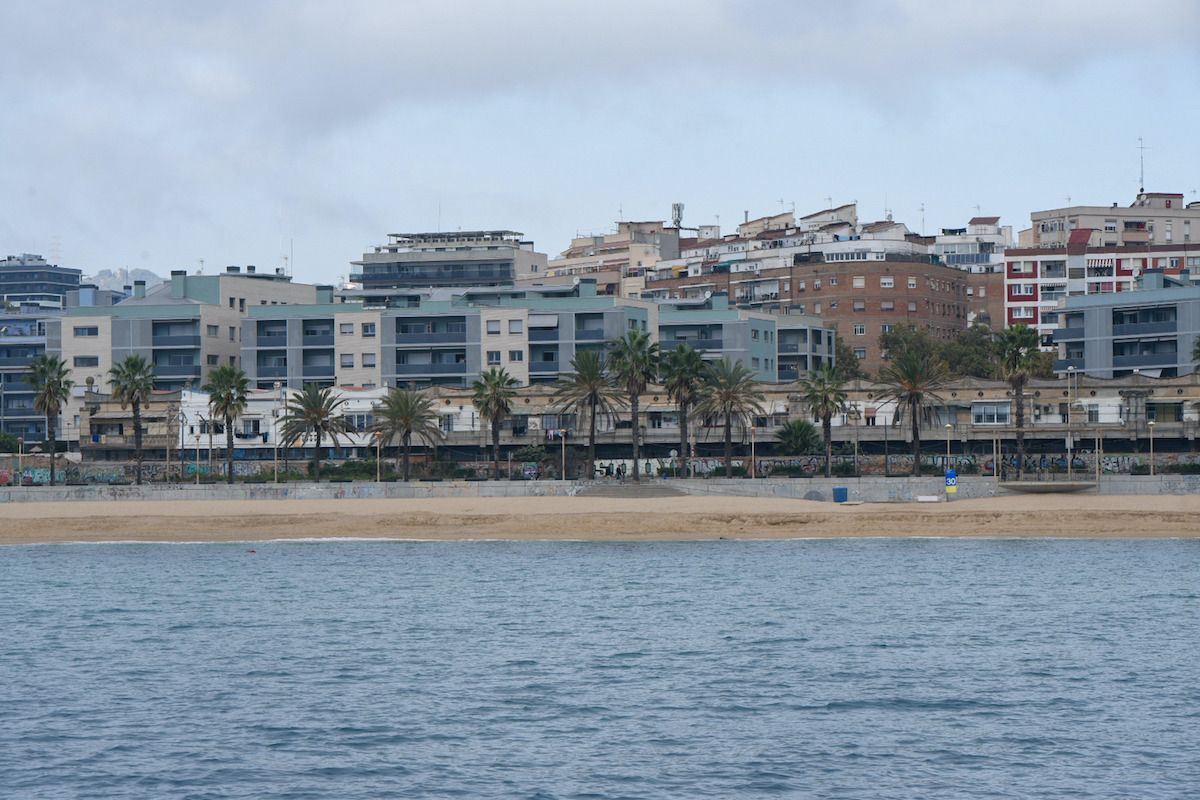
Other aspects of the green transition that demand greater metropolitan coordination have to do with coastal protection (for which the strategic plan developed a few years ago could be recovered and adapted) and even more so in these years when it will be a global center of attention due to the celebration of the Copa América. The future of metropolitan beaches has been a cause for concern for some time and goes even beyond the loss of their recreational function. As is also, on another front, the conservation, and as far as possible, the improvement of biodiversity throughout the metropolitan territory, which also requires attention from this scale.
These are just some of the challenges that must be decisively faced in this mandate. It must also be taken into account that during the same, another significant event must occur, such as the definitive approval of the Metropolitan Urbanistic Master Plan and its derivation into a Metropolitan General Urban Planning Plan that will be the true substitute for the 1976 Metropolitan General Plan. The urbanistic treatment of the metropolitan area with 21st-century criteria instead of those established 50 years ago will surely help in the green transition. But its main criteria, mainly in terms of green infrastructures and naturalization, should also be part of the tools available to the rest of the metropolitan territory.
In short, as we already anticipated, the metropolitan dimension, despite not having had a space equivalent to its importance during the election campaigns, will be decisive in articulating action against the climate emergency. We hope that the new administrations, with the complicity and participation of society as a whole, will rise to the challenge in these next four years.
Add The New Barcelona Post as your preferred Google source for free
Stay informed with the latest news.