The cranes of the Sagrada Família have been part of Barcelona's skyline for so many years that they have almost become another element of the city's daily landscape. For decades they have accompanied the evolution of the temple and have provided the backdrop to a Barcelona that was also changing around them. But this image is no longer linked to a single project: while the works of the Sagrada Família continue to advance to culminate the building conceived by Gaudí, the cranes have multiplied and appeared in various parts of a city immersed in a new stage of transformations.
From La Sagrera, where Barcelona is developing a new hub around the future station, to Vall d'Hebron, where one of the city's largest healthcare campuses is being transformed, or the Ciutadella del Coneixement, where the old Mercat del Peix gives way to a new space for research and innovation, cranes have become part of the landscape of this new Barcelona under construction. This week, Montjuïc has joined this new map of works, with the arrival of a 200-ton crane at the Fira Barcelona venue to begin the redevelopment of the exhibition grounds.
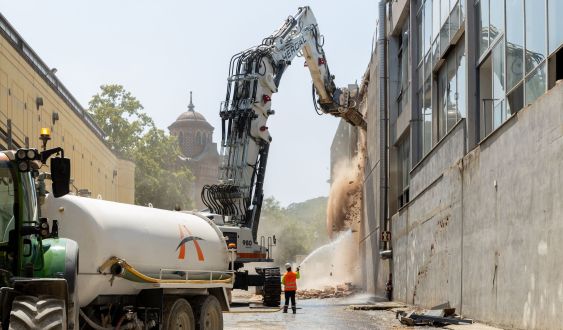
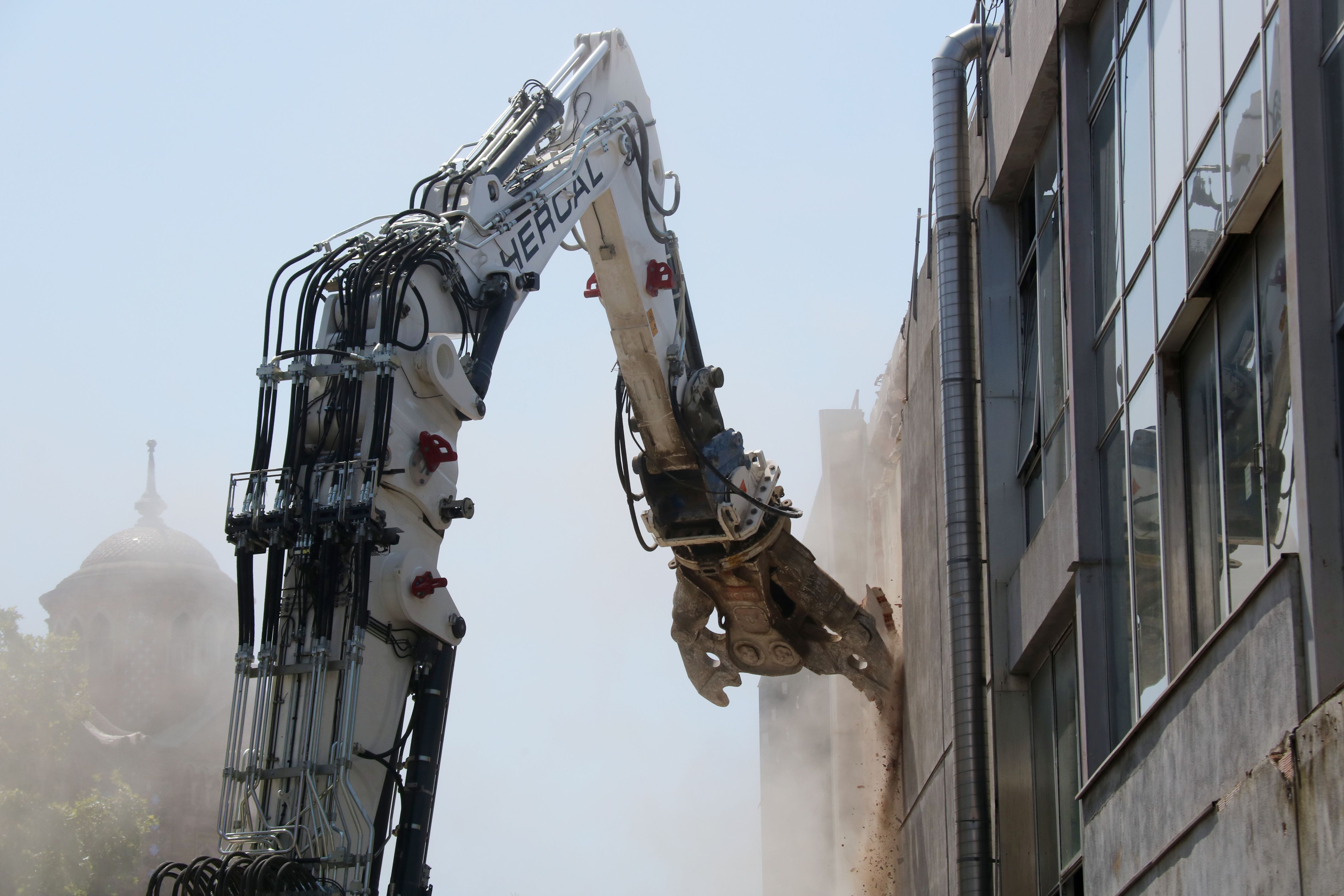
The installation of this large structure, with a 60-meter arm, and the start of the demolition of the old pavilions mark the moment when the remodeling of Fira Montjuïc leaves behind the plans and becomes tangible. After months of announcements, proposals and architectural renderings, the project is already beginning to take shape on the ground. However, this is only the first step of a very tight schedule. The demolition work on Palaces 4 and the current Congress Palace must be completed before the end of the year so that the construction of the new buildings can begin afterwards.
Thus, in just four years, the works will have to complete three major actions: the construction of the new multifunctional palace in these old pavilions that will now be demolished, the transformation of the current Palau Alfons XIII into the future Congress Palace and the reconversion of the old Palau del Vestit into the Fira Innovation Hub. All of this, with an eye on 2029, when Barcelona will commemorate the centenary of the International Exhibition. A large-scale operation that has a overall planned investment of 290 million euros in this first stage of the reform alone.
The mayor of Barcelona, Jaume Collboni, has recalled that the transformation of Fira Montjuïc is part of a new stage for the mountain, which he has defined as the "third great transformation" of Montjuïc, after the impetus of the 1929 International Exposition and the 1992 Olympic remodeling. During a visit to the works, accompanied by the Minister of Economy and Finance of the Generalitat, Alícia Romero, Collboni assured that the objective of this remodeling is to convert Fira Barcelona into a facility "more urban and more human-scaled, that stitches together the neighbourhoods of Poble-sec and Font de la Guatlla."
Three pieces to reinvent the Fira de Montjuïc
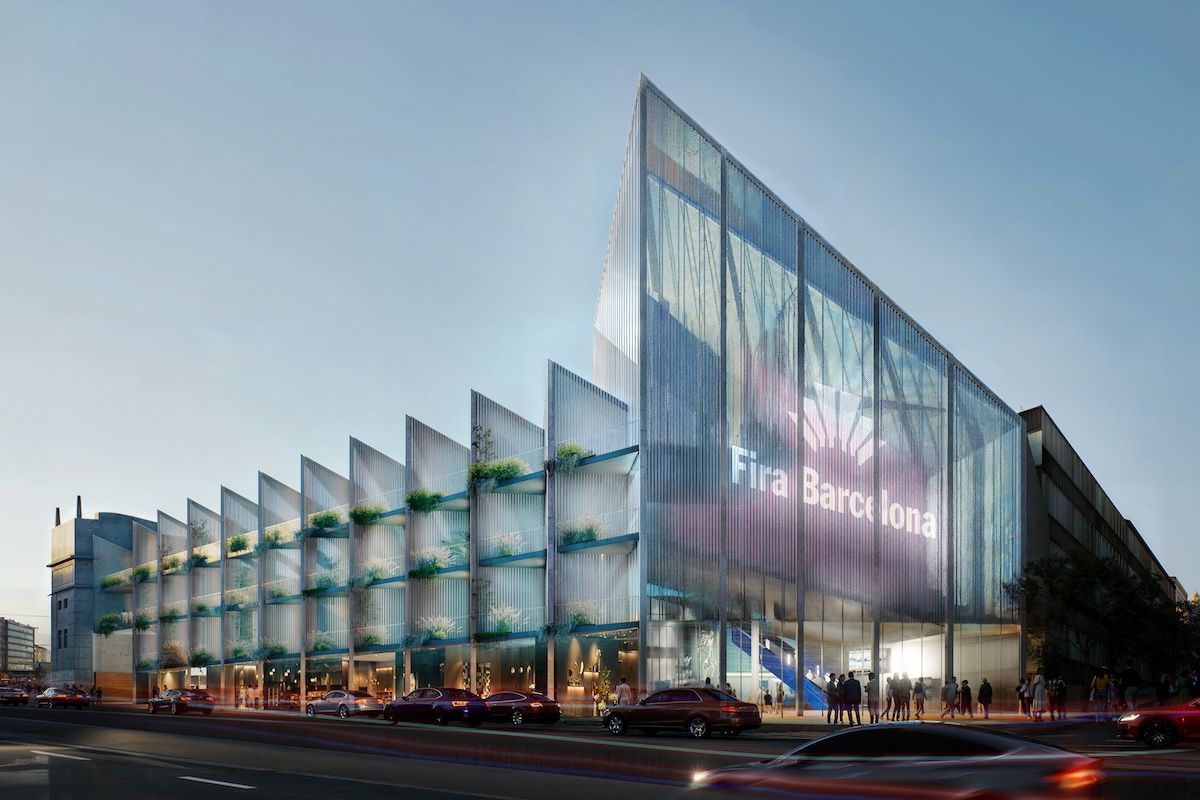
The first of the transformations is already visible. Where today machines are demolishing Palaces 4 and the Congress Palace, in four years the new multifunctional palace will be erected, conceived as the main entrance to the new Fira de Montjuïc. In this space, a 20,500 square meter building distributed over two floors will be erected, designed by architects Smiljan Radić, Miquel Mariné Núñez, Beatriz Borque, and César Rueda Bonet.
The new facility aims to move away from the image of a closed and monumental enclosure. To achieve this objective, the project opts for a more transparent and permeable building, with large glass surfaces that will allow a more direct relationship with the exterior. In addition, the incorporation of green spaces and a new landscaped walkway over Maria Cristina avenue will reinforce this openness and make the venue better integrated into the Montjuïc landscape.
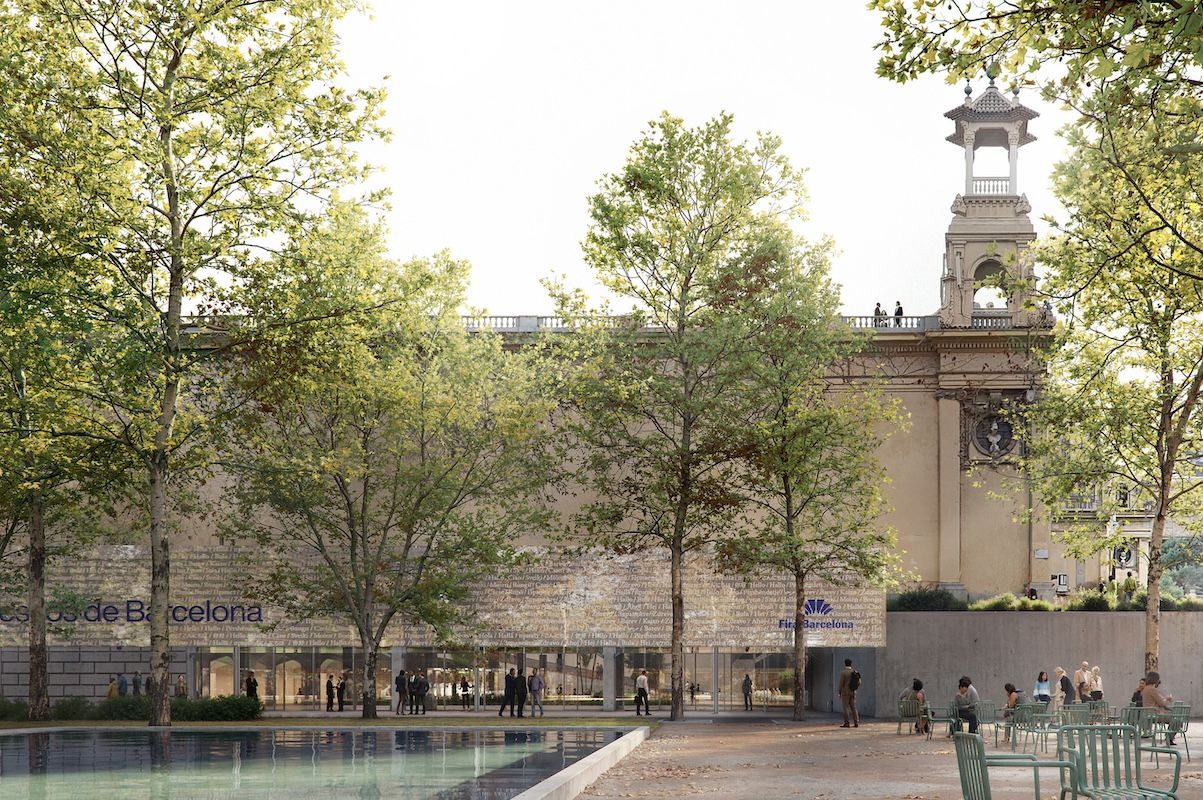
A few meters away, the old Alfons XIII Palace is also facing a new stage. After years of being largely unused, the building designed by Josep Puig i Cadafalch will become the future Congress Palace of Barcelona, in an intervention signed by Forgas Arquitectes, Archambac, and Álvaro Alejandro Fernández that will maintain its exterior architecture but completely transform the interior to adapt it to contemporary needs. Behind the historic facade, a new congress space will be created with meeting rooms and a large auditorium with capacity for more than 2,000 people, while a 6,670 square meter garden-patio will open the building to the exterior.
The third reform will affect the old Palau del Vestit (Garment Palace), which will be transformed into the Fira Innovation Hub, a new space linked to innovation and the economic activity of the fair institution. The project, designed by Bjarke Ingels Group and MIAS Arquitectura, is built around preserving the memory of the building: the colonnade and the front facade, a work by Josep Maria Jujol, will remain as the entrance gate to a new construction that will be built behind it. The new building will be "Z"-shaped and will be surrounded by green spaces open to the public, with the aim of becoming a new meeting point between Fira and the surrounding neighborhoods.
These three buildings, however, represent only the first phase of a broader transformation of the fairgrounds, which will extend until 2035, and will address the reform of the remaining buildings of the complex: the Palau de les Comunicacions (Palace 1) and the Palau de la Metal·lúrgia (Palace 8).
A new stage for the entire mountain
But as the mayor of Barcelona reminds us, the remodeling of Fira Montjuïc is only one piece of a broader transformation that aims to redefine Montjuïc's role within the city within the city. An operation that includes the expansion of the National Art Museum of Catalonia, the modernization of the Olympic Ring, and the recovery of the Municipal Sports Palace.
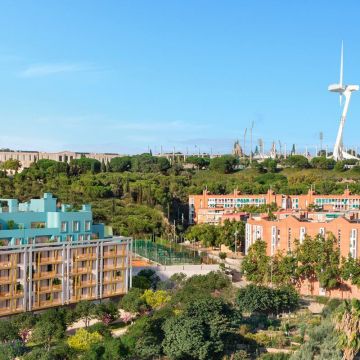
But this new stage for Montjuïc has a difference compared to previous transformations: for the first time, the focus is not only on large facilities, but also on the neighborhoods surrounding the mountain. At the foot of the fairgrounds, the old area occupied by the Fira will give way to a new urban space with 548 affordable housing, a new primary care center (CAP), a sports center, and new public spaces.
Add The New Barcelona Post as your preferred Google source for free
Stay informed with the latest news.