
The expansion of Fira de Barcelona's Gran Via venue continues to advance with an eye on the third quarter of 2026 as the completion date. The project's promoting company, Fira 2000, has awarded a temporary joint venture formed by FCC and Comsa the main works for the expansion. This involves the construction of the structure and roof of the future pavilion, with an award amount of 74.5 million —90.1 million if VAT is added— for the UTE formed between both companies under the name Fira P. Zero.
The tender, which was launched with an estimated contract value of 83.5 million —101.1 million with VAT—, received five proposals, corresponding to the UTEs formed by Acciona and Copisa; OHLA, Acsa and Construccions Rubau; Sacyr and Copcisa, and Dragados, Ferrovial and Vopi 4, in addition to that of FCC and Comsa. The UTE that has been awarded the tender has done so for an execution period of two years, by reducing the initial period of 28 months by 16 weeks with its proposal.
Named Hall Zero, the new Fira de Barcelona pavilion will be the size of an Eixample block and will allow the exhibition area to be increased by 25%, in an expansion that has a budget of more than 320 million euros. FCC and Comsa have been awarded the works to build the pavilion after also securing the contract for the underground works, so the new award gives continuity to the work carried out, according to sources from Fira 2000 consulted by The New Barcelona Post. Awarded about a year ago, the contract for the underground works that already went to FCC and Comsa had a budget of 45 million and an execution period of 17 months.
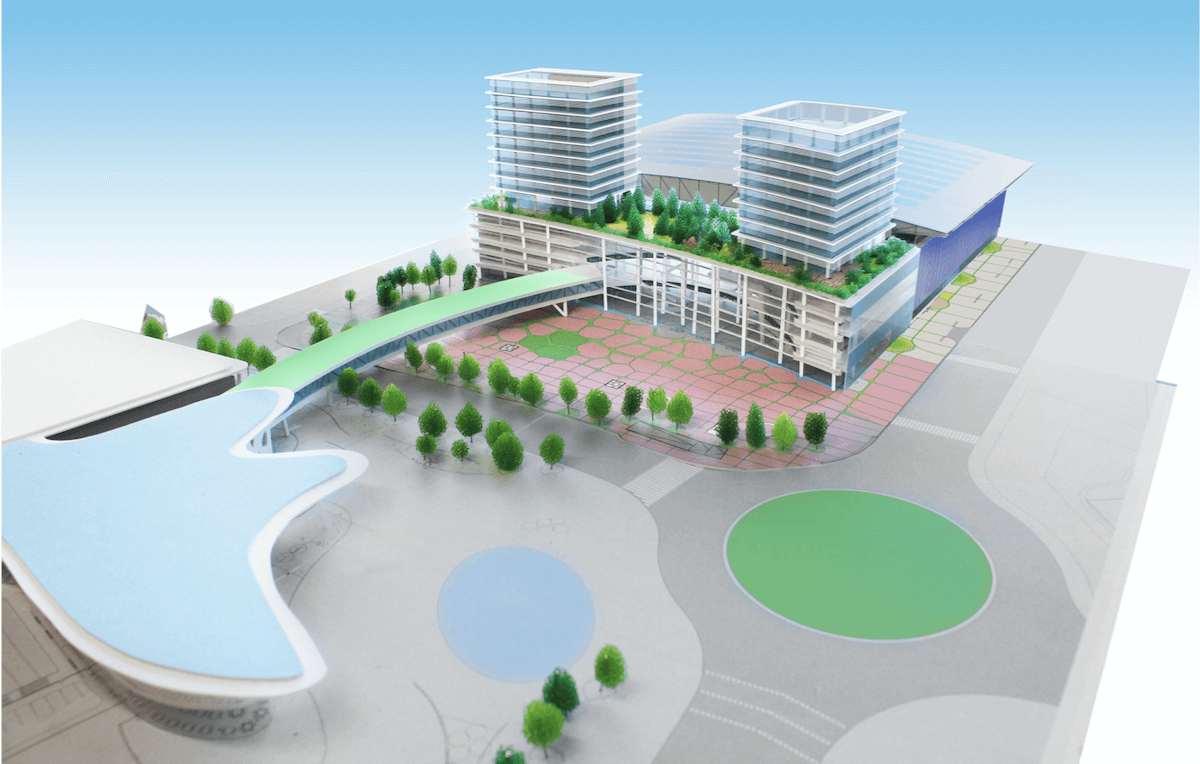
The works by Comsa and FCC are being carried out on the plot that until a few months ago housed the Porcelanosa store in L'Hospitalet, which has moved a few meters to make way for the large pavilion destined to be a new symbol of Fira and a strategic project for Barcelona and its surroundings. Designed by Japanese architect Toyo Ito and the Barcelona studio B720 Fermín Vázquez Arquitectos, the new pavilion will have more than 60,000 square meters for exhibition spaces and a total built area of 135,400 square meters.
Thus, with the incorporation of Hall Zero, the Gran Via venue will go from having 240,000 square meters to exceeding 300,000, placing it among the world elite of facilities for fairs and congresses. In addition, the new pavilion, which will have two floors, will be connected to the current venue from above, by means of a unique elevated walkway.
The project is executed through the Fira 2000 company, controlled 52% by the Generalitat. The Barcelona City Council owns 24%, and the L'Hospitalet City Council, the Barcelona Provincial Council and the Metropolitan Area also participate with 7.4% each, while the Cambra de Comerç has 1.21%. The company is responsible for both the expansion of Gran Via and the remodeling of the historic Montjuïc venue, budgeted at 175 million.
Thus, the cost of both projects amounts to 498 million —well above the 333 million estimated in 2019. In addition to resorting to bank loans and the European Investment Bank (EIB), which agreed on a first loan of 110 million, the financial project of the initiative established that the six shareholder institutions of Fira 2000 had to make capital contributions of 157.91 million euros during the period 2022-2026 in the same proportion as their shareholding. In addition, the annual fee that Fira de Barcelona pays to the company annually to use the pavilions, which are owned by Fira 2000, was increased from eight to twelve million. All this to expand and set up facilities and a venue that no longer only aspires to play in the first division of fairs and congresses, but to position itself as one of the undisputed favorites worldwide.
Add The New Barcelona Post as your preferred Google source for free
Stay informed with the latest news.
