
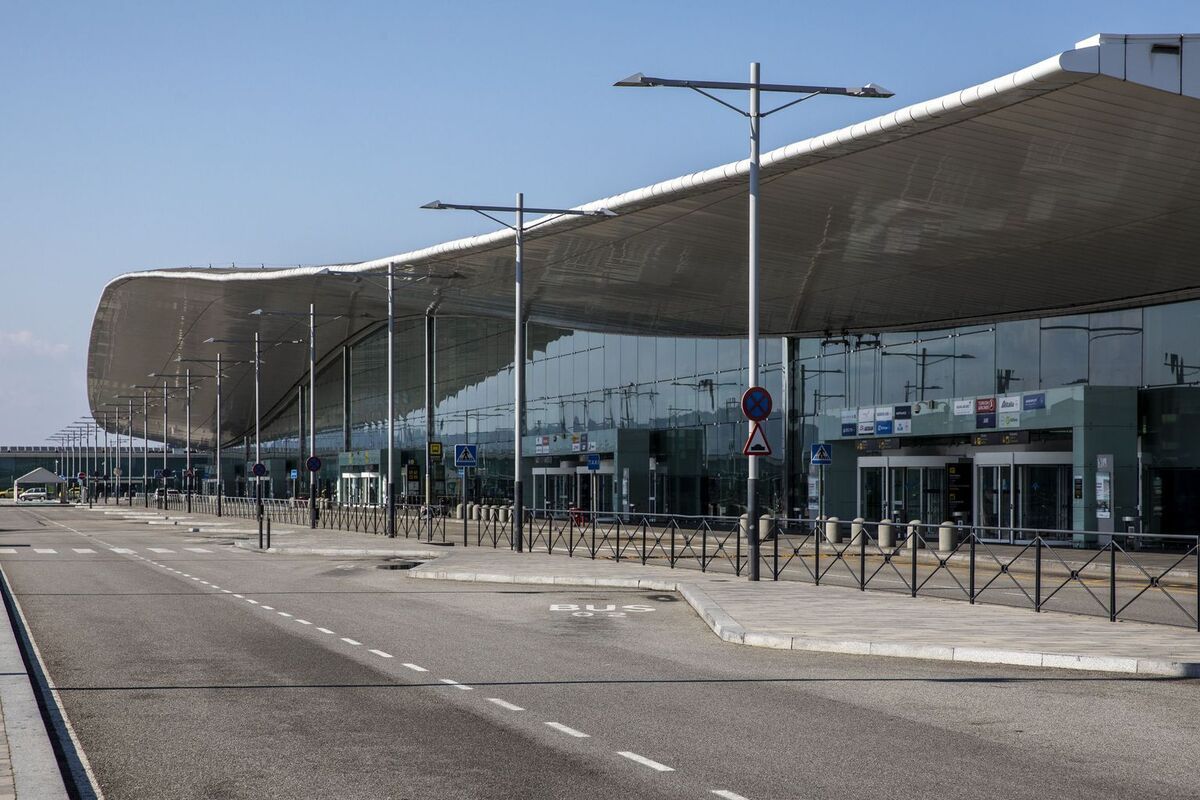
To verify that El Prat Airport is an infrastructure close to collapse, it is not necessary to indulge in a feast of comparative statistics, but simply to have walked a bit through similar infrastructures in the world. Ours, as you know, is a tribe specialized in muscling up controversy about anything, and every time the expansion of El Prat's third runway is proposed, a real revolt occurs in the opinionated stress of businessmen, administrations, part-time environmentalists, and hacks. All of them share a common denominator: the catastrophism of those who think that without a much more optimized airport, Barcelona will end up as a mere minor beach bar in the context of the intense international competition of hubs and, on the other hand, those who hear the words "third runway" and already imagine flocks of tourists happily defecating at their doorstep.
As always happens, life is a little less extreme and the truth usually hides in something as unglamorous as the color gray. Firstly, and this is something rarely commented on, those of us who urgently need an expansion of El Prat are the people of Barcelona, as this is (and must be!) an infrastructure that we must claim as our own and that must allow us to travel comfortably around the world without so much passenger density and with better offers of direct international flights.
The expansion is, therefore and above all, a gain for the city's natives; this happened with the reforms of 1992 and 2009 (there is no need to stuff oneself with mobility statistics, I insist: it is enough to remember how uncomfortable it was decades ago to park a car in front of the Miró and Artigas ceramist's Mural), and so it will be with the addition of a satellite terminal that we need as much as throwing the mask in the trash.
As happened with the Hermitage controversy that we commented on last week in this Punyalada, the mere intention of improving the airport has already provoked a typically Barcelona reaction, more classic than strolls along La Rambla: tourism-phobia. If a week ago we heard fellow citizens uphold the curious thesis according to which a visitor to the MNAC is a first-class, clean, and civil culture-vulture tourist, while a biped who approaches the Hermitage is, by nature, a dangerous corner-peeing drunk, the expansion of the third runway has once again aroused a criminalization of the "guiri" typical of conservative and almost totalitarian societies, as if the curious people who arrive in Barcelona were authentic predators who scare away citizens and, an objectively false thing, the main causes of the general increase in the cost of city life.
The expansion of the third runway has once again aroused a criminalization of the "guiri" typical of conservative and almost totalitarian societiesLet's remember again: Barcelona is a very visited city (according to the Top 100 City Destinations 2019from Euromonitor International, the eighth in Europe and thirty-third globally), but at a percentage four times lower than the world's first, Hong Kong, and tripled by the tourist crowd that visits London.Even though the number of visitors has quadrupled in ten years, the problem our capital is experiencing is not one of visitor volume, but of tourism density per inhabitant and, above all, of over-localization of tourists to the same areas(especially the Gothic Quarter and the Quadrat d'Or). We are far from examples of overcrowding like Phuket and Pattaya (Thailand), Palma de Mallorca or Paris, which almost double our density per square kilometer. Therefore, if we want to seriously debate the effects of tourism, the first thing we should do is not get hysterical.
Yours truly lives a hundred meters from Casa Milà and leads a bad life in the heart of the Gothic Quarter. It would be very easy for me to buy into the demagogic discourse of "tourists: your luxury trip, my daily misery", and it must be said that a few weeks after the curfew I already miss the nights when I could go out to smoke in the doorway of my house and listen to my own footsteps. But I am aware that I live in the city center and walk through its historic quarter, and there is no European capital where this can be done in sepulchral silence.
Although the tourist season has already left artistic samples on my doorstep in the form of turds and some distinctly European pee, the general behavior of guiris in Barcelona is more than correct in most cases. In fact, I lived five years in my beloved neighborhood of Harlem, where many times I saw some illustrious neighbor from the Eixample, one of those anti-tourism puretas, happily peeing on my corner.
Whether the third runway is expanded or not, tourism will continue to visit Barcelona and, far from being indignant, the City Council would do well to exercise its neurons and promote a tourism plan that decentralizes density and introduces visitors to new areas of the city, such as the center of Horta, the wonderful Rambla del Poblenou or the new restaurants surrounding the Sant Antoni market. If Barcelonans want to preserve a historic center where local commerce survives and the atmosphere is "more citizen-friendly" they should protest less and have the kindness to move their ass more to go down and guzzle a gin tonic at Bar Ascensor, make a life in the Santa Caterina market or buy centuries-old recipe candies at La Colmena. What is impracticable, and of a cathedral-like cynicism, is to long for a city where the center is preserved as pristine as the Mona Lisa, without going to it or spending money in its shops.
The City Council would do well to exercise its neurons and promote a tourism plan that decentralizes density and introduces visitors to new areas of the cityAs Professor Francesc Robusté has well written, it is imperative that El Prat airport establishes a better coexistence with Reus and Girona to delocalize flights therelow costand thatBarcelona could have the first multi-airport system in the State. Unfortunately, the connection with these two localities still does not guarantee that passengers will arrive in Barcelona by transfer on trains or aerobuses within an hour. While this assisted breathing for the overcrowding of El Prat cannot be a reality, and given the usual parsimony of the State in infrastructure for Catalonia, expanding the airport can give the facility some breathing room without causing the flood of visitors that the apocalyptic prelude and, I insist again, lead to a structure that is of interest above all to Barcelonans. For now, it is also a classic,Catalan administrations have only excelled in deferring and fighting.
Due to life's circumstances, when our government officials agree, with the consequent delay in the planning of the works, Aena may no longer have (mysteriously) the 1,700 million necessary for the infrastructure. This would also be a classic of the tribe. Think badly, and you will surely be right. But let the motivated and the apocalyptic not suffer, for Barcelona always survives its deluded gravediggers.
Add The New Barcelona Post as your preferred Google source for free
Stay informed with the latest news.