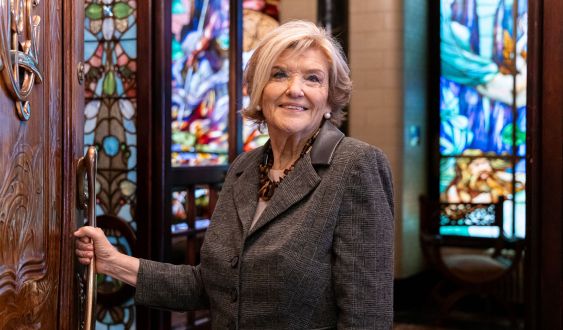
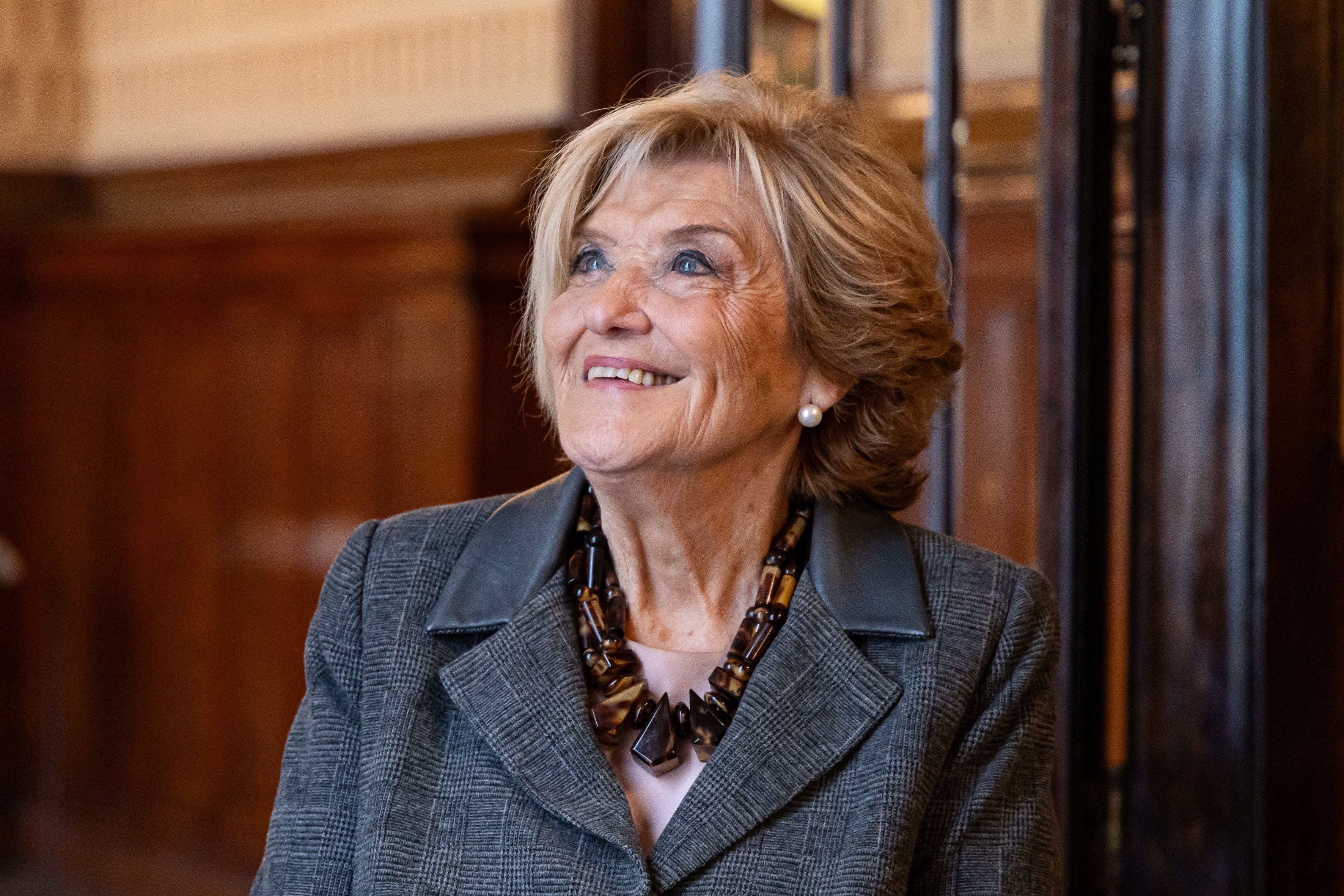
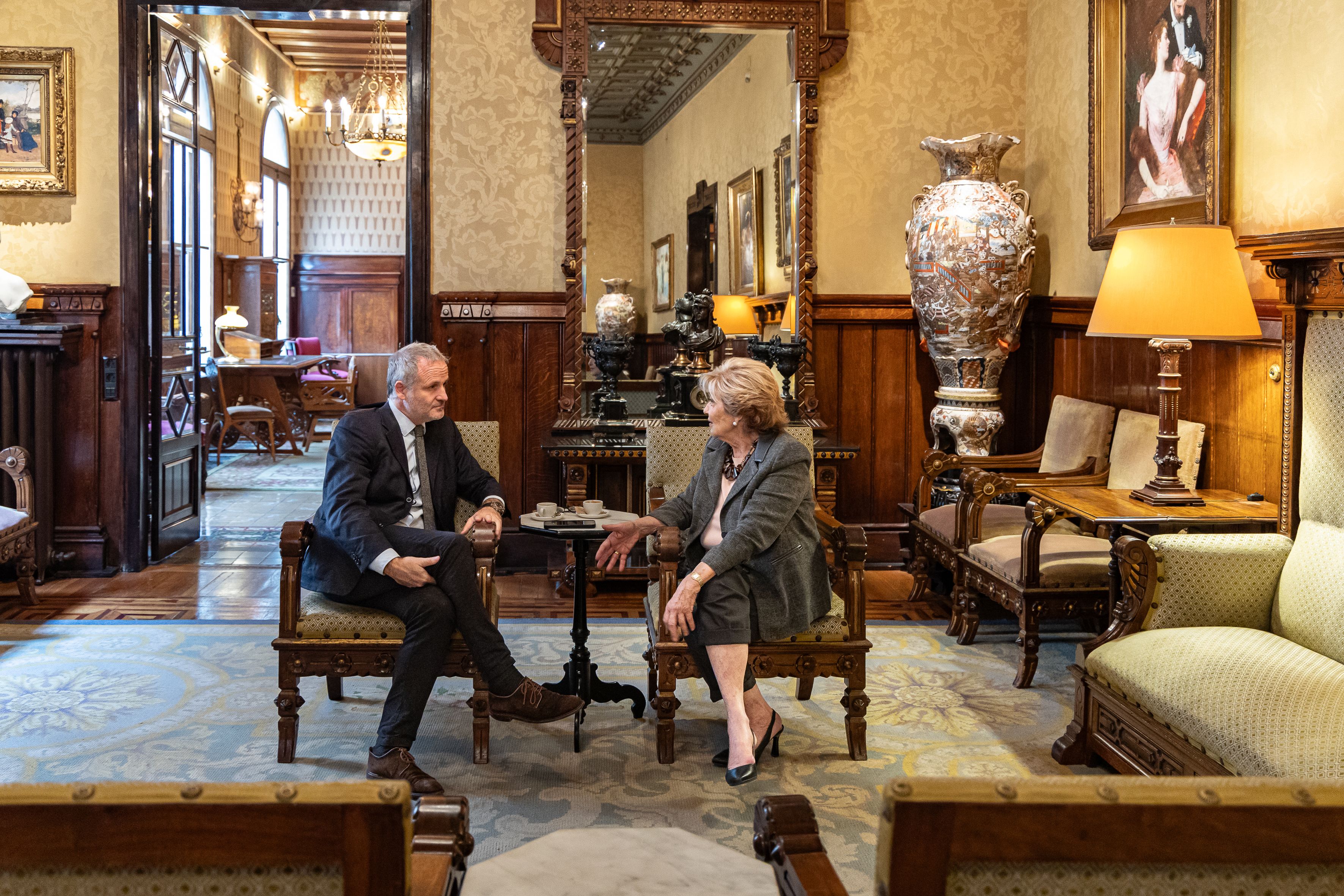
Ernestina Torelló is, since a few months ago, the first woman to preside over the Cercle del Liceu, the private club that since 1847 has lived wall to wall with the Gran Teatre (and which for almost two centuries was designed for men). Co-owner of a family winery of cavas and proud to define herself as a farmer (the oldest purchase document of her house is from 1395), Torelló was a board member for four years and first vice-president for four years before succeeding Francisco Gaudier at the head of a house with about 1,050 members, 30% of whom are women. Elected in June without any opposition to the Board, she describes herself as a president who delegates, defends maintaining the strict tie rule and wants to open the Cercle to conferences and lunches with diverse voices without disturbing the tranquility of the members. She talks about opera and music that comes from her family, about the generational leap of young members and the masquerade ball they maintain, about the possibility of stopping when they reach 1,100 members, about relations with the Liceu and with international clubs and, as it could not be otherwise, about how the harvest went.
– Congratulations on your position and appointment. But you were already part of the Board, weren't you?
– Yes. I was a board member for four years and first vice-president for four years.
– The last time I came here for an interview was with Mr. Gaudier, and the first thing he told me, informally and amusingly, was: "Jordi, I'm going to be very strict with the tie". He said there had to be some place in Barcelona where this rule was enforced. Will you be just as strict?
– In principle, yes. Because if you open your hand a little, then you have to open it completely. And, really, the members here, who in the end are the owners of this house, all want it. Even the young people like to come here like this.
– As vice-president, you have already seen how the house works. From the last mandate, what would you highlight?
– Paco Gaudier's mandate has brought the Cercle up to date. He has made it internationally recognized and made people want to come. You just have to see how he has left this house. He is an extraordinary public relations person. And he has had the time, the taste and the desire to dedicate himself fully for eight years, and that, of course, shows.
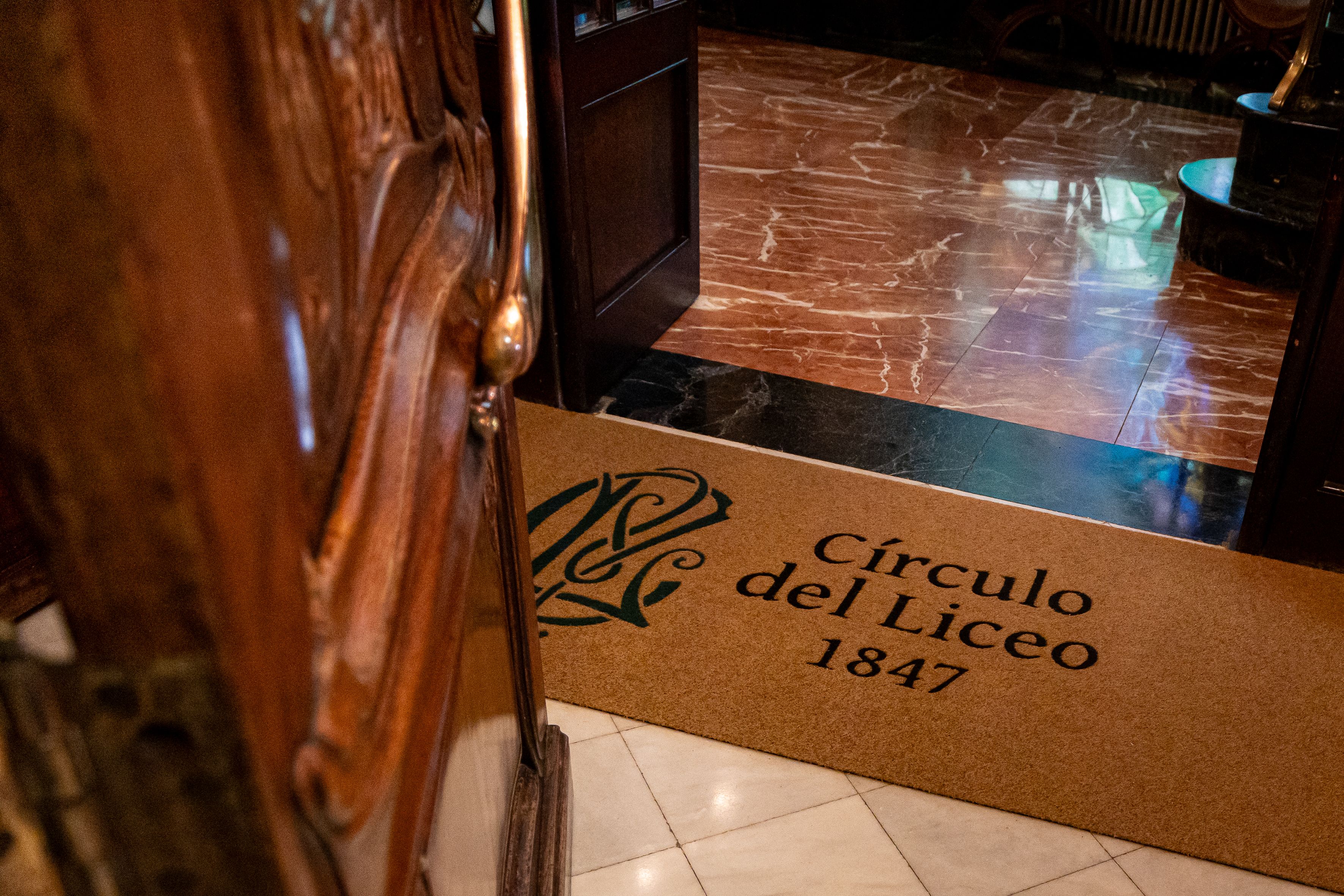
– You are a co-participant and co-responsible for what has been done in recent years. But, from now on, what will be your personal touch? Do you have any ideas, any obsessions?
– My touch, and also sometimes the feminine touch. First of all, I must say that all the Board members who had to leave due to the Statutes will be kept in commissions and other functions, because they all know the house very well and have things to contribute. They cannot be on the Board because the Statutes prohibit it, but, starting with Mr. Gaudier, who will be a commissioner of the president for international issues, for the house and for many things, and ending with all the others, we are keeping them.
Regarding my touch (and the feminine one), I would like to open the Circle a bit, to have very interesting people come to give lectures: members will like that. We also have to take into account what the members want, because this is their home, and they also don't want too many people to start coming in. I would like to open the Circle to people with diverse opinions and things to explain, to promote the lunch-Circle more, for example. In any case, it will already be a lot if everything continues to work as well as it does now. And that the members, above all, are happy, calm and comfortable, because this is an extension of their home.
"I would like to open the Circle a bit, to have very interesting people come to give lectures: members will like that"
– Offer me the advantages of being a member.
– This is one of the things we are thinking about. It has many advantages. But, who becomes a member of this house? A person who is a lover of culture and music, above all, but also of social relations. At first, it was mainly music: now we have opened it up. We constantly have musical events and lectures, especially to introduce operas (they explain everything, even with instruments). But we also do cultural events, we have people who come to explain books, a bridge club...
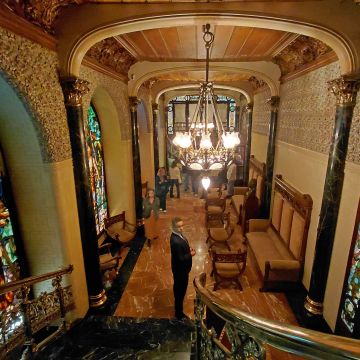
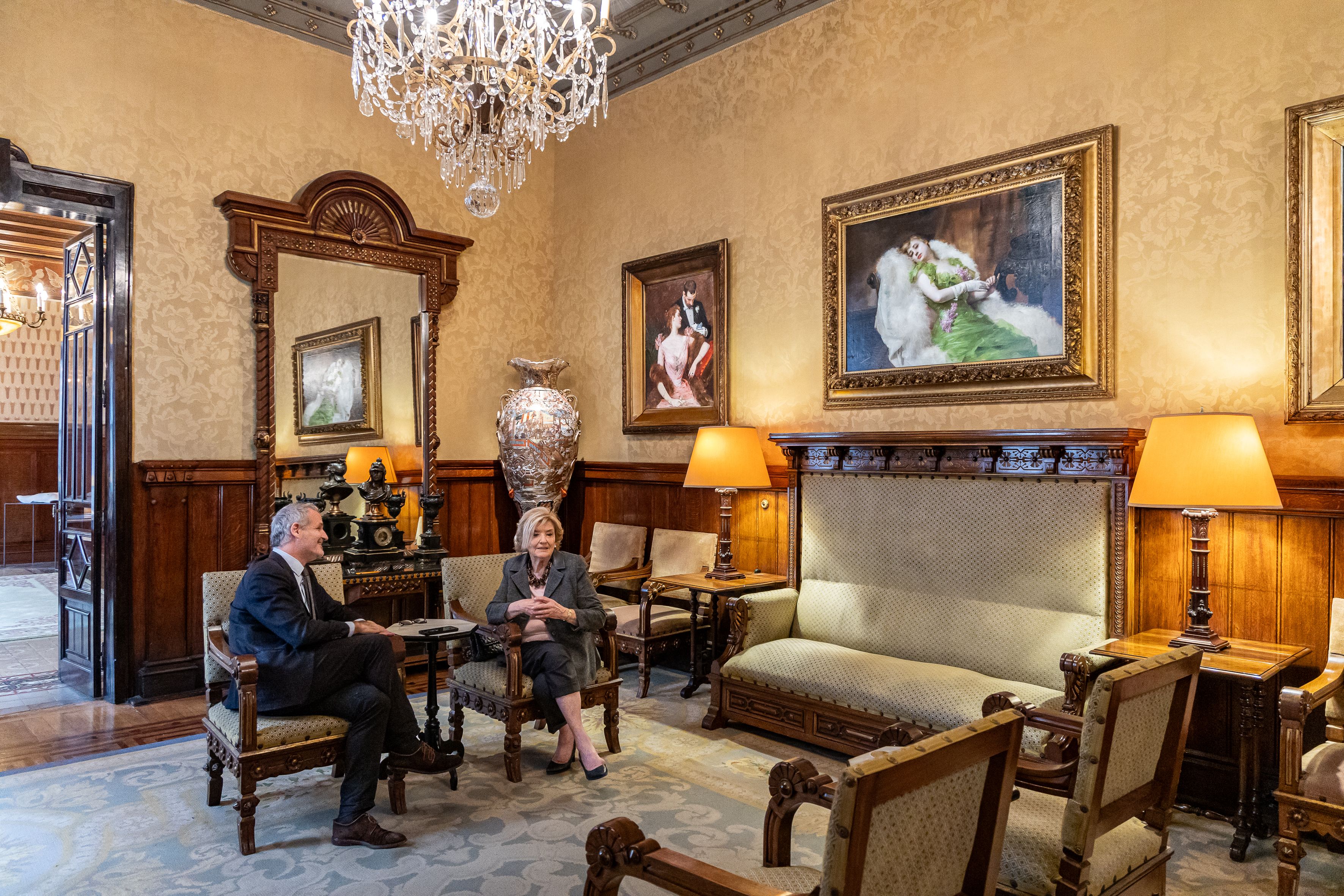
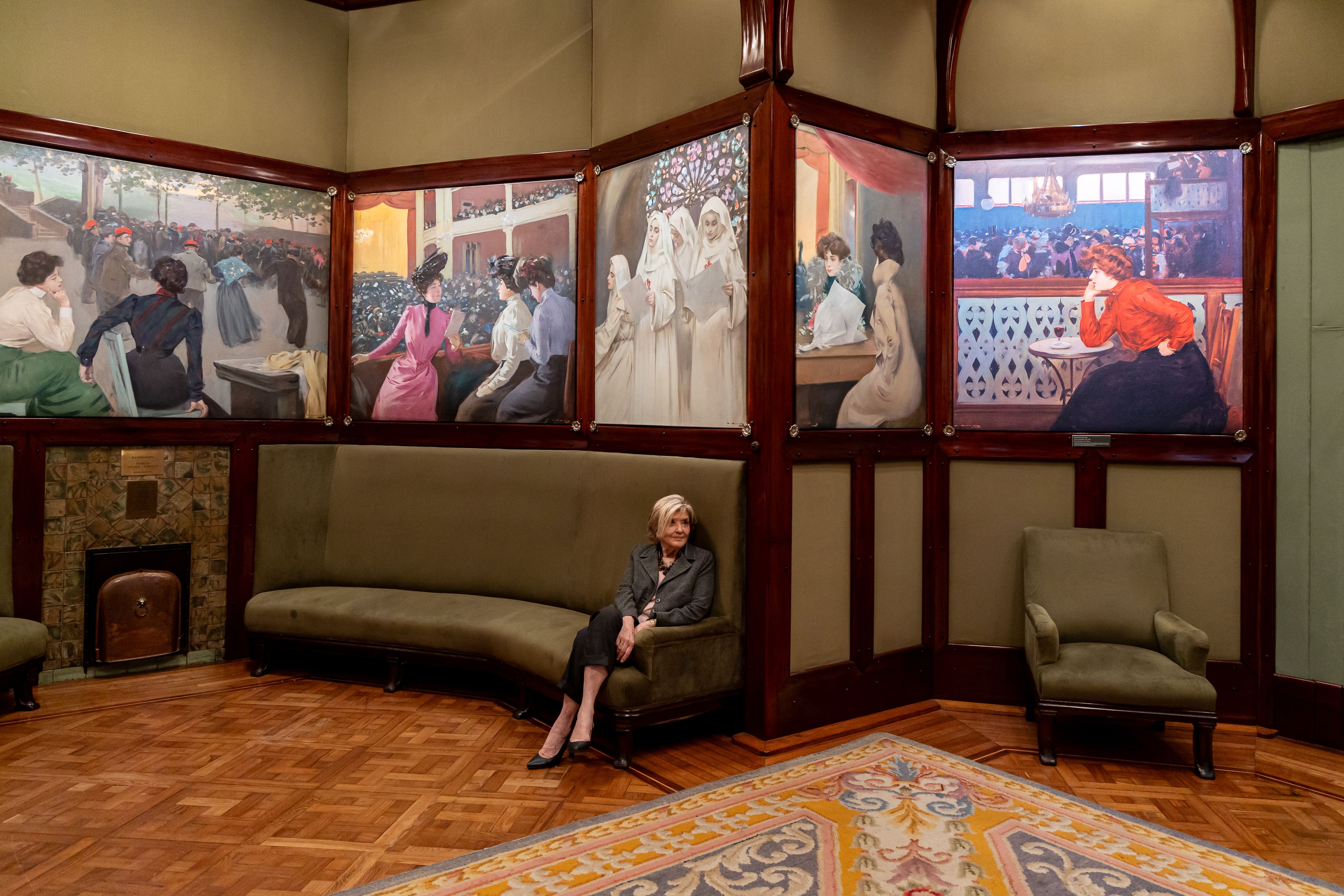
The advantage, therefore, is being in an extraordinary house, which does not exist anywhere in Barcelona, nor in all of Spain, I would say, nor in the whole world. This was done by the bourgeois of that era, who had money, but who also had very good taste. The whole house was built with one idea in mind, and that idea was Modernism: from the paintings they bought from painters to the floor, which the carpenters, the cabinetmakers made... Everything responded to the same idea. That this has been preserved throughout the building, does not exist anywhere.
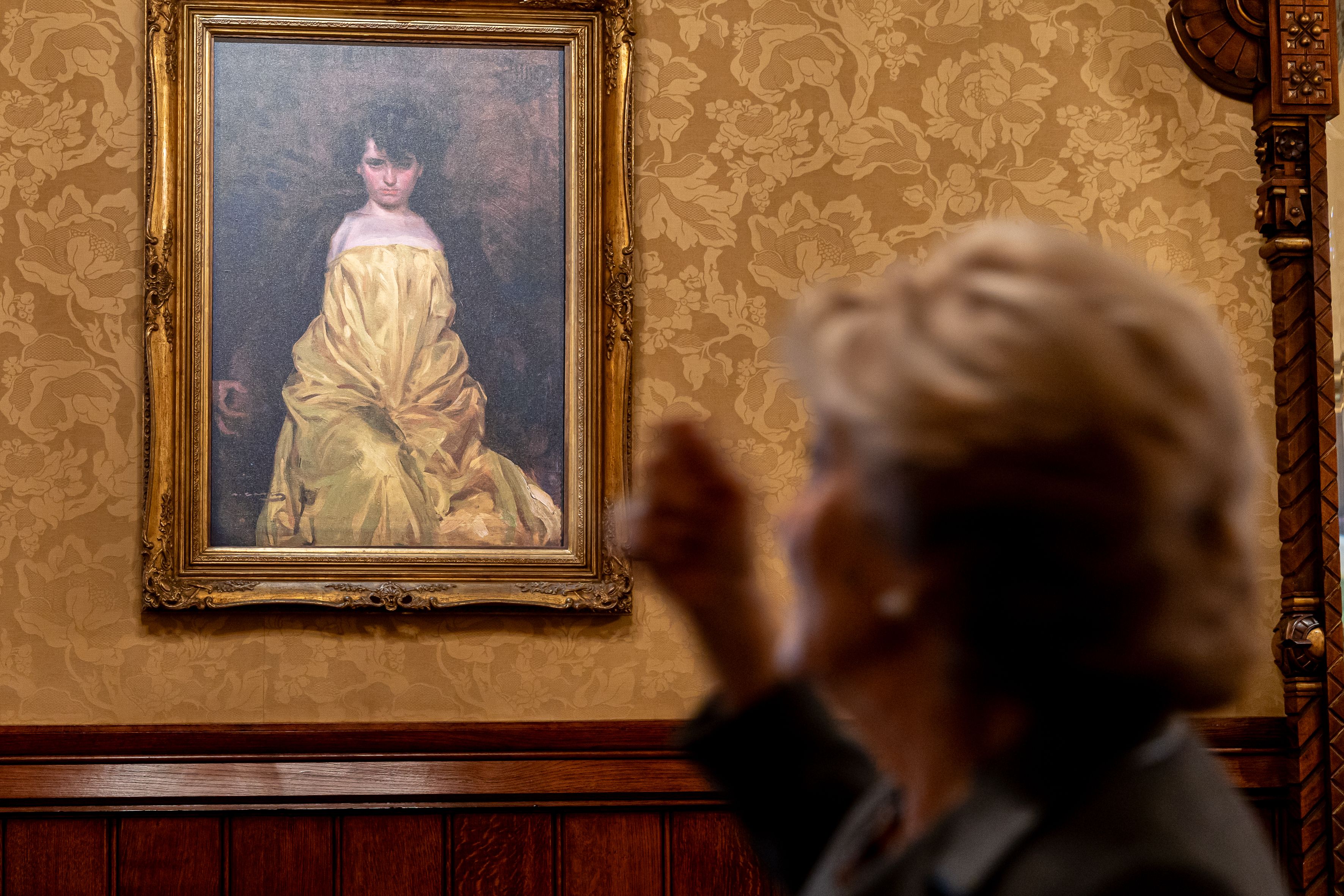
In fact, there has just been a very interesting exhibition in Munich, which will then go to Berlin, and we have lent several paintings for it. The Germans said: "But how did we miss this era of modernist Barcelona?". There, they have reproduced our entire Ramon Casas room, the Rotonda. In fact, this painting you see is not the original: it is a copy, because we have lent this one and three or four more. And many people, individually, have also lent some for the exhibition. I mean, it's a unique place, and it's nice to be a member of such a place.
Then, of course, there are the relations with the Liceu: this also has a series of advantages, just as the benefactors of the Liceu have some of ours. I believe that the advantage of becoming a member is this: being in a unique place and with wonderful conditions.
"Perhaps, when we reach 1,100, we will have to consider whether to close admissions"
– Are you losing or gaining members, or are you staying more or less the same? Are you not particularly concerned?
– Well, the black balls are over here. They already ended with Montserrat Caballé, who was the last one to have them. But, anyway, here we have an admissions committee and sometimes people who want to join are rejected because, for whatever reason, we consider it inappropriate. We are around 1,050, 1,053, 1,055 members. Today I signed for two people who want to be members. First they apply, they go through the admissions committee, then the Board approves it and they enter. We are a bit restrictive, in the good sense of the word. I think that, perhaps, when we reach 1,100, we will have to consider whether to close admissions.
– That's not usually heard. Normally, private clubs always try to have more members, because they are very expensive to maintain. In your case, you can stop.
– We can stop, because the members are very active and come constantly, especially the ladies, who are now 30%. And they are very active, they come to lunches, to conferences... All this gives activity and liquidity to the club.
– We are talking about a club that was created for men and is now presided over by you.
– Who would have thought, right? But they are delighted, because, listen, you can't go against the times either. Right? In fact, there was no opposition: the Board proposed me and no one opposed it. That means that, in some way, they liked it.
– So, are we on a continuous path of holding conferences and events?
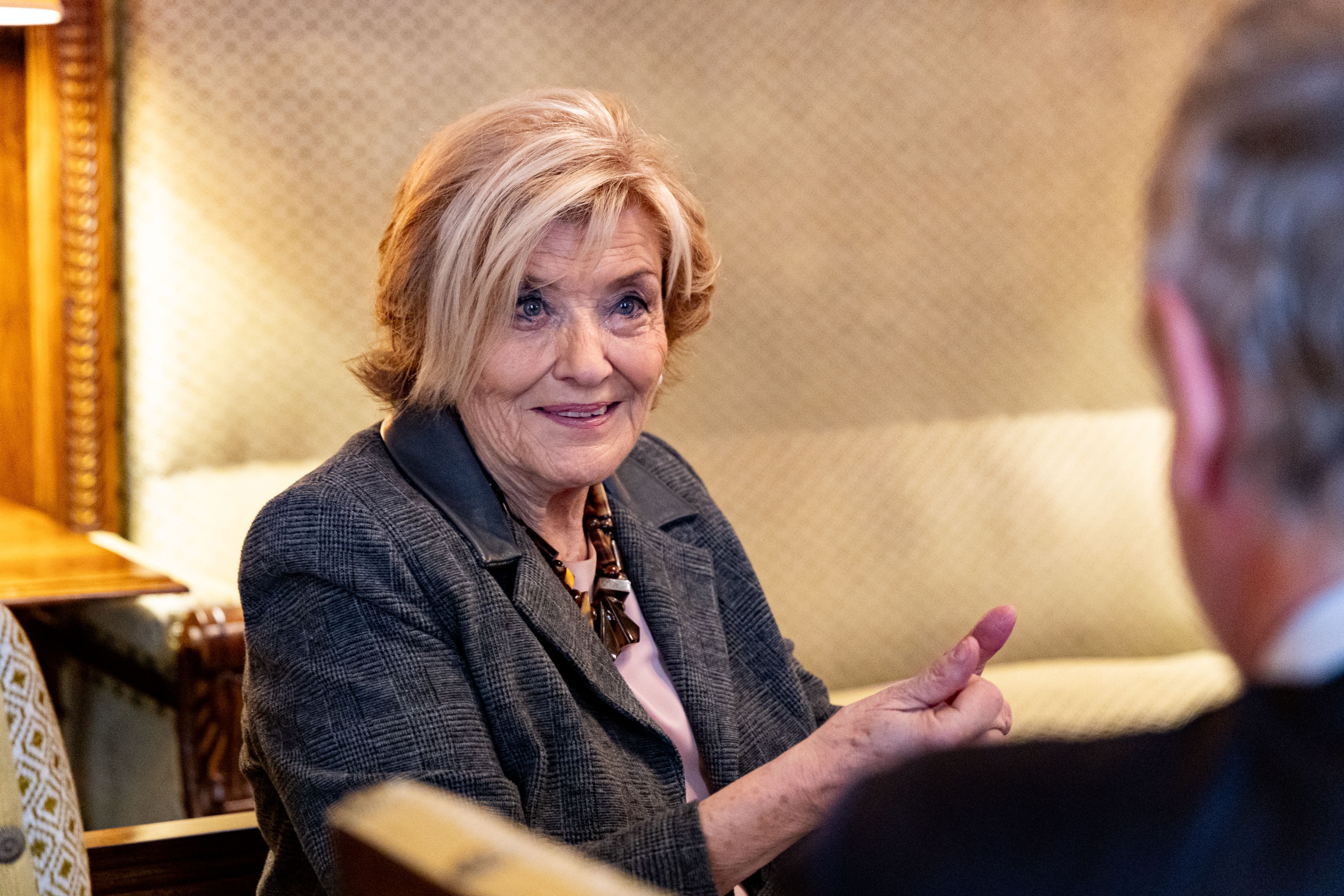
– Yes, absolutely. And perhaps increasing them, and above all, focusing on quality. That is, not holding a conference just for the sake of it; we won't do that anymore. Each member of the Board should contribute what they can to make all this possible, right? Paco has been a presidential president and I am a president who delegates more. Each member of the Board has their functions, and they are delighted. So, we are just starting: this was in June, and now we are beginning to plan the new direction. But, in principle, what we want is this: to bet on quality in every sense.
– So, it's a Board where there isn't much debate about numbers, but more about content?
– Yes, exactly. About numbers too, but without serious concerns. About content, yes.
– And the relations with the Liceu?
– Extraordinary. They are one entity and we are another, let that be clear, but the relations are extraordinary. Right now, I don't know what day we have a lunch with the new president, who is also a woman. And we, to go to the Liceu, pass through here, and they also often come through here, basically those who are benefactors or patrons. We have an extraordinary relationship.
– And young people?
– They are a growing, very interesting group, who are also very fond of opera and want to wear ties. They want to organize a masquerade ball this year, and they are very active. This is the future, or it is the present, because there are many of them. And it is the future because there is the young league, which must be about 80 or 90, but then there are two more leagues that are less young, who are already 40 or 45 years old, that is, very young too. This is the present and, above all, it is the future.
– The masquerade ball is a classic, both of the theater and the Cercle, and these young people maintain it. Does the theater no longer do it?
– The theater can no longer do the masquerade ball: there were some years when they started it and now they have stopped. Why? I don't know.
– But you maintain it.
– Yes, we maintain it, because the young people are the ones who make it. And they invite everyone who wants to participate. As I said, young people are very interesting and very active. They come to dinner instead of lunch, because they work a lot every day. And yes, you see that, during the day, it's emptier, and from the evening onwards is when the activities take place, which we fill up.
– Regarding international relations, there are many contacts with private clubs around the world, somewhat like associates of the Cercle. Is this maintained?
– Yes, it is maintained and increased. And precisely one of the board members, Santi Fisas, will be in charge of relations with international clubs. It is very interesting, and there are many members who are very interested in this, those who travel so much. Some clubs even have rooms. It is a growing factor, but also within very select clubs.
"My grandfather loved playing the violin and was a very good friend of Pau Casals"
– And you, how long have you been involved with the Cercle?
– Well, when I was young, I always came to the Cercle every Thursday. In fact, I think I was one of the few people who saw Callas, who only came once in that era. My grandfather loved playing the violin and was a very good friend of Pau Casals, so there has always been music at home. I even still keep a violin of my grandfather's, which Pau Casals surely advised him to buy and which is a 1740 violin. A jewel. I had it restored in Cremona and I still keep it.
– So, the link is music.
– The link is music, yes. And specifically opera.
– And meanwhile, taking care of the wineries?
– Yes. It's just that I like to work, you know? I've broken some of the molds of my life. It's perfectly compatible, and the latest mold-breaking is being president.
"This year has been a good year for quality and not so good for quantity. But that's always better than the other way around, right?"
– And in that sense, are you having good harvests? Is it going well?
– This year there has been a shorter harvest because it hasn't rained much in recent months, but on the other hand, it is of extraordinary quality. Not only at my home, but all around. It has been a good year for quality and not so good for quantity. But that's always better than the other way around, right?
– Would breaking molds be the feminine touch?
– Not exactly: I was born into a bourgeois family. I studied law. At that time there were very few people, because we are talking about several decades ago. I got married in my second year, had my son in my third year, and finished my degree. That was already a bit of breaking a mold, wasn't it?
– Breaking molds, but without breaking pride either?
– Absolutely not. In fact, I feel like a peasant, deep down. At home, the oldest document we have of purchase or feudal tenure is from 1395. That is, 631 years ago.
– Where is it from?
– From the house and farm of Can Martí, which is where we have the winery. From the 14th century, mind you! I am the twenty-first generation, all documented.
– All documented?
– Of course, we have to place ourselves in 1400, 1500, and 1600, when there was no property registry. There were the parishes, of course, but having a daughter was the worst thing that could happen to them: "let's see if they take this from us now." And then the daughters had to swear on the four Gospels that this was theirs because they inherited it from their father in 1422, and the other from her father in 1400... until 1900. One Gospel was not enough for us, no: four!
– And when do you come to live in Barcelona?
I don't come: I go and come back every day. Today I'm staying here because there's a lunch. First I had to see you, and then, in the afternoon, go to the Vila-Casas Foundation, which is celebrating 40 years. And from there I have to rush because in the evening, at the Liceu, we will have the patrons' dinner, on stage. That's why today I am staying. But otherwise, I go and come back every day.
– So we are talking about the Cercle del Liceu being governed right now by a peasant... a mold-breaker?
Exactly. That would be my touch.
Add The New Barcelona Post as your preferred Google source for free
Stay informed with the latest news.