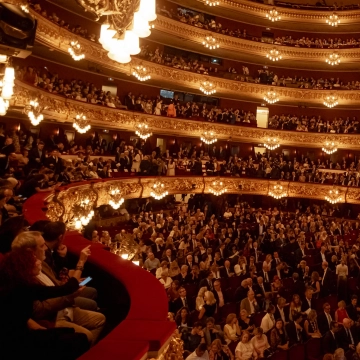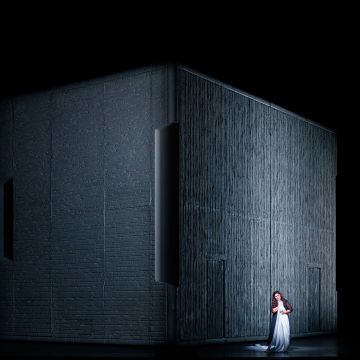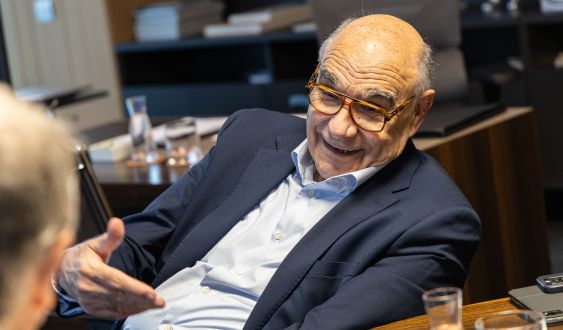
During these years, the theater has recovered budgetary balance, canceled its debt, and strengthened initiatives to bring opera closer to new audiences, without renouncing artistic demands.
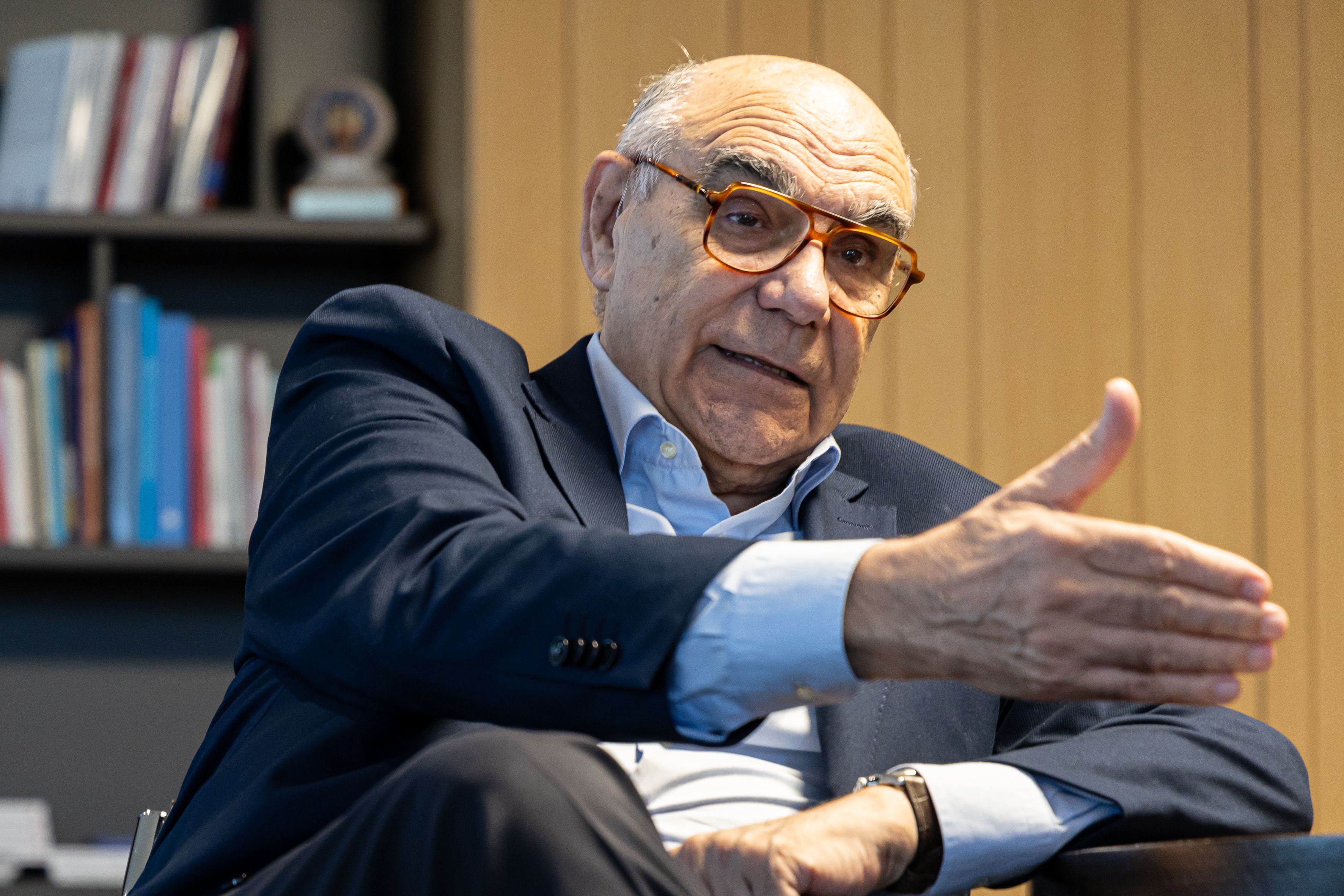
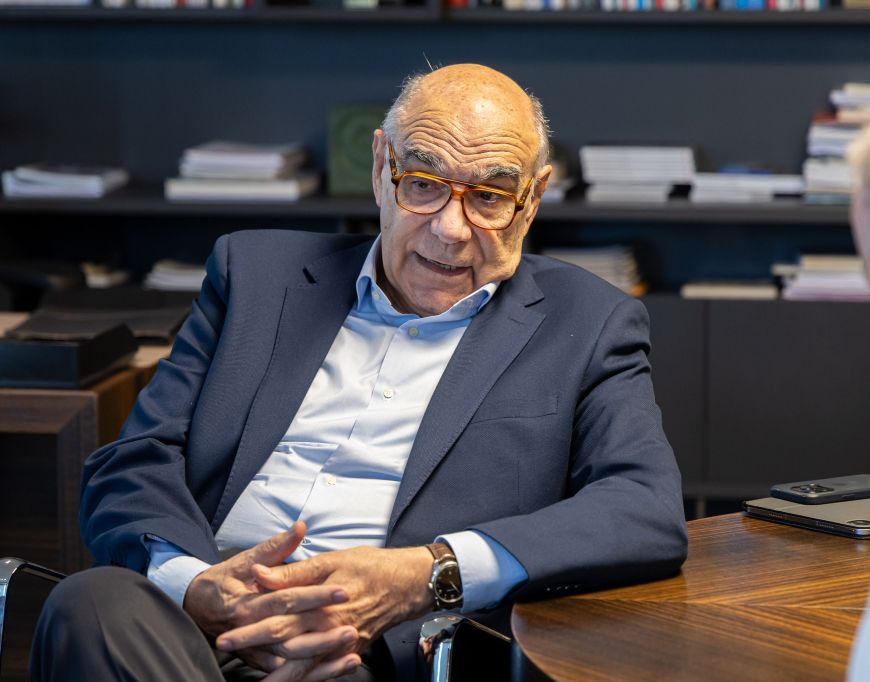
In this conversation, Alemany reviews the agreements with administrations, the role of patronage, the Liceu's position in the international opera scene, and the project Liceu Mar. He also reflects on the urban and political changes in Barcelona, a city he has known since his childhood in El Raval.
— When you assumed the presidency of the Liceu, the theater had economic and budgetary difficulties. Now you are ending in a very different situation. What is your assessment of these years?
— The initial situation really had some rough edges, which suggested that there were problems that would not be easy to solve. Especially regarding the agreements with the administrations to resolve the economic issue. From the point of view of internal management, the Liceu was not bad at all. What had happened was that, at a certain point, there had been a certain lack of public contributions and the theater had been affected by it.
In fact, this also happens in companies: if they have a drop in sales or a credit restriction and, despite being affected, they continue to limit themselves to administering the situation instead of managing the problem, this problem becomes eternal. It seemed to me that something similar had happened at the Liceu. I already saw it from my position in patronage, and then I thought it was a priority. That's why I said not to ask me questions about being an artistic director: I am not an artistic director. They asked me if I could assume the presidency and, therefore, do a manager's job. It's something I've often explained, but it's worth remembering to set the context.
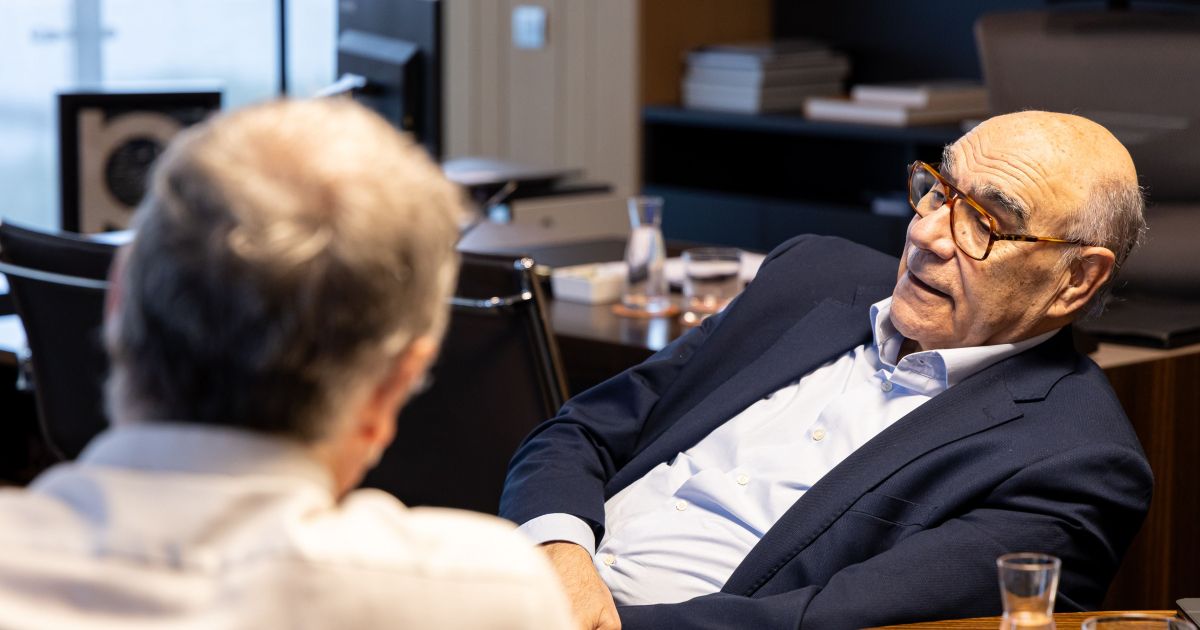
— So, you focused on the relationship with public authorities?
— I got involved especially in the dialogue with the administrations, particularly with those that at that time were more distrustful and critical of the Liceu's economic situation. It took a while. We created a delegated commission when Joaquim Molins was still alive, although he practically could no longer attend. I assumed a role that I didn't think would end up leading me to the presidency. I proposed to see if we could fix it.
I assumed a role that I didn't think would end up leading me to the presidency.
After a few months, perhaps a year or a year and a half, we turned the situation around. Everyone agreed and we created a formula (and I say this in an almost mathematical sense) so that public and private contributions would balance out. We committed to working on private resources, optimizing ticket sales, growing sponsorships, and generating other own income. In return, we asked the administrations that, if until then they contributed with significantly more than 50% of the budget, they would now contribute 50%.
This formula has lasted about ten years, although perhaps we had already started applying it when I was still in patronage. It has worked: it has balanced the numbers and helped bring order to the programming.
— What other changes have been decisive in this stage?
— There have been important changes in the general management and in the artistic direction, not all of which were forced, and also in the musical direction. Josep Pons had already clearly expressed that, when the last contract arrived, he wanted to do other things. He now conducts the German Radio and Television orchestra, but from time to time he will continue to come to the Liceu to conduct an opera.
These were the three vital changes, if we look at it from the point of view of the type of business: administration, resources (people, organization) and the commercial area. Young people have also joined to manage, who know how to make these areas work. Today I believe we have a good team, which we have been consolidating for a few years.
In a world like sports, which I knew, or opera and theater, which I have also known, it is not easy because people's work is very exposed and can be questioned by the public and the press. This weighs heavily on those who work there, even if from the outside we may not see it. It has not always been easy, but I believe that today the team is good.
These were the three vital changes, if we look at it from the point of view of the type of business: administration, resources (people, organization) and the commercial area.
— So, are you leaving satisfied? What indications make you think the balance is positive?
— I'm doing better, so to speak. When I came in, I set some priorities, but I didn't create too many expectations. We were just doing, and looking at what we had to do to redirect the situation. At the end of the road, I think I'm making a good balance. The public proves it. We have a high occupancy rate and good receptivity to the artistic product. In addition, the people inside are calm. When I started, Josep Caminal told me: "Now you're starting; when you finish, if they haven't sung a 'Va pensiero' to you a few times at the door, if the people inside the Liceu haven't complained about the distribution, the extras or whatever, it's because you haven't done what you had to do."
— On October 2, 2017, the choir sang it, the 'Va pensiero', at the door. But it wasn't for you, of course.
— I was there, but I had been in for less than a year and was still starting. I didn't remember the exact date.
At the end of the road, I think I'm making a good balance.
— You'll see it in video, it's beautiful. About the initial difficulties in the relationship with the administrations, back then there were political officials who didn't go to the Liceu's box and who perhaps saw it as an elitist institution. How did this relationship evolve?
In general, the people who have passed through the different administrations linked to the Liceu have wanted to row in the same direction. Sometimes I say that the Liceu is an oasis in the political relationship: there was always a willingness to collaborate, although (and I suppose you say it for Mayor Colau) some things were not always understood. Perhaps the Liceu was seen as a very elitist institution, and it is not at all. Some had this perception, but they soon saw that I did not represent any patriciate or any lineage there. I was a boy born in the Raval. I explained, a little theatrically, that I used to pass in front of the Liceu and had never imagined that I would enter it, not even as a spectator. And yet, I found myself integrated first into patronage and then into the presidency. There was never, then, any desire to cultivate elitism.
I was a boy born in the Raval.
I always explained the difference between a public theater and a private theater. Both are respectable and complementary, but the Liceu's vocation is to be a public good. At the same time, its management model must allow it not to be absolutely subject to the dictates of the administrations: it must be able to analyze the market and act based on this analysis.
Any opera house must have a public service vocation.
This public service vocation has been demonstrated with the initiatives we have promoted. The first operas, for example, have brought productions to Raval and then to Sant Andreu. Now "L'òpera dels set pètals" (The Opera of the Seven Petals) is being performed there, in reference to the seven neighborhoods of Sant Andreu. These are micro-operas of about twenty minutes, made with diverse people and with local artistic creators, which seek to launch new ideas, not limit themselves to responding to the demand for titles like Nabucco or La Bohème.
There is also Liceu a la Fresca, Liceu al Territori, and the Òpera a Catalunya initiatives. With the chamber group, moreover, we even performed in prison. These are projects that public administrations have viewed positively and that have justified that it was worth financing, totally or partially, a facility like this. Any opera house must have a public service vocation. One thing, however, is this vocation and another is the management model.
— Do you think the misfortunes that the Liceu has suffered explain why it is so publicly intervened? If it hadn't burned down, perhaps today it would be a privately managed theater?
— Surely the events that the theater has experienced have had some influence, and the very high cost of producing opera also influences it. But I read it more inversely: if it hadn't burned down, today we wouldn't have the Liceu we have.
— What do you mean?
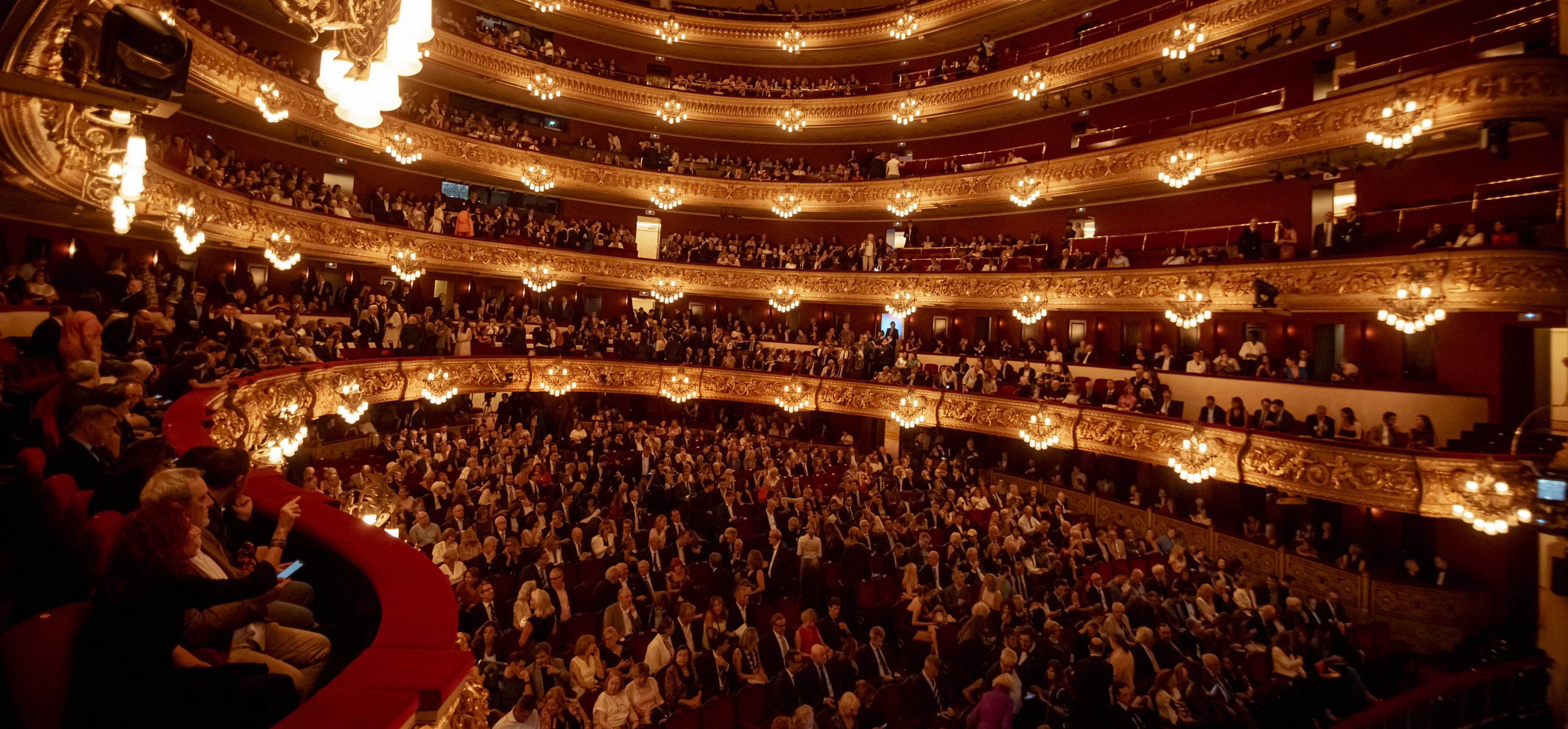
The 1994 fire and the 1999 inauguration allowed the theater to be modernized. It is true that the last major technological innovation was a long time ago, but during these years technologies have been incorporated and the backstage workspaces have been renovated. This has allowed the Liceu not to become outdated. It has been very well maintained, although it could always be better.
Furthermore, let me tell you that private contributions are no longer as militant as they were in the time of the 19th-century bourgeoisie. At that time, people did not pay taxes as they do now and invested directly in the cultural and social activities they liked. Today we pay taxes and many of these actions have been delegated to the public sector. Therefore, private collaboration is less secure than before.
Private contributions are no longer as militant as they were in the time of the 19th-century bourgeoisie
— Could patronage be stimulated more? What potential does the Liceu have compared to the Teatro Real in Madrid?
— One can always do more. The Liceu's patronage potential is different from that of the Teatro Real. The Real has large Ibex companies and also some public companies. The Liceu, on the other hand, has a network of small and medium-sized companies around it that, as a whole, is very powerful. Here there is a possibility for growth, although, when things go wrong, we cannot ignore large companies either.
Regarding public contributions, we have demanded that the State Administration provide us with the same as the Real. From what I understand, this is being done and we no longer perceive this grievance. On the other hand, regarding local and regional administrations, we are better treated than the Real: the Generalitat and the City Council, together with the other administrations involved, contribute more to the Liceu than the Madrid administrations to the Teatro Real.
The Real has an easier time reaching large companies because they are there, it coexists with them and brings clients and suppliers there. We, on the other hand, have our DNA and our way of doing things, and we don't want to do exactly the same either. We look for companies that have a commercial or industrial presence both here and in Madrid, or that have an important market in Barcelona, and we try to get them to treat us under conditions equivalent to those of the Real. This is practically the only comparison we make with them. We do not have the same strategies or the same objectives.
— It has been said that the Liceu had "dropped a division" during the economic crisis and the pandemic and that it has now returned to being among the great opera houses. Do you share this perception?
— Ranking opera houses is more difficult than ranking in sports. In sports there are classifications and titles; here there are no such objective results. In some rankings we were between tenth and eleventh place, and I think we have improved a bit. We were at the same level as the Real, perhaps even a little better positioned, but it depends on the factors that are valued.
Ranking opera houses is more difficult than ranking in sports.
There are very daring theaters. La Monnaie, for example, has a very innovative and daring program, which takes risks with respect to traditional customs. The Liceu is not La Monnaie, but it also does things that question some conventions. There have been productions that have been uncomfortable because they have questioned certain mythologies or metaphysics, but nothing has happened: the public accepts that there must be a dose of that.
Also, in my opinion, the Sub35 initiative scores very high. There are thousands of young people registered and we offer performances for them in almost all titles. If the weather permits, afterwards an atmosphere is created on the terrace where young people feel comfortable. This also counts when evaluating what a theater does.
We are also interested in incorporating young voices from the country, such as Sara Blanch or Serena Sáenz, and contributing to their ability to develop an international career. The fact that these singers are already performing abroad and that we have helped them also has value. If you only count how many times we hire Anja Harteros or Jonas Kaufmann (or the great international voices, in general), I don't know who comes first. We are not obsessed with having two or three top-level voices every year, or in every title, because that greatly increases costs. If costs grow too much, the relationship between expenditure and income can break and we can go back into deficit.
We are also interested in incorporating young voices from the country.
Now we have no deficit or debt. We finished repaying and canceling the accumulated debt: around 2010-2015 there were about 16 million euros of debt, and then covid forced us to assume four million more. We have returned everything until the 2024-2025 season. For me, this also scores; but what happens on stage must also score. If the economic effort is not reflected in the productions, in the voices and in the improvement of the orchestra, it loses an important part of its value.
— Liceu Mar is a very personal project in which you have been very involved. Do you think it will go ahead? Are you worried that it won't happen?
— I believe it will go ahead, but it will have to navigate difficulties and deadlines. For now, all actors involved in the Liceu, especially the administrations, have supported it. Right now, we are in a phase where there is still uncertainty. We launched a call for ideas, and 55 teams, from here and abroad, with experience in architecture, submitted proposals. We also did what is called a "beauty contest," a selection to assess who could do the project, what equipment they had made, and what achievements they had. Of the 55 teams, five have been chosen, and we expect them to present their project profiles in December.
We have closed the agreement with the Port and we count on the administrations. The City Council has publicly committed to the operation. We still need to know what it will cost, because until now we have worked with indicative figures. The forecast is to inaugurate it in 2032, but until then there is a lot of work to do.
In the end, it's like planning a highway: before building it, you need to have the land, obtain permits from all the municipalities it has to pass through, launch the tender for works, and execute them. All of this takes time; it cannot be done in two years. Now it's about keeping all the people, institutions, and groups that have an interest or vocation in it involved. Before presenting the architects' idea, we had already held seventeen meetings with people who have significant opinions in the city and the country, and everyone saw it positively. We have everyone somewhat concerned about the project, and that makes me think it will be done.
At one point I said, perhaps exaggeratedly, that the development model had to be that of the Sagrada Família: when there is money, progress will be made; when administrations do not have a budget, the pace will have to be adjusted. The Liceu Mar must be an illusion, not a problem.
The city must be able to digest changes.
— The boxes of the Liceu are also an observatory from which one can take the pulse of the city. How do you see Barcelona now? What has changed and what would you like to happen?
— It is evident that there has been a change in political priorities. The priorities, in general terms, were the same, but the weight given to each one was different. With previous governments, both Ada Colau's and Xavier Trias's, there was a different balance. When the coalition of the "comuns" and the socialists arrived, during the period when the "comuns" had more weight, a lot of priority was given to the impacts of climate change and its effects, and the theory of degrowth was valued. This would have been scandalous in previous mandates.
These changes have undeniably had effects. One can agree more or less, but urban transformations worry me. I don't know if I would call them transgressions, I don't think that's exactly the word: but obviously, if you take the Cerdà plan and make a street, in theory (because in practice it isn't), pedestrian, you alter a balance.
Barcelona is a great city that has extraordinary potential and can correct any distortion that was truly unbearable.
The Eixample has a very middle-class orientation and a quite balanced distribution, both in terms of population and services. When a road like those in San Francisco is created within the Eixample, or a tram is laid along Diagonal, distortions are generated. The city must be able to digest these changes. Not everyone will start walking and cycling immediately: some changes, therefore, may have ended up being indigestible. That said, Barcelona is a great city that has extraordinary potential and can correct any distortion that was truly unbearable. I have a lot of confidence in Barcelona, just as you do within your media outlet.
Add The New Barcelona Post as your preferred Google source for free
Stay informed with the latest news.