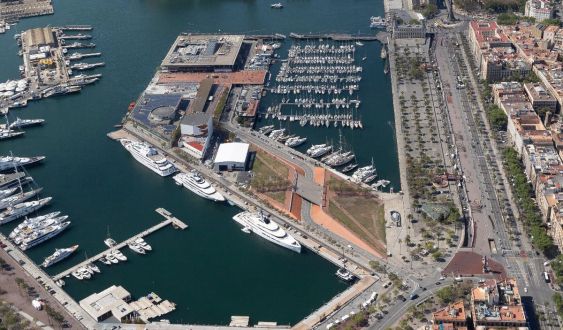
Barcelona looks to the sea again—and this time it does so through opera, dance, and contemporary creation. The future Liceu Mar, the second venue of the Gran Teatre del Liceu in Port Vell, has already passed its first major test: attracting global talent. And it has done so with unexpected forcefulness.
Up to 55 architecture and urban planning teams from around the world have responded to the call to imagine this new cultural hub. A figure that, in the words of the project's promoters, far exceeds initial expectations—"we expected about twenty candidacies," they admit. The result: five finalist teams that will now compete to draw the future of a space that aspires to redefine the relationship between city, port, and culture.
The five selected teams share a key characteristic: the combination of top-tier international studios with local offices. A formula that is not accidental, but structural. "Liceu Mar is born as a choral project"—in the words of Barcelona's chief architect, Maria Buhigas—and this collaborative logic has also been transferred to the competition.
"The calendar foresees that works can begin between late 2029 and 2030"
The finalist teams are:
- SANAA + Camps Felip Arquitectura
- Batlle i Roig + Snøhetta
- Barozzi Veiga + Maio + Burgos & Garrido
- Sou Fujimoto + GRAS + AldayJover
- David Chipperfield Architects + b720 + CreuSeCarrasco
Beyond the names, the jury has valued the capacity of these teams to integrate diverse disciplines: architecture, urban planning, acoustics, design, and audiovisual technologies. It is not just about building a cultural container, but about designing a complete experience.
The teams have been selected for their ability to balance five key profiles: architectural and urban planners, and three specialists—in acoustics, design, and audiovisual technologies—with the aim that these elements are fully integrated into the building and its surroundings.
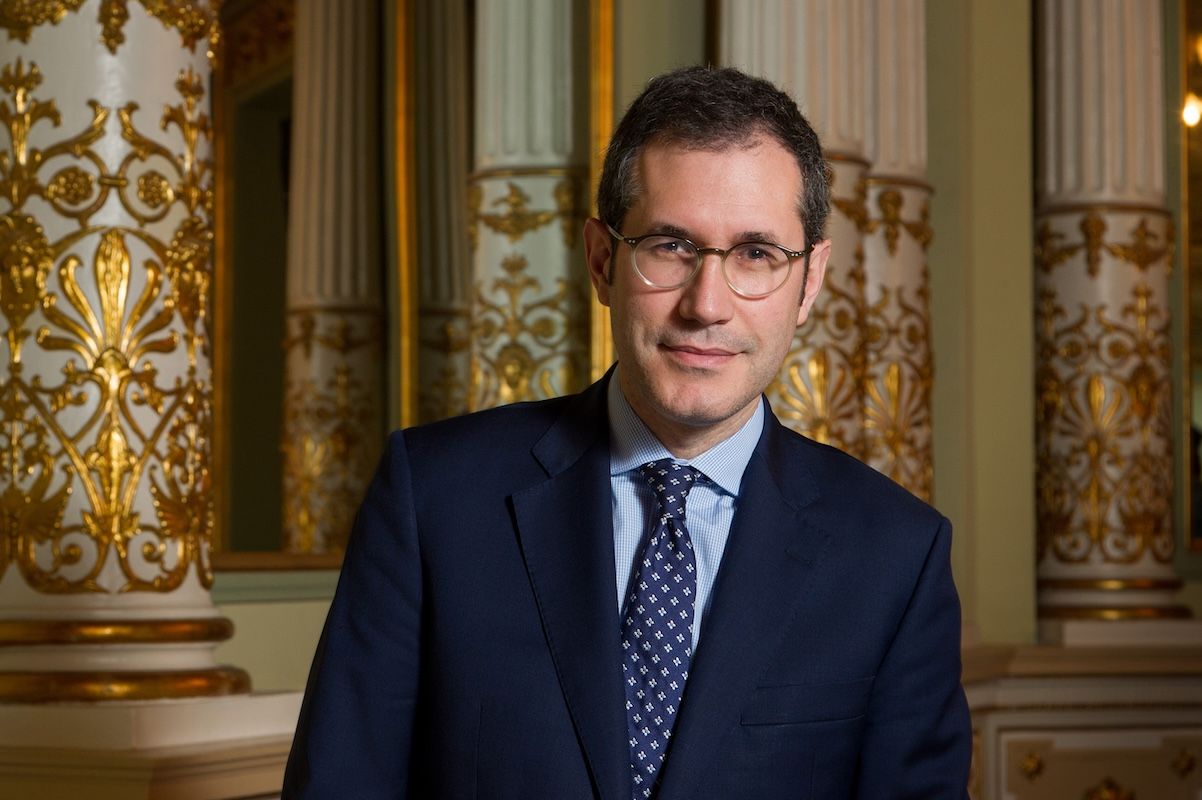
Valentí Oviedo: "As a Mediterranean space, the environment will play an essential role"
In fact, the building's surroundings acquire great relevance in the project: "as a Mediterranean space, the environment will play an essential role," assures the general director of the Liceu, Valentí Oviedo. Moreover, the will is for "the environment and the building to play the same role," reinforcing the idea of a space where architecture and urbanism are conceived as a single piece.
According to Valentí Oviedo, the project must be resolved on three simultaneous scales: the distant presence, as a new icon of the landscape; the human scale, in the approach of citizens and visitors; and interior comfort. This triple dimension summarizes the ambition of Liceu Mar: to be at the same time an emblematic building and an everyday space.
With a planned investment of about 50 million euros for the building, Liceu Mar wants to become much more than an extension of the La Rambla theater. It aspires to be a creative hub and a driver of 21st-century cultural revitalization: a living, flexible, and sustainable facility, a reference for all audiences, guaranteeing universal access to culture. It will promote contemporary creation —with the International Center for New Creation Opera—, strengthen educational and family activities, the Petit Liceu, a stable dance season, and diverse operatic programming in multiple formats and scales.
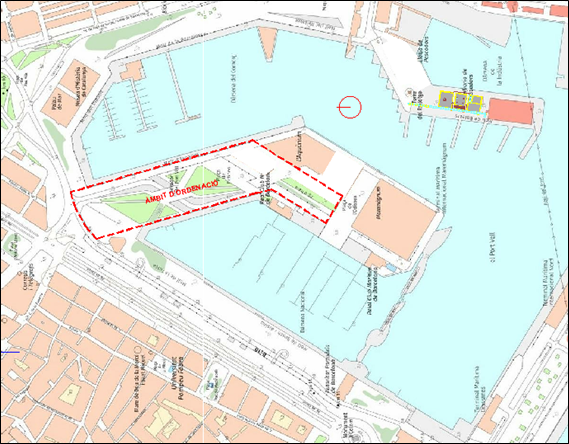
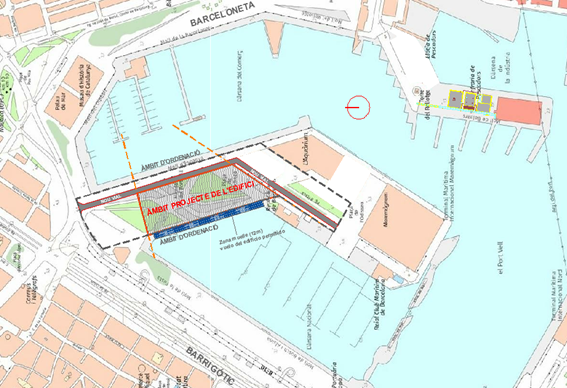
Added to the cultural project is the transformation of 46,000 square meters of the Moll d'Espanya, with the aim of generating a large public space open to the sea. The redevelopment —which will involve an additional investment of about 20 million euros— will bury road traffic and completely redefine this part of the Port Vell.
The Port of Barcelona will be responsible for the urbanization of the surroundings of the future facility, while the municipal company Barcelona d'Infraestructures Municipals (BIMSA) is in charge of the integral management of the construction of the new Liceu Mar.
Barcelona, laboratory of cultural architecture
The selection of the five finalists now opens a second paid phase in which the teams will have four months to present their proposals. The models will be made public within the framework of the World Capital of Architecture 2026 and the jury will receive and evaluate them anonymously —without knowing which of the five teams designed each one—. Until then, the future Liceu Mar remains an idea under construction. No one has drawn it yet.
The calendar foresees that works could begin between late 2029 and 2030, if the planned deadlines are met. Until then, the project will enter a key phase of architectural definition that will determine not only the form of the new facility, but also Barcelona's relationship with the sea that surrounds it.
Add The New Barcelona Post as your preferred Google source for free
Stay informed with the latest news.