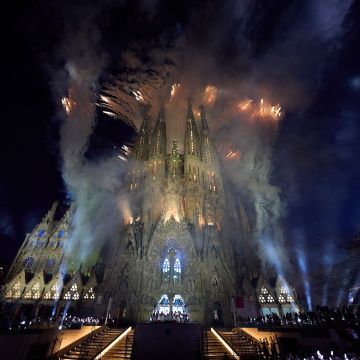
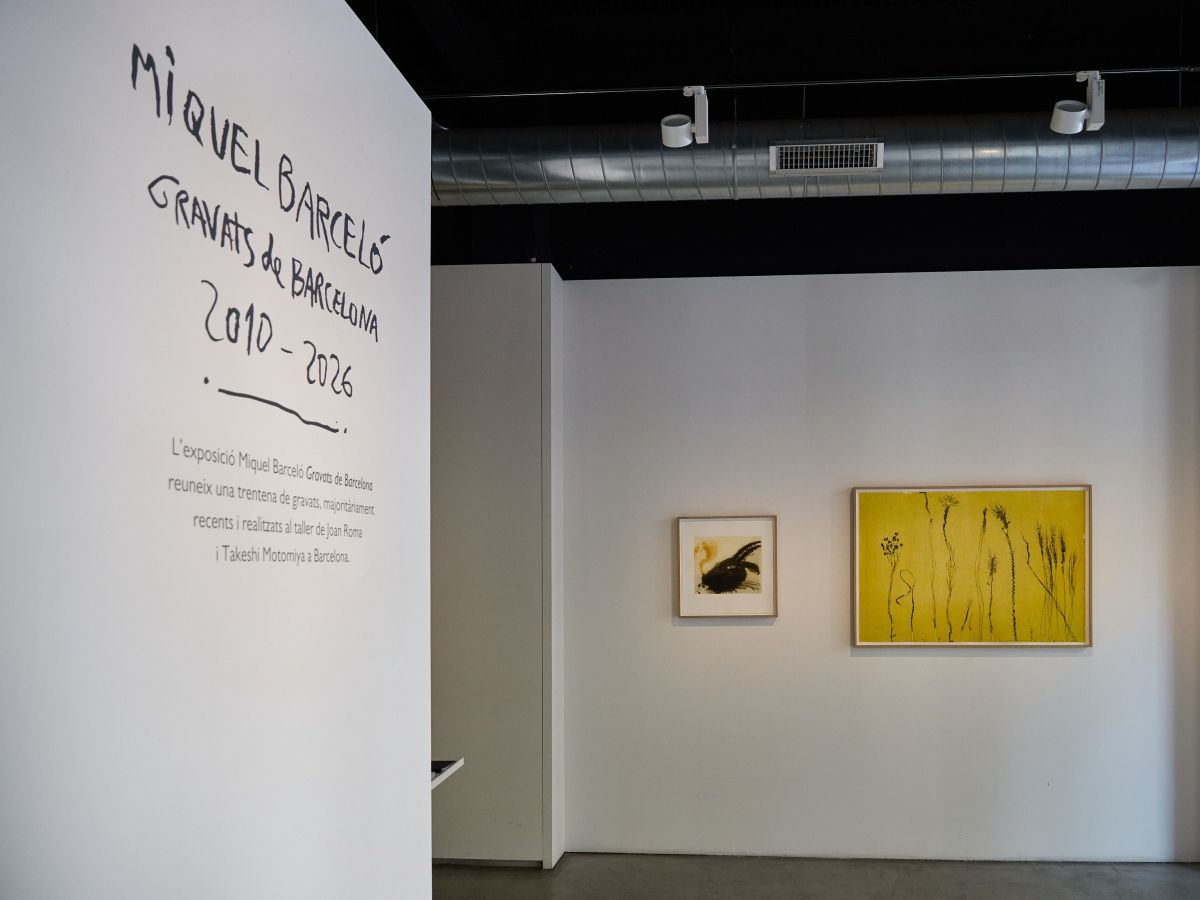
The day after the blessing of the Tower of Jesus, Miquel Barceló. Obvious comments among journalists, "I will not make statements" obvious from the artist, everything pending, God will provide, the Church has doctors. But from here we cannot refrain from saying that it is Barceló and no one else who should be in charge of the Glory facade. There is no need to go into details such as mud, soft stone, the Mediterranean, Palma Cathedral, Gaudí himself, Glory itself. One only needs to know that Barceló is now the most important artist in our country, that to understand each other he is a Miró or a Picasso in flesh and blood, and that letting him go is always a mistake. We do not miss him at the presentation of his exhibition at the Artur Ramon Gallery, "Engravings of Barcelona (2010-2026)". The first in a gallery since the old 90s.
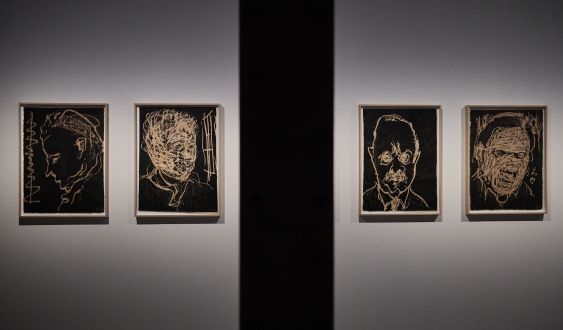
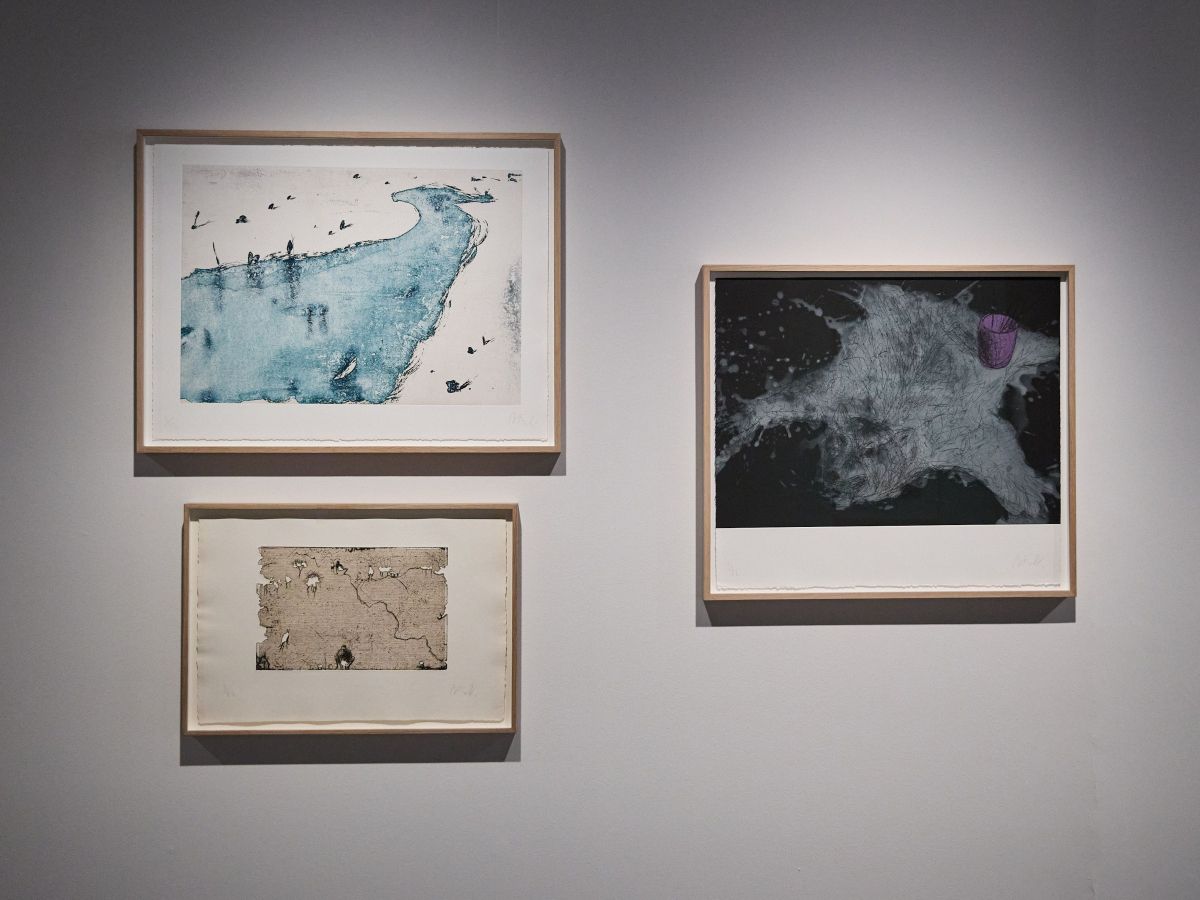
Curated by Enrique Juncosa, the exhibition shows about thirty engravings made with various techniques: aquatint, etching, woodcut, lithography, carborundum, roller, silkscreen, varnish, collage, drypoint (scratching directly on the plate), direct painting with acid, African termites, even electric saw (in the enormous octopuses at the entrance, which thus manage to make a jagged, fishbone-shaped line)... Barceló speaks with an earthly proximity that is appreciated, he explains little but is open to explaining if asked, and says several times that he prefers to make works than to exhibit them.
All of them are made in the workshop of Joan Romà and Takeshi Montomiya between 2010 and 2026 and show diverse -and characteristically Barcelonian- themes such as fish, octopuses, plants, vegetables, animals, skins, portraits of famous writers or even a hidden self-portrait in the form of a goat squid. He says that each engraving workshop seems like a different alchemy laboratory to him, to the point that, even using the same techniques and exactly the same materials, it is very noticeable if an engraving is made in a workshop in Paris or Barcelona because an air has remained. The air. Engraving. And he explains it so simply that it must be true.
Also displayed in showcases are three books illustrated by him: El Bestiari by Apollinaire, Sobre la apariencia de las cosas, by the same curator of the exhibition, and Dins la panxa del bou, a book without texts. Barceló says he is enthusiastic about engraving because it has the intermediary of the plate, which does not appear in the more direct art of painting. What he doesn't like is multiplying, making long editions, and that's why he makes very few (even though engraving is a technique intended for reproduction). In fact, he considers engraving a particular style of painting, and in times of digital printing, he believes the technique acquires value because the result is of a special, non-superficial, more definitive intensity. We are talking about 30 unpublished engravings, which have not been exhibited anywhere, except for the Lletraferits which have been shown in Paris and Prague. Soon, they say, a book with these and other engravings.
Barceló's references in this technique include Rembrandt, Goya, Picasso, Munch, and Piranesi, but behind him wander his fish and stains of salty life that seem to point to him as a true reference for the future. And it is that, as if it were nothing, we are talking about an artist who can say without messing up his hair (pardon, I mean without combing his hair) that the tapestries for Nôtre Dame cathedral are almost ready. Of someone who has painted the dome of the United Nations headquarters in Geneva. Of someone who cannot return to his home in Mali, near a cliff, because of the war.
Of someone who, also with a constantly attentive local gaze, has dedicated a poster to Biel Mesquida to celebrate his Honorary Award. We are talking about a colossal man and at the same time of human size, with a brilliant gaze and a very sensual anguish. Ultralocal and planetary at the same time, poetic and aggressive at once, intelligible and innovative simultaneously, Barceló says he was not at the blessing ceremony for the central tower of the Sagrada Familia. I promise I still know nothing about the decision. But man. But really, man, but for God's sake.

Add The New Barcelona Post as your preferred Google source for free
Stay informed with the latest news.