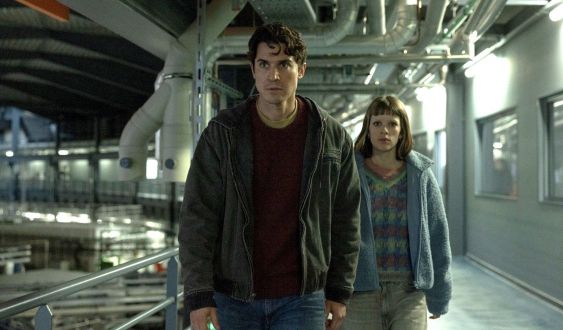
How much of our brain are we willing to hand over to artificial intelligence? Just a few decades ago, a question like that would have sounded like the premise of a dystopia written by one of the great authors of the genre — George Orwell, Aldous Huxley. Today, though, the question — and its answer — no longer feel so dystopian, or so far off. Increasingly, in fact, they're playing out in the present tense.
First, we handed AI our mechanical tasks: searching for information, summarizing, sorting, even answering questions we often accept at face value without much scrutiny. Then came decisions: which travel itinerary suits us best, how to organize our savings, how to handle a problem, even what to say in a given situation. The next step still seems hard to delegate: emotions, one of the traits that define us most as human. Not just letting technology know what or how we feel, but actually allowing it to interpret those feelings — and shape them.
That's precisely the starting point of Day One (streaming on Amazon Prime), a series we might call dystopian, though the future it imagines doesn't feel as distant as we might like to think. The show imagines AI-equipped contact lenses capable of seeing and recording everything the wearer experiences, and of interpreting their surroundings in real time. Initially, the company behind them — Diskin, led in the fiction by Damián Diskin (Jordi Mollà) — presents them as a tool to help users make instant decisions.
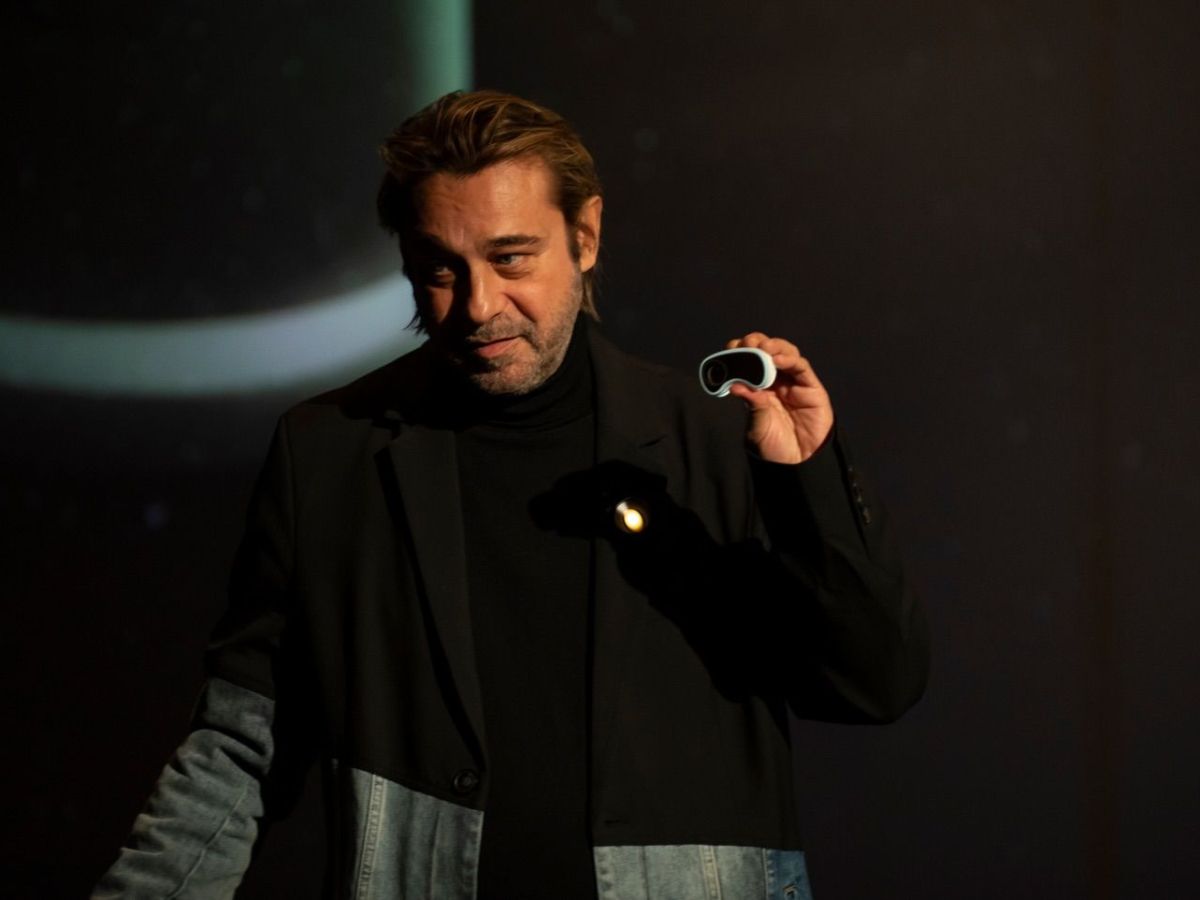
But the technology soon reveals a far more unsettling capability: it can also intervene in, and even manipulate, emotions. Stopping this technology from reaching the world becomes the mission of Ulises Albet (Álex González), one of the series' protagonists, who finds himself in a race against time to block its launch, timed to coincide with Mobile World Congress week.
Yet the distance between this fiction and the present is smaller than it might appear. Fortunately, we don't yet know of any company — at least not publicly — developing lenses capable of directly intervening in our emotions and, through them, our brains. But you don't have to look far to find some of the technologies Day One imagines. AI-powered glasses have already been a reality for months, capable of recognizing what's in front of us. Nor are humanoid or animal-shaped robots unfamiliar, they play a significant role in the series and are also a regular fixture at Mobile World Congress (MWC), being among the most photographed elements of the tech event that lands in Barcelona every year.
The leap the series imagines — moving from occasionally consulting technology to wearing it permanently built into our bodies — increasingly feels less like science fiction and more like a matter of time.
A Technological Barcelona
And this future — a future that may have already begun — has, in Day One, a very specific setting: Barcelona. The city that each year becomes one of the tech industry's great meeting points also transforms, in fiction, into the epicenter of this story. So much so that most of the series was filmed in the Catalan capital, in a production driven by Prime Video with participation from 3Cat and associate production by Mobile World Capital Barcelona, reportedly on a budget of €9 million, according to unofficial sources.
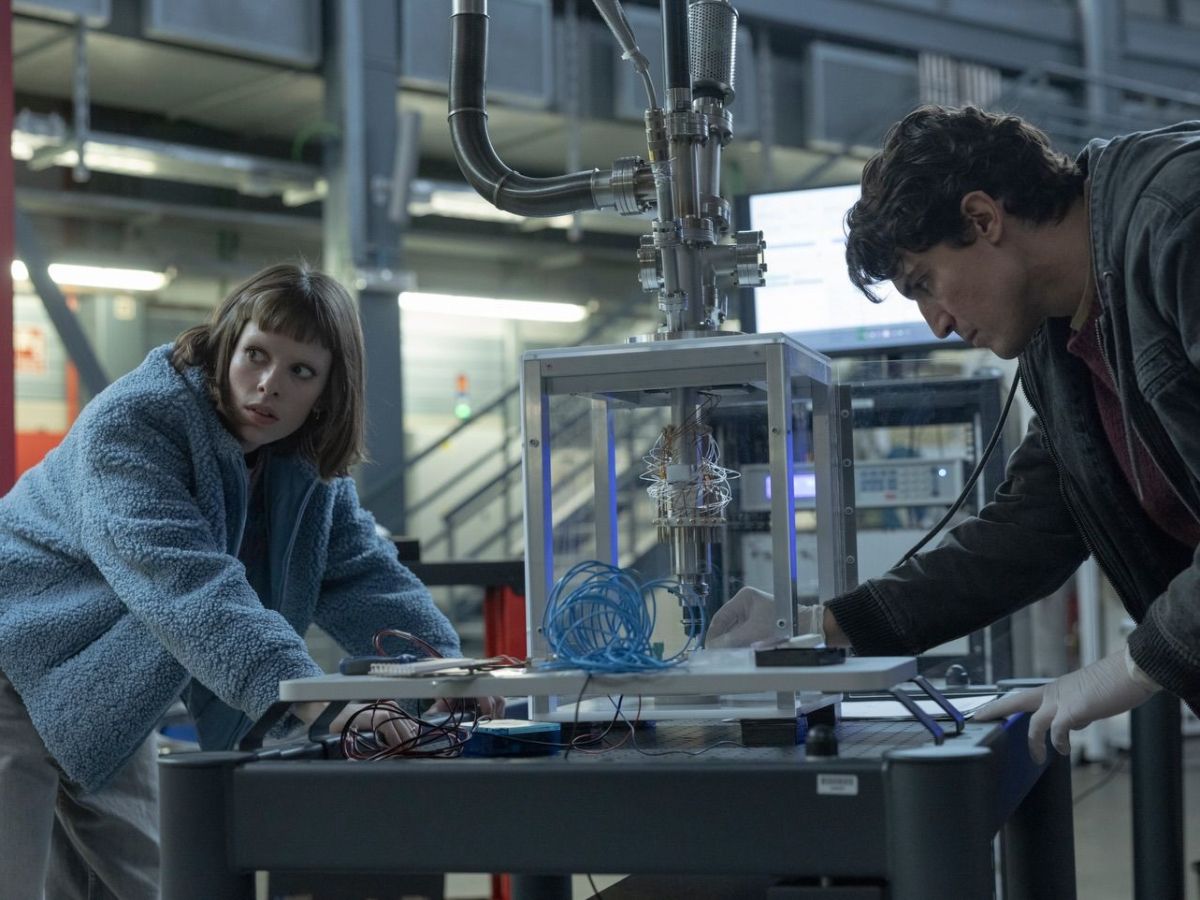
After the journey The New Barcelona Post began this summer through the many faces of cinematic Barcelona with Lights, Camera and... Barcelona!, Day One takes us a step further, towards the city of the future. Where we have previously followed the trail of Barcelona noir in productions such as El cerco, uncovered Barcelona disguised as eighteenth-century Paris in one of the most ambitious productions ever filmed in the city, Perfume, and explored the margins of the Catalan capital in Petit Indi, the focus now shifts to another Barcelona: one of laboratories, supercomputers, artificial intelligence and technological innovation.
This technological face of Barcelona isn't fictional, and the production didn't need to recreate it on soundstages or sets, as is often the case in films tackling dystopian futures — it already exists in reality. The quantum computers at the Barcelona Supercomputing Center (BSC-CNS), the ALBA Synchrotron, Pompeu Fabra University and even the Talent Arena — the event held as part of the MWC and focused on digital talent — are not products of the imagination of the series' writers, Cristina Pons, Luis Arranz, Luis Moreno and Juan Salvador López, directed by Marta Pahissa and Víctor Cuadrado, but cutting-edge facilities and spaces that form part of the scientific and technological fabric of Barcelona and its metropolitan area.

It's a Barcelona that is instantly recognizable to researchers, engineers and scientists from around the world, but far less familiar to the general public and, in many cases, not very accessible. Day One thus lets us step into these spaces and discover a city that usually falls outside the cinematic imagination, one typically dominated by the grandeur of the Eixample's streets or the monumentality of the Sagrada Família.
Likewise, the congress that serves as the series' backdrop, Mobile World Congress, is also, in real life, a showcase for many of the technologies Day One imagines: artificial intelligence, smart devices, humanoid robots, and glasses capable of interacting with the world in front of us. The line between reality and fiction blurs even further given the series' direct ties to the Mobile ecosystem: Mobile World Capital Barcelona is credited as associate producer, and in fact used the so-called Mobile Lunch — the event traditionally held as a prelude to Mobile World Congress week — to unveil the production.
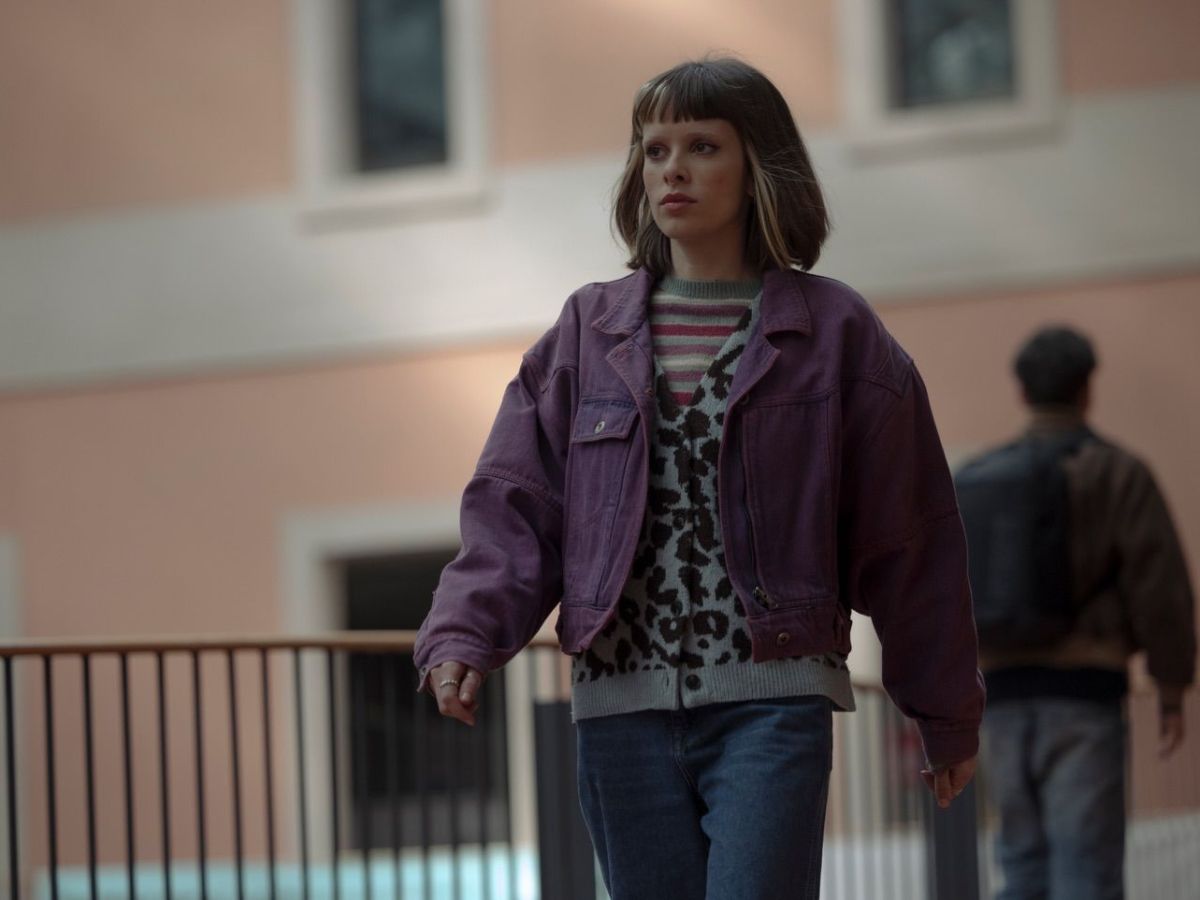
Technology without limits
It's precisely because the line between reality and fiction is increasingly blurred that Day One takes on such an unsettling dimension. Because the real danger doesn't lie only in what the technology is capable of, but in the power we're willing to grant to the tools that embody it — and, above all, to the companies that design them. What happens when a tool created to make our lives easier ends up becoming an instrument of control and manipulation?
It's a debate that hangs over all six episodes of the series, each roughly 45 minutes long, with a cast led by Álex González and Jordi Mollà, joined by names like Alba Planas, Iván Massagué, Peter Vives and Melina Matthews. It's a question that, despite everything, Day One never quite answers. The ethical debate is there, resurfacing again and again, but it feels like a reflection kept in the background — one that rarely becomes the true center of the conflict, or of the script itself.
The real danger doesn't lie only in what the technology is capable of, but in the power we're willing to grant to the tools that embody it, and, above all, to the companies that design them.
In fact, this contradiction plays out in the protagonist himself. Ulises, the man tasked with stopping the new device's launch, is introduced at the start of the series as a kind of hermit who lives apart from technology, to the point of rejecting any contact with it — yet by the end of the story, he ends up turning to some of these very innovations. Holograms and virtual assistants that let him recover bonds, memories and emotions tied to people who are no longer here. The technology that at first represents a threat thus also becomes a form of comfort.
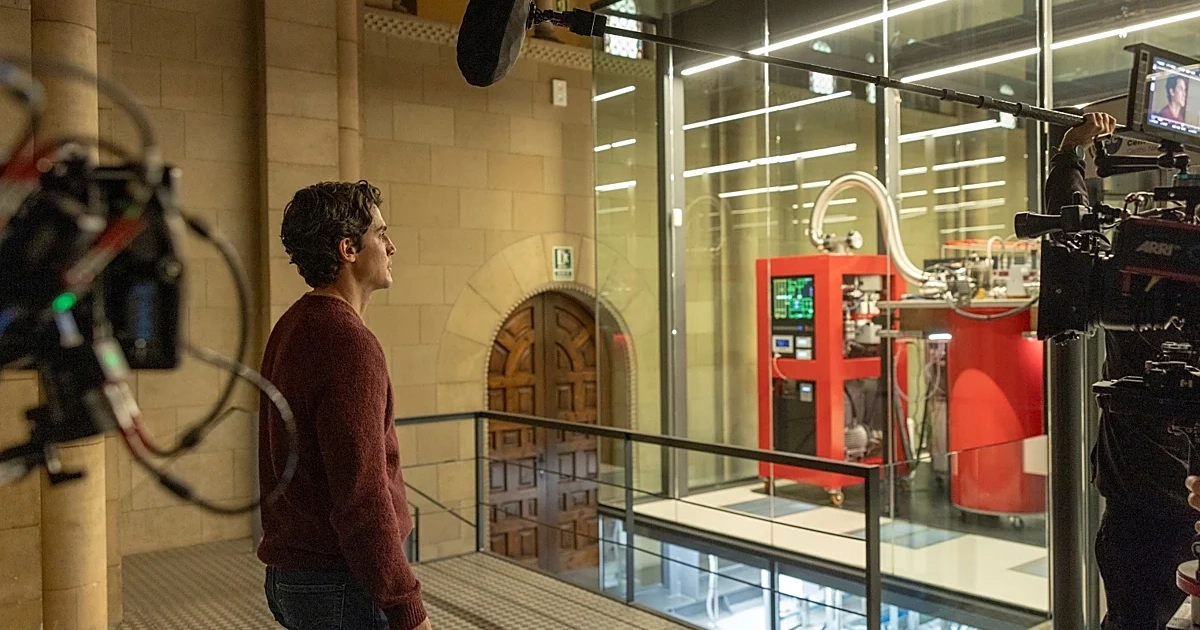
As a result, the ethical reflection on technology embodied in the protagonist's own conflict loses weight as the plot drifts toward police thriller territory. Murders, chases, hitmen, corporate secrets and a race against the clock move to the foreground, without abandoning the characters' personal and romantic storylines.
Perhaps, then, the point of Day One isn't so much to resolve these questions as to leave them open, to put on the table the consequences (and contradictions) of a future that no longer seems so dystopian. In technological terms, "day one" is the moment a new tool enters the world and there's no turning back. But when does that moment really begin? Could it be said that we're already living our own "day one," with the arrival of intelligent tools? To what extent are we ceding ground to technology? And, above all, do we know where to draw the line? These are the questions Day One leaves on the table — questions that, increasingly, are escaping the realm of fiction.
Add The New Barcelona Post as your preferred Google source for free
Stay informed with the latest news.