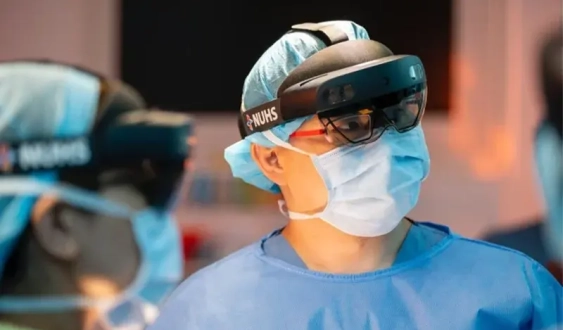
New era. New wave. The message is constant. In the 240,000 square meters that make up the Mobile World Congress 2026 at the Fira de Barcelona's Gran Via venue, there are signs and screens constantly announcing this new era. A new vital moment for our society that MWC 2026 has dubbed IQ Era (the era of the intelligence quotient), its motto this year. But what does that mean? And let's go back to basics: where do we come from and where are we going? These days, the technology of Mobile answers us.
We leave behind the digital era, that focused on computerizing and connecting information, and give way to an era in which systems and technology —of course, artificial intelligence— are capable of understanding situations and making decisions in real time. AI no longer just assists, but executes. And this change, which perhaps awakens a lesser degree of surprise for the MWC visitor than in other years —the dancing robot no longer tells us anything—, acquires great relevance when we contextualize it with the passage of time: in 20 years of Mobile we have already lived through quite a few stages, technologically speaking.
And at Mobile, a change in mentality is perceived, which outlines this change of stage. For digital ethnologist Josep Maria Ganyet, Mobile 2026 shows three major trends: "strong Asian growth, the need for regulation and technological sovereignty and, above all, the will to define why we use these technologies." After years focused on exploring possibilities and pushing the limits of AI, "now is the time to close —Ganyet points out— and focus on the why and the what for: what do we want it for? What do we want it to bring us?"
Barcelona commemorates this year the 20th anniversary of the arrival of the Mobile World Congress (MWC), the global connectivity congress organized by GSMA that landed in Barcelona, under the name of 3GSM World Congress 2006, as the most important congress in the world on mobile telephony. We were, at that time, a pre-digitized society that dreamed of "having broadband on mobile, watching television on mobile and having email in our pocket, in real time."
These were the big novelties of 2006 of that Mobile and journalist Albert Cuesta —who has lived through the 20 editions of MWC in Barcelona— explained them in a report by Barcelona TV in 2006. A brief trip to the past condensed into six minutes.
"I have seen things you people wouldn't believe". The famous line from the monologue Tears in Rain from Blade Runner —and which this weekend Francesc Fajula brought back at the Lunch Mobile— could be uttered by Albert Cuesta or any of the 50,000 visitors who attended the congress in 2006, if they had been able to take a look at this year's edition, surrounded by more than 110,000 attendees from 205 countries. Digitalization has transformed our society and economy, and the report published this Monday by the MWCapital foundation on the occasion of MWC 2026 exemplifies this.
The digitized economy represents 25.5% of Catalan GDP
If before the ICT sector was a vertical within the economy, now it is a transversal reality across all society and all companies and industries. For this reason, for Francesc Fajula, director of MWCapital, "today it makes no sense to speak only of a technological sector, but of a fully digitized economy and society, in which technology is a transversal and strategic element." In fact, according to figures from the foundation, in 2006 the weight of the digital economy represented 16.4% of Catalan GDP, and currently represents 25.5%. In absolute terms, the digital economy adds up to a value of 68.8 billion euros, which represents a quarter of Catalonia's economy.
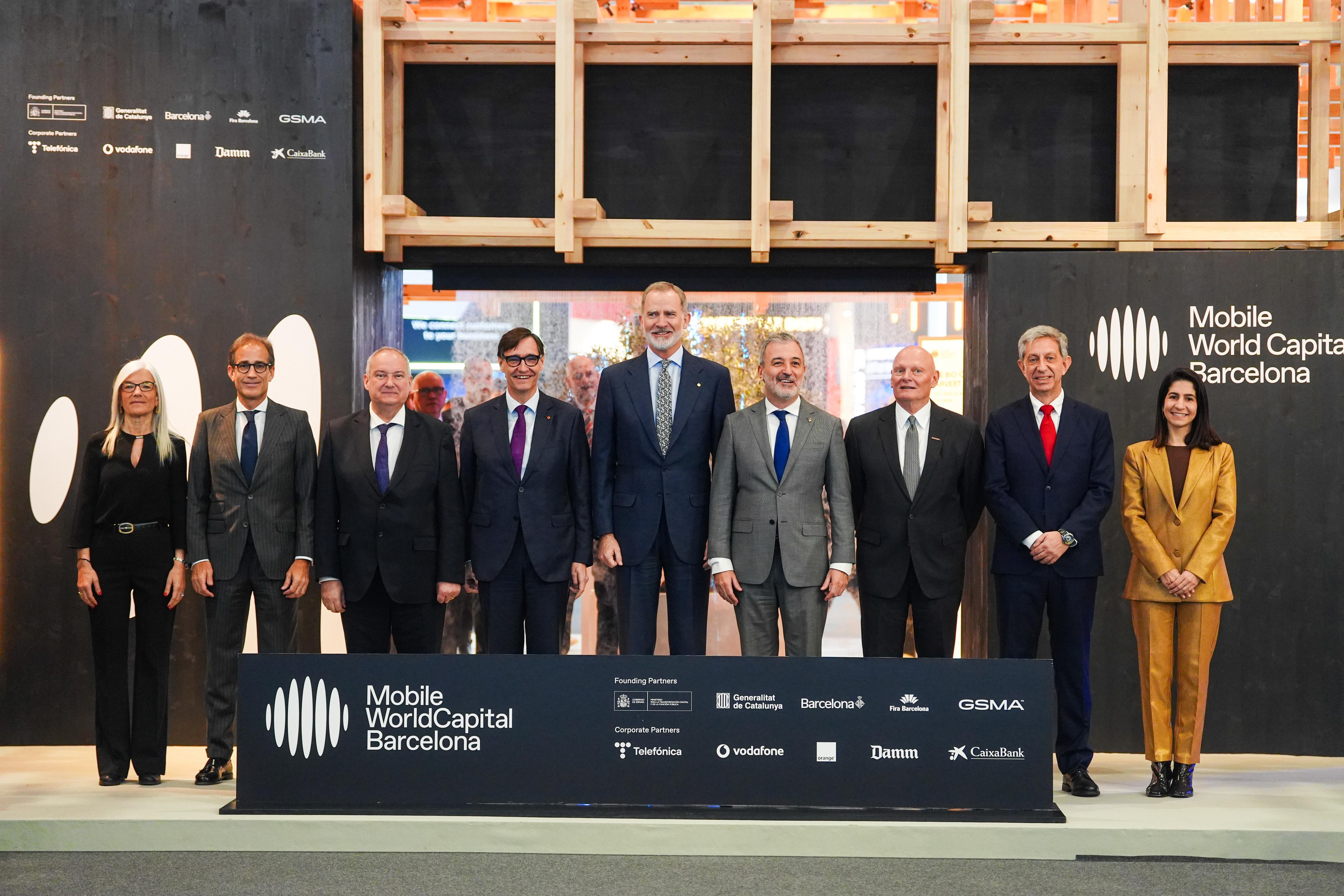
The legacy of the Mobile World Congress in Barcelona
The MWCapital report highlights a legacy of the Mobile World Congress in Barcelona that goes far beyond the economic impact on the city. Yes, the congress has gone from having an impact of 100 million euros in the city of Barcelona in 2006 to one of 561 million euros. It has gone from 800 exhibitors to 2,900. From generating 3,000 jobs, to generating 13,000.
But the legacy goes much further: while the congress has been growing during these two decades, the city's technological and scientific ecosystem has also done so: more digital talent, more startups and spin-offs, more technological hubs, more foreign investment and a more consolidated leadership in terms of technology adoption in companies.
In total, there are 2,400 active startups in Catalonia and 203 technological hubs have been installed in recent years in the Catalan territory, especially in the AMB and Barcelona, as a result of "the growth of the economy and technological evolution, but also of the complicities and collaboration that has existed during these 20 years between the administrations of Barcelona, Catalonia, the Spanish State and the GSMA," highlighted the Secretary of Digital Policies of the Generalitat de Catalunya, Maria Galindo, on the first day of the MWC.
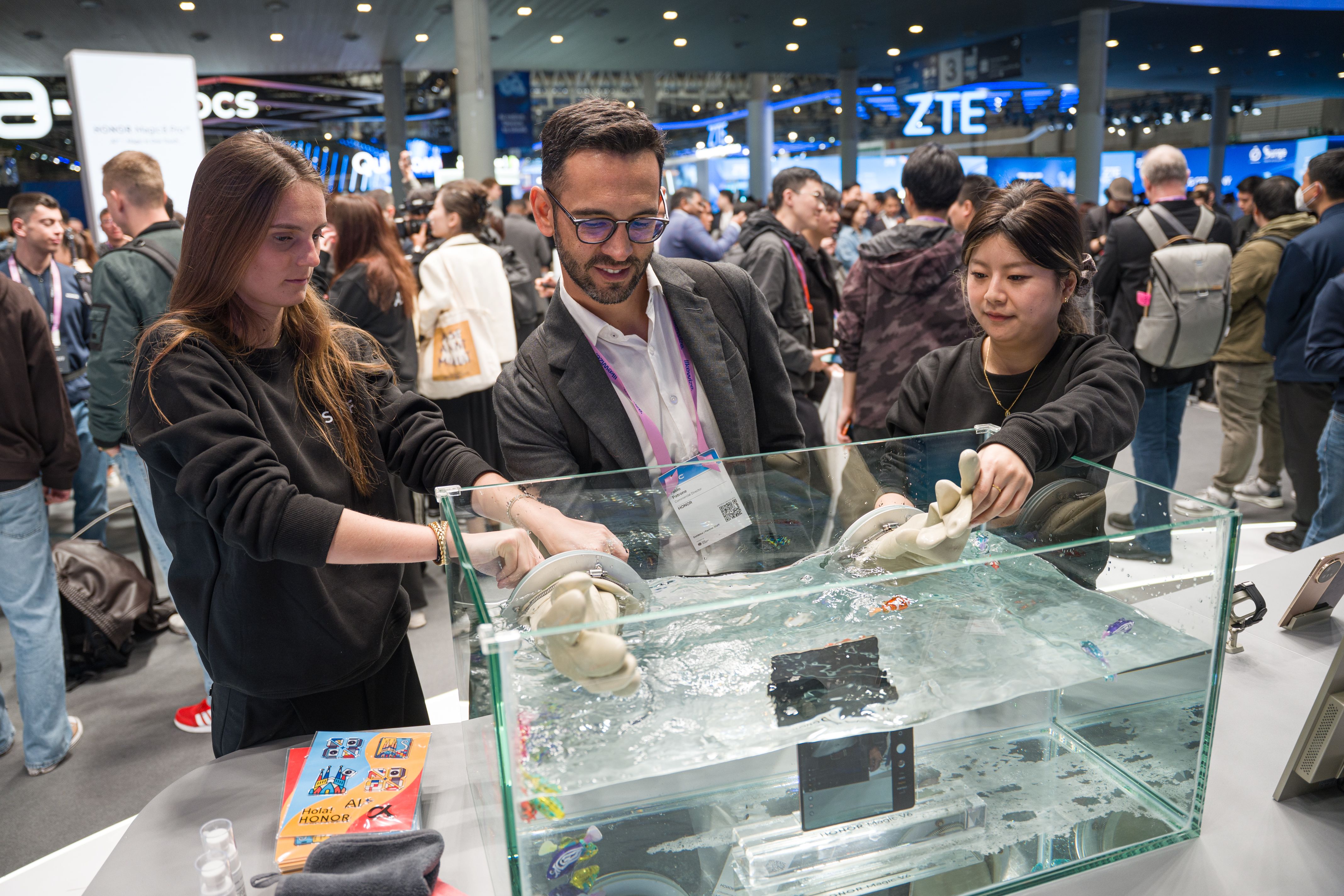
The next challenge: "from paper to business"
For the Deputy Mayor for Economy, Housing, Finance and Tourism of the Barcelona City Council, Jordi Valls, what the MWC has achieved during these 20 years is, mainly, "to accelerate an ecosystem" of high added value for our economy and for our society. And for the future? What do we want the congress to bring us? "Technology transfer". That knowledge and technology come to materialize. "Convert our knowledge capacity into projects", Valls stated, relying on the figures: "We are the fourth or fifth region in the world in terms of scientific publications, but in terms of technology transfer, we drop to position 19." The challenge is to move from knowledge to business.From paper to business.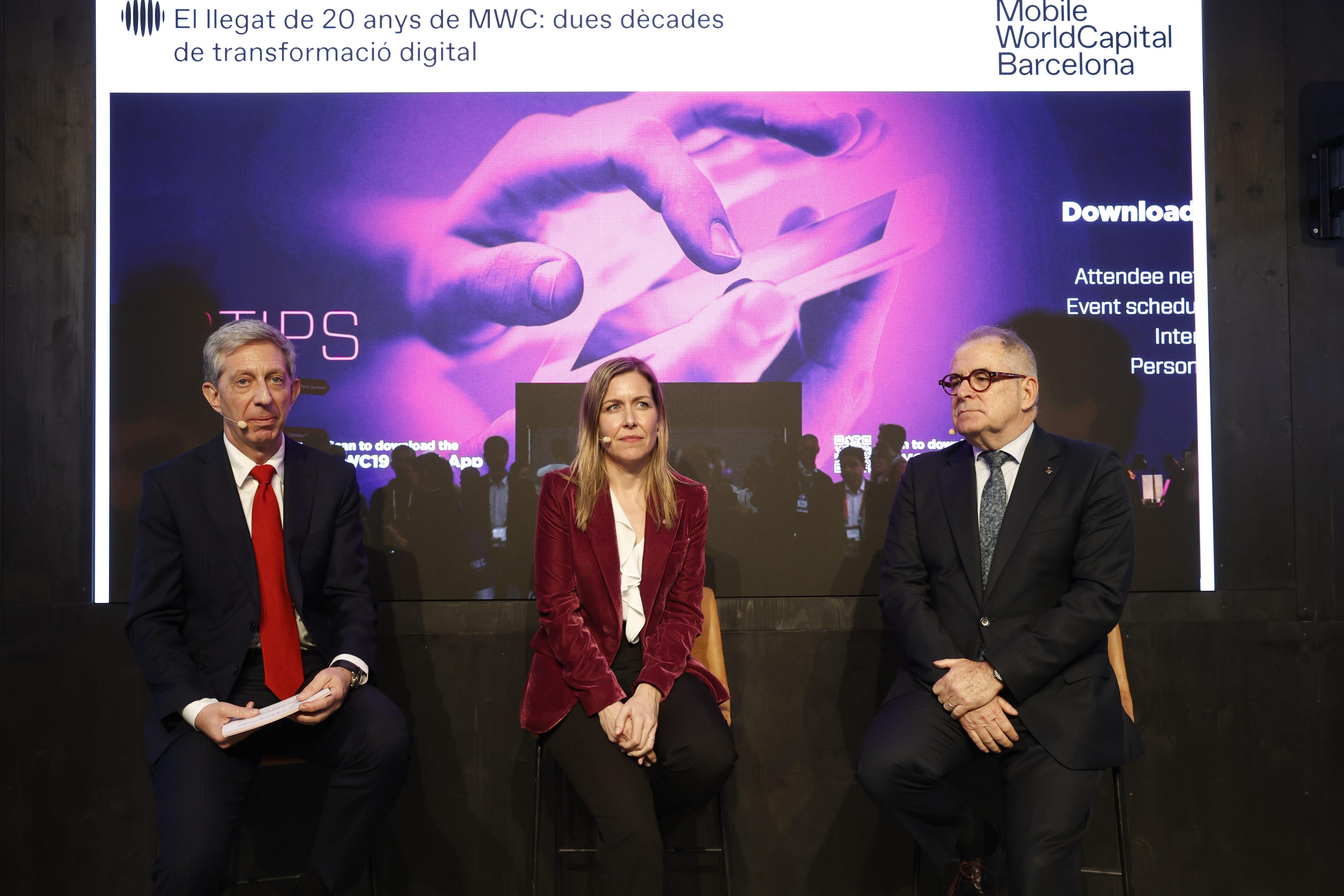
The Polytechnic University of Catalonia (UPC) has generated 5.3% of all Spanish spin-offs
Spin-offs are companies that are born within another organization (be it a university, company, or research center) and that separate from the parent company to exploit a technology or product. In Catalonia, the largest generator of spin-offs is the Polytechnic University of Catalonia (UPC), which has generated 5.3% of all Spanish spin-offs.
Moving from papers to business is also the raison d'être of Leitat. Jordi Cabrafiga, general director of Leitat, explains to us in front of the technology center's stand at the Mobile "that the congress is functioning as a catalyst to attract technological talent, and that is what we need. Attracting talent is Catalonia's main challenge to lead the technological future that lies ahead."
A talent, by the way, that these days has its own space in the Talent Arena, the branch of the Mobile World Congress that was born last year with a clear purpose: "to close the circle," in the words of Jordi Arrufí, head of Digital Talent at MWCapital. The success of the congress located in the Montjuïc venue of Fira de Barcelona was resounding: in its first edition, it gathered more than 20,000 attendees.
This year, however, the challenge of the Talent Arena will not be so much to fill the venue as to fill it with content: to ensure that digital talent is capable of dominating this new stage. Because the IQ Era will not only be that of algorithms that decide, but that of societies capable of converting knowledge into shared prosperity.
Add The New Barcelona Post as your preferred Google source for free
Stay informed with the latest news.