"The influx of tourists exceeded the city's ceiling of possibilities, turning it into an unsustainable space that the sector itself was unable to absorb. A quick and effective solution was needed to give Barcelona residents back a friendly city. Initially, the new model was seen as a threat to the hospitality business, which strongly opposed it. The primary reason was that the plan entailed a series of consequences that reduced tourism, as we had understood it until then, to its minimum expression."
Utopian Barcelona is the result of conversations held with 5 municipal architects. Each of the conversations has revolved around a specific theme, although the result, a consequence of an integral vision of the city, incorporates transversal ideas. The idea for this series of 5 articles about a utopian Barcelona was born to give wings to these architects who maintain close contact with the city, some for many years and, moreover, daily. The creative scope of municipal architects is often limited by budget allocations, by execution deadlines, by the policies of the government in power… So, without entering into partisanship, they have ventured into the exercise of speculating about a Barcelona that will never exist, but that we can imagine.
The articles have a futuristic character. However, not all of them delve into science fiction. The readings invite imagined locations and corners. To invented forms of the city. To projections of a Barcelona society far removed from the current one and, above all, they seek to give the reader a good time. With the exception of the text in italics, which is a transcription of part of the conversation or a research process, the rest is the fruit of imagination.
*Guest architect: Armand Fernández Prat, municipal architect of the Barcelona City Council.
Armand summons me to the tavern located in what is today Plaza Sant Jaume, but within the context of Barcino, Roman Barcelona; things of virtual reality that, nowadays, make it possible to substitute the present with moments of the city's history like this one. It's not that anything extraordinary happened today in Barcino. The sun is shining and the temperature is pleasant, like early May. We both drink wine flavored with Mediterranean plants. The glasses are made of clay. We comment on the activity surrounding us: the evident differences among passersby according to class or gender conditions, the group of men chatting nearby who look like senators, and the passing of a squadron of the praetorian guard. It was a mistake to keep heritage under such levels of protection for so many decades, says Armand. Because heritage we often link to the past, but that doesn't mean it must strictly mean the past. Heritage provides identity to a specific place. And in Barcelona, of course, as everywhere, heritage is something implicit. This can refer to a building, it can be a landscape, a custom, a temperament… Whatever it is, it is alive. Heritage accumulates. And besides allowing us to identify ourselves, it allows us to relate to the rest of the world. Because it is not a local issue, but a global one. That's why we like to travel and visit places, because we consider heritage as our own and, consequently, we pilgrimage, even if we were born elsewhere. Heritage is of concrete location but universal will.
Barcelona's change of model and the bet on virtual reality was due to the influx of tourists exceeding the city's capacity, turning it into an unsustainable space that even the sector itself was unable to absorb. A quick and effective solution was needed to return a friendly city to the people of Barcelona. Initially, the new model was seen as a threat to the hospitality business, which strongly opposed it. The primary reason was that the plan entailed a series of consequences that reduced tourism, as we had understood it until then, to its minimal expression.
Barcelona continued to be one of the most appreciated destinations globally. However, a percentage around 75% would visit it without having to travel. In-situ visits were reduced to the current point, where only 25% of the influx compared to what was the turning point is in-person. The applied fees, as well as the high cost to access heritage in person compared to virtual access, made traveling to Barcelona something not everyone could afford. This filter represented a permeable barrier. The plan led to a notable increase in the quality of life in the city. This also meant that the focus of investments in new icons and, therefore, new heritage in the medium or long term, was placed on a virtual bet rather than in the field of conventional construction. The creation of hotel beds was stopped and a good part of the existing ones were rethought as co-living and cooperative work spaces.
On the other hand, Barcelona was the first city where art galleries, museums, and law firms of renowned architects opted for the creation of virtual spaces. In this way, a new Barcelona was built where intangible heritage ---fashion, the fact of being a seaport, or the label of being a reference for Mediterranean warmth--- also gained prominence. Idiosyncrasy is also part of heritage. These particularities define the character of the city. They are ways of doing and being that have been configured layer by layer throughout eras. And it will continue to be so because heritage is a present that is constantly being forged. That is why it was necessary to rethink the relationship between heritage and the visitor, so that, instead of being a problem, it would become the main ally against the theme park that Barcelona was becoming. Now, heritage is part of life.
One of the most symbolic cases of this transformation has been La Pedrera, converted, in part, into a museum space and, on the other hand, also into residential use. We are facing the largest rethinking ever carried out with the city's heritage. And it's good that it is. La Pedrera was not designed and built to be a museum. It was meant to be an apartment building with the imperfections that a space with which people interact implies. Now, apart from being a visitable space, it is a habitable space. The case of La Pedrera has been proof that the preservation of heritage does not require these levels of protection or, in other words, so many prohibitions.
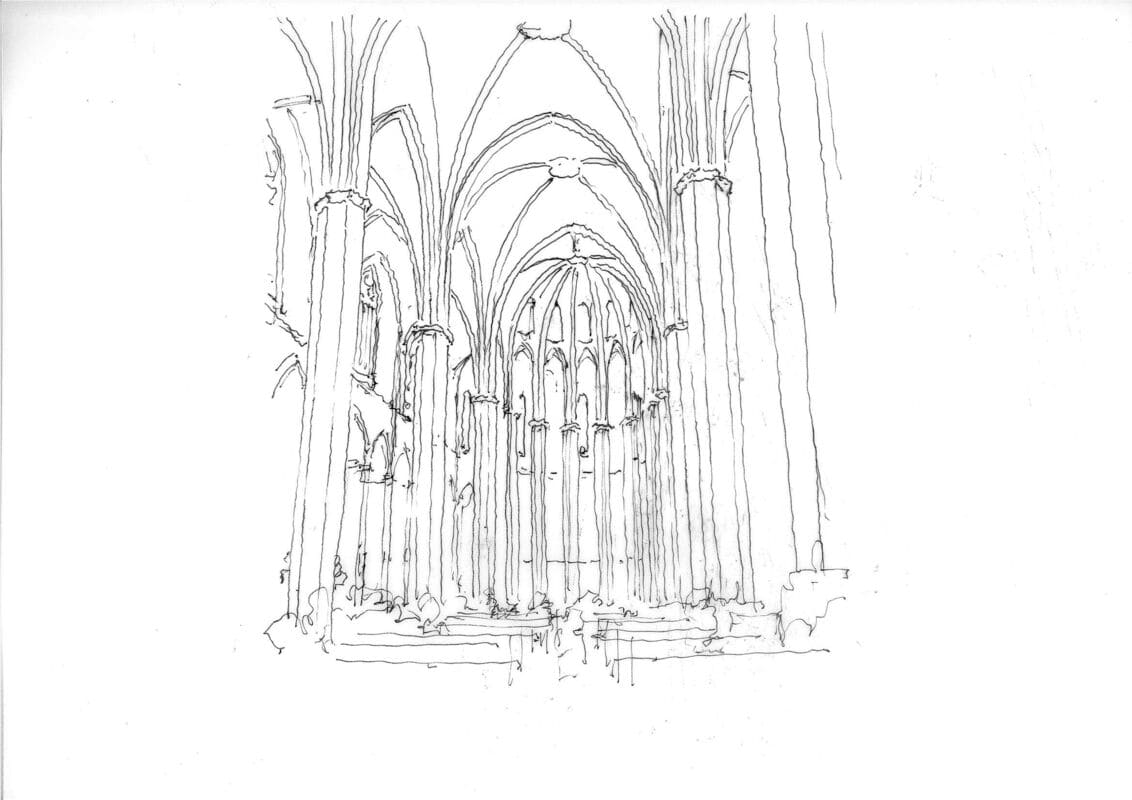
The balance of the new model is positive. Revenues through virtual visits have not only been maintained, but are increasing year after year. And maintenance costs have not been altered. Another paradoxical case similar to La Pedrera is that of Santa Maria del Mar, a space originally intended for Catholic worship but which has become a venue where spiritual activities of any religion, as well as activities that invite introspection such as yoga or meditation, can take place. On any given day like today, it is easy for the Born promenade to be the meeting point for followers of these disciplines to participate in activities led by master teachers. This is the difference between opening up heritage or limiting its enjoyment.
If heritage is loved, it is protected immediately. But this required a society with self-esteem. La Pedrera continues to be a visitable space, but at the same time it is a habitable space. Santa Maria del Mar continues to be a place of worship, but at the same time it is a practicable space. Given its universal character, access to heritage must also be universal. And this is what Barcelona has achieved with the new model: universal access to heritage and preserving the city in all areas of ecology, including those aspects that refer to the quality of life of citizens.
When the conversation has been going on for a while, Armand looks at his watch and tells me we should be finishing up. He has tickets for the inaugural concert of Beethoven's Ninth Symphony in Vienna, just like today, May 7, but in eighteen twenty-four. I pay the bill. It's four hundred and fifty denarii, about twenty current euros: certainly, if it doesn't stop, this inflation will finish us off.
Chapter 1. The mobility of the future. Guest architect Joan Sansa.
Chapter 2. The landscape and the ecological footprint. Guest architect Sara Udina.
Add The New Barcelona Post as your preferred Google source for free
Stay informed with the latest news.